
AC Maintenance in Texas
Homes in Texas run cooling for more months of the year than in 45 of the other 49 states.
Tell us about the job
Takes about a minute. No obligation.
- 94°Fsummer afternoon high where people live
- 7 monthsof cooling, April through October
- 14.94¢ per kWhwhat homes paid for power in 2024 (kWh means kilowatt hours, the unit on an electric bill)
- 12,619hail events from 2015 to 2024
A neglected AC costs more here Texas electric rates beat 27 other states
- Southern counties need about 27% more cooling than northern ones
- Summer afternoons average 94°F where people live
- Cooling runs April through October
- 12,619 hail events from 2015 to 2024
- 11,436 damaging wind events from 2015 to 2024
- 33% of homes lost power a day or more in 2024
Newer homes here mean more systems worth protecting
Half the homes in Texas were built in 1992 or later. That's a newer housing stock than all but five states. If your AC came with the house, there's a good chance it's not that old, and a yearly checkup is what keeps it that way longer. Most of the state is single-family houses, not mobile homes, which means most of these systems are full-size central air, the kind worth keeping on a maintenance schedule rather than running until something fails.
Hotter afternoons, harder season
Seven months of cooling is a long season, and 94 degrees on an average summer afternoon is hard on a system that doesn't get a break. A dirty coil or a weak capacitor that would last another year somewhere cooler gets pushed past its limit here by July or August. That's usually when a unit goes down, right when it's working hardest and hardest to replace. A spring checkup catches the weak part before the heat does.

What a tune-up actually covers
The parts of your AC a real inspection puts hands on
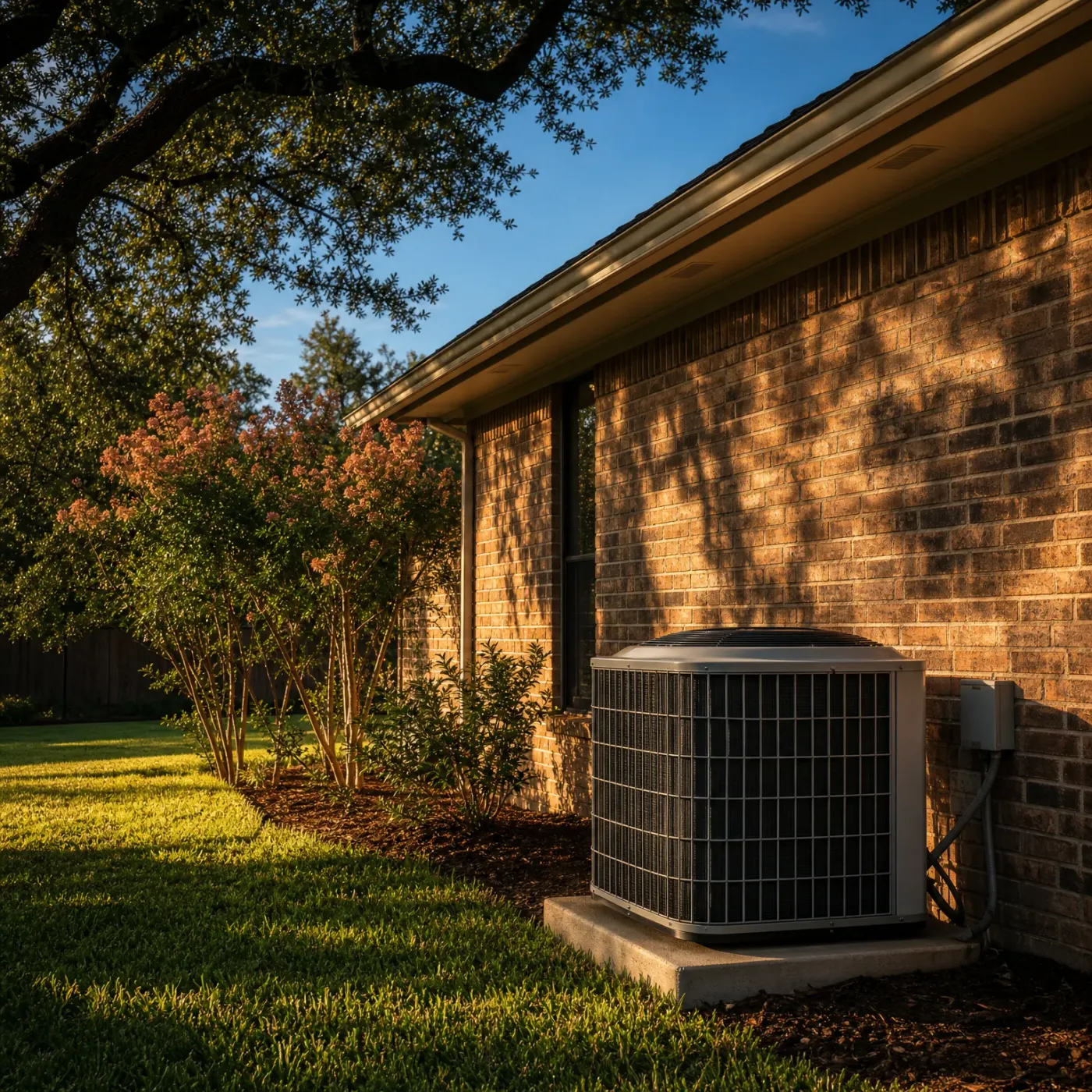
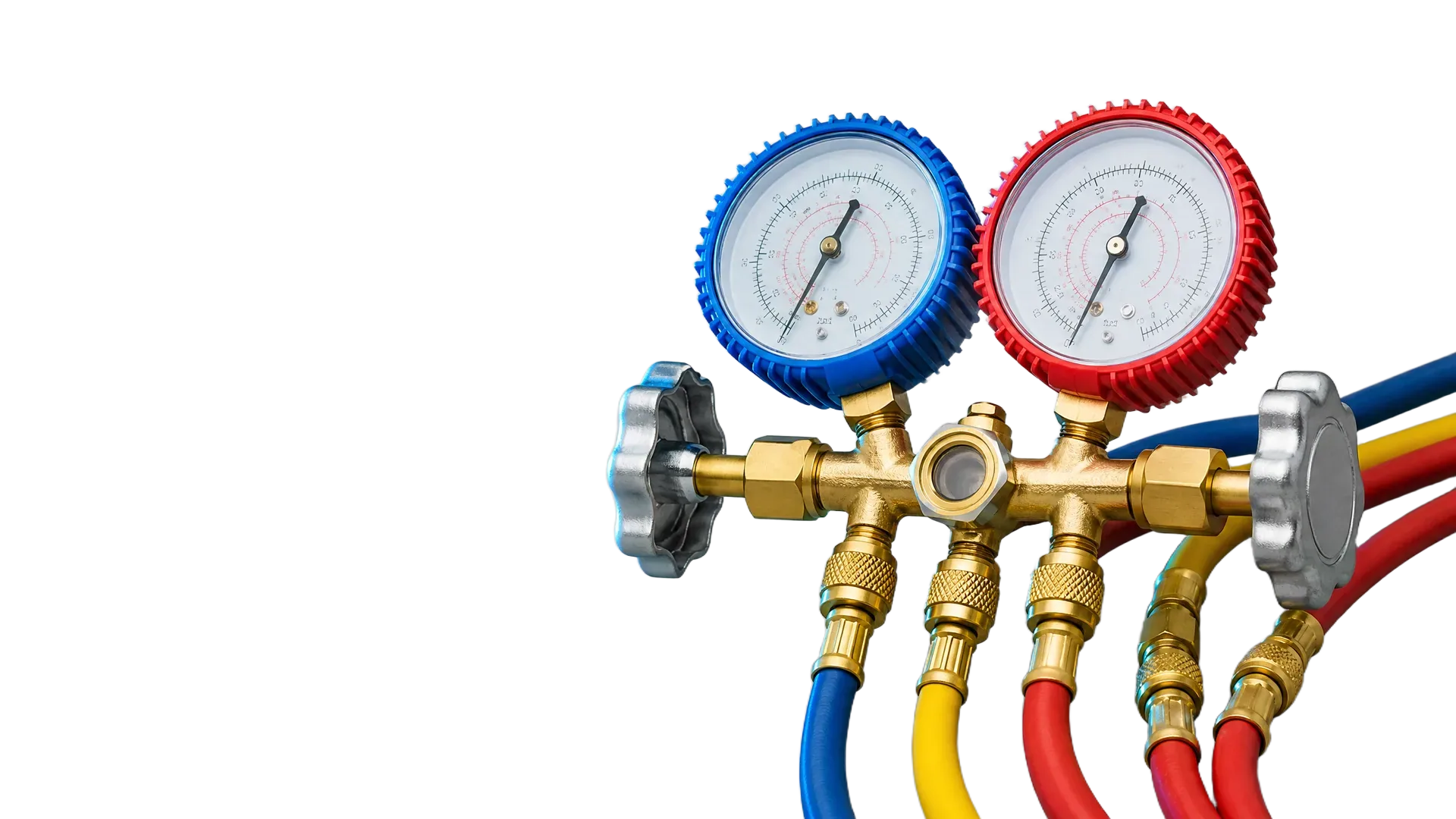
A tune-up starts outside, at the condenser. The coil gets washed clean of dirt and grass clippings that choke airflow, because a dirty coil makes the whole system work harder to dump heat. The fan blades get checked for wobble, and the capacitor that kicks the compressor and fan motor on gets tested under load, not just looked at, since a weak capacitor can still look fine sitting still. Refrigerant charge gets checked against what the system calls for. Too little and the coil can ice over. Too much and the compressor runs hotter than it should. Inside, the evaporator coil gets inspected for dirt and mold, the drain line gets cleared so condensation has somewhere to go, and the blower wheel gets checked for the caked-on dust that cuts airflow even when the motor sounds fine. Electrical connections get tightened, because a loose connection is what turns into a burnt wire later. The thermostat gets checked against the actual temperature in the room, not just its own display. A tech checks each part against what it's supposed to do and fixes what's drifted before it takes something bigger down with it.
The cooling load isn't the same everywhere in the state. Homes in the southern counties need about 27% more cooling over a year than homes in the north, and that shows up in how long the system runs, not just how hard it works.
Hidalgo County needs about three and a half times as much cooling a year as Dallam County, where the state's cooling need is lowest. Run a system that much more and a weak part gets found that much sooner.
Southern counties run cooling about seven months a year. Northern counties run about six. That extra month is wear a weak capacitor or a dirty coil has to survive before anyone notices something is wrong.
Hidalgo County runs cooling about ten months a year, the longest stretch anywhere in the state. Deaf Smith County runs about four. A system in Hidalgo barely gets an off season before it's needed again.
Summer afternoons hit hardest in Zapata County, where the June through August high averages 99°F. Jeff Davis County stays closer to 90°F. An AC working against 99 degrees all afternoon is under more strain than one working against 90.
Statewide, the average summer afternoon runs 94°F. Texas homes run cooling longer than homes in 45 other states, and against hotter afternoons than almost anywhere else.
If a system sits in the southern half of the state, or anywhere summer afternoons push toward the high 90s, a spring checkup matters more. Farther north, the season is shorter and there's a little more room for error, but the same weak part is still there waiting for July.
What does an AC in Texas face?
How hot do summer afternoons get?
94°Faverage afternoon high where people live
Alaska66°F
Arizona101°F
How many months does the cooling run?
7 monthsof cooling a year
Alaska0 months
Hawaii12 months
What does electricity cost?
14.94¢per kWh, what homes paid in 2024
North Dakota11.51¢
Hawaii42.86¢
How often do storms hit?
292severe weather events per county from 2015 to 2024
Alaska5
Wyoming1,057
How many homes lost power for a day or more?
33%of homes in 2024
Arizona7%
Maine54%
Book it before April, not after
April is when this system stops coasting and starts working for real, seven days a week, into October. Whatever was marginal last fall, a tired capacitor, a coil that never got washed off, doesn't announce itself in March. It shows up the first week the compressor has to run flat out. Book the checkup in March, before that first hot stretch, and a tech can catch the weak part while it's still sitting there quietly instead of failing on the one afternoon the house needs it most.
What skipping it actually leads to
An air conditioner doesn't fail all at once. It fails one part at a time, and each skipped year makes the next part carry more than it should. Dirt on the condenser coil is the usual starting point. It builds up slowly. The system loses its ability to dump heat, and the compressor runs hotter and longer to do the same job. A compressor that runs hot all season doesn't recover when the weather breaks. It just comes back next year a little weaker. A dirty evaporator coil does something different but just as serious. It can ice over, and once ice forms, airflow drops and the system stops cooling even though it's running full tilt. A clogged drain line backs up condensation into the pan and sometimes into the house, which has nothing to do with cooling and everything to do with water where it shouldn't be. None of this happens overnight. A capacitor weakens for a while before it finally can't kick the compressor on. A loose connection sits there before it arcs and burns. Maintenance is the point in that slow slide where someone is actually looking, so the weak part gets caught while it's still working instead of after it's taken something else down with it.

Texas electricity runs 14.94 cents per kilowatt-hour, and homes here pay more for power than in 27 other states. That rate applies to every kilowatt-hour an AC pulls, so a system that's lost efficiency doesn't just run longer, it runs more expensive at the same time.
The average Texas home that cools with AC used 13.6 million Btu (British thermal units, a measure of heat) of electricity for it in a year. That's the load a working system carries doing its job right. A dirty coil or a low charge doesn't lower that number, it raises it, since the same house still needs the same cooling, just produced less efficiently.
A dirty coil raises the bill before it fails anything, and power here already costs more.
Tell us about the job
Takes about a minute. No obligation.
Fill out the form once and a licensed Texas contractor calls to schedule your AC tune-up.