



Texas Cooling Help
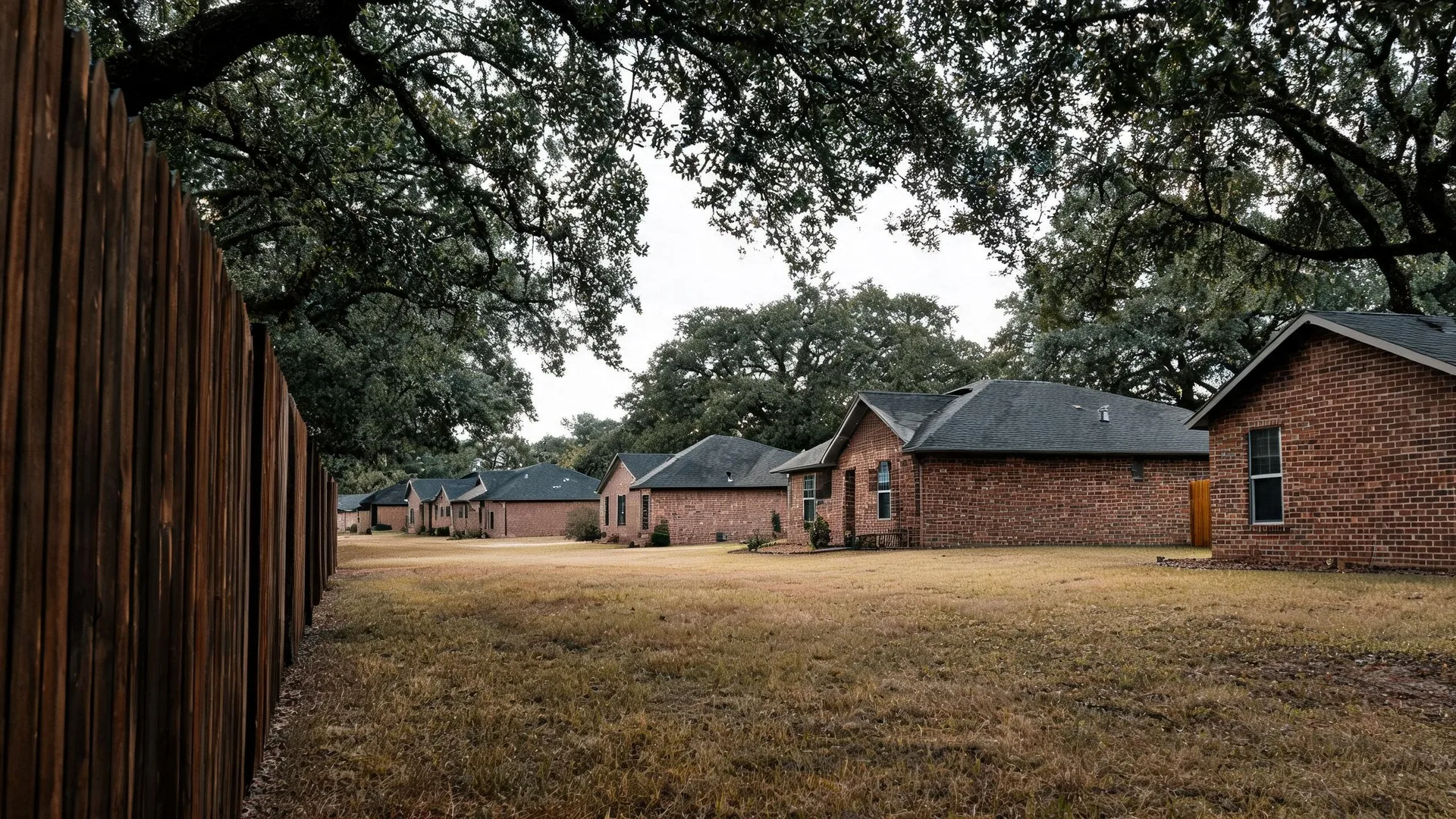
A row of single-story brick houses with dark shingled roofs behind a wooden privacy fence, seen across a dry grass field under overcast sky with large oak branches overhead.

AC Maintenance in Denton, TX

Tell us about the job

Takes about a minute. No obligation.

Step 1 of 3: Equipment

A dirty filter is the start of most service calls. Once it clogs, the system has to pull air harder, and that strain works backward through the whole unit. The coil inside gets less airflow across it, so it runs colder than it should and can ice over. Water that should drip off a clean coil into the drain pan instead runs down a frozen one and misses the pan when the ice melts fast. The drain line itself picks up algae over time and backs up, and a backed up drain line can trip the float switch and shut the whole system off on its own. None of this starts with a broken part. It starts with airflow, and a clean filter and a clear drain are what keep air moving the way the system was built to move it.

6 months
May through October, your air conditioner is on duty
94°F
the average summer afternoon it cools against
355 hail events
in ten years, and hail bends the fins on outdoor coils
115 wind events
in ten years, and wind drives debris into outdoor units
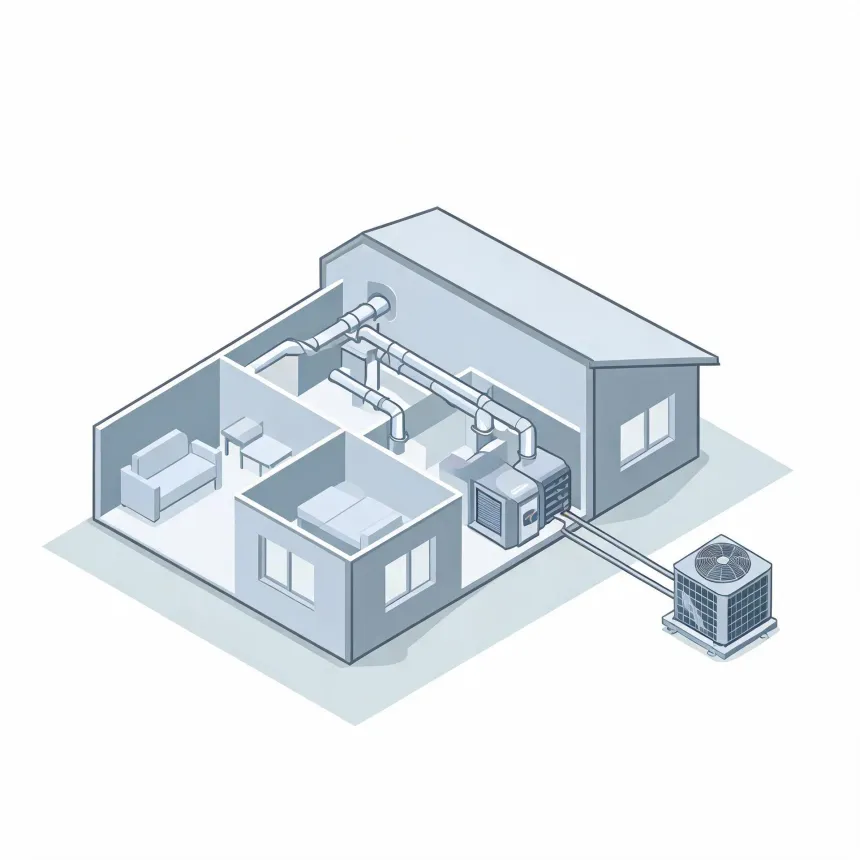
Isometric line illustration of a cutaway house showing interior rooms with furniture, ductwork leading to an indoor air handler, and an outdoor condenser unit connected by a line set.
Your air conditioner works hardest from June through September.

NOAA nClimDiv, 1991–2020 normals

Electricity in Texas ran 14.94 cents per kilowatt-hour in 2024.

A neglected AC pulls harder to do the same job, and every extra cent it draws costs more in Denton than almost anywhere else.

Cooling starts in May here. Have it checked in April.

Cooling runs May through October
Summer afternoons average 94°F
355 hail events from 2015 to 2024
Six months of heatDenton County afternoons average 94°F through June, July and August.

Half the homes in Denton County were built in 2003 or later. A system that age still has real years left in it. Yearly maintenance is what keeps it running the way it did when it was new, instead of losing a little capacity each season to dirt and wear nobody notices until it adds up. A tech checking the coil, the refrigerant charge and the electrical connections once a year catches the small problems while they're still small. Skip those checkups on a newer system and you're letting it wear out faster than it has to, for no reason tied to its age.

A tune-up pays for itself here

A neglected system uses more power, and power costs more here. A tune-up pays for itself.

Find a contractor
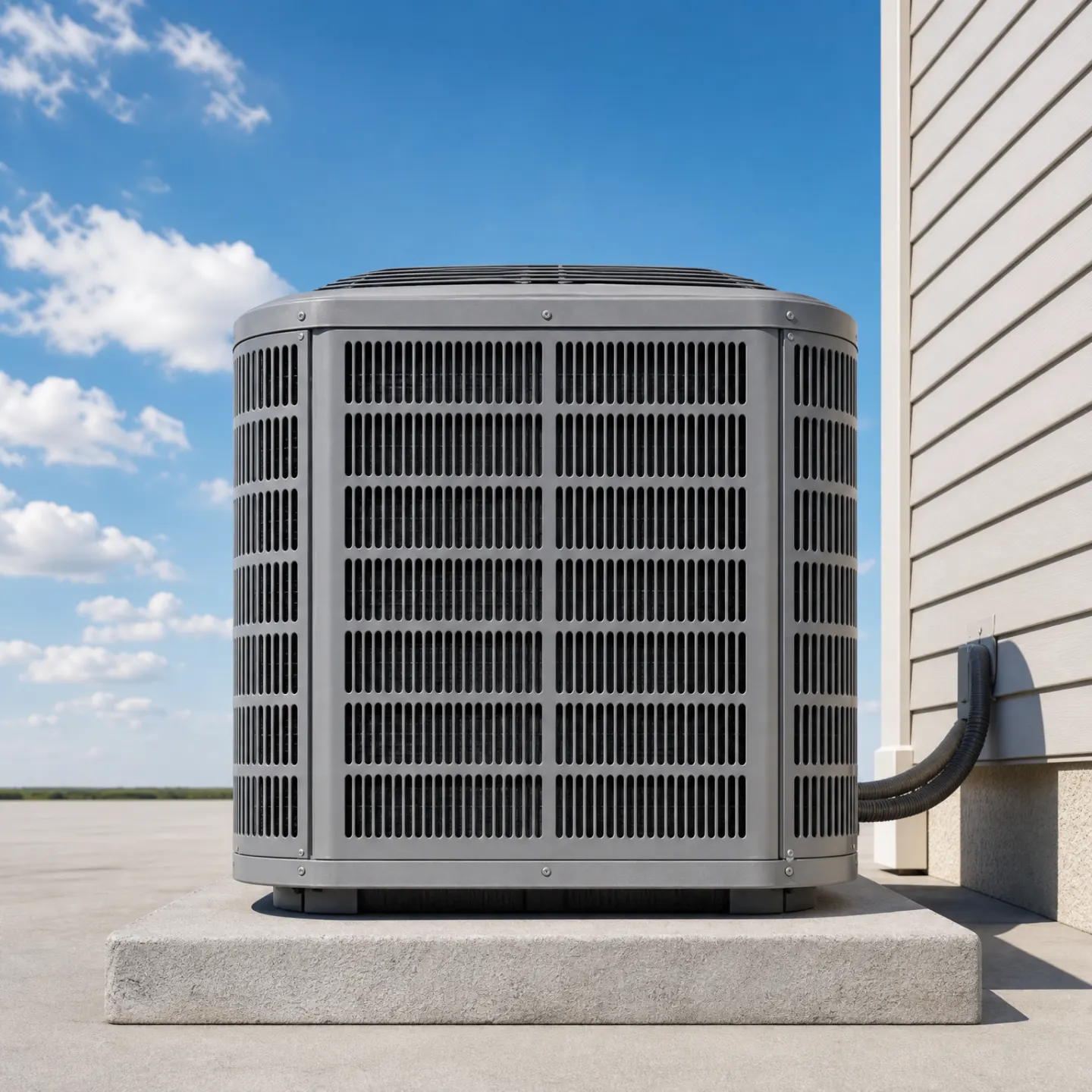
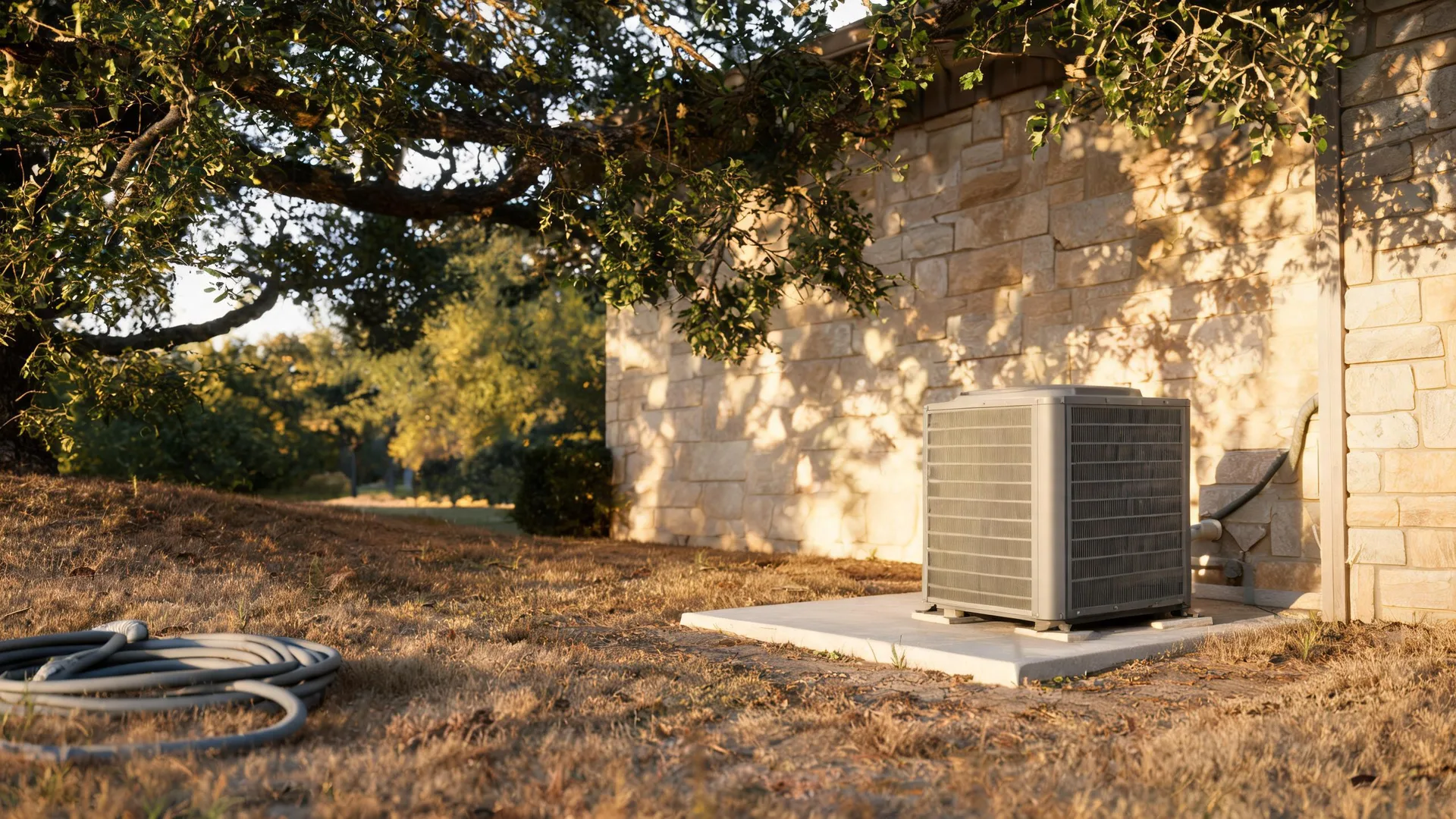
A gray cylindrical air conditioning condenser unit mounted on a concrete pad next to a light-colored vinyl-sided house exterior.

Six months of work, one chance to check it first

Six months of 94 degree afternoons is six months with no real break for the system. That kind of stretch is when a weak capacitor or contactor tends to show itself, not from age but from the load. Checking it before May catches that part while it still has time to be replaced on a slow day instead of a hot one.

A gauge set tells you what a glance can't

A quick visit gets a filter check and a look at the outside unit. A thorough one connects gauges to the refrigerant lines and reads the actual pressures. It checks the charge against what the system calls for. It tests the capacitor under load instead of just eyeing it for bulges. A low charge and a weak capacitor are common reasons a system fails in the middle of summer, and neither one shows up without a meter on it.
Ask what gets written down

A thorough tune-up leaves you with numbers written down. The refrigerant pressures, the temperature split between the air going into the system and the air coming out, the capacitor's reading against its rating. Those numbers mean nothing by themselves. Next year's numbers compared against them show a system drifting before it breaks down. A quick visit that ends with nothing on paper gives you no way to catch that drift at all.

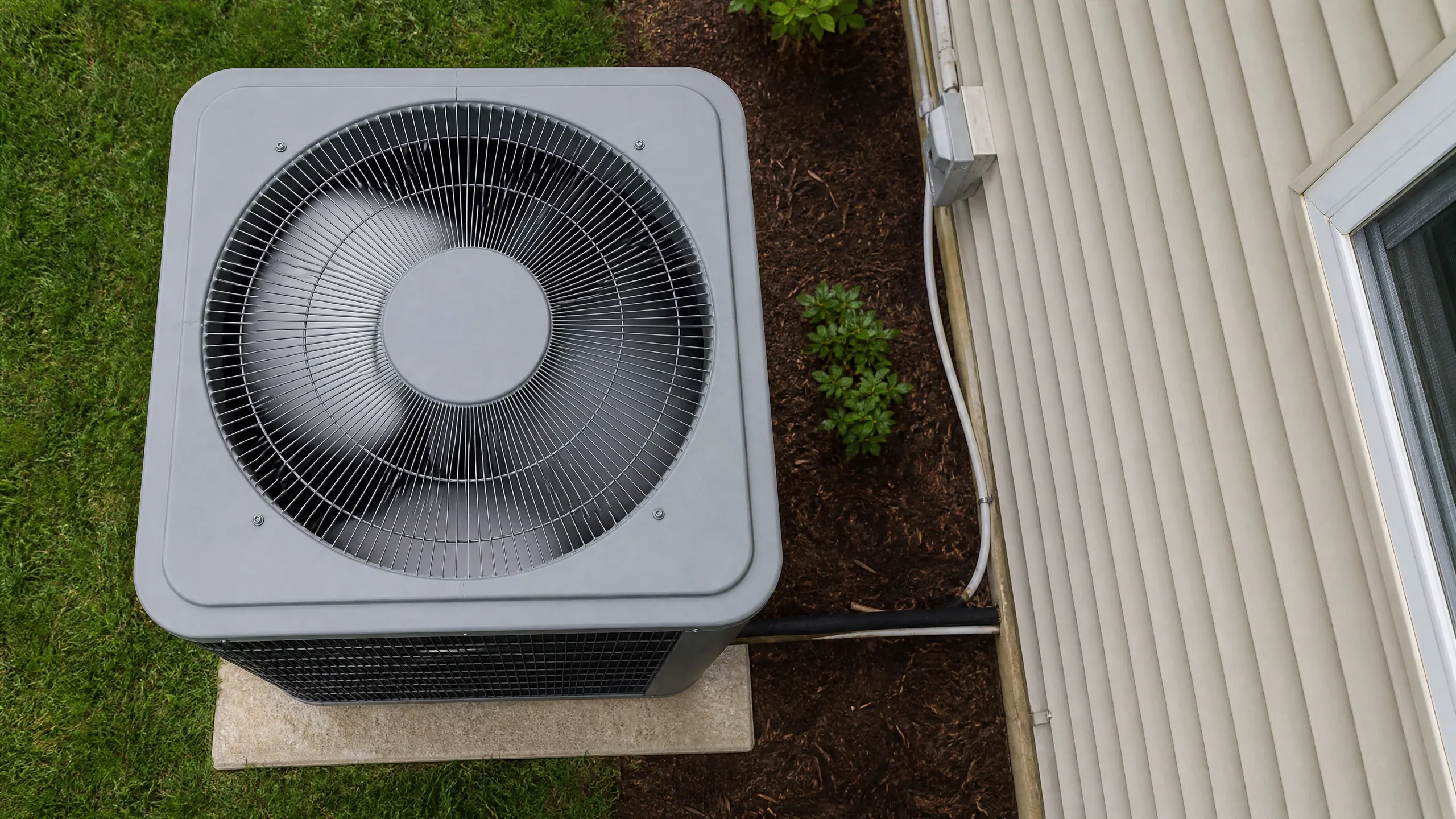
Aerial view of a gray outdoor air conditioning condenser unit mounted on a concrete pad next to a house with vinyl siding.

Book your AC tune-up in April, before homes here start needing cooling in May.

  1. Jan
  2. Feb
  3. Mar
  4. Apr
  5. May
  6. Jun
  7. Jul
  8. Aug
  9. Sep
  10. Oct
  11. Nov
  12. Dec

A tune-up checks the refrigerant charge, cleans the coils, tests the capacitor and tightens the electrical connections.

A tune-up covers more than the filter and the coil. The tech should check the blower motor and wheel, since a wheel caked with dust moves less air even when the motor itself is fine. The condensate drain gets flushed, not just looked at, because algae builds up inside where you can't see it. Refrigerant lines get checked for rub spots where they pass through framing or sit against metal, since a slow leak there can take years to show up as weak cooling. The outdoor fan motor gets tested under load, not just spun by hand, because a motor can turn freely and still be too weak to move air once it's under a real load. The thermostat's calibration gets checked too. A thermostat reading a few degrees off makes the system run longer than it needs to, and nobody notices because the house still feels fine.