Texas power isn't cheap
Electricity here ran 14.94 cents per kilowatthour in 2024. A dirty coil or a low charge makes your AC run longer to cool the same house, and every extra hour shows up on the bill.
Takes about a minute. No obligation.
Electricity here ran 14.94 cents per kilowatthour in 2024. A dirty coil or a low charge makes your AC run longer to cool the same house, and every extra hour shows up on the bill.
A technician cleaning the coil, checking refrigerant charge and testing the capacitor keeps your system from drifting into longer run times. Skip it for a year or two and the unit doesn't fail, it just quietly costs more to run.
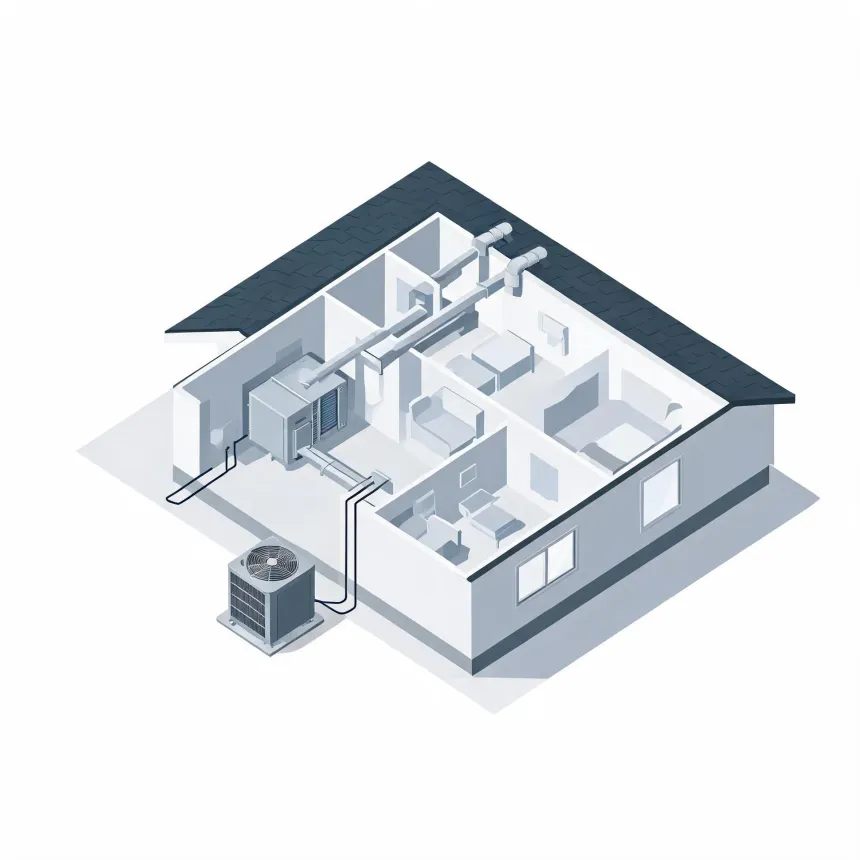
NOAA nClimDiv, 1991–2020 normals
April is when cooling starts in Comal County.
Get the AC checked in March, before it has to work.



Half the homes in Comal County were built in 2005 or later. If yours is one of them, the system could still be the one it came with, or close to it. A yearly check is what keeps a system that age running the way it did when it was new. Skipping it doesn't break anything right away, but it's how a good system starts to lose ground earlier than it should. Worth a look if you're not sure how old yours is.
Seven months of cooling, April through October, and June through August the afternoon high averages 94°F. That is a long stretch of hard running, not just a few hot weeks. A worn capacitor or a dirty coil does not get a quiet moment once that kind of heat sets in. It tends to show up on the day you need the system most.
Find a contractorCooling runs here from April through October. Once that stretch starts, the system doesn't get a break, and neither does the chance to check it without your house heating up in the meantime. A capacitor or coil that was already weak going into the season has no quiet stretch to be found and fixed. By the time June and July bring those 94 degree afternoons, whatever was wearing thin is working full out.
A clogged filter starves the system of airflow. The coil behind it can still ice over even while the house is hot, and once that happens the system cools less, not more. Hold it up to a light. If you can't see through it, it's past time to change it.
Condensate has to go somewhere. When the drain line clogs with algae or dirt, water backs up into the pan and then past it, onto the floor or into the ceiling below. It doesn't announce itself ahead of time. A line that runs clear for months can clog without warning.
A tune-up checks the refrigerant charge, cleans the coils, tests the capacitor and tightens the electrical connections.
A tune-up is not just a glance at the unit. A technician checks refrigerant charge against what the system calls for, not just whether it's low but whether it's exactly right, since too much does the same damage as too little. The capacitor gets tested under load, because a weak one can still start the compressor on a cool day and fail on a hot one. Electrical connections get checked for corrosion, since a loose one builds heat over time. The condensate drain gets cleared before it backs up. None of this shows up by looking at the unit from across the yard, which is the whole reason it gets checked instead of guessed at.