




Texas Cooling Help
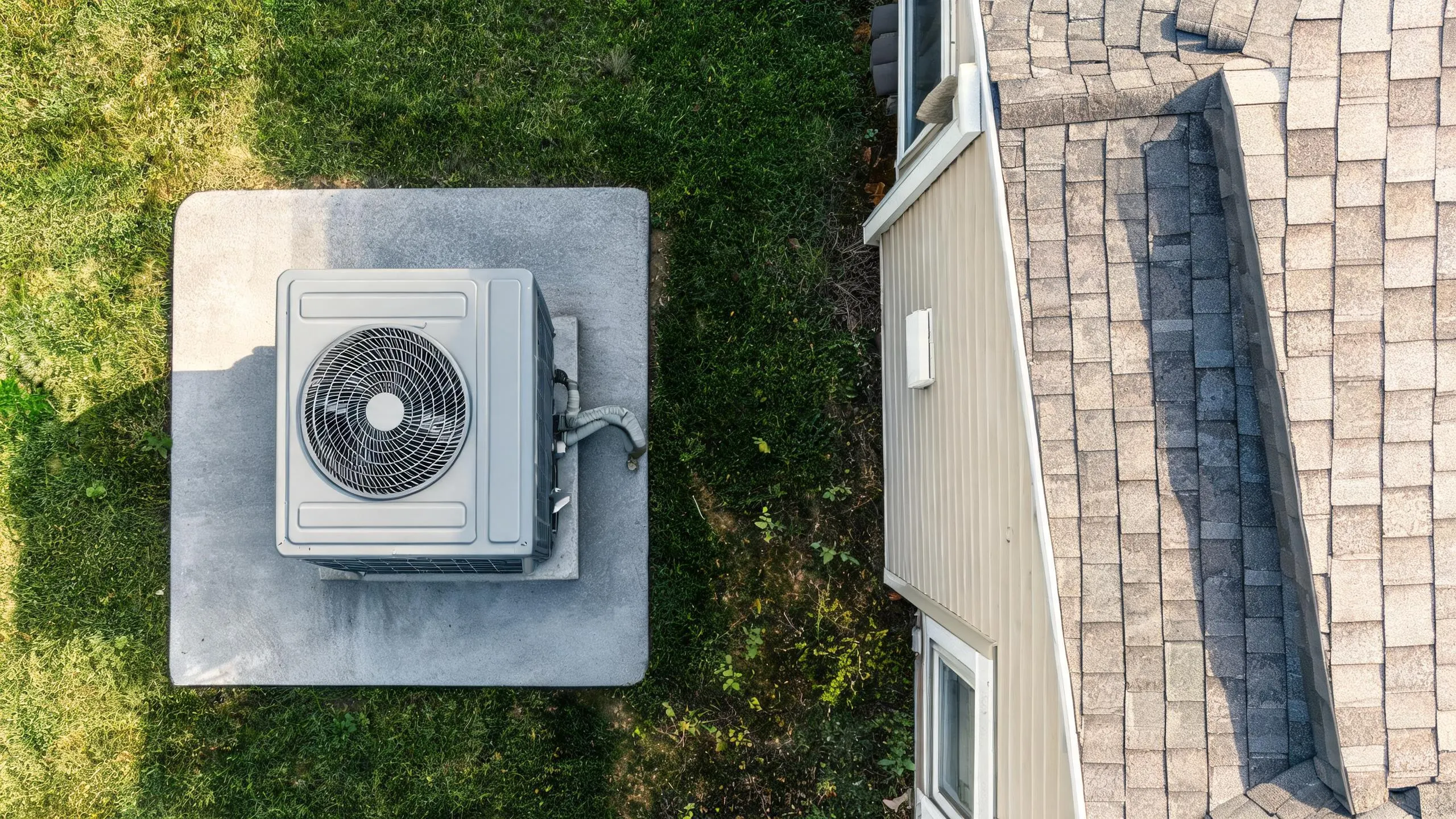
Overhead view of an air conditioning condenser unit on a concrete pad next to a house with asphalt shingle roofing and vinyl siding.

AC Maintenance in Weatherford, TX

Tell us about the job

Takes about a minute. No obligation.

Step 1 of 3: Equipment

A dirty coil or a low refrigerant charge makes the compressor work harder to cool the same house. That shows up on the bill before it shows up as a breakdown. Texas homes paid about 14.94 cents per kilowatt-hour in 2024, and an AC that runs inefficiently all summer burns through more of those kilowatt-hours every single day it runs. A tune-up catches the dirty coil, the weak capacitor, the low charge, before it costs you all season. The system runs the same hours either way. What changes is how much power it takes to do it.

6 months
May through October, your air conditioner is on duty
94°F
the average summer afternoon it cools against
113 hail events
in ten years, and hail bends the fins on outdoor coils
50 wind events
in ten years, and wind drives debris into outdoor units
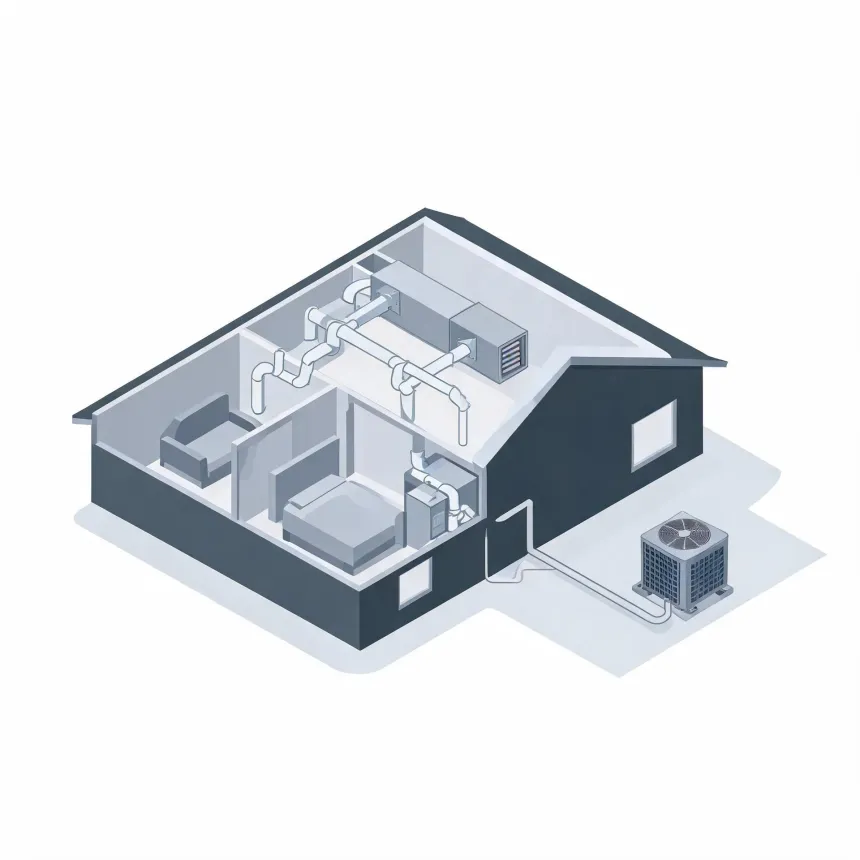
Isometric cutaway illustration of a house showing interior ductwork, an air handler and furnace unit, and an outdoor condenser connected by lines outside the wall.
Your air conditioner works hardest from June through September.

NOAA nClimDiv, 1991–2020 normals

Your AC starts running in May here.

Have it checked in April, before it has to run hard for six months straight.

Six months of 94 degree afternoons, plus hail, wears a system fast

Cooling runs May through October
Summer afternoons average 94°F
113 hail events from 2015 to 2024
Newer systems still need the yearly checkHalf the homes in Parker County were built in 2002 or later

Between visits, check the filter and change it when it looks gray or clogged. A dirty filter chokes airflow across the coil, and that's one of the few failures you can head off yourself. Keep the outdoor unit clear of grass clippings, leaves, and anything growing into the fan cage. Walk past the indoor unit now and then and look for water pooling underneath it, which usually means the condensate drain is clogged. If you catch that early, it's a wet-vac job. If you don't, it can shut the system down or damage the pan underneath. Past that, leave the panels closed and the refrigerant alone. Opening the cabinet or touching the lines without training risks the coil, the compressor, or you.

The cost of skipping it shows up on your electric bill, not your invoice

A dirty coil or a weak capacitor makes your AC pull more kilowatt-hours to do the same job. At 14.94 cents each, that difference shows up on your bill before the system ever breaks down. A tune-up catches it while it's still cheap to fix.

Find a contractor
A man in a dark cap, gray long-sleeved shirt and brown work pants, carrying a canvas tool bag with pens and tools in its pockets, steps up onto a porch toward an orange-red paneled front door, with gray horizontal siding and a potted shrub in a terracotta planter to the right.
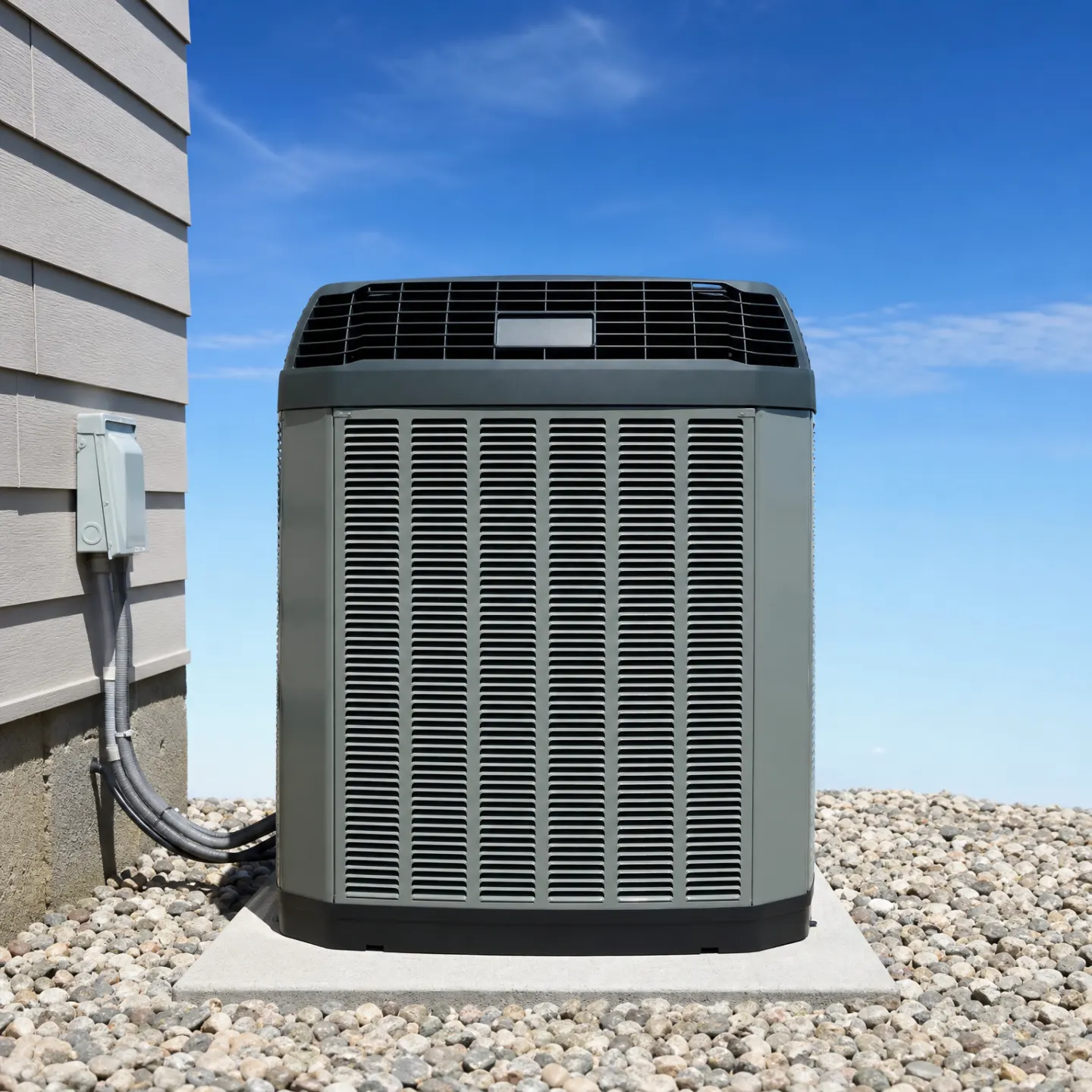
An outdoor air conditioning condenser unit mounted on a concrete pad beside a house, with electrical conduit running to a wall-mounted disconnect box.

A newer system is worth the yearly check

If your system came with the house, it's likely one of the newer ones, built in 2002 or later. A yearly check on a system that age is doing real work. It catches a capacitor that's starting to weaken or a coil that's starting to clog while both are still easy to fix. That's a different visit than the one a system gets after years of running unchecked.

The gauges see the charge, not just the air

A system low on refrigerant can still blow cold air at the vent and feel fine to stand under. The only way to know the charge is right is to connect gauges to the lines and measure the pressure. Run it low for long enough and the compressor wears out carrying a load it wasn't built for.

A capacitor doesn't warn you before it fails

The capacitor gives the compressor and fan motor the jolt they need to start. It weakens slowly, with no sign from the thermostat or the airflow, until the day it can't deliver that jolt and the unit won't start at all. A meter reading during a tune-up catches it while it's still working, not after it quits.

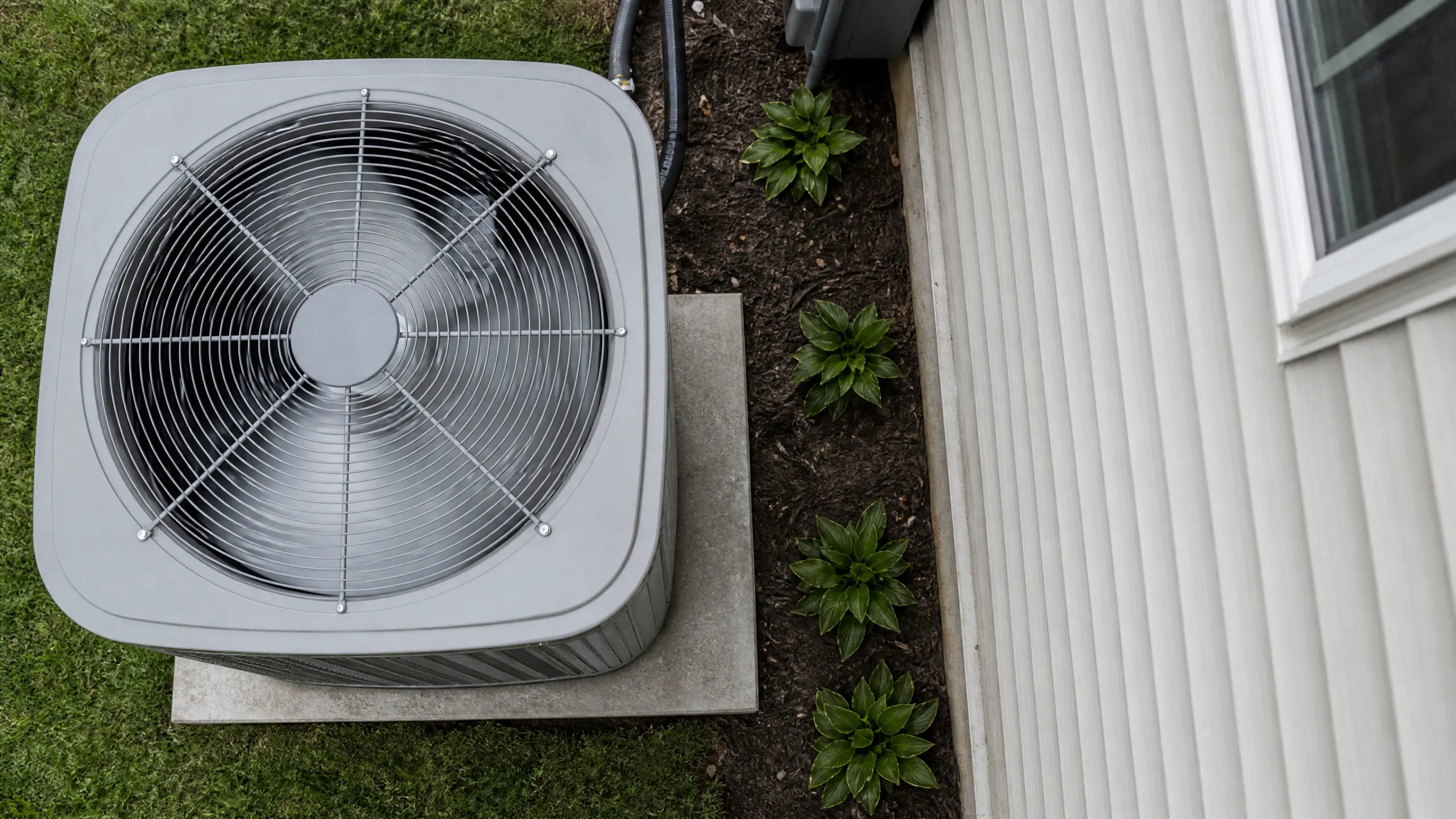
Overhead view of a gray outdoor AC condenser unit on a concrete pad beside a mulched garden bed and a house with vinyl siding.

Book your AC tune-up in April, before homes here start needing cooling in May.

  1. Jan
  2. Feb
  3. Mar
  4. Apr
  5. May
  6. Jun
  7. Jul
  8. Aug
  9. Sep
  10. Oct
  11. Nov
  12. Dec

A tune-up checks the refrigerant charge, cleans the coils, tests the capacitor and tightens the electrical connections.

A tune-up is a set list, not a glance at the unit. The tech checks refrigerant pressure with gauges on the lines, because that's the only way to know the charge is right. The capacitor gets tested under load, since a weak one can still start the system on a cool morning and fail by afternoon. The condenser coil gets washed clean, not just looked at, because dirt packed between the fins blocks the heat the system is trying to get rid of. Electrical connections get tightened, since a loose one heats up and burns before anyone notices. The blower wheel gets checked for dust buildup, and the condensate drain gets cleared so it isn't the thing that shuts the system down later. None of that shows up on the thermostat. It shows up later, in whether the part failed or just got old.