Electricity here isn't cheap
Texas homes paid 14.94 cents per kilowatthour in 2024. A system that has to work harder than it should burns through that rate all summer long.
Takes about a minute. No obligation.
Texas homes paid 14.94 cents per kilowatthour in 2024. A system that has to work harder than it should burns through that rate all summer long.
A clogged filter or a dirty coil makes your AC run longer to cool the same house. In Brownsville, where the AC runs most of the year, that difference shows up on the bill every month, not just once.
NOAA nClimDiv, 1991–2020 normals
A quick tune-up checks that the system turns on and blows cold air.
A thorough one pulls the coil, checks the refrigerant charge, and tests the capacitor before it fails.



A yearly check is what keeps that 14.94 cents from working against you all summer. Replacing a filter and cleaning a coil takes a technician a few minutes on a maintenance visit. Letting dirt build up all year costs you on every bill the AC runs. The tune-up is the cheaper path, not the extra one.
Cooling starts in February here and runs through November. Once it starts, it runs hard from the first week. A check in January catches a weak capacitor or a dirty coil before the system has to carry the full season on it.
Find a contractor
Skip a season and nothing happens right away. Skip a few and the parts that were already wearing keep wearing with nobody watching them. A coil that never gets cleaned keeps losing airflow. The system runs longer to move the same cool air, and that longer runtime wears the compressor faster than the dirt ever would on its own. A capacitor that's weakening doesn't get caught and tested under load. It fails the way capacitors fail, all at once, usually on the day the system is working hardest. A drain line that never gets cleared backs up quietly until the pan overflows. None of this shows up as a single event. It shows up as the system working harder for longer, year after year, until something that could have been tightened or cleaned has to be replaced instead.
A capacitor that's weakening makes the outdoor fan hesitate or the compressor hum before it kicks on. A coil losing airflow shows up as warm air at the vents even though the thermostat is calling for cold. These are not sudden failures. They show up as small delays and small temperature differences for weeks before the system actually stops.
A musty smell from the vents usually means the coil or the drain pan has grown mold, not that something is broken yet. A rattle that wasn't there before is a loose panel or a motor mount working itself free. Catching these at a check means a technician tightens or cleans something. Waiting means that same part fails while it's running.
A tune-up checks the refrigerant charge, cleans the coils, tests the capacitor and tightens the electrical connections.
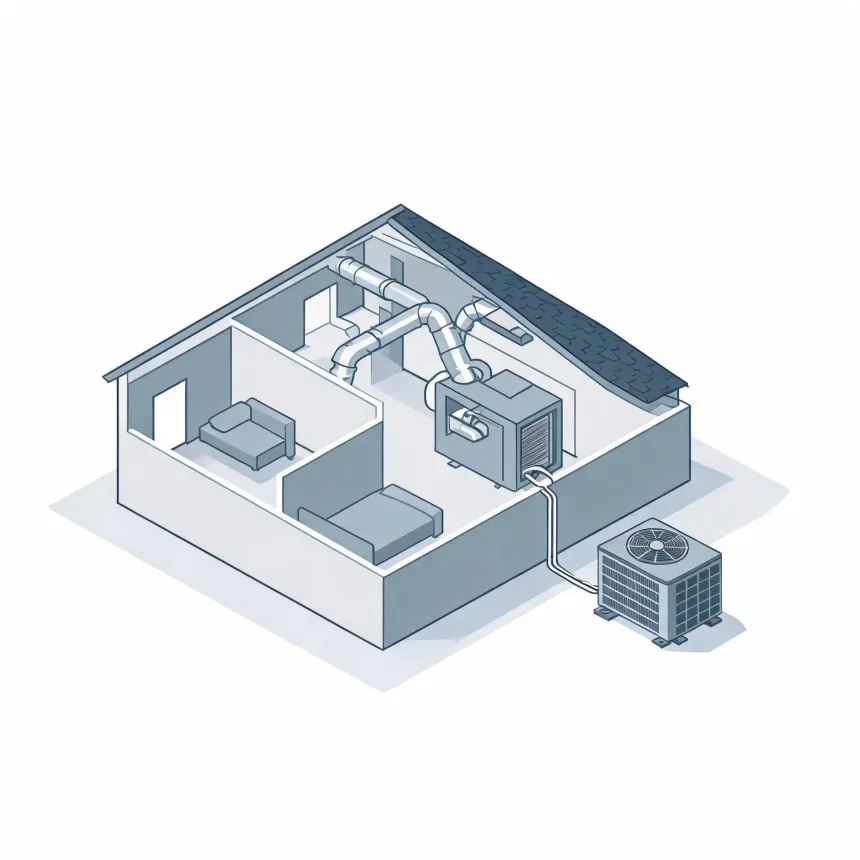
A proper tune-up starts outside at the condenser. The technician pulls the panel, cleans the coil fins with a brush or low-pressure rinse, and checks that the fan spins freely without wobble. Inside, the evaporator coil gets checked for dirt and mold, and the drain line gets cleared so condensation has somewhere to go instead of backing up into the pan. The refrigerant charge gets checked against what the system is supposed to carry, since too little or too much both make the compressor work harder than it should. The capacitor and contactor get tested under load, not just looked at, because a capacitor can read fine sitting still and still fail the moment the compressor tries to start. Electrical connections get tightened, since a loose wire at the disconnect or contactor is what turns into a no-start call later.