Texas Cooling Help
A row of single-story brick houses with dark shingled roofs lines a grassy field bordered by a tall wooden fence, with a large spreading oak tree overhead under an overcast sky.

AC Maintenance in Abilene, TX

Tell us about the job

Takes about a minute. No obligation.

Step 1 of 3: Equipment

A dirty filter works the whole system harder

When the filter clogs, the blower has to pull harder to move air across the coil. The coil can start icing over instead of cooling. Airflow problems from a dirty filter are behind a lot of no-cooling calls that have nothing wrong with the compressor at all.

The drain line is easy to forget until it backs up

Condensation off the coil has to go somewhere, and that line can grow algae or get clogged with dust just like any small drain. A clogged line backs water up into the pan and sometimes into the house. Checking it during a maintenance visit catches this before it becomes a water problem instead of an AC problem.

6 months
May through October, your air conditioner is on duty
93°F
the average summer afternoon it cools against
121 hail events
in ten years, and hail bends the fins on outdoor coils
88 wind events
in ten years, and wind drives debris into outdoor units
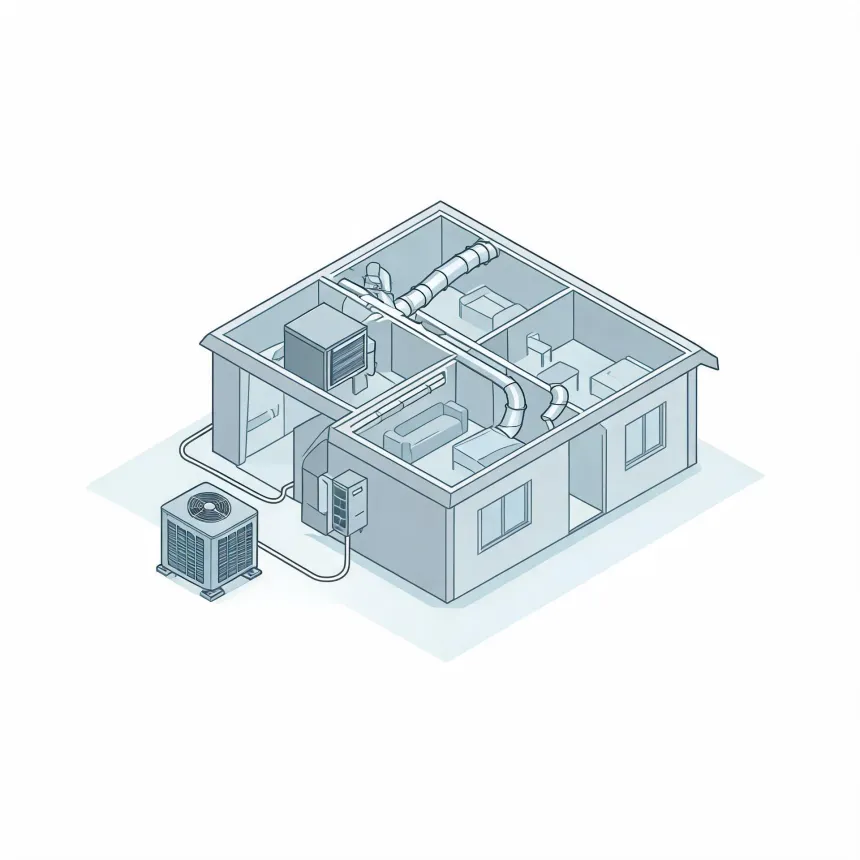
Isometric line illustration of a cutaway house showing interior rooms with ductwork, an air handler and furnace, connected by lines to an outdoor condenser unit on the ground outside.
Your air conditioner works hardest from June through September.

NOAA nClimDiv, 1991–2020 normals

Warm air from the vents when the thermostat is set low enough to run the compressor is worth a look.

Weak cooling usually comes from a low charge or a failing capacitor, and both get worse if left alone.

One AC checkup a year covers a system working this hard this long

Half the homes here were built by 1978
Cooling runs May through October
Summer afternoons average 93°F

Cooling starts in May here and runs through October. That is six months of the compressor cycling on nearly every day. April is the month to get the system checked, before it has to carry that load. A capacitor or contactor that is already weak won't announce itself in cool weather. It waits until the heat is steady and the unit is running for hours at a stretch. Catching that in April means it gets fixed on a slow day instead of in the middle of a stretch of hard summer heat.

A system working harder than it needs to costs more here than the checkup does

A dirty filter or a weak capacitor makes the system run longer to do the same job. At 14.94 cents per kilowatt-hour, Texas electricity makes those extra hours add up. A checkup catches that before the bill does.

Find a contractor
A man in a cap, gray t-shirt and brown work pants climbs porch steps toward an orange front door, carrying a canvas and leather tool bag.
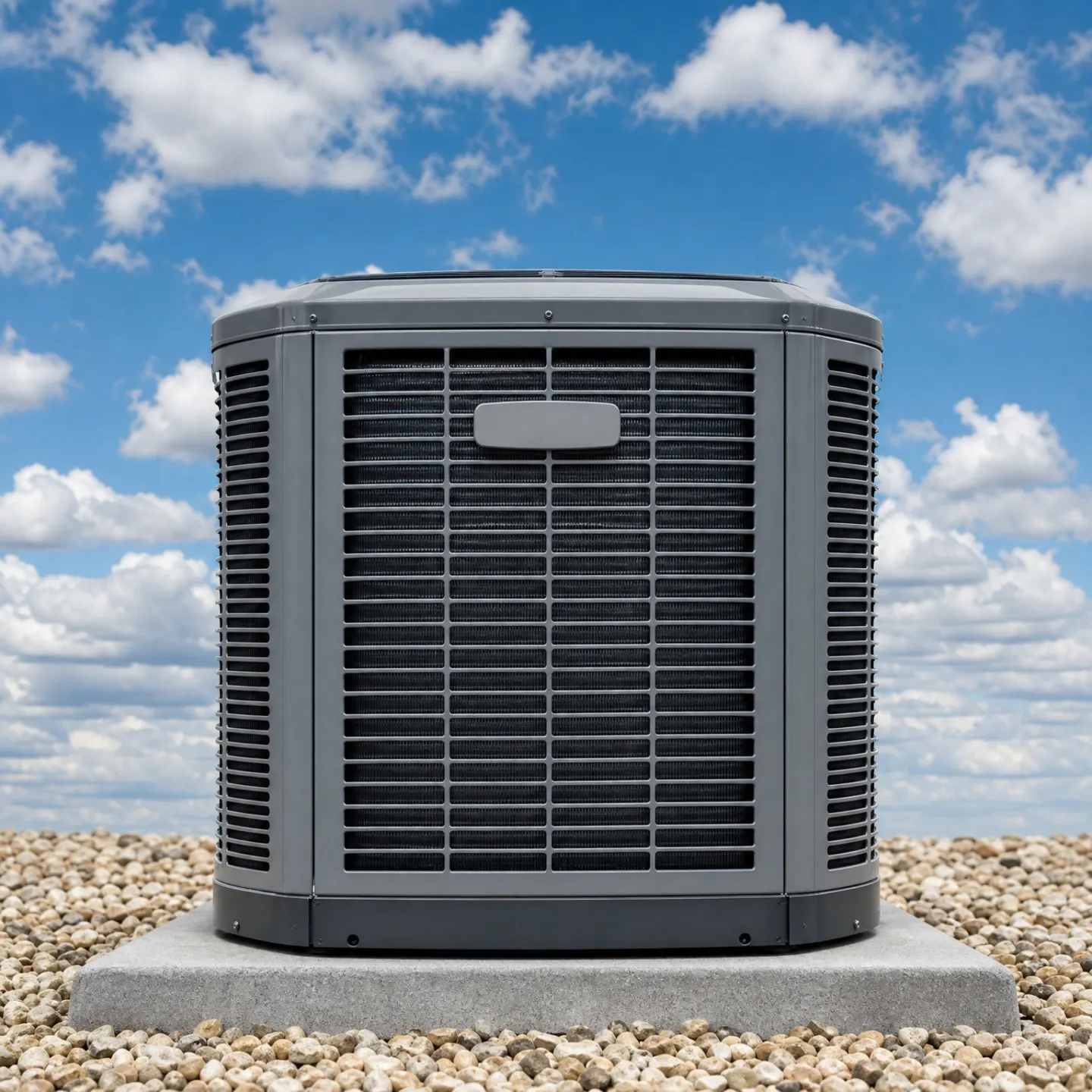
An outdoor air conditioning condenser unit mounted on a concrete pad surrounded by gravel, photographed against a partly cloudy blue sky.

What you can check without opening anything up

Between visits, the filter is the one thing worth checking yourself. Pull it and hold it up to a light. If light barely gets through, it needs to be swapped. A clean filter keeps the blower from straining and the coil from icing over. Outside, keep the area around the condenser clear. Grass clippings, leaves and anything piled against the cabinet block the airflow it needs to dump heat. Leave space on every side. You can also look at the line set, the insulated pipe running from the outdoor unit to the house, and check that the insulation is still wrapped tight with no bare copper showing. Inside, listen for anything new. A hum that wasn't there before, a rattle, a system that short cycles on and off instead of running a steady stretch. None of that is something to fix yourself, but noticing it early and getting it looked at beats waiting until the day it won't start at all.

Refrigerant doesn't run out, it leaks out

A sealed system isn't supposed to lose charge over time. If it's low, there's a leak somewhere in the coil or the line set, and the compressor runs longer trying to make up for it. That strain on the compressor is what skipped maintenance misses until it fails.

Dust on the coil acts like insulation

The outdoor coil and the indoor coil both need bare metal in contact with the air moving across them to move heat. Dust buildup on either one makes the system work harder for the same result, and a technician can see that buildup and clean it before it becomes the reason the system struggles.

Overhead view of an air conditioning condenser unit on a concrete pad next to a house with asphalt shingle roofing and vinyl siding.

Book your AC tune-up in April, before homes here start needing cooling in May.

  1. Jan
  2. Feb
  3. Mar
  4. Apr
  5. May
  6. Jun
  7. Jul
  8. Aug
  9. Sep
  10. Oct
  11. Nov
  12. Dec

A tune-up checks the refrigerant charge, cleans the coils, tests the capacitor and tightens the electrical connections.

A real tune-up is more than a filter swap. The technician checks refrigerant pressure against what the system calls for, since too little or too much both cause the compressor to work harder than it should. The capacitor and contactor get tested under load, not just looked at, because a capacitor can measure fine cold and still fail once the compressor is running for hours. The condensate line gets flushed. The coils get inspected for dust and cleaned if they need it. Electrical connections get checked for anything loose or corroding, since a loose connection generates heat and heat is what eventually burns a wire. The outdoor fan motor and blower get checked for bearing wear, usually by listening for noise that would not show up any other way. None of this fixes a problem that is not there yet. It finds the part that is already weak, before the heat finds it first.