Texas Cooling Help
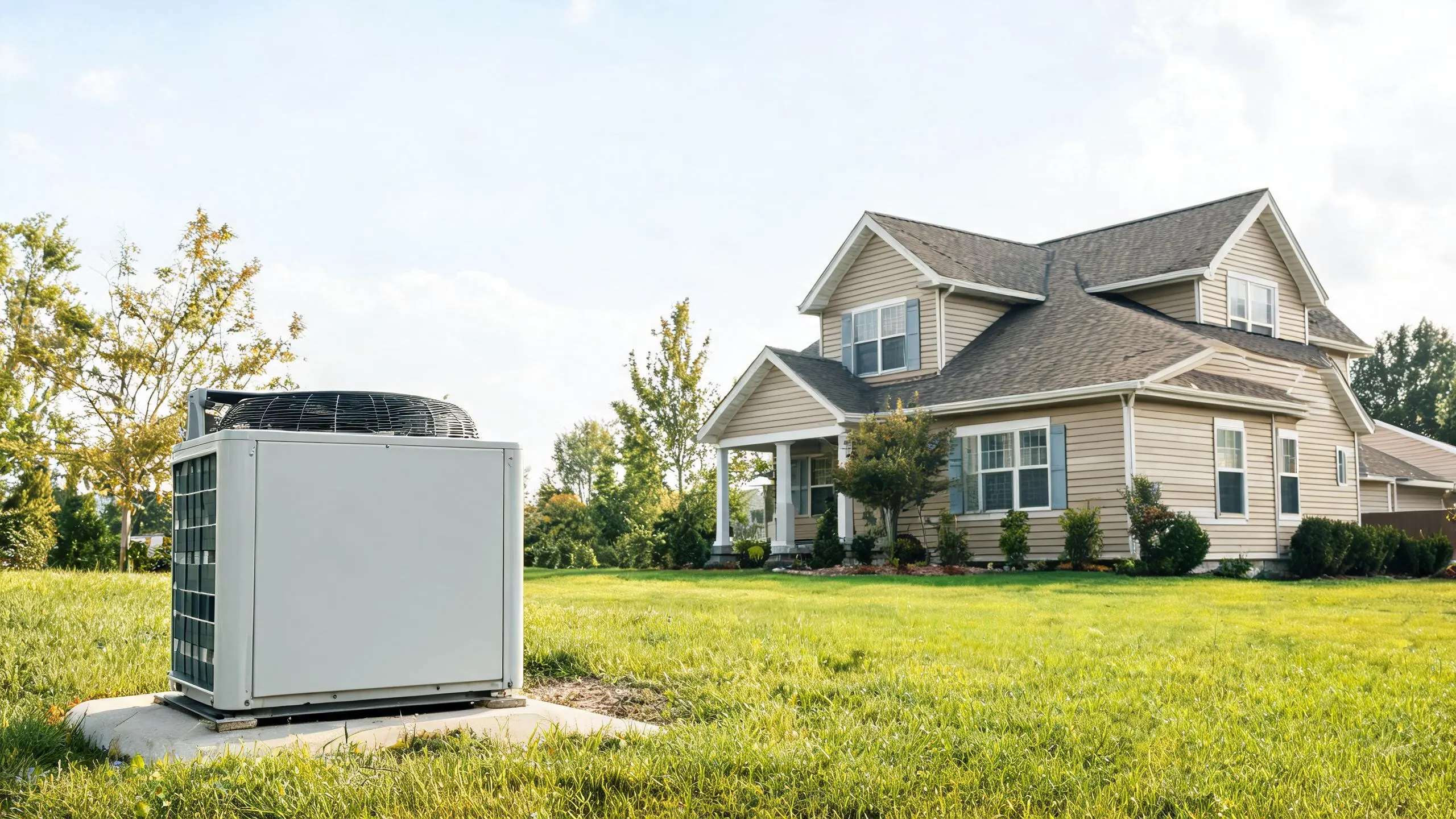
An outdoor HVAC condenser unit on a concrete pad in front of a two-story suburban house.

Heat Pump Repair in Wichita Falls, TX

Tell us about the job

Takes about a minute. No obligation.

Step 1 of 3: Equipment

What keeps failing matters more than what failed

A heat pump that trips its breaker once or stops switching over to heat can usually be fixed and left alone. A unit that keeps coming back for new problems, especially around the reversing valve or the compressor, is telling you the next failure is already on its way. Repeated calls on the same system are the real signal, not whatever is wrong this time.

Some parts are worth fixing, some aren't

A bad capacitor, a failed contactor, or a clogged drain line is a quick, contained repair that brings a heat pump right back to normal. A compressor going out or a refrigerant leak in the coil is a different kind of repair, one that costs close to what the rest of the system is worth and doesn't always hold afterward. Ask what part failed before deciding it's worth fixing.

5 months
November through March, your system heats
5 months
May through September, it cools
32°F
the average winter night it heats against
96°F
the average summer afternoon it cools against
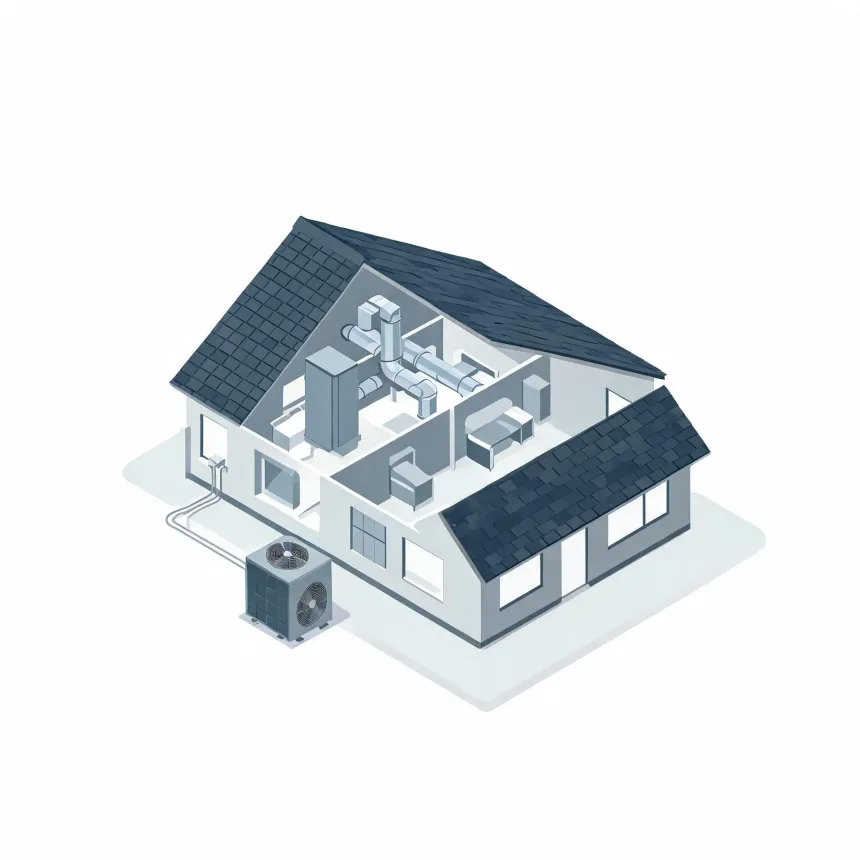
Isometric illustration of a cutaway single-family house showing interior ductwork and an air handler, with an outdoor condenser unit connected by lines along the exterior wall.
Your system heats November through March and cools May through September.

NOAA nClimDiv, 1991–2020 normals

Half the homes in Wichita County were built in 1972 or earlier.

A heat pump that came with a house that old may already be near the end of its life, repair or no repair.

November and May are when a weak heat pump quits

Cooling runs May through September
Heat runs November through March
168 hail events from 2015 to 2024

Nothing about Wichita Falls makes a heat pump fail in some unusual way. It breaks down the same way they do everywhere, a worn capacitor, a stuck reversing valve, a dirty coil, and the fix is the same fix a tech would make in any other county. What's worth knowing here is what running it costs while you decide whether repair makes sense. Texas homes paid about 14.94 cents per kilowatt-hour in 2024, and a heat pump that's struggling, short cycling or running longer to hit the same temperature, pulls more power the whole time it's limping along. That's a reason to get the repair done rather than put it off, not a sign the unit itself is somehow different for being here.

Ask how much life it has left

If your system came with an older house, it may be near the end of its life. Ask how much life it has left before paying for a big repair.

Find a contractor
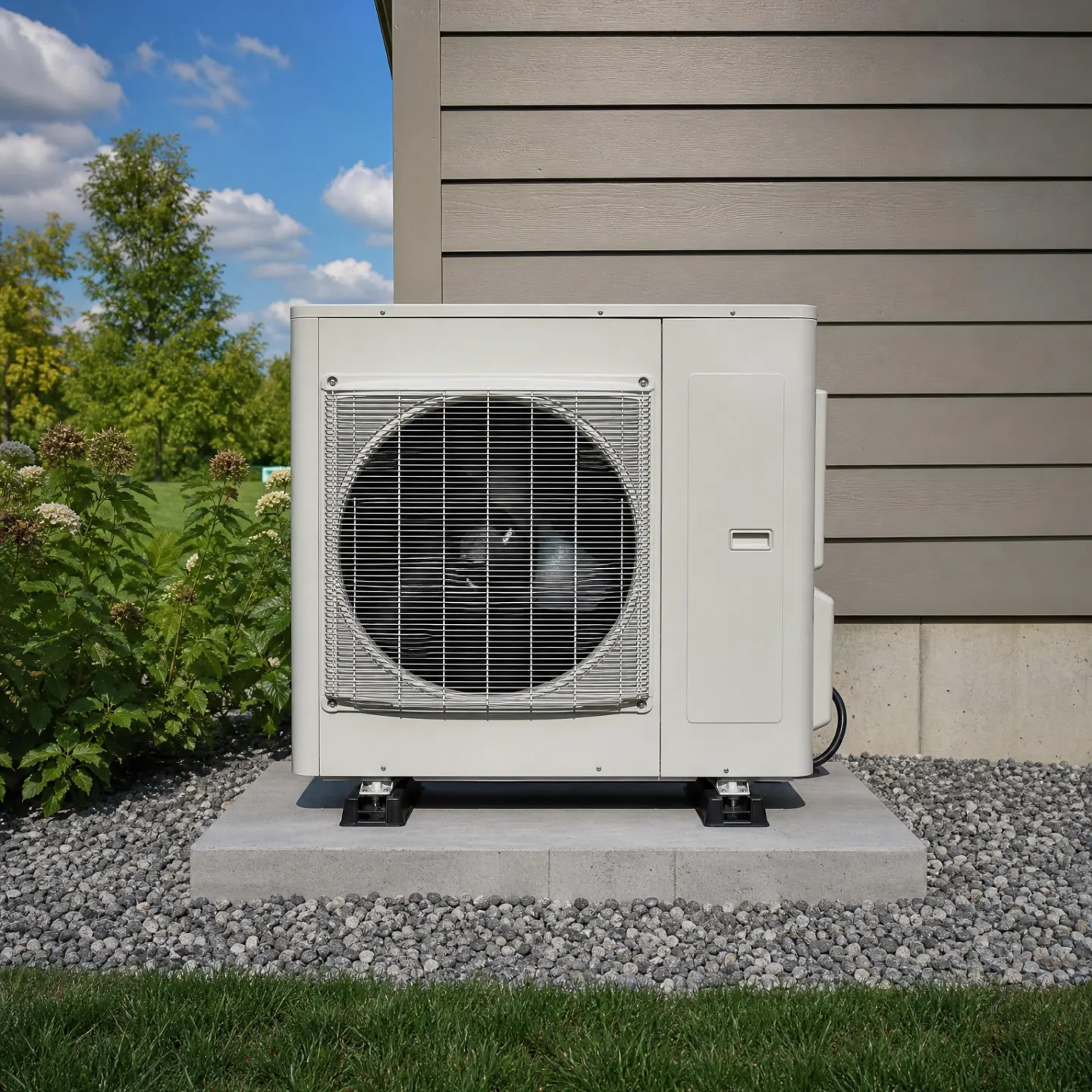
A white mini-split heat pump outdoor unit mounted on a concrete pad beside a gray-sided house, surrounded by gravel and green shrubs.

Find out its age before you pay to fix it

If this unit has been in since the house was built, ask the technician for its age before agreeing to a repair. A heat pump that old has already put in a lot of hours, and a compressor or coil job on it may not buy much time. Find out how many years it has left in it, then decide if the repair is worth paying for.

The reversing valve is the part unique to a heat pump

Everything else in a heat pump is the same as a central air conditioner, but the reversing valve is what lets it switch between heat and cool. When it sticks, the system keeps running in one mode no matter what the thermostat asks for, or it hangs halfway and the air coming out is barely warm. A solenoid coil failure is a straightforward fix. A valve body that's stuck or worn inside is a harder call, since it sits in the refrigerant line and replacing it means opening that line up.

Outdoor coils take the abuse indoor coils don't

The outdoor coil sits out in the weather all year, and dirt, grass clippings and ice build up on its fins over time. A coil that can't release heat in cooling mode, or pull heat in from the outdoor air during a defrost cycle, makes the compressor work harder to hit the same temperature. That extra strain on the compressor is what eventually takes it out. Keeping the fins clear is the one thing an owner can do to head this off before it turns into a compressor problem.

A heat pump that needs attention usually says so before it quits outright. Warm air blowing when the thermostat is set to heat, or cool air during a cooling call, means the system isn't switching over right. Ice building up on the outdoor unit and staying there, instead of clearing during the defrost cycle, points to a problem with the defrost control or the reversing valve. A unit that runs and runs without closing in on the set temperature is losing the fight somewhere, often a refrigerant charge that's low or a compressor that's weaker than it used to be. Short cycling, where it kicks on, runs a few minutes, then shuts off again and again, puts wear on the compressor every time it restarts. A breaker that trips more than once is never something to just reset and ignore.

A diagnostic visit starts outside at the unit itself, checking refrigerant pressures, electrical connections and how the compressor sounds when it kicks on. The tech will run the system in both heat and cool to see whether the reversing valve actually switches when it's told to, since that's the one part that only shows a problem under load. Inside, they'll check the air temperature coming off the indoor coil and look at the filter and airflow, because weak airflow can mimic a refrigerant problem and send someone chasing the wrong fix. Any error codes stored in the control board get pulled and checked against what the system was actually doing. The goal is to find which part failed and why, not just to get the system running again for now.