Texas Cooling Help
A row of single-story houses, one brick and others with pale siding and covered porches, behind a trimmed hedge and lawn, under large oak trees draped with Spanish moss.

Heat Pump Repair in Tyler, TX

Tell us about the job

Takes about a minute. No obligation.

Step 1 of 3: Equipment

The reversing valve sticks or fails

The reversing valve is the part that switches a heat pump between heating and cooling, and it moves every time the system changes modes. When it sticks, the heat pump can get stuck blowing cold air when it should be heating, or stop switching over at all. A stuck valve is a common reason a heat pump seems to work fine in one mode and quit in the other.

The outdoor unit takes the damage

The outdoor coil and fan sit outside through every season, so they take wear the indoor equipment never sees. Dirt and debris cake the coil and block airflow, the fan motor wears out from running in the heat and the cold, and the defrost cycle that clears ice off the coil can fail and let frost build up until the system can't pull heat from the outside air. Most heat pump service calls trace back to something going wrong on that outdoor unit.

5 months
November through March, your system heats
6 months
May through October, it cools
38°F
the average winter night it heats against
93°F
the average summer afternoon it cools against
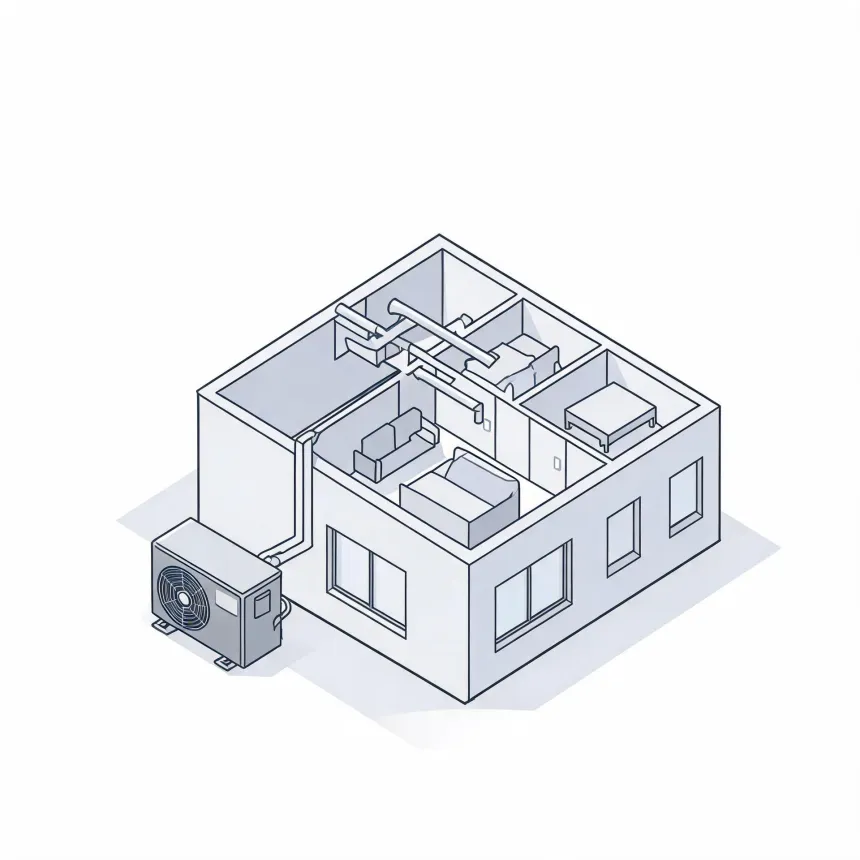
Isometric line illustration of a cutaway single-story house showing interior rooms with furniture and ceiling ductwork, connected to an outdoor condenser unit on the ground outside the left wall.
Your system heats November through March and cools May through October.

NOAA nClimDiv, 1991–2020 normals

Half the homes in Smith County were built in 1986 or later.

A heat pump installed with a house that age usually still has years of service left in it, which is why a repair call makes sense before anyone talks about replacement.

Tyler is not harder on a heat pump than anywhere else

Power costs 14.94 cents a kWh statewide
148 damaging wind events from 2015 to 2024
107 hail events from 2015 to 2024

Repair it

If your system came with a newer house, it likely has plenty of life left. Repair is usually the right call.

Find a contractor
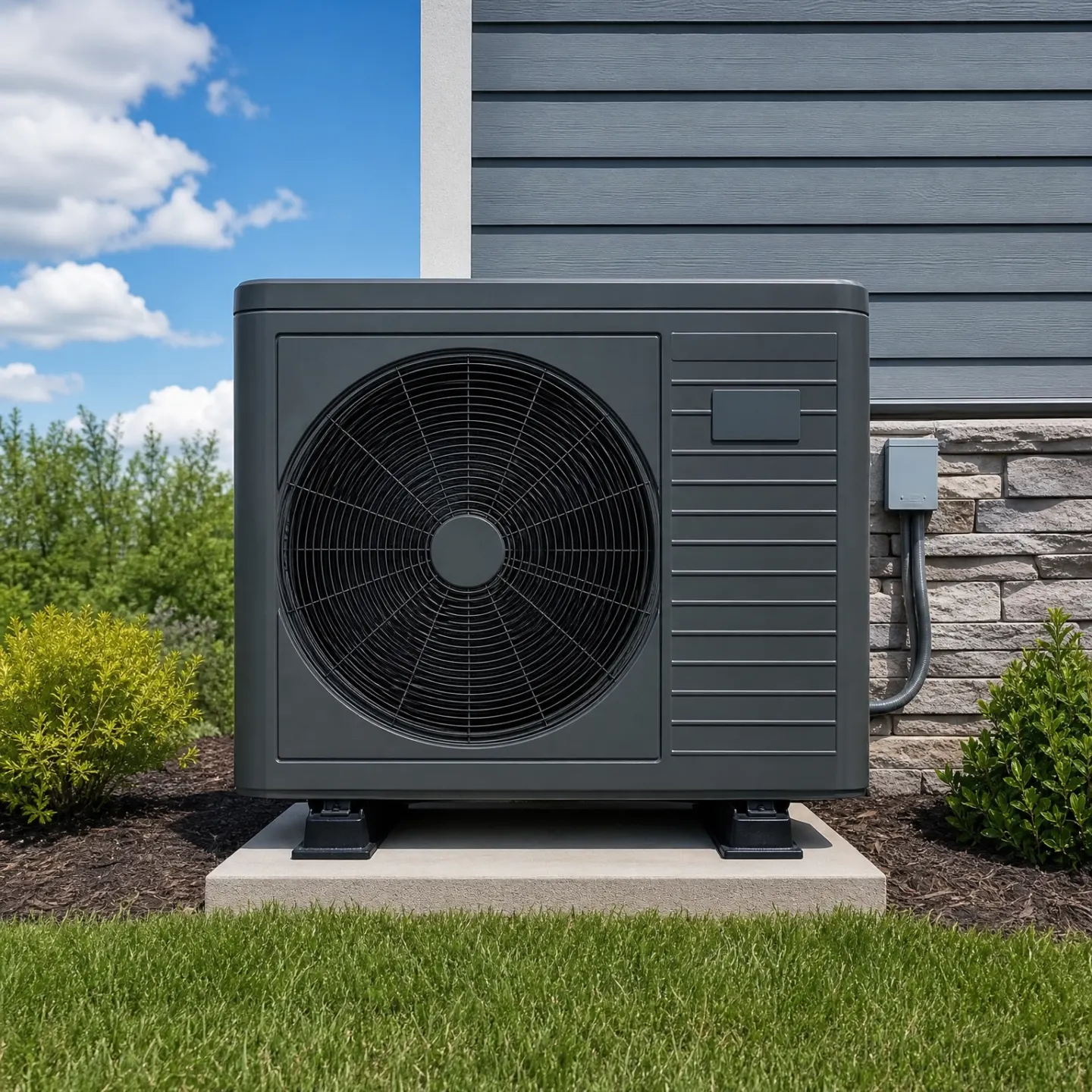
A dark gray heat pump unit mounted on a concrete pad next to a house with gray siding and a stone veneer wall.

A newer house, a system worth fixing

If the house was built in the last few decades, call a repair tech before you let anyone talk replacement. A reversing valve or defrost control is a fixable part on a system that still has years left in it, not a reason to start over.

Check the thermostat setting first

Make sure the system is set to heat or cool as intended and the setpoint is actually past room temperature. A mode switched by accident or a schedule that changed itself looks exactly like a failing unit.

Look at the outdoor unit and the air filter

Walk outside and see if the coil is caked with leaves, grass clippings or ice, and clear anything blocking airflow into it. Then check the air filter inside, since a clogged one starves the system of airflow and can make a healthy heat pump act like a broken one.

Most of the time the first sign is comfort, not noise. The air coming out of the vents feels cool when the system is supposed to be heating, or it never quite gets the room where the thermostat says it should be. Ice on the outdoor unit that doesn't melt off during the day is another one worth paying attention to, since a working defrost cycle should clear it on its own. Short cycling, where the unit kicks on and off every few minutes instead of running a full cycle, usually points to a control problem rather than something you can fix by changing the filter. A hissing or bubbling sound from the outdoor unit can mean a refrigerant leak, and that one tends to get worse, not better, if it sits. None of these mean the whole system is done. They mean something specific inside it is failing and still needs a tech to say which part.

A heat pump is really a compressor and sealed refrigerant circuit paired with the controls and motors around it. The sealed side either holds its charge or it doesn't, and a leak there is worth knowing about early rather than late. Everything else, the reversing valve, the defrost control, the fan motor, the capacitor, fails on its own and gets replaced on its own without touching the rest of the system. A compressor nearing the end of its life tends to sound different before it feels different, a hard start or a hum that never turns into a run. If a tech tells you the compressor itself is failing, that's the one repair worth weighing against starting over. Short of that, it's a part doing what parts eventually do, on a cabinet that still has plenty of working life left in it.