




Texas Cooling Help
Single-story brick and white-sided buildings with covered porches behind a trimmed hedge and lawn, framed by overhanging oak branches draped with Spanish moss.

Heat Pump Repair in Sugar Land, TX

Tell us about the job

Takes about a minute. No obligation.

Step 1 of 3: Equipment

A heat pump here switches jobs with the seasons. It runs cooling from April through October, about seven months, then switches over to heat from November through February. Each switch asks something of a part that just sat idle. In April the compressor has to push heat out of the house after months of barely running. In November the reversing valve has to change direction after a long stretch of straight cooling. If a part was already weak, this is when it gives out, right at the start of the season you need it for. A unit that made it through last winter can still fail in the first cold snap this November.

4 months
November through February, your system heats
7 months
April through October, it cools
46°F
the average winter night it heats against
93°F
the average summer afternoon it cools against
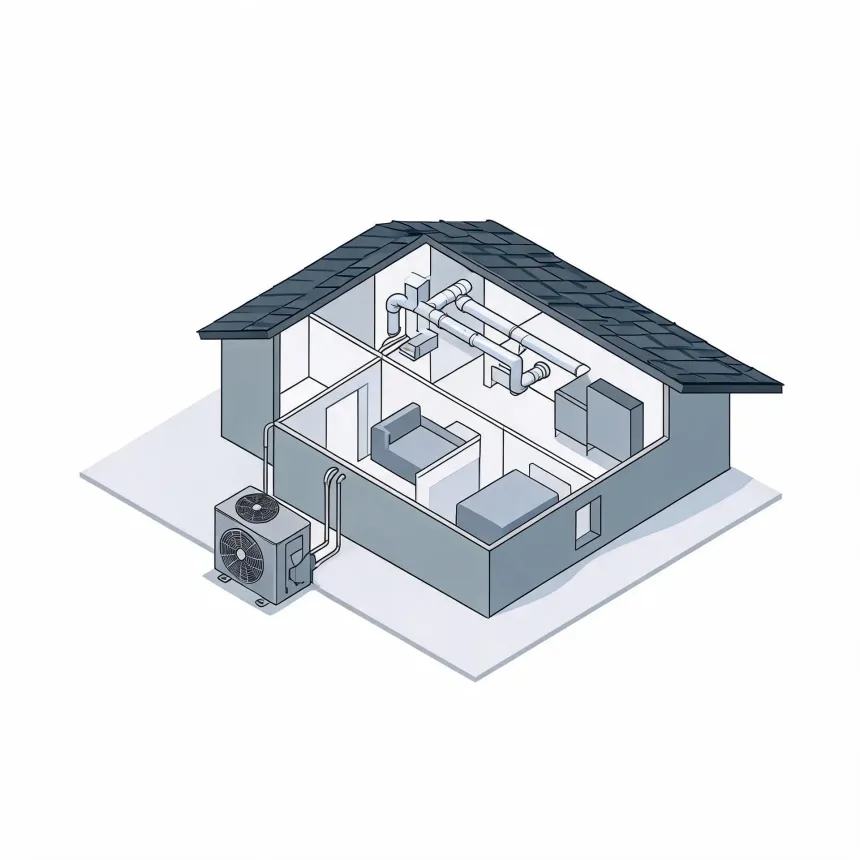
Isometric grey-toned illustration of a cutaway house showing interior rooms, ceiling ductwork and an air handler, connected by lines to an outdoor condenser unit beside the building.
Your system heats November through February and cools April through October.

NOAA nClimDiv, 1991–2020 normals

A diagnostic visit starts with the thermostat and the breaker, not the cabinet.

Ruling out the simple causes first means the time spent inside the unit goes straight to the actual problem.

Half the homes here were built in 2005 or later

Half the homes here were built by 2005
Power costs 14.94 cents a kWh statewide
Climate zone 2A
A newer system is usually worth repairingHalf the homes in Fort Bend County were built in 2005 or later

Check the outdoor unit for bent fins or dents in the cabinet after any storm, even one that didn't knock the power out. Hail doesn't have to crack a panel to do damage. A dented fin blocks airflow across the coil, and the unit has to run longer to move the same heat. Debris thrown against the fan blade can throw it out of balance, and that wears the motor bearing faster than normal use would. None of this stops the system from running. It just makes it work harder until something gives, usually at the next seasonal switch.

Get it looked at early

Problems tend to show up in the first weeks of the season, when the load hits a part that was already weak.

Find a contractor
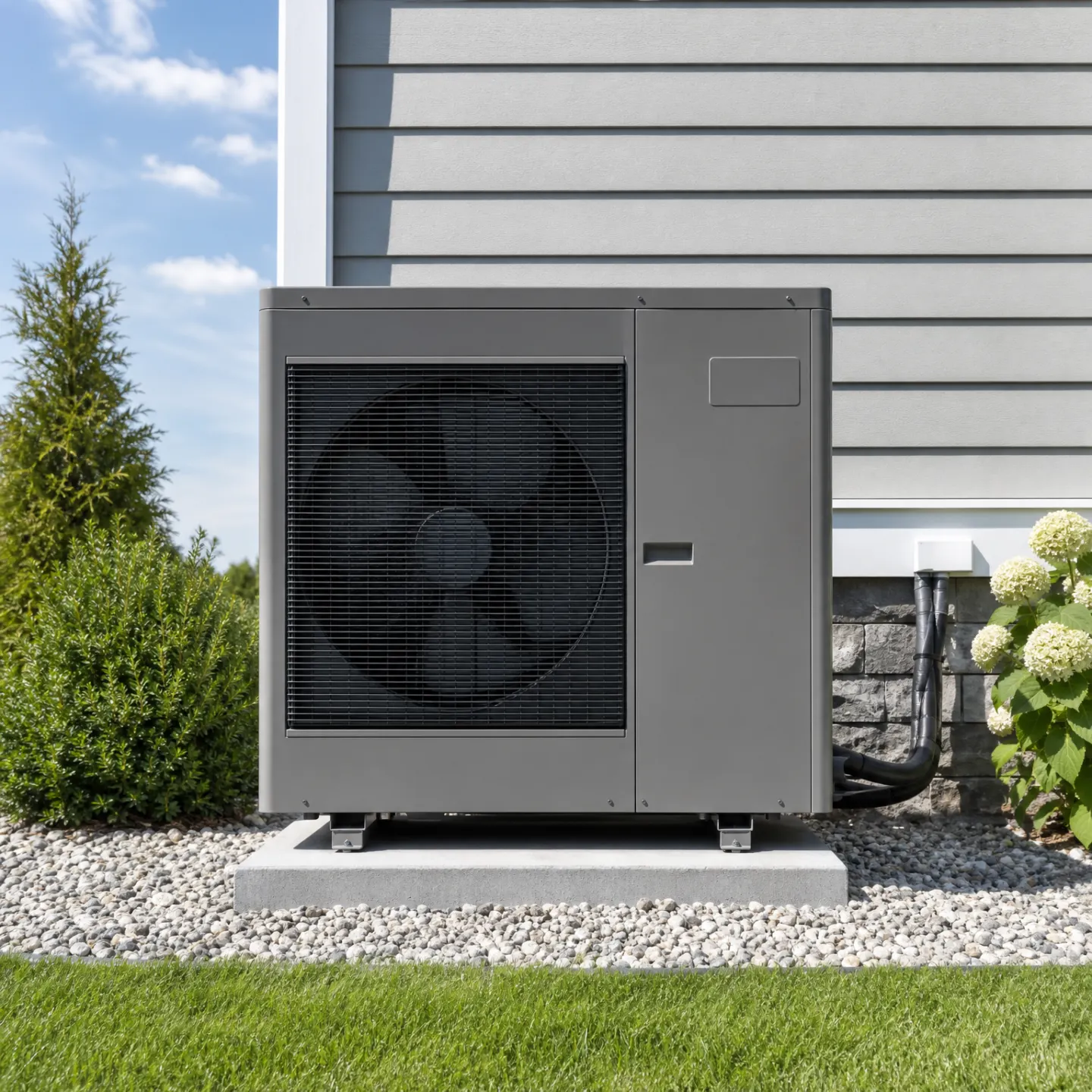
A gray air-source heat pump mounted on a concrete pad next to a house with gray vinyl siding, surrounded by gravel and flanked by green shrubs and white hydrangea flowers.

Small problems don't stay small while the system keeps running

A heat pump that's struggling doesn't fail all at once. A weak start capacitor still gets the compressor running most of the time, just slower, with more strain on the windings each time. A low refrigerant charge still lets the system blow air, just not enough to pull the heat it should. The system doesn't stop, so nothing forces the issue, and the problem is left to get worse under its own load. A compressor working harder than it should runs hotter than it should, and heat is what wears compressor windings down. A reversing valve that's slow to shift keeps shifting anyway, a little rougher each time, until it sticks. The parts that fail outright are usually the ones that spent a while failing quietly first.

The capacitor and the contactor wear out first

The start capacitor gives the compressor and fan motors the initial push to get spinning, and it weakens a little every time it's used. Once it's too weak, the compressor hums and doesn't start, or the fan sits still while the unit tries to run. The contactor is the switch that sends power to the outdoor unit, and its contacts pit and burn from years of making and breaking that connection. A worn contactor can stick closed, so the outdoor unit keeps running even after the thermostat is satisfied.
Refrigerant doesn't wear out, but the lines it travels through do

A heat pump is sealed, so it shouldn't lose refrigerant at all. When it does, the cause is almost always a leak, often at a joint, a coil, or wherever the line sets get brazed together. Vibration over the years loosens fittings and rubs through soft copper. A low charge doesn't just mean weaker heating or cooling. It means the compressor is pulling liquid refrigerant into parts built for vapor, and that shortens its life fast.

A few things are safe to check before anyone comes out. Look at the thermostat first. Make sure it's set to heat or cool as needed and the batteries aren't dead, since a blank or unresponsive display sometimes isn't the heat pump at all. Check the air filter. A filter clogged with dust chokes off airflow, and a heat pump starved for air will ice up or struggle to keep temperature no matter what else is working right. Walk outside and make sure nothing is stacked against the outdoor unit, no leaves, no stored items, nothing blocking the sides where it pulls in air. Check the breaker panel for a tripped switch. None of this fixes a bad capacitor or a refrigerant leak, but it rules out the simple causes before anyone opens the cabinet.

A repair makes sense when the failure is one part doing its job badly. A weak capacitor, a pitted contactor, a blower motor with a worn bearing. Swap the part and the system runs the way it was built to. Replacement starts to make more sense when the compressor itself is the problem, because the compressor isn't something anyone swaps out on its own. A system that keeps losing its charge is also worth a harder look. A repeat leak usually means the coil or line set is wearing out everywhere, not just at one bad fitting. What matters most is the pattern. A unit that keeps needing work in a different spot each time is telling you something a single fix won't change.