



Texas Cooling Help
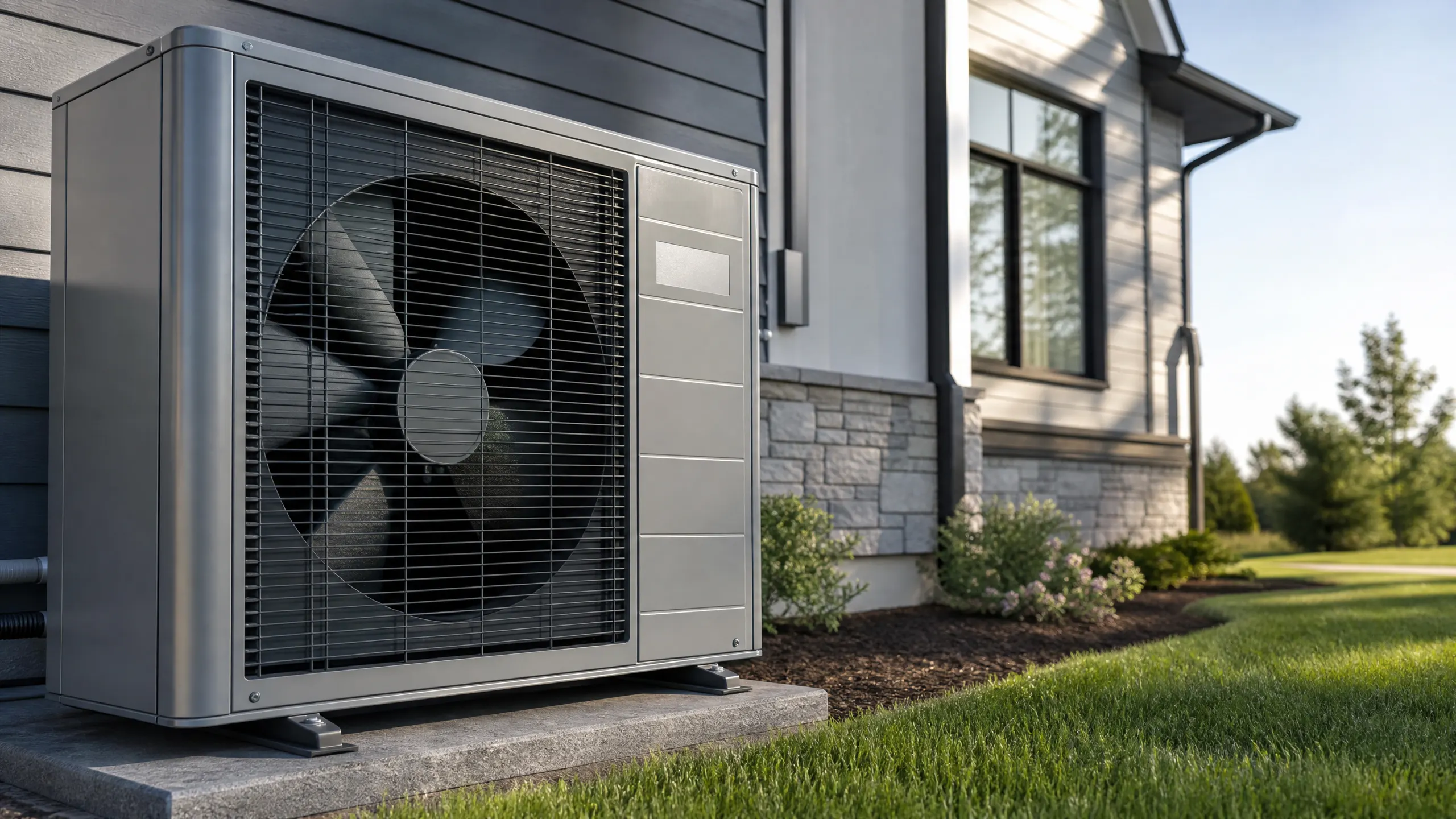
A grey heat pump outdoor unit mounted on a concrete pad against the exterior wall of a house with grey siding and stone veneer.

Heat Pump Repair in Sherman, TX

Tell us about the job

Takes about a minute. No obligation.

Step 1 of 3: Equipment

A heat pump works year round, not just in summer, so its parts see more run time than a furnace or an AC-only compressor. That matters when you're deciding whether something is worth fixing. The reversing valve is the part unique to a heat pump, and when it sticks, the system blows cold air when it should be heating, or won't switch over at all. That's usually a repair, not a reason to replace. A failing compressor is a different story. It's the most expensive part in the system, and once it's going bad, the labor to replace it starts closing the gap with a new unit. A refrigerant leak is worth asking about directly too. Older systems use a refrigerant that's being phased out, and a tech topping off a leak instead of fixing it is just delaying the same decision. If the problem turns out to be a sensor, a capacitor, or a control board, that's a straightforward fix almost every time, regardless of how old the system is.

5 months
November through March, your system heats
5 months
May through September, it cools
35°F
the average winter night it heats against
93°F
the average summer afternoon it cools against
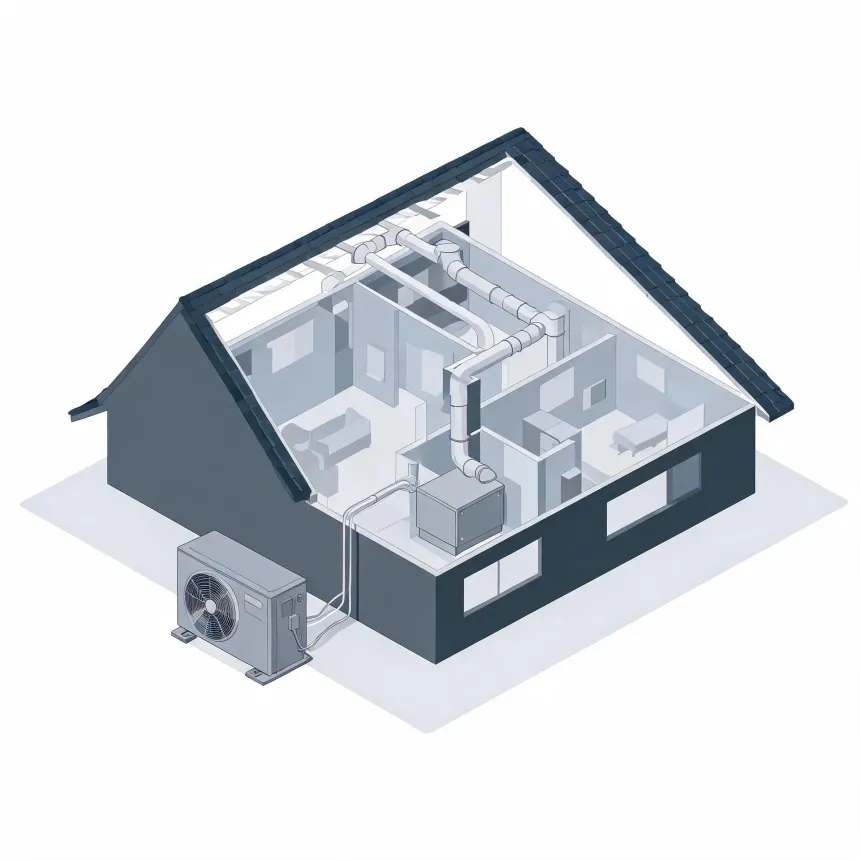
Isometric cutaway illustration of a single-story house with a dark gabled roof, showing interior rooms with ductwork leading to an indoor air handler and an outdoor condenser unit connected by lines on the ground outside.
Your system heats November through March and cools May through September.

NOAA nClimDiv, 1991–2020 normals

October is the month to get a heat pump looked at here, before it has to carry the first cold snap.

A weak part that made it through a mild September often fails in the first hard week of heat, right when the house needs it most.

Half the homes in Grayson County were built in 1985 or later

Half the homes here were built by 1985
150 hail events from 2015 to 2024
Power costs 14.94 cents a kWh statewide
Sherman heat pumps take a beating out thereGrayson County saw 150 hail events from 2015 to 2024.

Nothing about a Sherman summer or winter asks more of a heat pump than what it's built for. Most failures here are the same ones you'd find anywhere. A capacitor gives out, a contactor gets pitted from normal wear, a sensor starts reading wrong. None of that is tied to this place. What is worth knowing is what a repair costs to run after it's fixed. Texas homes paid 14.94 cents per kilowatt-hour in 2024, and a heat pump working against a bad part, a dirty coil, or low refrigerant pulls more power to do the same job. Fixing it right the first time is what keeps that number from creeping up.

Get it looked at early

Problems tend to show up in the first weeks of the season, when the load hits a part that was already weak.

Find a contractor
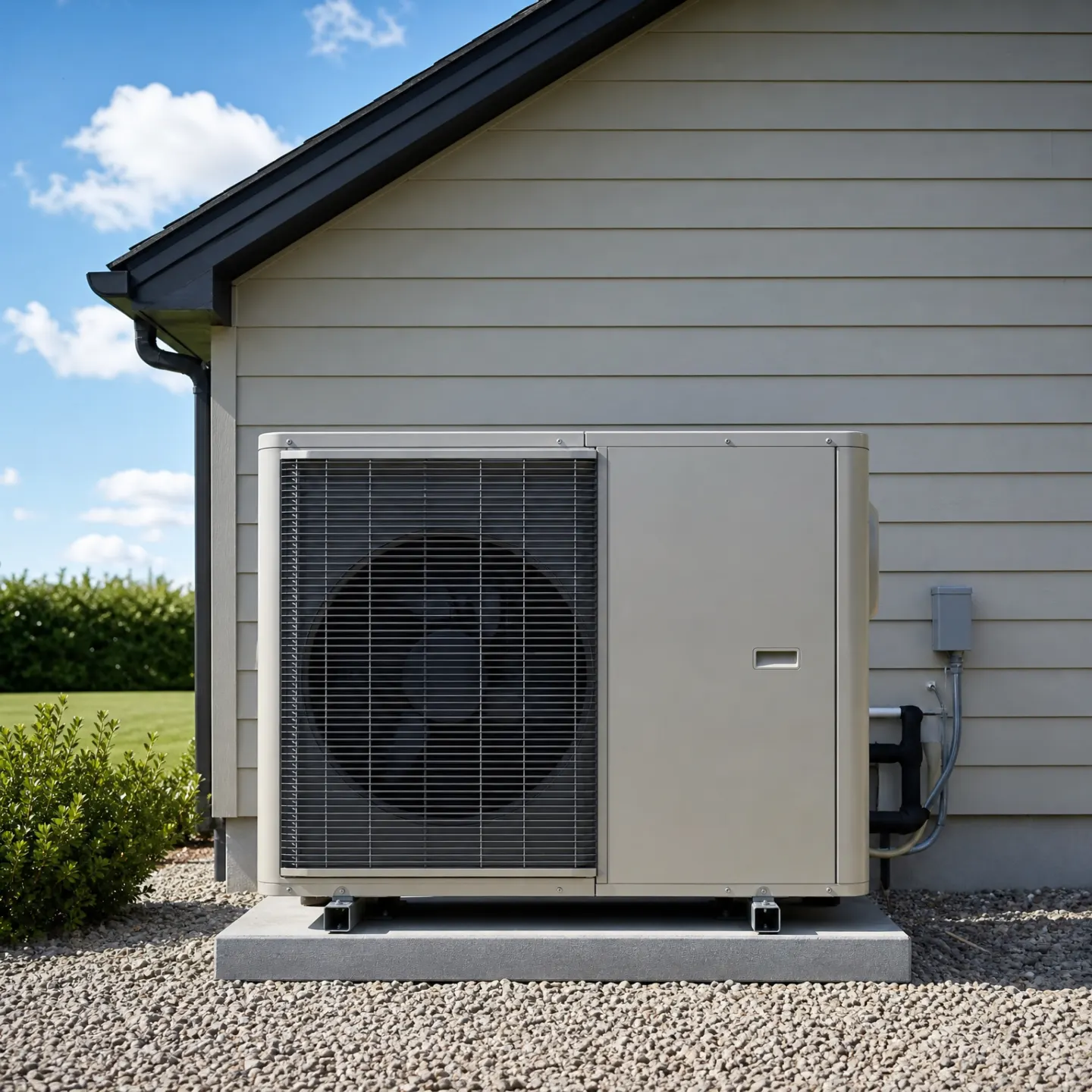
A residential heat pump outdoor unit mounted on a concrete pad next to a house with gray vinyl siding.

What the hail actually did

That hail doesn't have to hit the unit itself to cause damage. It pits the condenser fins and the cabinet, and a tech can usually tell what's weather damage and what's a part that just wore out on its own. That matters for the fix. If hail bent the fins enough to block airflow, straightening or replacing them is the job. If something inside gave out from the running hours the system puts in here, that's a different repair. Either way, the diagnosis is what tells you which one you're paying for.

What you can check yourself

Look at the outdoor unit and clear away leaves, grass clippings or anything stacked against it, since a blocked unit can't move air and will struggle no matter what's wrong inside. Check the filter and swap it if it's gray with dust. Walk around the breaker panel and look for anything tripped. Inside, check the thermostat is set to the mode you expect and the batteries aren't dead if it's not hardwired. These take a few minutes and rule out the causes that have nothing to do with the equipment itself.
What to leave to a tech

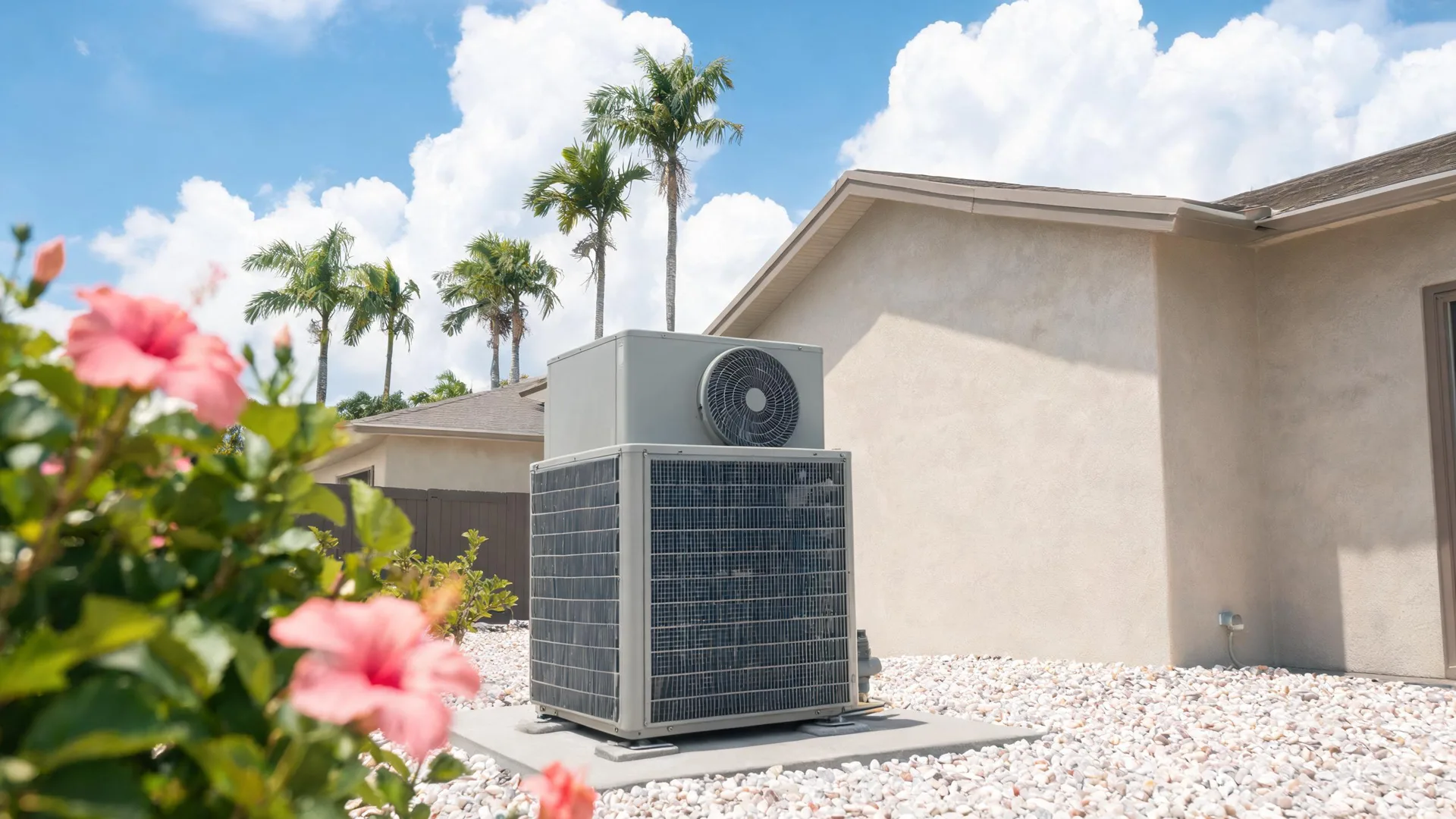
If the outdoor unit is frosted over outside of a normal defrost cycle, or you hear grinding, buzzing or clicking that wasn't there before, that's a sign of a failing part, not something to open up yourself. The same goes for refrigerant lines or anything behind the access panel. A heat pump runs on a sealed system and a charge that's off needs gauges and training to fix, not guesswork. Calling early with a clear description of what you saw or heard gives the tech a head start before they even arrive.

A failing capacitor can leave the compressor trying to start without enough power behind it, and that strain is what turns a weak part into a dead compressor. The same goes for a system low on refrigerant. The compressor works harder trying to move heat with less to move it with, and that extra heat has nowhere to go but back into the compressor itself. Ice on the outdoor coil outside of a normal defrost cycle means airflow is already blocked, and running it longer just packs on more ice before any of it has a chance to melt off. None of this is about how hard the system is pushed. It is about what happens when a part that is already failing keeps being asked to do its job. The fix that would have been simple on its own is a different job once that happens.

A diagnostic visit starts outside, with the unit running if it can run at all. A tech checks the pressures on the suction and liquid lines, because that tells them whether the charge is right before they touch anything else. They'll pull the cover and look at the capacitor and contactor, since those tend to wear out before anything else in the cabinet. Airflow gets checked next, the filter and the coil both, because a system starved for airflow can look like it's low on refrigerant when it isn't. If the unit is stuck in one mode or blowing the wrong temperature of air, they'll test the reversing valve directly rather than guess at it. Only after all that does a tech know whether a part gets replaced or the whole system does.