




Texas Cooling Help
A lit single-story brick ranch house with an attached garage photographed from the street at dusk, flanked by large mature oak trees.

Heat Pump Repair in Seguin, TX

Tell us about the job

Takes about a minute. No obligation.

Step 1 of 3: Equipment

Most heat pump problems in Seguin are not unusual. A system that won't switch over, short cycles, or runs the reversing valve into a fault is usually dealing with the same wear any heat pump sees after enough seasons of use. Seguin runs its heat pump both ways, cooling through the summer and heating through the mild winter, so the system logs more hours per year than a furnace or AC that only works one season. That's the main reason parts like the reversing valve, the defrost board, or the compressor contactor give out sooner here. It's rarely a sign something was installed wrong. Texas electricity ran 14.94 cents per kilowatt-hour in 2024, so a heat pump that's losing efficiency from a worn part costs more to ignore here than it would somewhere with cheaper power.

5 months
November through March, your system heats
7 months
April through October, it cools
42°F
the average winter night it heats against
95°F
the average summer afternoon it cools against
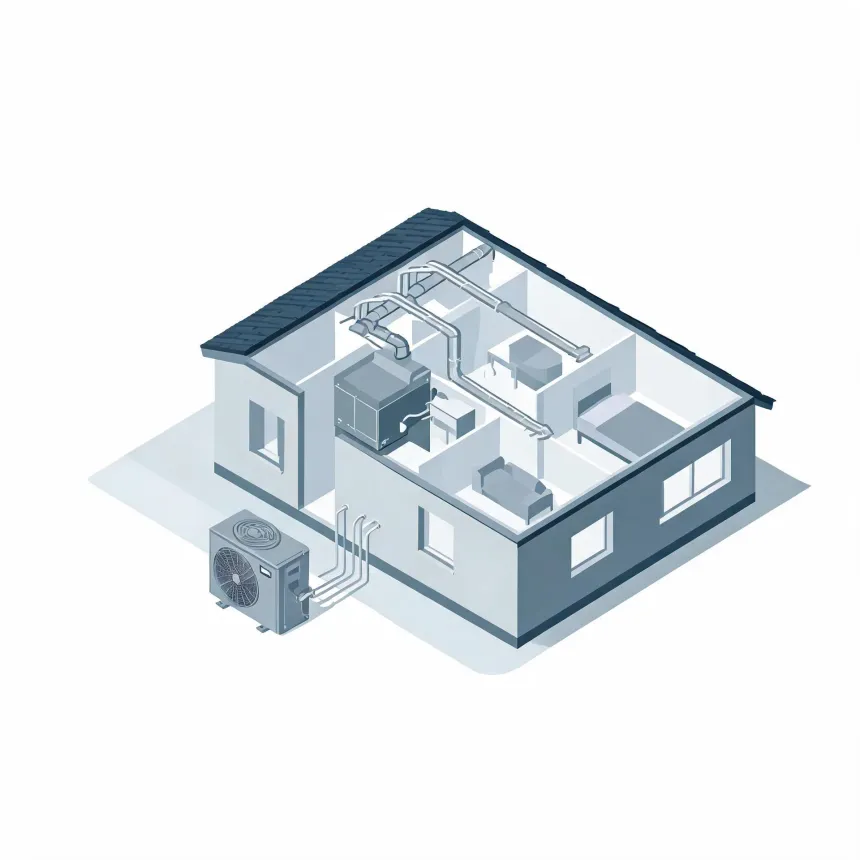
Isometric cutaway illustration of a single-story house showing interior rooms with ductwork, an indoor air handler unit, and an outdoor condenser unit connected by lines along the exterior wall.
Your system heats November through March and cools April through October.

NOAA nClimDiv, 1991–2020 normals

Guadalupe County logged 104 severe weather events between 2015 and 2024, with wind and hail doing most of the damage.

Your outdoor unit sits right in that path, so if it took a hit, get it looked at even while it still runs.

April and November are when the switchover gets tested first

Cooling runs April through October
Heat runs November through March
Power costs 14.94 cents a kWh statewide

Half the homes in Guadalupe County were built in 2003 or later, so there's a good chance yours is one of them. A heat pump that age has likely had one owner and one set of habits on it, not decades of patched-together fixes. If a part failed, that's wear catching up to a system that's otherwise sound, not a sign the whole unit is near the end. A reversing valve or a defrost board can be replaced on its own, and on a newer unit that's usually the right call.

On a newer system, fix the part that failed

A failed reversing valve or defrost board is worth repairing on its own. Get it diagnosed and fixed rather than replacing a system that still has years in it.

Find a contractor
A man in a dark cap and jacket and tan work pants, seen from behind, climbs porch steps toward an orange-brown front door while carrying a worn canvas tool bag.
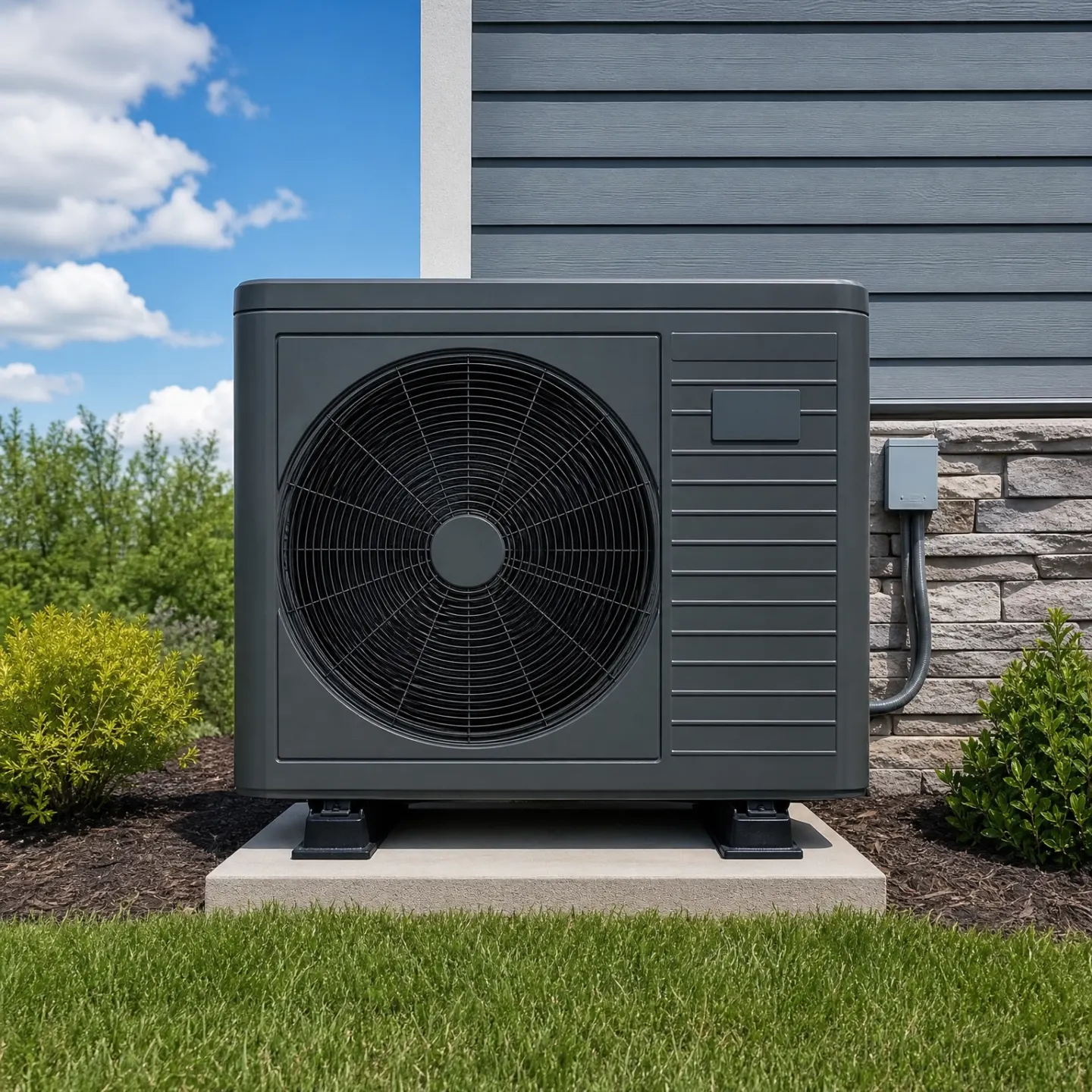
A dark gray heat pump unit mounted on a concrete pad next to a house with gray siding and a stone veneer wall.

What to check before you call

Before anyone comes out, go look at the outdoor unit. If the coil is caked in dirt, leaves, or ice that hasn't melted off, that alone can stop a heat pump from heating or cooling right. Pull the filter and hold it to a light. If you can't see through it, swap it or clean it, a clogged filter starves the whole system of airflow. Check the thermostat is actually set to heat or cool and the batteries aren't dead, a dim or blank display is sometimes the whole problem. Look at the breaker panel for a tripped switch, a heat pump draws on more than one circuit and either can trip without the other. If the outdoor fan isn't spinning at all, don't reach in, that's a call for someone licensed, not something to fix by hand. Pay attention to whether the air feels wrong for the setting. Cool air blowing during a heating call usually means the reversing valve didn't switch, and that's worth telling the tech before they even get there.

What the compressor means for the decision

The compressor is the part that makes repair or replacement a real question. A failed contactor, capacitor, or control board is a straightforward swap on a system that's otherwise sound. A failing compressor is a different conversation, because it's the most expensive part in the unit and everything else depends on it. Ask the tech directly which one they're looking at before deciding anything.

Why the same part failing again means something

A capacitor or contactor that fails again soon after being replaced isn't bad luck. Something else is working it harder than it should, often a weak compressor or a dirty coil forcing the rest of the system to strain to keep up. A repeat failure is worth having a tech look past the part itself and figure out what's driving it to fail.

A heat pump that's struggling still tries to do its job, and that's the problem. If the reversing valve won't fully switch, the compressor keeps running while it fights against refrigerant going the wrong direction. That strain shows up as heat on parts that were never built to handle it. A dirty coil does something similar, the compressor works harder to move heat through a surface that can't shed it fast enough, and that extra load wears down windings that don't get a second chance once they fail. Short cycling is its own kind of damage, every restart puts a jolt through the compressor and the capacitor that starts it, and capacitors rated for a certain number of starts don't care why they're being asked for more. None of these failures happen the first time the system struggles. They happen because it kept struggling, call after call, until the part that was absorbing the strain gave out.

A diagnostic visit starts outside, at the unit itself. The tech checks refrigerant pressure, pulls amp draw on the compressor, and watches how the reversing valve responds when it's told to switch. That last part matters more than it sounds. A valve that's sticking might still move eventually, just too slow to catch on a quick look, so the tech will run the system through a full cycle rather than take a single reading and call it done. Inside, they check the temperature split across the air handler and look at the defrost board to see if it's timing cycles correctly. Most of this is the tech ruling things out one at a time until only one explanation still fits. If they find a part that's failed, they'll tell you which one and why it's the one under the most strain, not just that something's wrong.