Texas Cooling Help
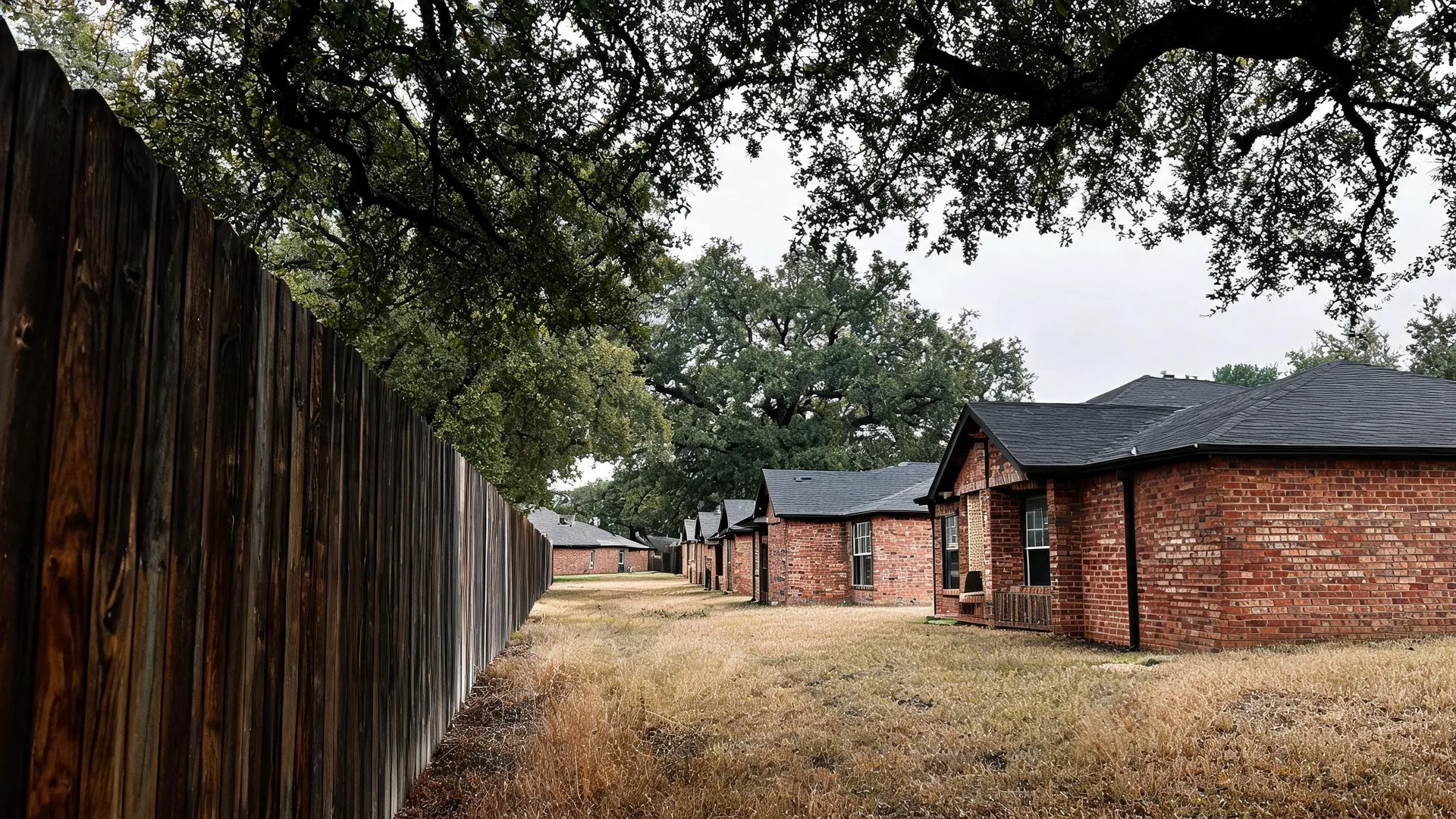
A row of single-story brick houses with dark shingled roofs stands along a dry grass strip beside a tall weathered wooden fence, under large overhanging oak branches and an overcast sky.

Heat Pump Repair in San Angelo, TX

Tell us about the job

Takes about a minute. No obligation.

Step 1 of 3: Equipment

The reversing valve is usually the first thing to go

A heat pump leans on its reversing valve to switch between heating and cooling, and that valve works harder than almost anything else in the system. When it sticks, the unit gets stuck blowing cold air when it should heat, or it won't defrost right. A failing valve can sometimes be rebuilt, but once the coil inside it is worn, the whole valve needs replacing.

A refrigerant leak explains a lot of the other symptoms

Low refrigerant shows up as weak heat, ice building on the outdoor coil, or the system running constantly without catching up. The leak itself has to be found and sealed before adding refrigerant does any good, otherwise the charge just drops again. If the coil has corroded through, that's a repair worth weighing against replacing the unit.

5 months
November through March, your system heats
7 months
April through October, it cools
34°F
the average winter night it heats against
95°F
the average summer afternoon it cools against
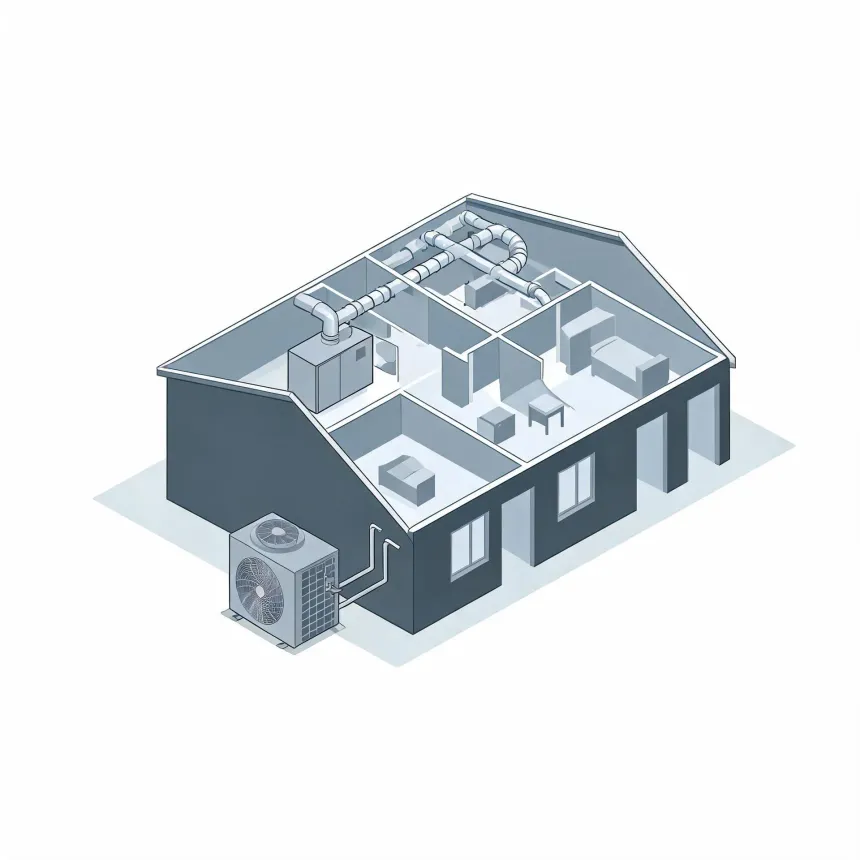
Isometric cutaway illustration of a single-story house showing interior rooms, attic ductwork and an air handler, with an outdoor condenser unit connected by lines along the exterior wall.
Your system heats November through March and cools April through October.

NOAA nClimDiv, 1991–2020 normals

Tom Green County had 171 hail events and 171 damaging wind events between 2015 and 2024.

A heat pump outside through storms like that wears hardest at the reversing valve and the coil.

November is when a weak reversing valve finally gives out

Cooling runs April through October
Heat runs November through March
171 damaging wind events from 2015 to 2024

There's nothing unusual about a heat pump here compared to anywhere else in Texas. It's the same system, the same valve, the same coil, and it fails the same way it would in any other county. What's different is just the bill once something does go wrong. Texas homes paid 14.94 cents per kilowatt-hour in 2024, and a heat pump stuck on backup heat or running nonstop to keep up pulls a lot more of it. That's one more reason not to let a weak reversing valve or a slow leak sit through the winter.

A newer system is worth repairing

Half the homes in Tom Green County were built in 1980 or later. If that's yours, the reversing valve and coil are likely still within their working life. A repair gets you back to normal without putting a newer system up for replacement.

Find a contractor
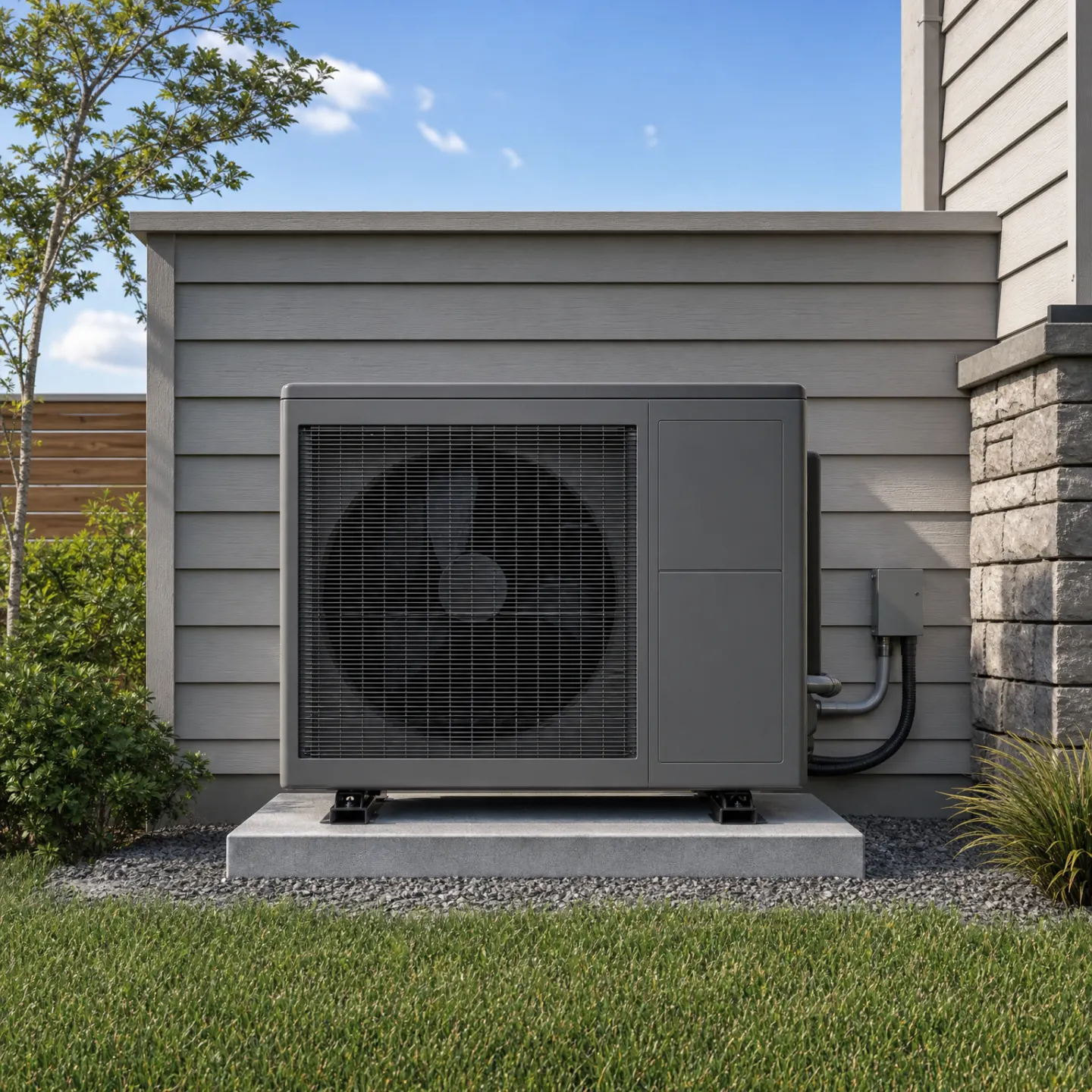
A gray heat pump outdoor unit mounted on a concrete pad next to a residential house with lap siding and stone accents.

Check the valve and the coil together

Get the reversing valve and the coil checked together rather than one at a time. A sticking valve can look like a refrigerant leak from the symptoms alone, slow heat, ice on the coil, the system running without catching up, and guessing wrong means paying for a repair that doesn't fix it. Years of hail and wind on the outdoor unit are exactly why those two parts deserve a real look before anything gets replaced.

A stuck valve puts strain on the compressor

When the reversing valve won't switch right, the compressor can end up fighting against itself, pushing refrigerant the wrong way through the system. Run it like that long enough and the compressor is what fails next, and that's a far bigger repair than the valve alone.

A slow leak turns into a frozen coil

A heat pump low on refrigerant will keep running, just worse, and that lets ice build up on the outdoor coil. Once ice covers the coil it can't pull heat from the air at all, and the system may keep running anyway, straining to do a job it physically can't do anymore.

Before anyone comes out, a few things are worth a look. Check the thermostat is actually set to heat and the temperature is set above room temperature, since a setting bumped by accident gets mistaken for a broken system all the time. Go outside and look at the unit itself. If the coil is caked in ice or snow, that's worth noting but don't chip at it or hose it off. Check the outdoor unit isn't blocked by anything close up against it, since airflow in and out matters for a heat pump the way it doesn't for a furnace. Inside, check the air filter. A filter packed with dust chokes airflow and can make a working system act like a failing one. Check any breakers tied to the system haven't tripped. None of this fixes a stuck reversing valve or a refrigerant leak, but it rules out the easy stuff first.

Age is the first thing to weigh, but it's not the only one. A heat pump that's otherwise sound is usually worth repairing even for a compressor or a valve, since those are single parts in an system that still has years left in it. What changes the math is a system that's already needed a few repairs in a row, each one a different part. That pattern usually means the whole unit is wearing out at once, not just the piece that failed this time. A repair fixes what broke. It doesn't tell you what's about to break next. If a tech opens the unit and finds rust through the cabinet or a compressor that's been struggling for a while, that's worth asking about directly, since it changes whether this repair is the last one or just the next one.