




Texas Cooling Help
A weathered wooden privacy fence runs along the left side of a dry grass lawn, with a large spreading oak tree and a row of single-story brick houses with dark shingle roofs under an overcast sky.

Heat Pump Repair in Round Rock, TX

Tell us about the job

Takes about a minute. No obligation.

Step 1 of 3: Equipment

Williamson County has logged 130 hail events between 2015 and 2024. Your outdoor unit sits right in the path of that, with thin aluminum fins and a coil that dents or clogs easier than most people think. Hail doesn't have to crack anything to cause trouble. A bent fin cuts down airflow, the coil can't do its job, and the system runs longer to make up for it. That extra strain is often what's behind a heat pump that's suddenly noisy, icing up, or not keeping up with the thermostat. Worth having someone check the coil and fins before assuming the problem is bigger than it is.

5 months
November through March, your system heats
7 months
April through October, it cools
40°F
the average winter night it heats against
95°F
the average summer afternoon it cools against
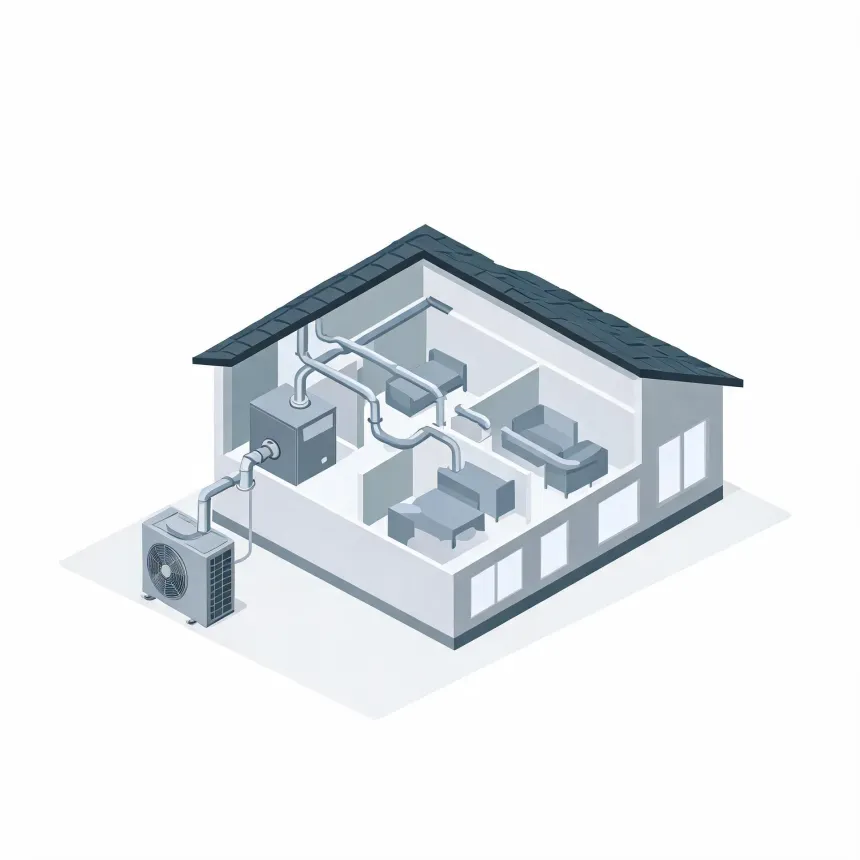
Isometric cutaway illustration of a single-story house showing an indoor air handler, branching ductwork through rooms with furniture, and an outdoor condenser unit connected by a line outside the wall.
Your system heats November through March and cools April through October.

NOAA nClimDiv, 1991–2020 normals

Half the houses in Williamson County were built in 2006 or later.

A heat pump that age still has years in it, so a repair call makes more sense than a replacement quote.

A county that sees this much weather is hard on a heat pump that stays outside year round

220 severe weather events from 2015 to 2024
33% of homes statewide lost power a day or more in 2024
58 damaging wind events from 2015 to 2024

A heat pump here runs both sides of the job, heating in winter and cooling in summer, so the compressor gets less downtime than it would in a place with a short AC season. That's normal wear, not a sign something's wrong with your unit specifically. Texas electricity ran 14.94 cents per kilowatthour in 2024, and a heat pump losing efficiency from a dirty coil or a low charge shows up fastest on the bill, often before you notice the house feeling off. If it's running longer and the bill backs that up, that points to the system working harder than it should, not necessarily something expensive. Most of the time it's a part worth repairing, not a system worth replacing.

October is the month to get a heat pump checked before the cold sets in

Heat pump problems tend to show up right when the load picks up, not in the middle of winter. Yours runs heat from November through March, which makes October the month to catch a weak part before it's pushed into five straight months of work. If it's acting up now, before the cold even gets here, that's worth paying attention to.

Find a contractor
A man seen from behind in a dark jacket, tan work pants and boots climbs wooden porch steps toward an orange front door, carrying a waxed canvas tool bag, with a potted shrub beside the entry.
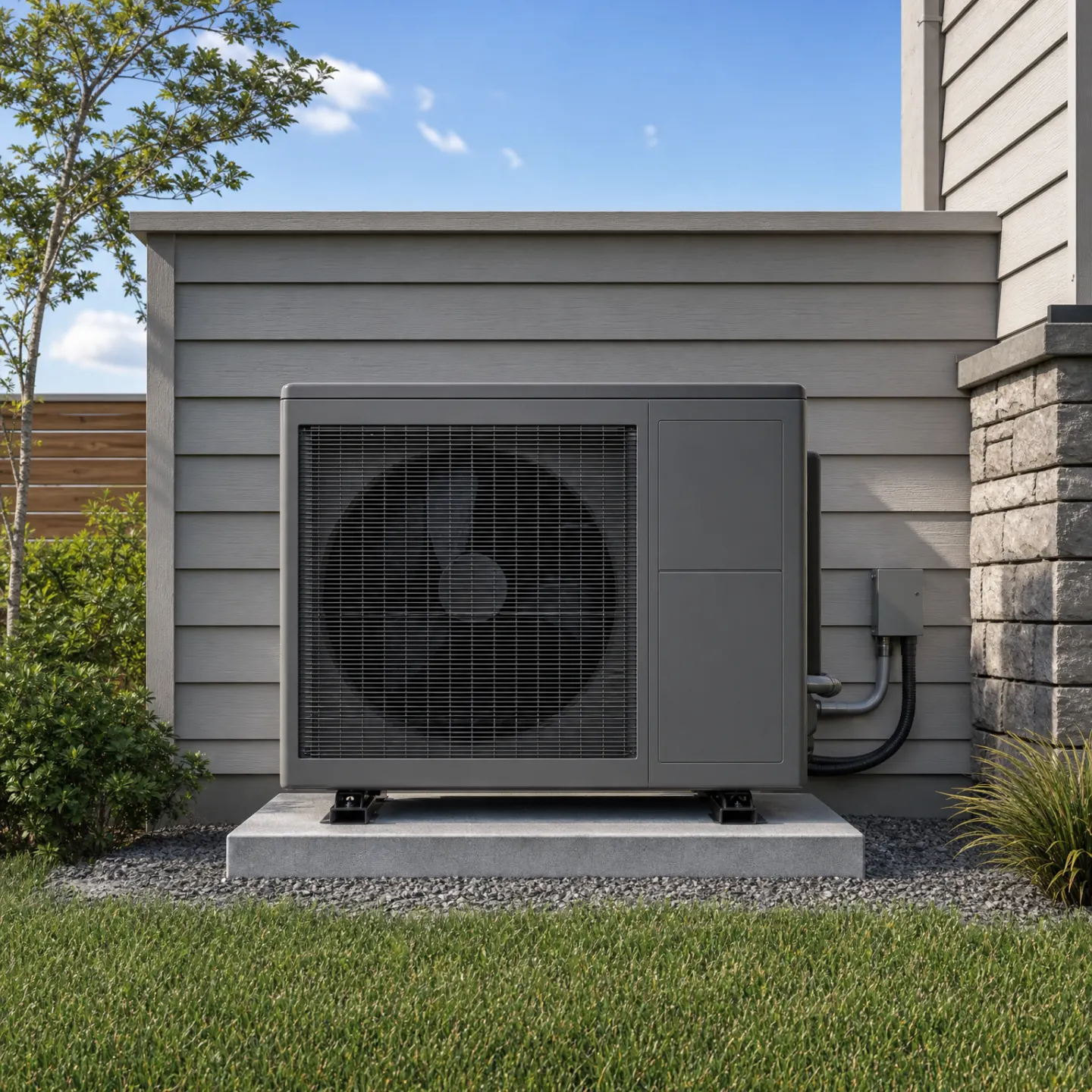
A gray heat pump outdoor unit mounted on a concrete pad next to a residential house with lap siding and stone accents.

Outside year round, in a county that doesn't go easy on it

The outdoor unit doesn't get an off season here. It runs the house through summer heat, then straight into winter with barely a break between. That's the same hard use the page already mentioned, and it's normal for a heat pump working both jobs. What that year-round run time does do is leave the coil and fins exposed through every hailstorm that comes through the county, not just one season's worth. So when a tech is out for a repair, it's worth having them check the coil condition along with whatever's acting up now. It can point to why the problem showed up this month instead of some other time.

Short cycling wears out the parts that start the system

A heat pump that kicks on, runs briefly, then shuts off again is working against itself. Short cycling puts the heaviest strain on the compressor and the start components. The longer it keeps happening, the more likely one of them fails outright instead of just needing adjustment.
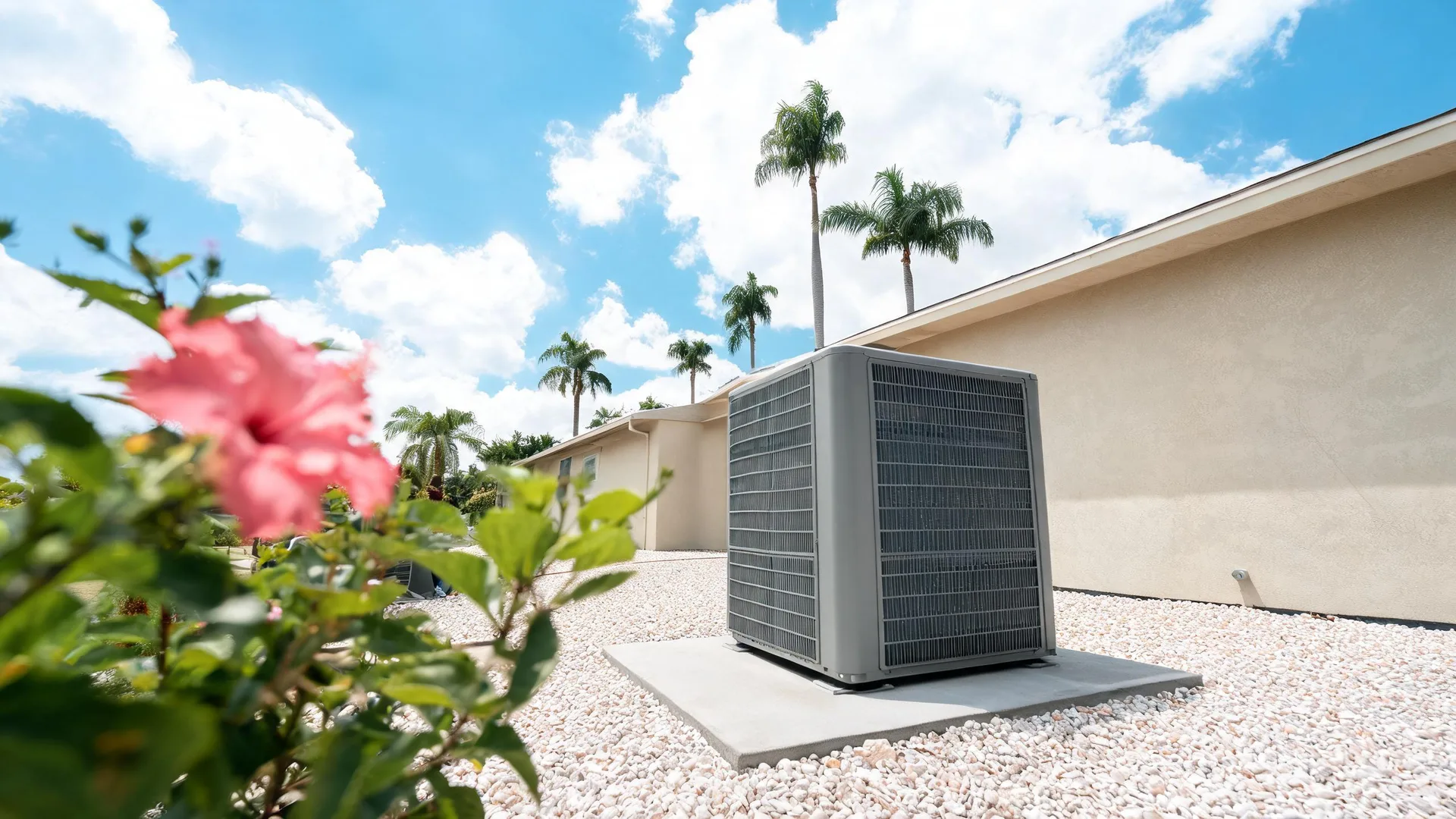
A heat pump stuck in defrost is telling you something specific

Some frost on the outdoor coil in winter is normal, and the system clears it on its own. A unit that stays in defrost mode, runs the outdoor fan without ever satisfying the thermostat, or keeps a layer of ice that never melts between cycles has a reversing valve or a sensor not doing its job. Ice left to build up can damage the coil underneath it.

A heat pump that's struggling doesn't fix itself by staying on. A weak capacitor still fires the compressor every cycle. Each start pulls harder than the last, so the part that was marginal last week fails outright this week. Low refrigerant charge works the same way in reverse. The compressor keeps trying to move a full load of heat with less refrigerant to do it, so it runs hotter than it was built to. A dirty or iced-over coil makes the system stretch its runtime to hit the same temperature, and that extra runtime is what pushes a failing part past the point of no return. None of this gets better with time. The part either gets replaced while it's still just a part, or it takes something bigger down with it when it finally gives out.

A diagnostic visit starts outside at the unit, checking the refrigerant charge against what the system is supposed to carry. Too little charge shows up as a compressor running hot and a house that never quite hits the thermostat setting. From there it moves to electrical. A capacitor gets tested under load, not just looked at, because a capacitor can read fine sitting still and still fail the moment the compressor tries to start. The contactor gets checked for pitting. The fan motor gets checked for amperage draw. The reversing valve gets checked for whether it actually switches when it's told to. A tech will also check static pressure across the coil, which shows whether airflow is restricted before the panel ever comes off. Most of what's wrong turns up in one of those readings, not in a guess.