




Texas Cooling Help
A single-story brick house with a two-car garage photographed at dusk, with interior lights glowing through the windows and trees on either side.

Heat Pump Repair in Rockwall, TX

Tell us about the job

Takes about a minute. No obligation.

Step 1 of 3: Equipment

May is when cooling starts here, and a heat pump that was limping along in April tends to show it the first hot week. Whatever was marginal, a weak capacitor, a low charge, a contactor with pitted contacts, gets found out the moment the system has to run hard and keep running. The same thing happens in October, right before heat starts in November. A heat pump here runs cooling from May through October and heat from November through March, so it gets little rest between seasons to hide a problem in. If yours is struggling or short-cycling right as the load picks up, that is the weak part finally meeting the job it has been dodging.

5 months
November through March, your system heats
6 months
May through October, it cools
37°F
the average winter night it heats against
93°F
the average summer afternoon it cools against
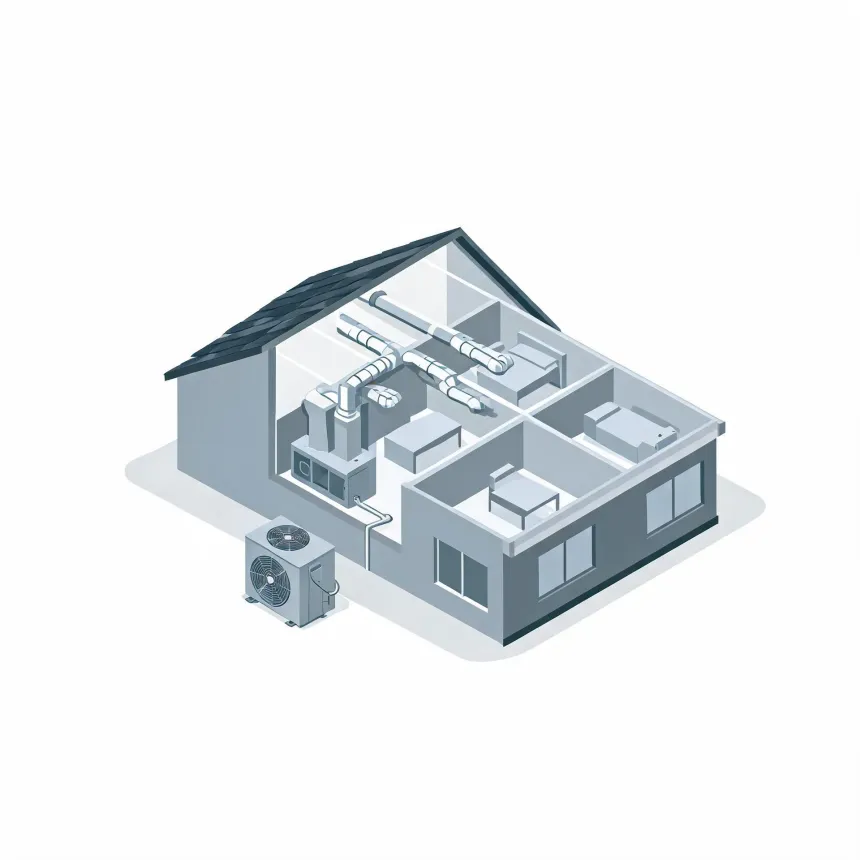
Isometric grayscale illustration of a cutaway house showing interior rooms, ceiling ductwork connected to an indoor air handler, and an outdoor condenser unit beside the exterior wall.
Your system heats November through March and cools May through October.

NOAA nClimDiv, 1991–2020 normals

Half the homes in Rockwall County were built in 2006 or later.

A heat pump that came with a newer house still has years of work left in it, which is a reason to repair it.

Rockwall County weather is not what wears out a heat pump here

48 severe weather events from 2015 to 2024
33% of homes statewide lost power a day or more in 2024
9 damaging wind events from 2015 to 2024
Rockwall County weather is not unusual for a heat pumpElectricity here runs 14.94 cents per kilowatt-hour, so what you're after is usually a worn part, not a strange climate.

A lot of what fails in a heat pump traces back to the switch itself. The reversing valve moves a slide inside to change direction, and over enough cycles the slide can stick halfway or stop moving at all. The defrost control depends on a sensor reading the outdoor coil temperature correctly. Let that sensor drift and the board either skips defrost when ice is building or kicks into defrost when the coil is already clear, and either way the system runs out of sync with what it needs. Capacitors lose their charge with age and heat, and a weak one makes the compressor or fan motor strain to start every cycle instead of kicking on clean. Contactors wear from the arcing that happens every time they open and close, until the contacts pit enough to stop making a solid connection. Most of this is wear from cycling, not any one bad event.

Get it looked at early

Problems tend to show up in the first weeks of the season, when the load hits a part that was already weak.

Find a contractor
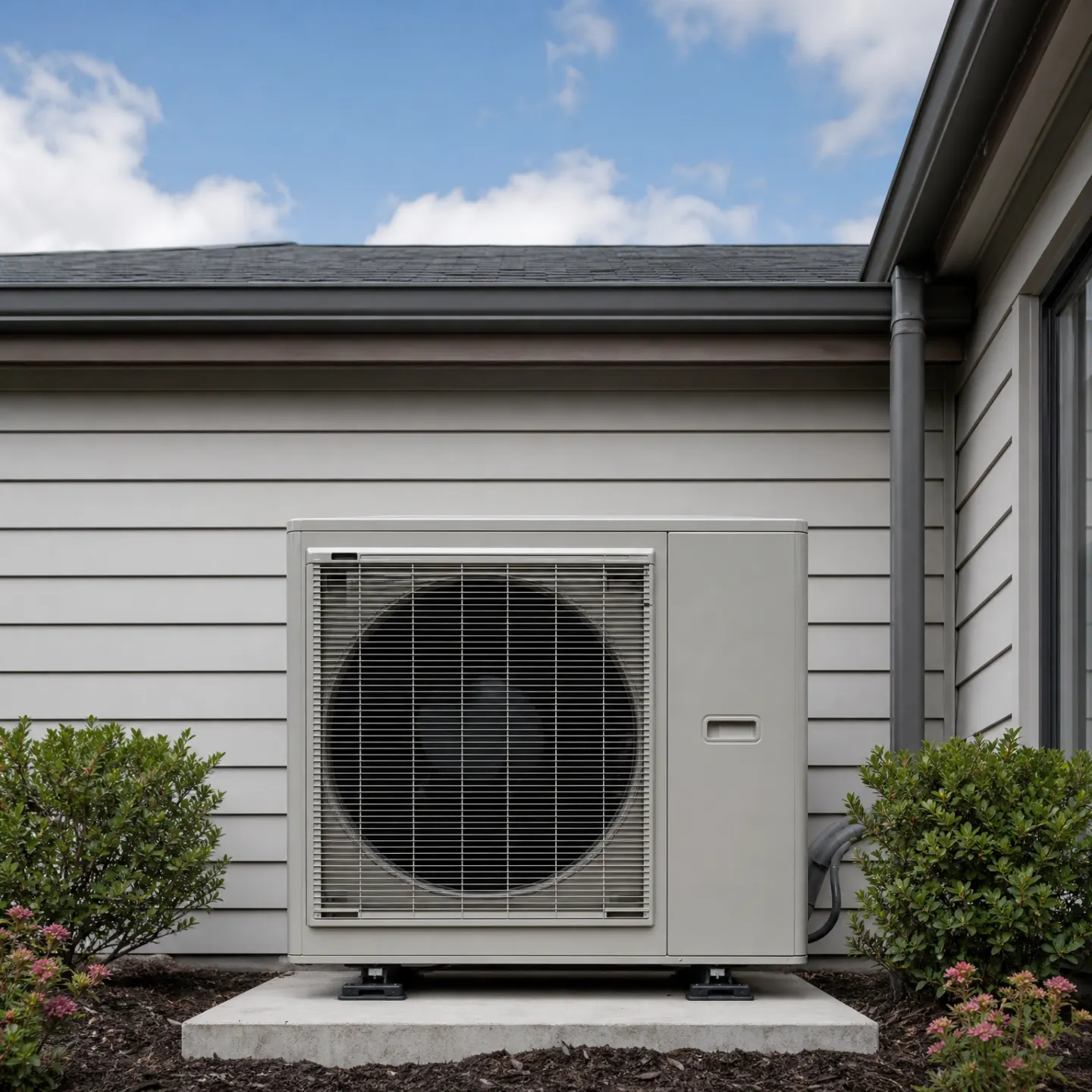
A gray heat pump condenser unit mounted on a concrete pad against the gray lap-siding exterior wall of a house.

A heat pump works both directions, all year, and that's where it shows wear first

A heat pump does not get downtime the way a furnace or an air conditioner alone would. It switches between heating and cooling, working the reversing valve, the defrost control and the outdoor coil in both directions, all year. That constant switching is where trouble tends to show up first. Listen for the outdoor unit running long stretches without shutting off, or short-cycling on and off every few minutes. Feel the vents. Air that should be warm coming out barely lukewarm is a sign something is off. Watch the outdoor coil for a heavy coat of frost or ice that does not clear on its own. That points to a defrost control or reversing valve that is not doing its job. A unit that hums but will not start, or trips its breaker more than once, has an electrical problem that gets worse the longer it runs that way. None of these are things to wait out. A heat pump struggling to switch modes or hold a temperature is telling you which part gave out before it quits altogether.

What you can check yourself

Look at the outdoor unit and clear away leaves, mulch or anything stacked against it so air can move through the coil. Check that the filter inside is not clogged, since a dirty filter chokes airflow and makes the whole system work harder. Look at the thermostat batteries and settings, and make sure it is actually set to heat or cool rather than sitting in fan only. Go to the breaker panel and see whether the breaker for the outdoor unit has tripped. These take a few minutes and rule out the simplest causes.
What to leave alone

Do not pull the panels off the outdoor unit or touch the wiring behind them. Do not add refrigerant or try to clear frost off the coil by hand, since a coil icing up is usually a symptom of something electrical or mechanical, not the actual problem. If the breaker trips again after you reset it once, stop resetting it and leave it off. Going further than a visual check and a breaker reset risks turning a part failure into a bigger repair, or getting hurt on a unit that still has power running to it.

A heat pump that keeps running with a problem does not just annoy you, it spreads the damage. A coil icing up will keep pulling air across ice instead of metal until the restricted airflow strains the compressor itself. A failing contactor that keeps arcing pits its contacts worse with every cycle, until it welds shut or stops making contact at all. A refrigerant leak left alone starves the compressor of the oil it carries, and a compressor runs dry only so long before it seizes. Once the compressor goes, the rest of the unit does not matter much anymore. Shutting the system off when something looks or sounds wrong buys you time. Running it anyway can turn a bad capacitor into a bad compressor.

Some repairs are easy calls. A capacitor, a contactor, a fan motor, these are parts that fail on their own and get swapped without touching anything else. The compressor is a different question. It sits behind a bigger price tag, and a contractor has to weigh it against the age and condition of the rest of the unit before recommending the work at all. A heat pump that has lost its charge more than once is also worth a harder look, since a leak that keeps coming back usually means a slow leak somewhere in the coil, and that often costs more to chase down than to replace. The reversing valve matters too. It is what lets the unit heat and cool, and when it fails the unit is stuck doing one or the other, which on a heat pump is most of the job. None of this means replace it the moment something breaks. It means ask what broke before you decide what it is worth fixing.