Texas Cooling Help
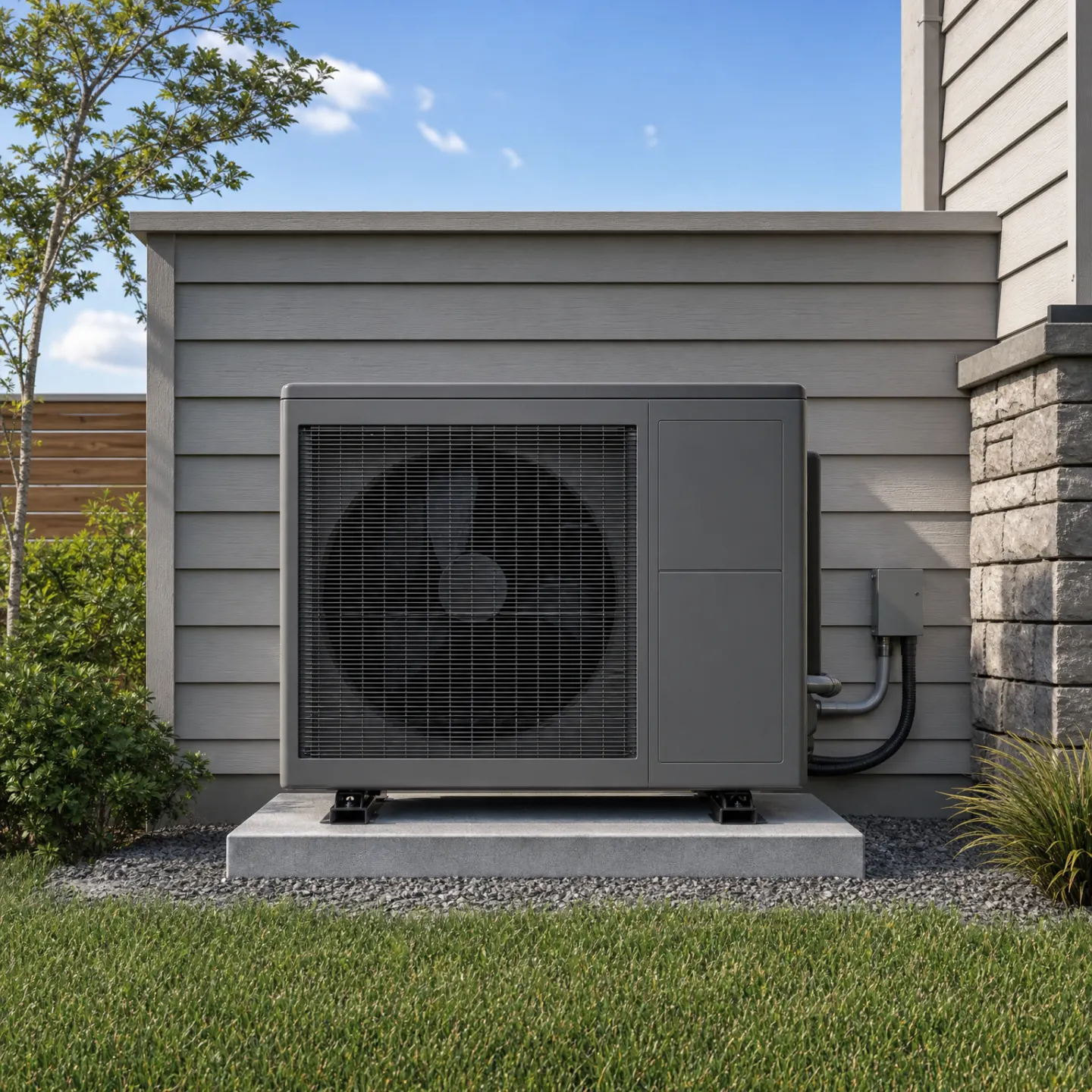
A grey outdoor HVAC unit mounted on a concrete pad beside the beige-sided exterior wall of a suburban house.

Heat Pump Repair in Plano, TX

Tell us about the job

Takes about a minute. No obligation.

Step 1 of 3: Equipment

Check the thermostat and breaker first

Set the thermostat to heat or cool and move the setpoint well past room temperature to force a call for action. Check the breaker panel for a tripped switch and the disconnect box next to the outdoor unit. If the outdoor fan isn't turning and the indoor unit is silent too, this is often where the problem actually is.

Look at the outdoor unit and the filter

Walk outside and look for ice coating the coil or the lines, and clear away any leaves or debris blocking airflow around the cabinet. Pull the air filter and hold it up to light. If you can't see through it, swap it. A clogged filter can starve the system enough to make it freeze up or shut down on its own.

5 months
November through March, your system heats
6 months
May through October, it cools
36°F
the average winter night it heats against
93°F
the average summer afternoon it cools against
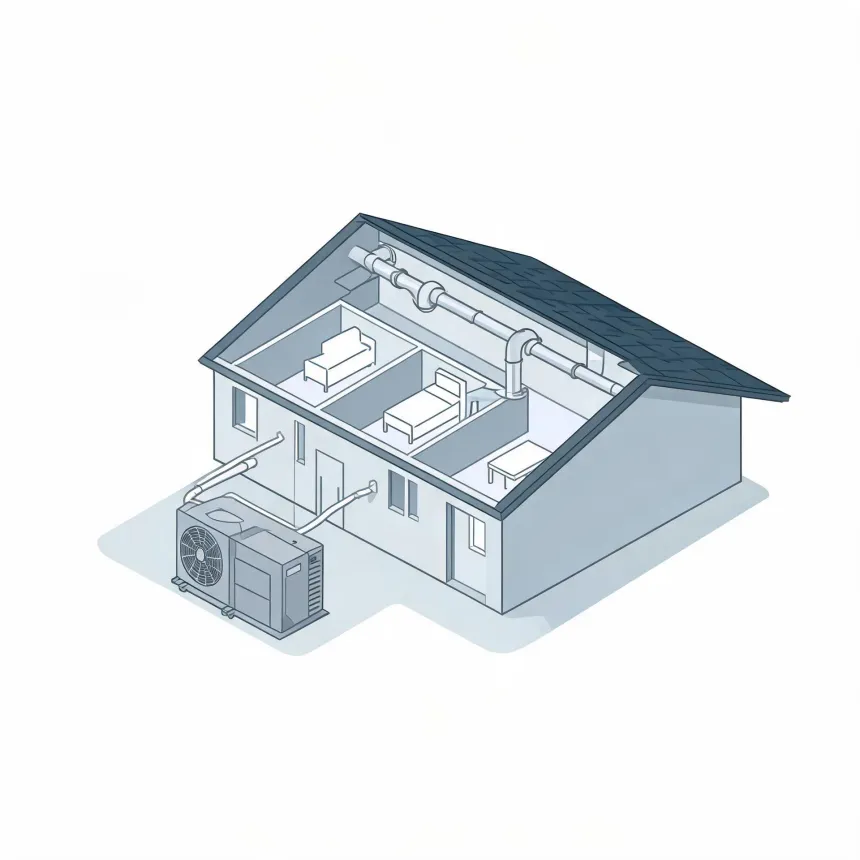
Isometric line illustration of a cutaway single-story house showing interior rooms with furniture and attic ductwork connected to an outdoor condenser unit beside the building.
Your system heats November through March and cools May through October.

NOAA nClimDiv, 1991–2020 normals

Half the homes in Plano were built in 2003 or later.

A heat pump that came with a newer house still has working life in it, so repair is the right first call.

A heat pump that struggles in November or May was already weak before the weather tested it

Cooling runs May through October
Heat runs November through March
283 hail events from 2015 to 2024
Plano heat pump repairTexas homes paid 14.94 cents per kilowatt-hour in 2024, and a heat pump earns that back by moving heat instead of making it.

Collin County saw 283 hail events between 2015 and 2024. That's the outdoor unit's coil and fan blades taking a hit, year after year, sitting out there exposed. A dented coil doesn't always fail right away. It restricts airflow a little more each season until the system is working harder than it should just to keep up. If your heat pump is short cycling or not holding temperature, that kind of wear is worth ruling out, not guessing at. A contractor can check the coil and refrigerant charge together and tell you whether you're looking at a simple fix or something the hail started years ago.

Hail this frequent is worth a check, even if your heat pump still runs

Collin County had 283 hail events between 2015 and 2024. That kind of weather reaches the outdoor unit's coil and fan blades directly. If your heat pump took a hit and still seems to run fine, it's worth having a contractor check it anyway. Damage like that doesn't always show up as a breakdown right away.

Find a contractor
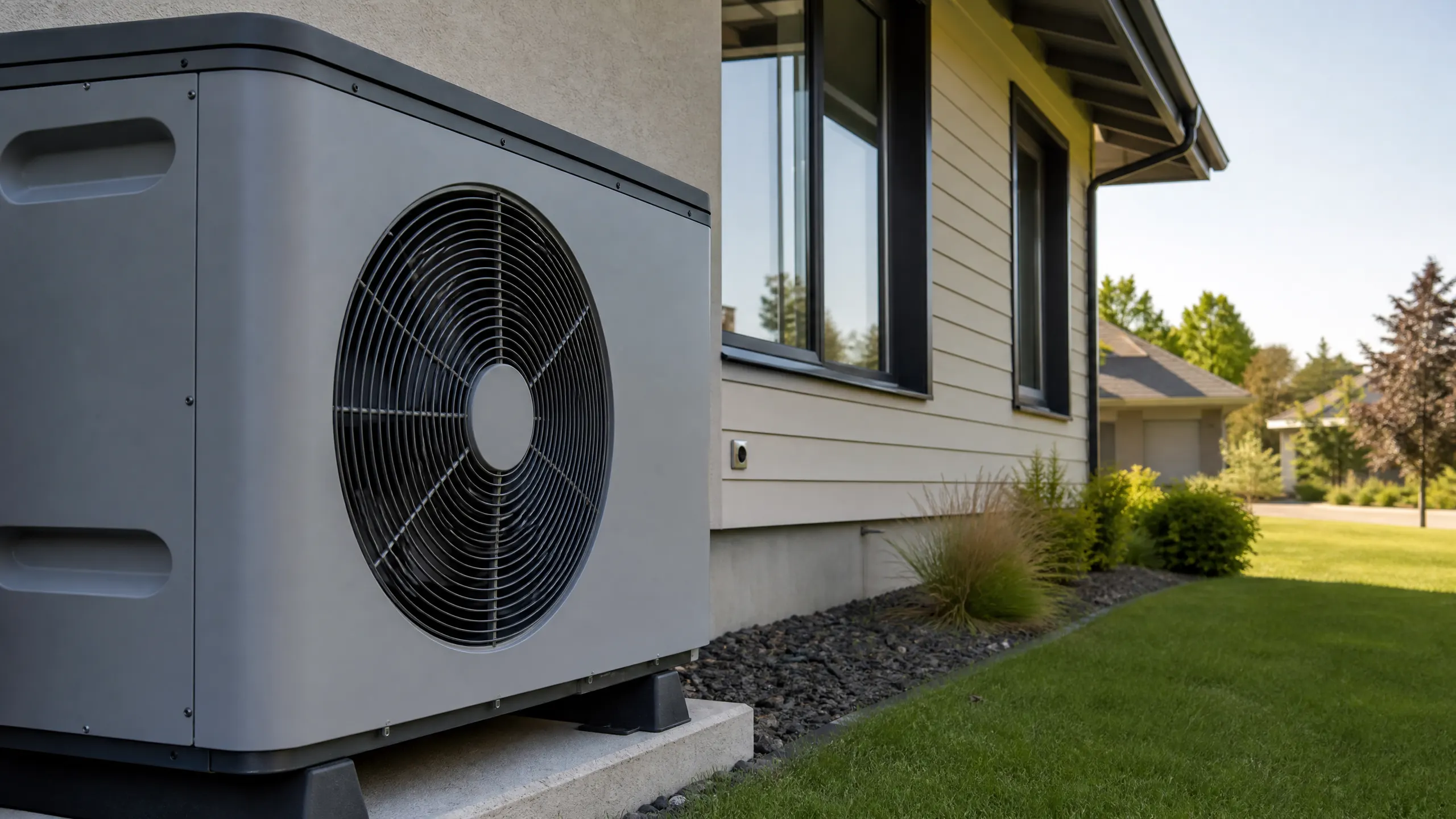
A gray heat pump outdoor unit mounted on a concrete pad next to a residential house with lap siding and stone accents.

Still within its working life

If your heat pump came with the house and the house is recent, call a repair tech before you start pricing a replacement. A dented coil or a weak capacitor is a repair either way, but a system with years left ahead of it is worth fixing rather than swapping out.

It runs but doesn't keep up

The heat pump turns on, the fan moves air, but the house never quite gets to setpoint, or it takes much longer than it used to. That points at a weak capacitor, a low refrigerant charge, or a reversing valve that isn't fully switching between heating and cooling. The system isn't dead, it's working harder than it should to do the same job.

Short cycling wears it out faster

If the outdoor unit kicks on, runs a few minutes, then shuts off and starts again shortly after, that's short cycling. It points to a dirty coil, a refrigerant problem, or a failing sensor telling the system something is wrong when it isn't. Every one of those cycles puts wear on the compressor, so this isn't something to wait out.

A heat pump that's struggling doesn't fail cleanly. It fails a little more every hour it keeps running. Take a low refrigerant charge. The compressor still tries to move heat with less refrigerant than it needs, so it runs hotter and longer than it was built for. Keep that up and a top-off stops being enough, because the compressor itself has taken the damage by then. Ice on the coil works the same way. A little frost melts off during a normal cycle, but once ice builds up faster than the system can clear it, airflow drops, the coil gets colder, and more ice forms. Left running, that cycle can push liquid refrigerant back into the compressor, and the compressor is not built to handle liquid. A system showing signs of strain isn't resting between cycles. It's accumulating damage, cycle after cycle, until the part that fails is the one part you didn't want to lose.

A heat pump wears across its whole working life, not all at once, and that shapes the repair or replace question more than anything else. The compressor is the part that matters most, because it's also the part that's never worth replacing on its own. If a contractor tells you the compressor has failed, that's a replacement conversation, not a repair one. Everything else on the system, the capacitor, the reversing valve, the fan motor, the control board, is a normal wear part that gets swapped out and the system goes on running like it did before. So the real question isn't how old the system is, it's which part is asking to be fixed. A system that's needed a handful of small repairs over its life isn't in trouble. One that's lost its compressor is a different system entirely, whatever else about it still works.