




Texas Cooling Help
A nighttime street view of a row of illuminated single-story brick houses with large trees along the sidewalk.

Heat Pump Repair in McAllen, TX

Tell us about the job

Takes about a minute. No obligation.

Step 1 of 3: Equipment

A heat pump low on refrigerant has a leak somewhere in the line set or the coil. Topping off the charge without finding that leak just buys a little time before the same call comes back. A failing compressor is usually where repair stops making sense, since it is the most expensive part in the system and the labor to replace it can rival putting in a new unit. Age matters less than how the system has been treated. A heat pump with its coils cleaned and its refrigerant charge checked on a regular basis tends to hold up better than one that never gets looked at, even at the same age. If this is the first repair call on this unit, that is a good sign. If a tech has already been out more than once for the same problem, it is worth asking whether repair or replacement makes more sense going forward.

2 months
December through January, your system heats
10 months
February through November, it cools
51°F
the average winter night it heats against
97°F
the average summer afternoon it cools against
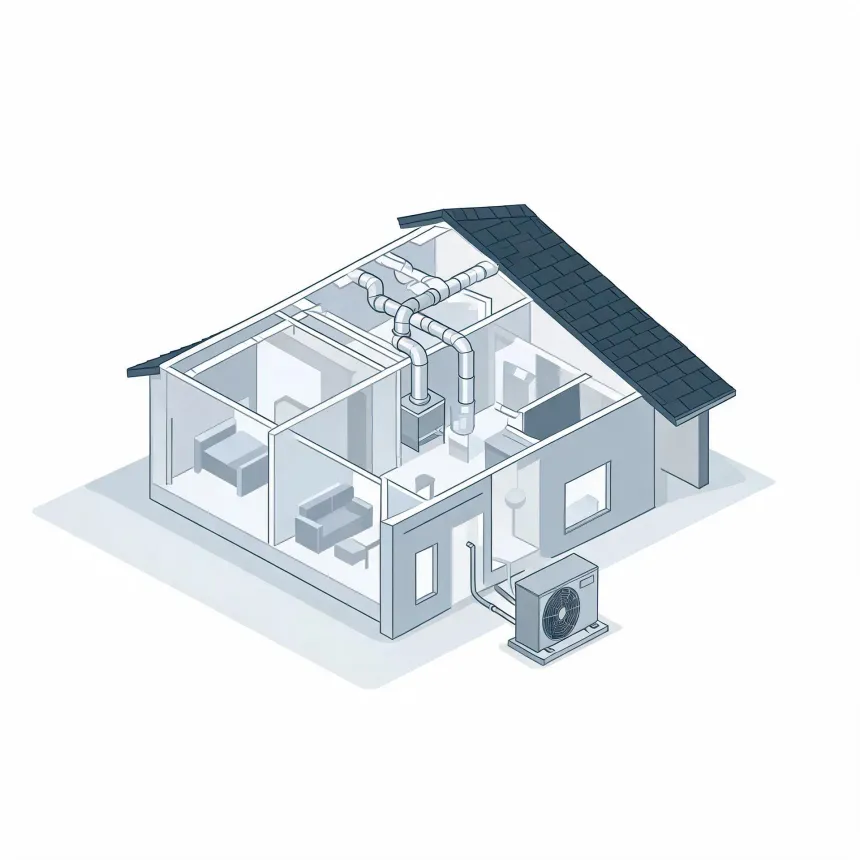
Isometric line illustration of a cutaway house showing interior rooms with furniture, ceiling ductwork connected to an indoor air handler, and an outdoor condenser unit linked by refrigerant lines.
Your system heats December through January and cools February through November.

NOAA nClimDiv, 1991–2020 normals

A heat pump that won't switch into defrost will ice over the outdoor coil fast.

Check that coil yourself before the call, since a thick layer of ice tells the tech something a working system never should.

Half the homes here were built in 2000 or later, so a lot of heat pumps are still young

Half the homes here were built by 2000
Climate zone 1A
Power costs 14.94 cents a kWh statewide
The cold snap finds the weak onesHeat here runs December and January, so November is when a weak heat pump starts to show it.

Nothing about McAllen's climate makes a heat pump fail in some unusual way. It runs heating and cooling most of the year here, so it logs more hours than a unit up north does. But the failures are the ones a tech sees anywhere. A worn capacitor. A low charge. A contactor that's pitted and sticking. Texas electricity ran 14.94 cents per kilowatt-hour in 2024, which is one reason a heat pump losing efficiency is worth fixing sooner rather than living with. The repair itself isn't a McAllen problem. It's a heat pump problem, and it gets fixed the same way here as anywhere else.

A newer system is usually worth repairing

If your heat pump came with the house, there's a good chance it's one of the newer ones, and that's worth something when you're deciding what to do about a repair. A young system with a bad capacitor or a stuck contactor is still worth fixing.

Find a contractor
A man in a dark long-sleeved shirt and brown work pants, seen from behind, carries a waxed canvas tool bag up porch steps toward an orange front door, with a potted shrub in a terracotta pot beside him.
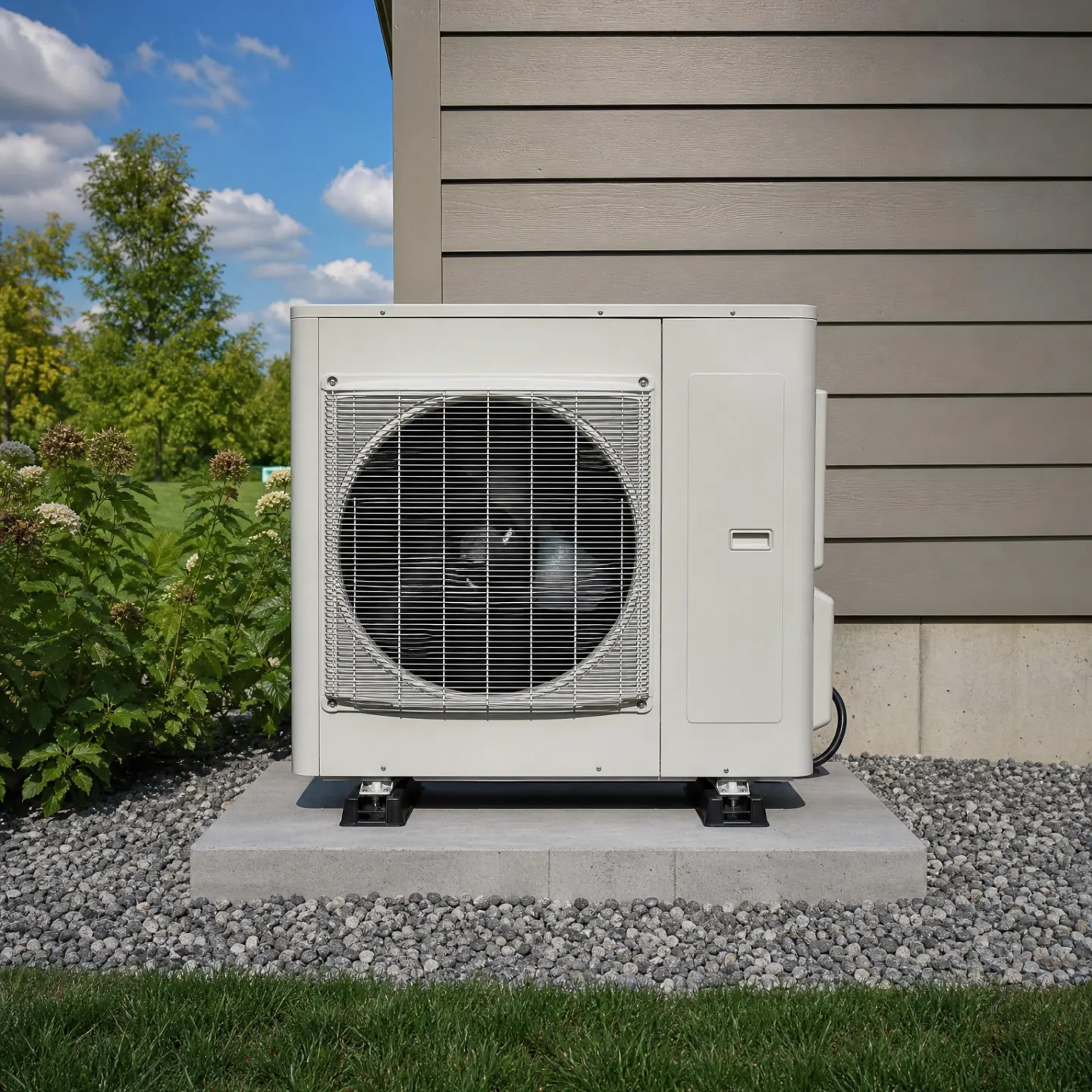
A white mini-split heat pump outdoor unit mounted on a concrete pad beside a gray-sided house, surrounded by gravel and green shrubs.

Running it broken breaks more of it

A heat pump that's losing charge or struggling to start doesn't fail outright. It keeps running, worse every day, until something else gives. A compressor forced to pull against a low charge runs hotter than it should, and heat is what wears a compressor down over time. A capacitor that's weakening makes the compressor or the fan motor draw harder on startup, and that strain shortens what's left of its life. Ice on the outdoor coil blocks the airflow the system needs to move heat at all, so the unit runs longer to do less, and a compressor can end up flooded with liquid refrigerant it was never built to handle. None of this fixes itself by waiting. The part struggling now is usually the smaller problem next to what it can take down with it.

What you'll actually notice first

A heat pump in trouble rarely just stops. It runs longer than it used to without getting the house to temperature. Air coming out of the vents feels lukewarm instead of hot. Outside, the unit might run constantly, short cycle on and off, or make a new noise like a hum, click, or rattle it didn't make before. Any of those is the system telling you something before it quits altogether.
What that means for the call

The longer a sign like weak airflow or a lukewarm vent gets ignored, the fewer options are left by the time someone looks at it. A tech can often trace a noise or a cycling problem back to one part, a capacitor or a contactor, if they see it early. Wait until the system won't run at all and the same call might end at the compressor instead.

A lot of heat pump failures start with something small that keeps working a little while longer before it doesn't. The reversing valve is a common one. It's what switches the system between heating and cooling, and when it sticks, the unit gets stuck in one mode or starts blowing air that doesn't match what the thermostat is asking for. The defrost control board is another. It tells the system when to melt off the ice that builds up on the outdoor coil during cold weather, and when that board fails, the coil keeps icing over until airflow is cut off almost completely. Fan motors wear out too, both the one outside and the one moving air through the house, usually from bearings that have just worn down after years of running. None of these are failures that come from a part being old by itself. They come from a system that never gets its coils cleaned or its refrigerant charge checked, which makes every part in it work harder than it needs to.

A diagnostic visit starts outside at the unit, not with a tool on the system itself. A tech checks the refrigerant charge, reads the pressures on both the suction and liquid lines, and watches how the compressor is pulling amps against what it should draw. Electrical parts get tested next. A capacitor can read fine sitting still and still fail under load, so it gets checked while the system is running, not just with a meter at rest. The contactor gets a look too, since pitted contacts can stick closed or stop making contact at all. Inside, airflow across the indoor coil gets checked, because a system starved for airflow will show symptoms that look like a refrigerant problem but aren't. The reversing valve gets tested in both directions, switching the system into heating and cooling to see if it responds the way it should. Whatever shows up wrong gets explained before anything gets replaced, since a bad reading in one spot can be caused by a failing part somewhere else entirely.