



Texas Cooling Help
A row of single-story brick houses with dark shingled gable roofs behind a dry grass lawn, with a tall wooden fence along the left side and large spreading oak branches overhead.

Heat Pump Repair in Lubbock, TX

Tell us about the job

Takes about a minute. No obligation.

Step 1 of 3: Equipment

Pay attention to what the heat pump does when it switches between heating and cooling. A healthy system changes over smoothly, with maybe a brief pause and a whoosh of air as it reverses. If yours hesitates, blows cold air during a heating cycle, or runs the outdoor fan without ever kicking into gear, the reversing valve may be stuck. Ice building up on the outdoor coil that does not melt off during the defrost cycle points to the same thing, or to a failing defrost control board. Short cycling, where the unit turns on and off every few minutes instead of running a full cycle, usually means a refrigerant or sensor problem rather than something you can fix by adjusting the thermostat. Any burning smell or a breaker that trips when the system starts is not something to wait on.

6 months
November through April, your system heats
5 months
May through September, it cools
29°F
the average winter night it heats against
92°F
the average summer afternoon it cools against
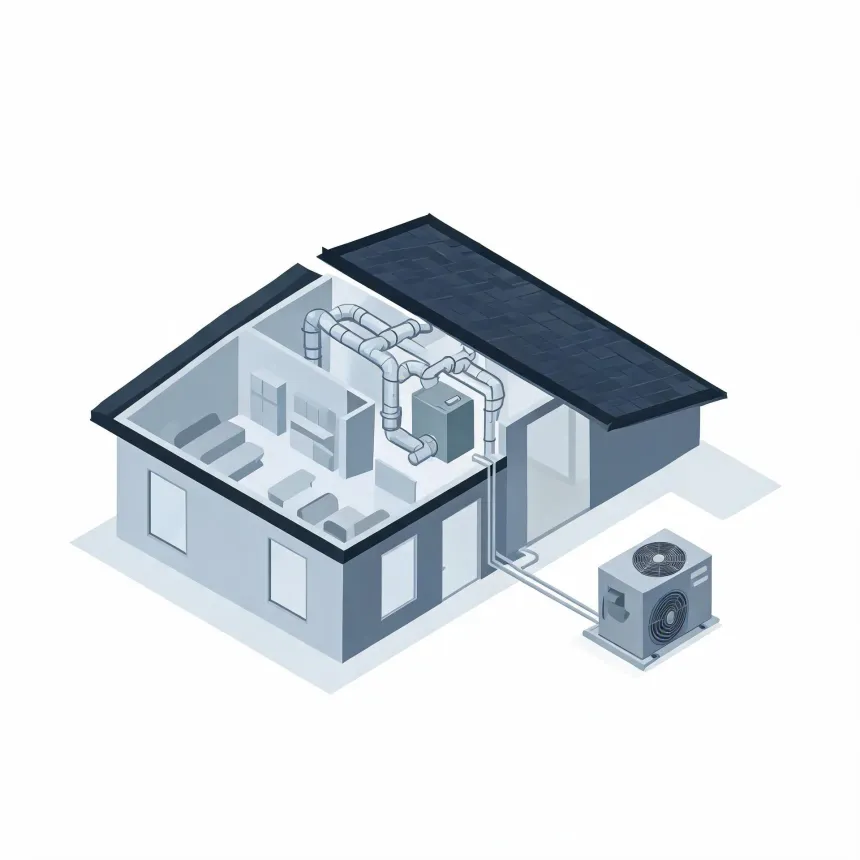
Isometric illustration of a cutaway single-story house showing interior ductwork and an air handler connected by lines to an outdoor condenser unit on a pad beside the building.
Your system heats November through April and cools May through September.

NOAA nClimDiv, 1991–2020 normals

A heat pump that needs a new compressor is close to needing a new heat pump.

Everything else on the unit is worth fixing if the compressor is still good.

Heat pumps in Lubbock earn their keep from November to April

Cooling runs May through September
Heat runs November through April
150 damaging wind events from 2015 to 2024

Most heat pump repairs in Lubbock are not complicated. A bad capacitor, a low refrigerant charge, a dirty outdoor coil, a worn contactor. These are the same failures a heat pump has anywhere, and the fix is the same anywhere too. What changes here is what happens if you let it go. Texas runs its electricity at 14.94 cents per kilowatt-hour, and a heat pump working around a bad part pulls more power to do the same job. A small problem now costs you on every bill until it's fixed.

A newer home means a repair usually makes sense

Half the homes in Lubbock County were built in 1985 or later. If that's your house, the heat pump likely still has plenty of life in it, and a repair is the right call over a replacement.

Find a contractor
A man in a dark gray t-shirt and brown work pants, seen from behind, carries a worn leather tool bag up wooden porch steps toward an orange front door.
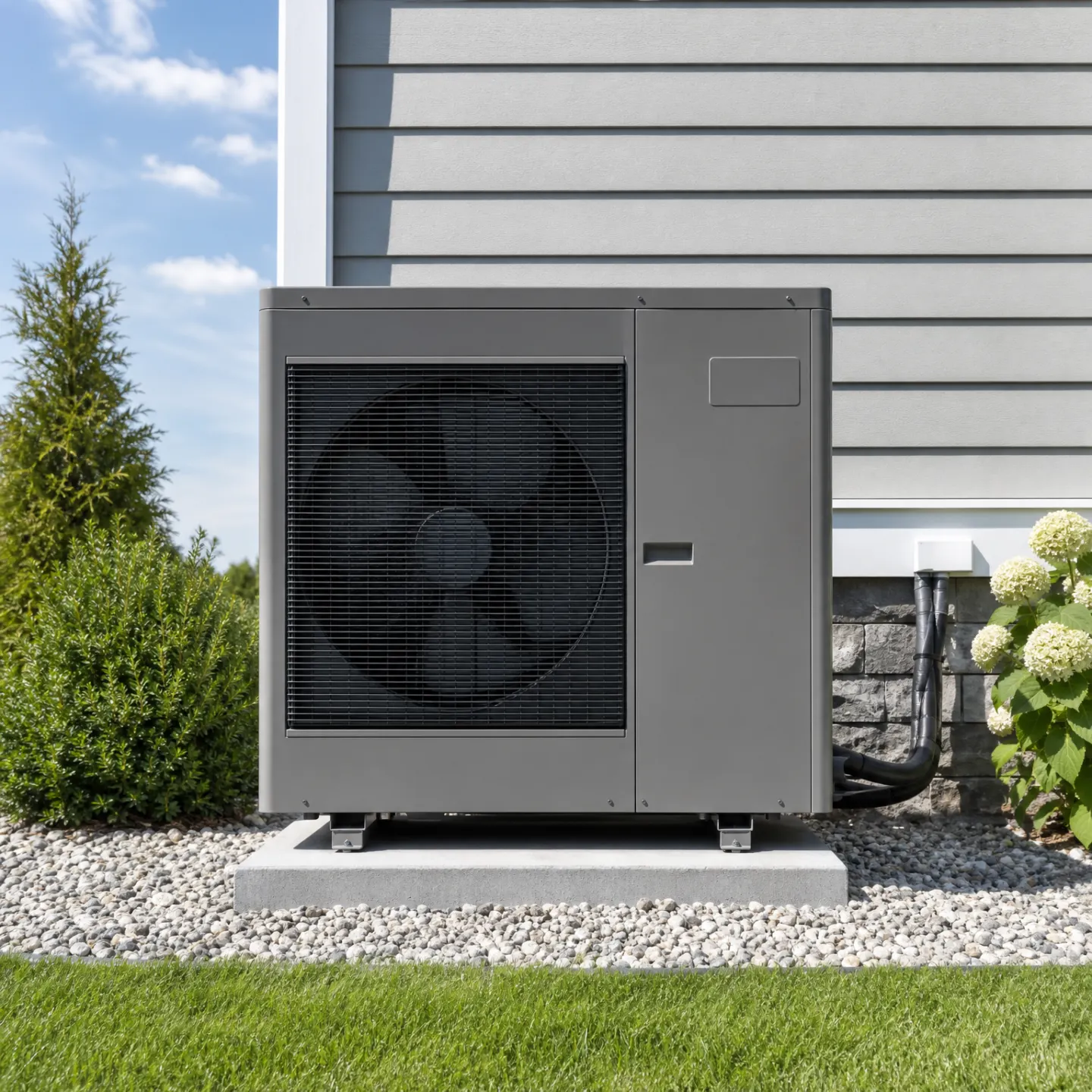
A gray air-source heat pump mounted on a concrete pad next to a house with gray vinyl siding, surrounded by gravel and flanked by green shrubs and white hydrangea flowers.

This unit has been through more than most

Lubbock County had 93 hail events between 2015 and 2024, and damaging wind on top of that more than once a year on average. An outdoor unit sitting through that takes hits a heat pump in a calmer place never has to deal with. Hail dents the coil fins and bends the cabinet, and a unit already carrying a weak part has less room to absorb the next storm on top of it. If something's acting up, get it diagnosed rather than guessing at a fix. A tech can tell you whether you're looking at ordinary wear or storm damage, and that changes what the right repair is.

A weak compressor works harder to make up the difference

When refrigerant charge is low or airflow across the coil is restricted, the compressor has to run longer and push harder to move the same amount of heat. It was not built to carry that extra load indefinitely. Left running that way, the windings overheat and the compressor fails for good, turning a repair into a full unit replacement.
A part under strain tends to take its neighbors down with it

A failing capacitor makes the compressor and fan motor draw more current than they should every time they start. That extra draw wears down the motor windings faster than normal use would. Catch the capacitor early and only that one part needs replacing. Wait, and the motor it was feeding power to may need replacing with it.

A few things are worth checking before anyone comes out. Look at the outdoor unit and see if the coil is caked with dirt or the fins are packed with leaves and grass clippings. Airflow blocked there makes the whole system work harder than it should. Check that the air filter inside isn't gray and clogged, since a dirty filter chokes the system the same way a dirty coil does. Look at the thermostat and make sure it's set to heat and set higher than the room temperature, and check the batteries if it uses them. Walk around the house and see if the breaker for the heat pump has tripped. If the outdoor fan isn't spinning at all, or the unit is making a loud grinding or rattling noise, turn it off at the thermostat and leave it off until someone can look at it.

A diagnostic visit starts outside at the unit itself. The tech pulls the cover panels and connects gauges to check refrigerant pressure on both the high and low side. The system gets run in both heating and cooling so they can watch how it switches over, since some problems only show up during that reversal. They'll check amp draw on the compressor and fan motor, test the capacitor's actual output against what it's rated for, and look at the contactor for pitting or burn marks. Inside, they check the air handler, the coil, and airflow at the vents. A problem that looks like a bad part outside sometimes traces back to restricted air movement inside. Before any repair starts, someone should walk you through what they found and what it means.