


Texas Cooling Help
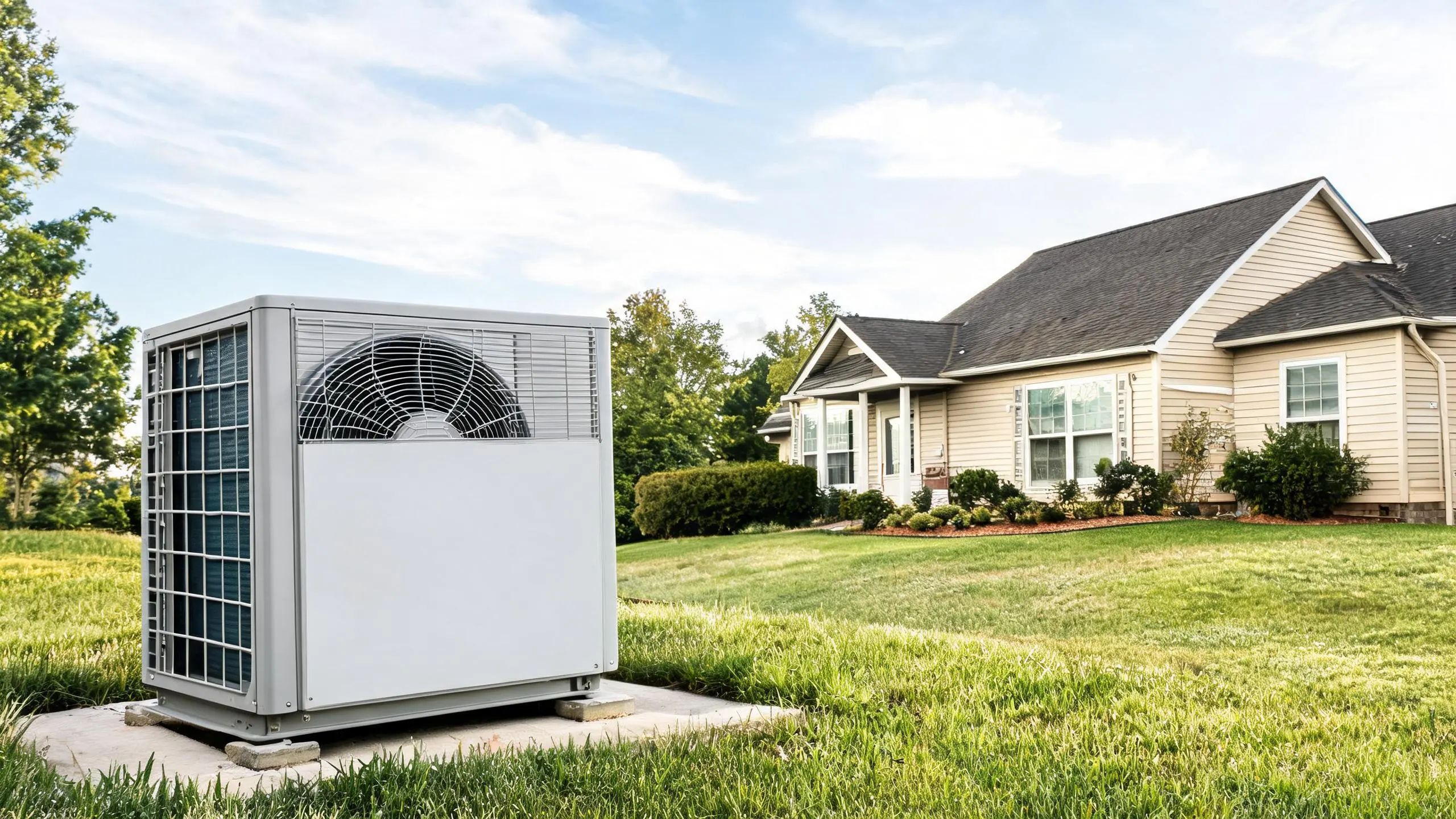
An outdoor heat pump unit mounted on a concrete pad in front of a single-story suburban house with beige siding.

Heat Pump Repair in League City, TX

Tell us about the job

Takes about a minute. No obligation.

Step 1 of 3: Equipment

Before you call anyone, check a few things yourself. Look at the thermostat first. Make sure it's set to heat or cool as needed and the batteries aren't dead, since a blank or frozen display can look like a system failure when it isn't. Next, go outside and look at the outdoor unit. If you see ice built up on the coil or the lines, that's worth noting, but don't try to chip it off. Check that nothing is blocking the unit, no leaves, no grass clippings, no fence sitting too close. Inside, pull the air filter and hold it up to the light. If you can't see through it, that's restricting airflow and can make the whole system struggle. Last, check your breaker panel for a tripped breaker before assuming the worst. None of this fixes a refrigerant leak or a failed compressor, but it rules out the simple stuff fast.

3 months
December through February, your system heats
7 months
April through October, it cools
48°F
the average winter night it heats against
90°F
the average summer afternoon it cools against
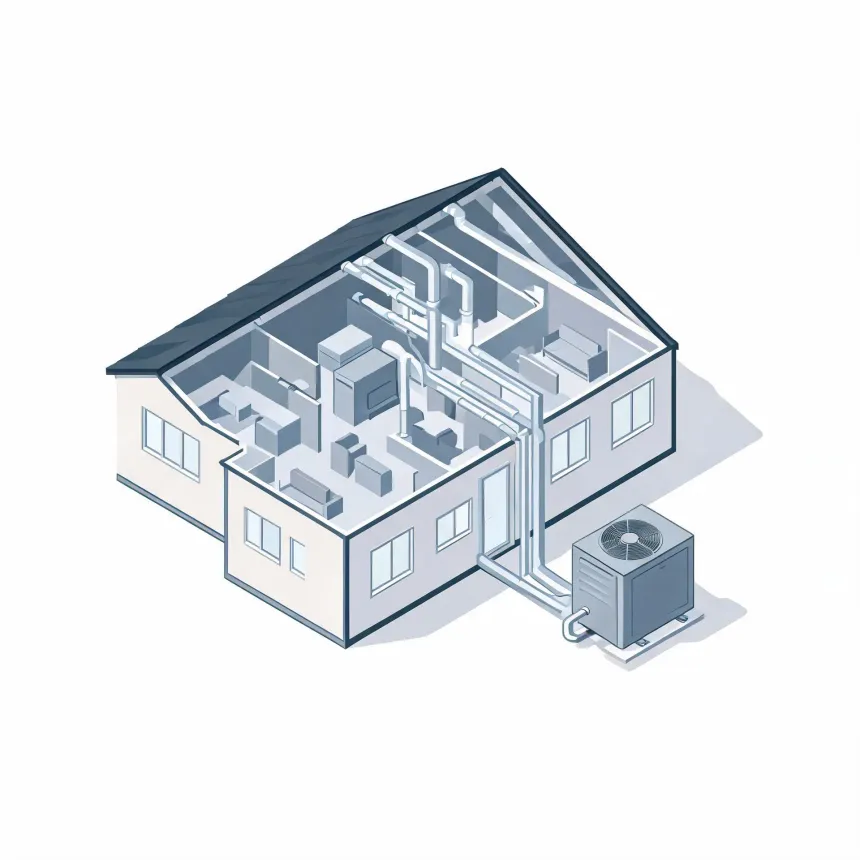
Isometric illustration of a cutaway single-story house showing interior ductwork and vents connected to an outdoor condenser unit beside the building, on a white background.
Your system heats December through February and cools April through October.

NOAA nClimDiv, 1991–2020 normals

Half the homes in Galveston County were built in 1990 or later.

A heat pump that came with a newer League City house usually still has years left in it, which makes repair the right first call.

November is mild here, then heat starts in December and finds whatever was already weak

Cooling runs April through October
Heat runs December through February
Power costs 14.94 cents a kWh statewide

If the house is newer, the fix probably doesn't mean replacing it

Get a repair diagnosis before you start pricing a new system. With a system this age, there's a good chance the fix is smaller than you think.

Find a contractor
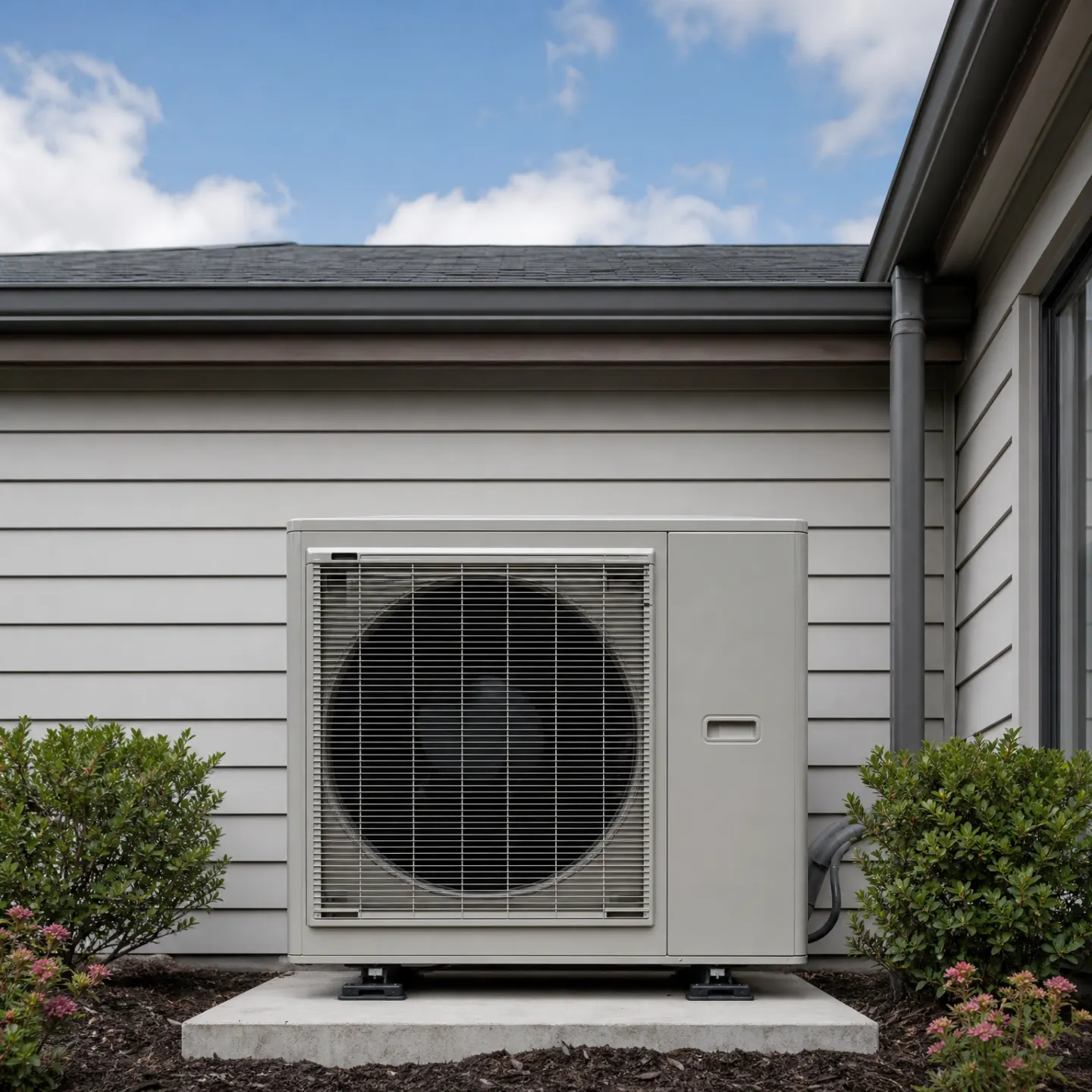
A gray heat pump condenser unit mounted on a concrete pad against the gray lap-siding exterior wall of a house.

It runs both directions, so more parts do the work

A heat pump runs both directions, so it wears in more places than a straight air conditioner does. The reversing valve is usually the first thing to act up. It switches the refrigerant flow between heating and cooling, and if it sticks, the system gets stuck in one mode or stops moving heat at all. The defrost board is another common point of failure. That board tells the unit when to reverse and melt frost off the outdoor coil, and when it fails, ice builds up and never clears. Capacitors weaken with age and run time, same as any AC, and a weak one shows up as a unit that hums but won't start, or a fan that spins slow. None of this means the unit is worn out. These are specific parts doing specific jobs, and any one of them can fail on its own while the rest of the system is fine.

Short cycles and air that isn't warm enough

A heat pump that kicks on and off every few minutes isn't finishing a full cycle, and that's usually the system protecting itself from something like low refrigerant or a failing sensor. If the air coming out feels lukewarm instead of hot, the reversing valve may not be switching all the way over, or the unit may have dropped back to backup heat on its own.
What's worth watching versus what's worth calling in now

A system that's short cycling or blowing weak air is still running, so there's usually a little time to get a diagnosis. A heat pump that won't switch between heating and cooling, or one that's iced over and not clearing on its own, is further along. The longer a stuck reversing valve or a failed defrost board runs, the more strain it puts on the compressor.

A heat pump that's struggling will keep trying to hit the setpoint, and that's what causes the damage. Low refrigerant makes the compressor work harder to move the same amount of heat, and that extra strain is what burns a compressor out early. A reversing valve that's stuck partway will keep the system fighting itself, trying to switch modes it can't fully complete, and that fight wears the valve further toward failure. Ice on the outdoor coil blocks airflow, so the system pulls harder to compensate, and harder pulling means more heat building up in places it shouldn't. None of these start as compressor problems. They end as compressor problems if the system keeps running on them, because the compressor is the one part that can't be patched once it's gone.

A diagnostic visit starts with the thermostat and the full cycle, not just the outdoor unit. A tech will run the system in the mode it's failing in and watch what it actually does, not just what it's supposed to do. Gauges go on to check refrigerant pressure, since both too little and too much pressure point to different problems. The reversing valve gets tested directly, usually by listening and feeling for it to shift when the mode changes, because a valve that's stuck partway can sound fine and still not be working. The defrost board gets checked too, along with the sensors that tell it when to kick in. Electrical components like capacitors and contactors get tested under load, since a part can look fine sitting still and still fail the moment it's asked to do its job. The point of all this is finding which part is actually causing the symptom, not just which part is old.