




Texas Cooling Help
Adobe-style desert homes lit by warm exterior lights at dusk, surrounded by saguaro cacti and native desert plants.

Heat Pump Repair in El Paso, TX

Tell us about the job

Takes about a minute. No obligation.

Step 1 of 3: Equipment

A tech starts with questions, not tools. What is the system doing. Is it blowing cold air when it should be warm, short cycling, or not running at all. When did it start. They check the simple things first, the thermostat settings, the breaker, the outdoor unit. From there they move to refrigerant pressure and the reversing valve, the part that lets the system switch between heating and cooling. They'll also check the defrost cycle. A heat pump that can't defrost properly ices up and stops pulling heat from the outside air. The condenser fan and compressor get tested with a meter for the correct electrical readings, not judged by ear. By the end you should hear plainly what's failing and why, not just have a part swapped and hope it holds.

5 months
November through March, your system heats
5 months
May through September, it cools
32°F
the average winter night it heats against
95°F
the average summer afternoon it cools against
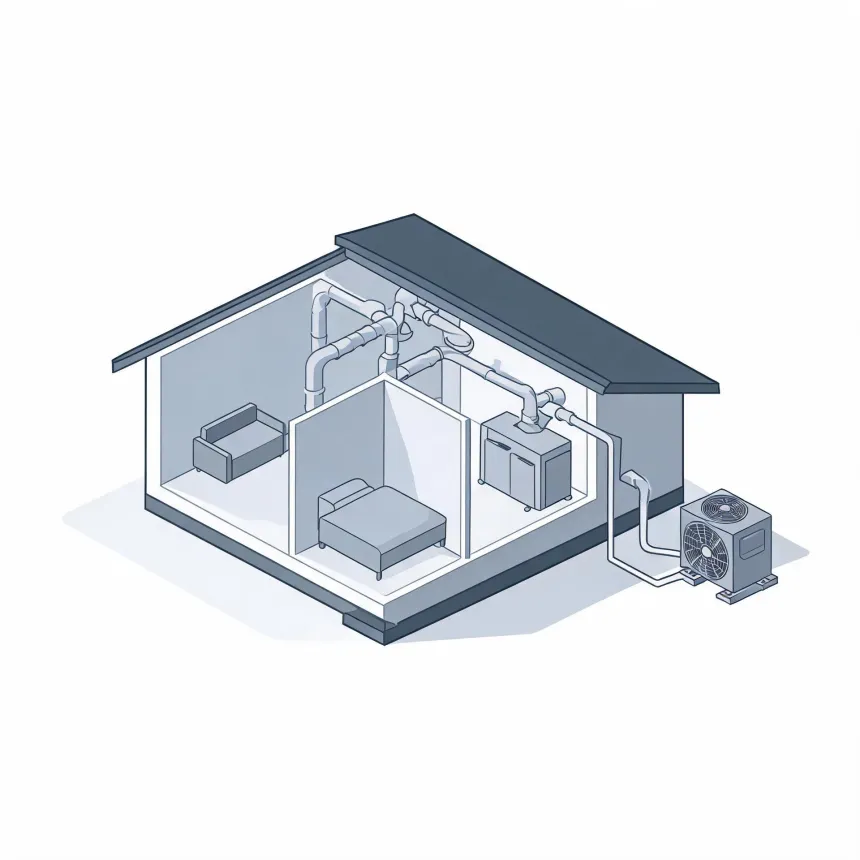
Isometric cutaway illustration of a small house showing interior rooms with furniture, an indoor air handler with ductwork, and lines running to an outdoor condenser unit beside the building.
Your system heats November through March and cools May through September.

NOAA nClimDiv, 1991–2020 normals

Heat here starts in November, and October is the month to get a heat pump looked at.

The first cold snap finds the weak part fast, so a check before October catches it before you lose heat.

Hail and heat both take a toll on the outdoor unit here

57 hail events from 2015 to 2024
Power costs 14.94 cents a kWh statewide
Climate zone 3B

Most heat pump problems in El Paso trace back to something ordinary, a worn contactor, a low refrigerant charge, a capacitor that's weakening. Nothing about the climate here makes the machine fail in a stranger way than it would anywhere else. What changes the math is the power bill behind it. Texas homes paid about 14.94 cents per kilowatt-hour in 2024, and a heat pump running on a weak capacitor or a dirty coil pulls more power to do the same job. Fixing the ordinary problem early is what keeps the bill ordinary too.

A newer home usually means a system still worth fixing

Half the homes in El Paso County were built in 1988 or later. If that includes yours, the heat pump likely isn't the original, and whatever it's doing now is probably a single worn part, not a system at the end of its life. Worth a repair call before assuming otherwise.

Find a contractor
A man in a dark long-sleeved shirt and brown work pants, seen from behind, carries a waxed canvas tool bag up porch steps toward an orange front door, with a potted shrub in a terracotta pot beside him.
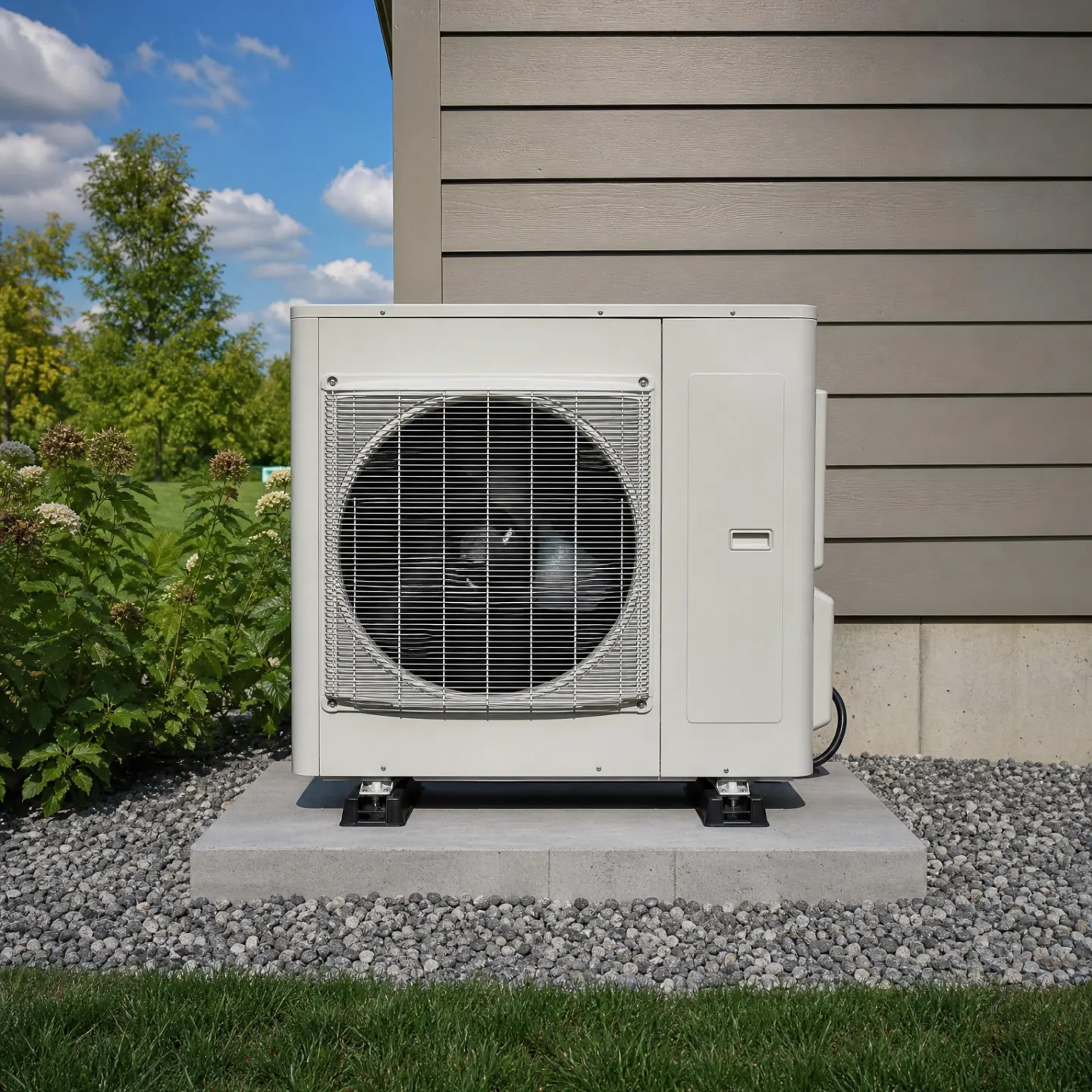
A white mini-split heat pump outdoor unit mounted on a concrete pad beside a gray-sided house, surrounded by gravel and green shrubs.

Check the data plate before you call

If your house was built in 1988 or later, the data plate on the outdoor unit will tell you the install year. Worth a look before the tech gets there. A heat pump running within its expected working life is a repair call, not a replacement decision, and knowing the age going in means the visit starts with diagnosis instead of guesswork.

Warm air that isn't warm enough

A heat pump in heating mode should feel warm at the vent, not lukewarm. Air that feels barely above room temperature often means the reversing valve isn't fully switching over, or the system is low on refrigerant. It's not always a sign of total failure, but it's the first thing most homeowners notice before anything else goes wrong.
What it means for the repair call

Catching the lukewarm air early, before the unit starts icing up or short cycling, usually means the tech is chasing one part instead of several. Wait too long and a weak reversing valve or low charge can drag the compressor into the problem too, turning a simple fix into a bigger one.

Before anyone comes out, there's a few things worth checking yourself. Make sure the thermostat is actually set to heat, not cooling or fan only, since a setting bumped by accident looks exactly like a broken system. Check the breaker for the outdoor unit and the indoor air handler, both of them, because either one tripped will shut the whole thing down. Look at the air filter. A filter clogged with dust chokes airflow and can make a working heat pump feel like a failing one. Walk outside and look at the unit itself. If it's covered in ice or buried in leaves and debris, clear what you can reach and see if that changes anything. None of this fixes a bad capacitor or a stuck reversing valve, but it rules out the things that aren't actually broken before you pay someone to find that out for you.

A heat pump that's worn out usually tells on itself before a tech ever shows up. The compressor struggles to hold pressure, the unit ices over even in mild weather, or it runs constantly and still can't keep the house warm. One bad part doesn't do that. A failed capacitor or a stuck reversing valve causes a specific, single symptom, and swapping that part brings the system right back to normal. What should give you pause is a system that's needed several different repairs over a short stretch, each one a different part failing. That pattern usually means the whole unit is wearing out at once, not that it's been unlucky. A tech who tells you plainly which of these you're looking at, one part or the whole system, is worth more than one who just quotes a price.