Texas Cooling Help
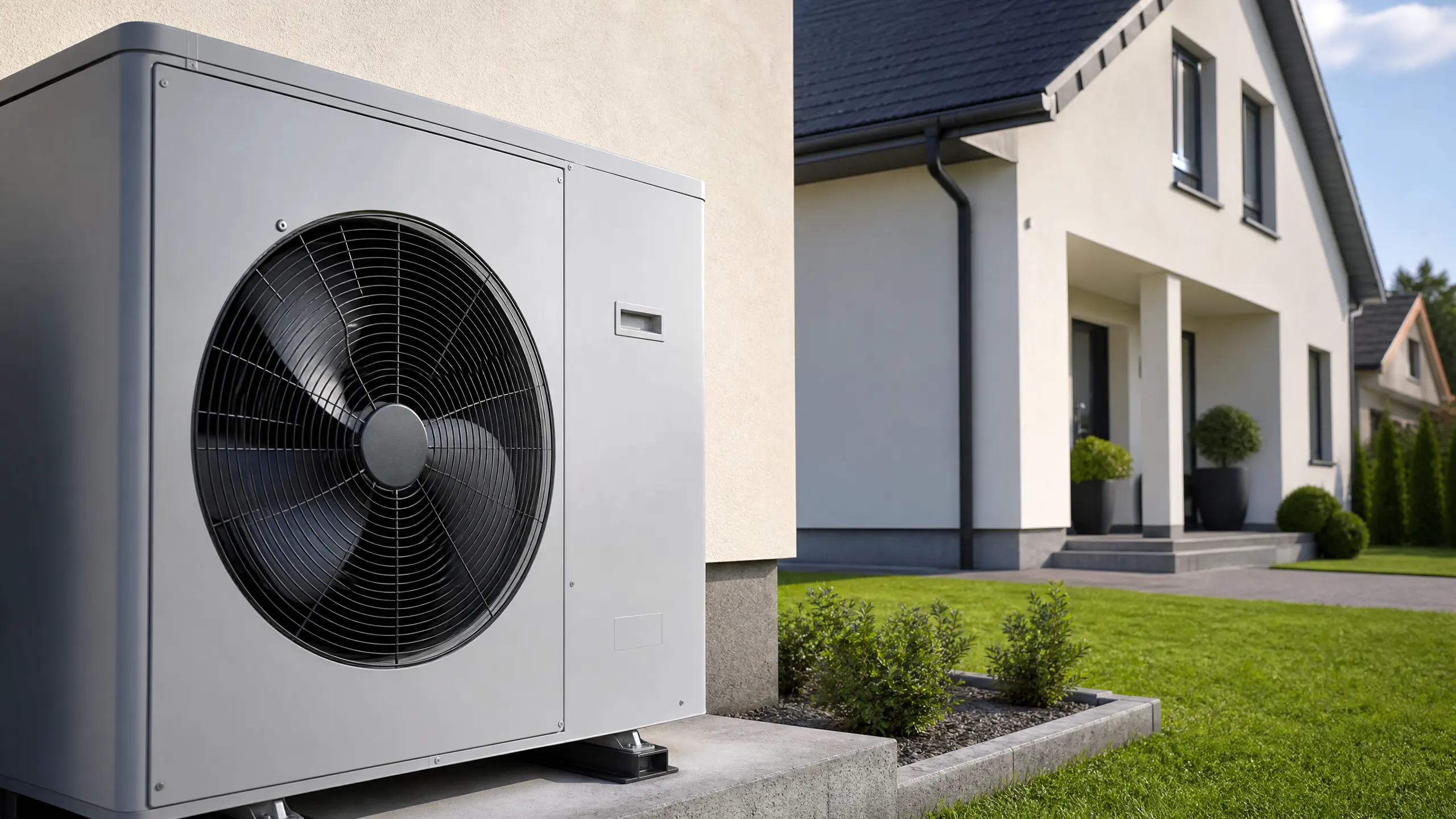
A grey air-source heat pump outdoor unit mounted on a concrete pad next to a modern white-rendered residential house.

Heat Pump Repair in Denton, TX

Tell us about the job

Takes about a minute. No obligation.

Step 1 of 3: Equipment

The tech checks the whole system, not just the symptom

A heat pump that won't heat might have a problem in the outdoor unit, the indoor coil, the thermostat wiring or the refrigerant charge. The tech will check refrigerant pressures, test the reversing valve, look at the defrost control board, and check electrical connections before naming the cause. A heat pump has more parts doing more jobs than a standard furnace, since it has to move heat both directions, so there are more places for something to go wrong.

What the visit tells you

By the end, you should know what failed, why it failed, and whether it's a quick part swap or something bigger like a compressor issue. That matters because a heat pump that short cycles or runs constantly without heating well is often costing you in power use even before it fails completely. Knowing the actual cause lets you decide whether to repair it or whether the unit is old enough that replacement makes more sense.

5 months
November through March, your system heats
6 months
May through October, it cools
36°F
the average winter night it heats against
94°F
the average summer afternoon it cools against
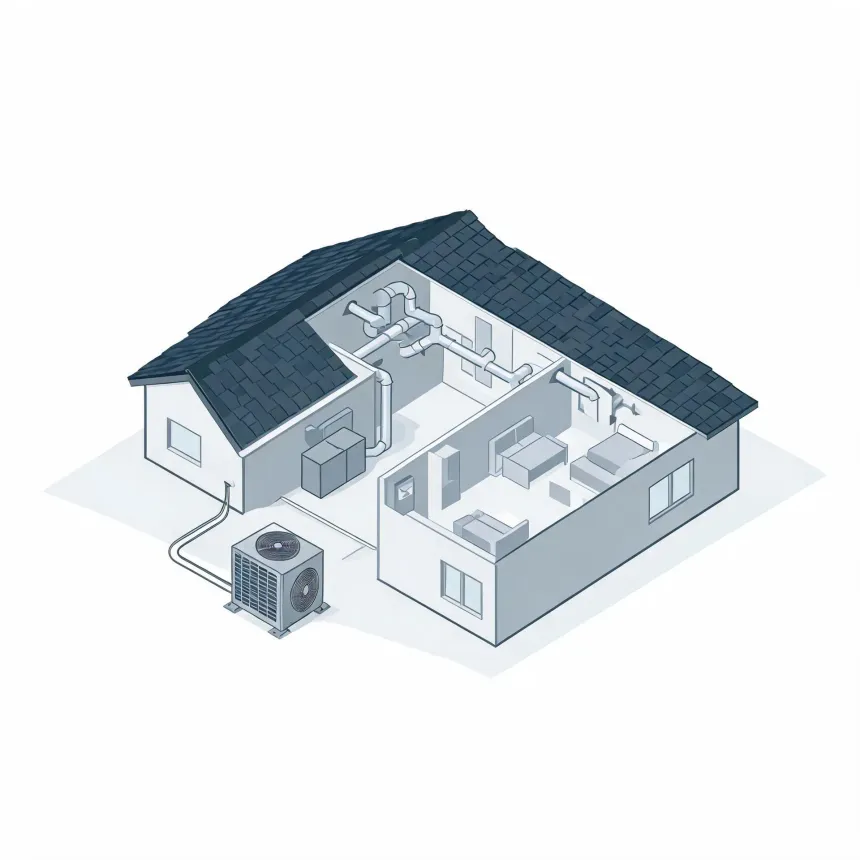
Isometric cutaway illustration of a single-story house showing interior rooms, ceiling ductwork, an indoor air handler, and an outdoor condenser unit connected by lines on the ground.
Your system heats November through March and cools May through October.

NOAA nClimDiv, 1991–2020 normals

Denton County logged 355 hail events between 2015 and 2024, and the outdoor unit sits right in that path.

A heat pump that's taken hail hits or years of storms needs a real diagnosis, not a guess at the thermostat.

November is when a weak heat pump gets found out

Cooling runs May through October
Heat runs November through March
355 hail events from 2015 to 2024
Denton heat pump repairElectricity here runs 14.94 cents a kilowatt-hour, so a heat pump that's struggling costs you while it's still running.

Half the homes in Denton County were built in 2003 or later, so there's a good chance yours is one of the newer systems in the area. A heat pump that age has likely got plenty of life left in it, even after hail or a hard summer. If yours came with the house, check the install date on the unit's data plate before you assume the worst. That one number tells you more than the age of the house ever could. Most of the time, a problem at this stage is a part failure, not the system wearing out, and that points toward repair rather than replacement.

Get it diagnosed properly

Your heat pump works hard here, and that's usually what's behind the problem. Have it diagnosed properly so the fix lasts.

Find a contractor
A man in a dark jacket and brown work pants, seen from behind, climbs wooden porch steps toward an orange door while carrying a canvas tool bag, with a potted shrub in a terracotta urn to the right.
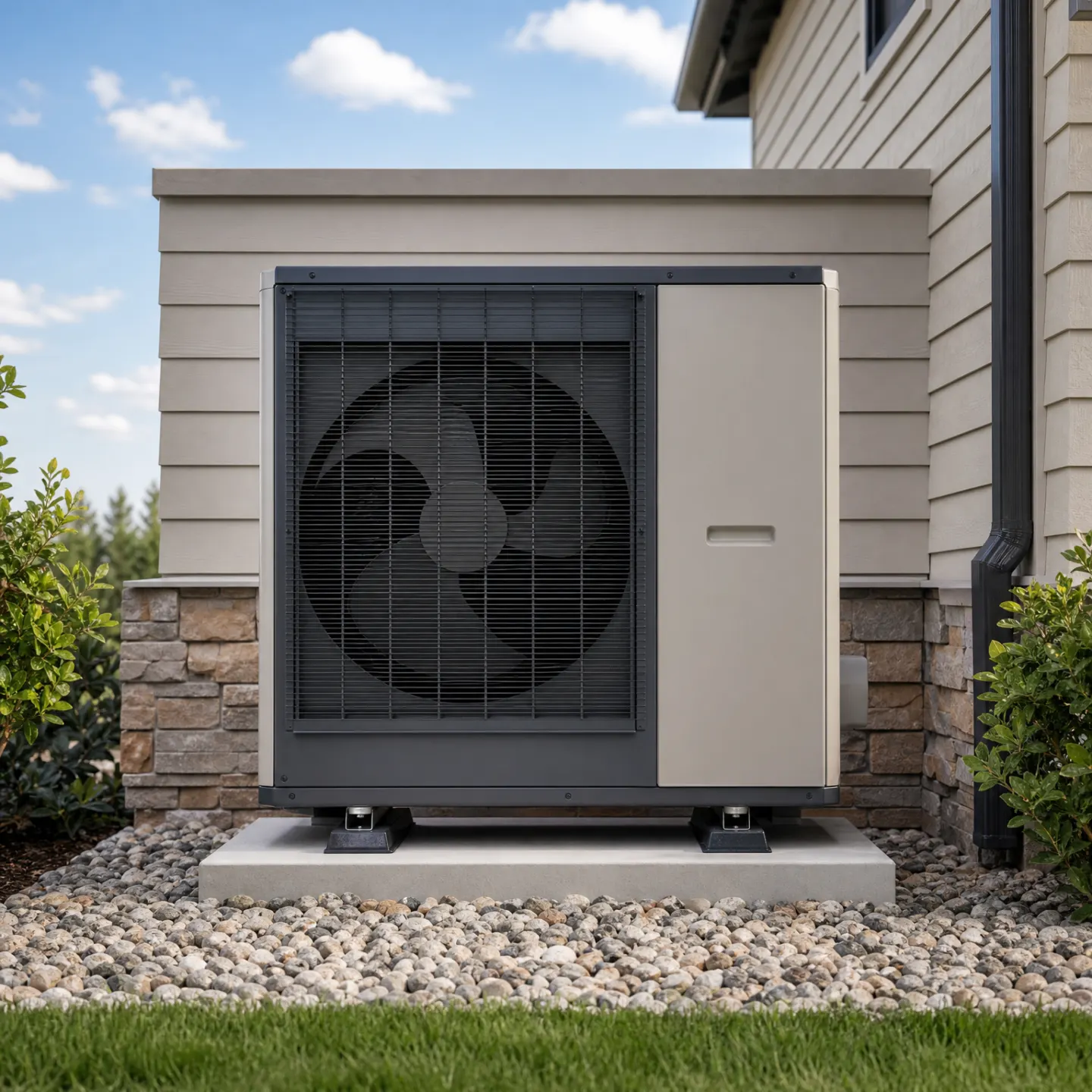
A gray heat pump outdoor unit mounted on a concrete pad next to the stone-accented exterior wall of a house.

Storm damage doesn't always show up right away

Hail doesn't have to crack a panel to leave a mark. A coil fin gets bent, a sensor line gets jarred loose, and the unit keeps running for months before you notice it's not heating right. If yours has been through a few storm seasons, that's worth ruling out before anything else. A tech can check the outdoor coil and refrigerant lines for storm damage alongside the usual electrical and control checks, so the fix addresses what actually happened to the unit, not just the symptom it's showing now.

Check the thermostat settings first

Make sure it's set to heat, not cool, and that the set temperature is actually above room temperature. A battery running low can also cause the display to blank out or stop responding. It takes a minute to rule out before assuming the unit itself has failed.

Look at the outdoor unit

Walk outside and see if the unit is running and if air is moving through it. Clear away leaves, mulch or anything stacked against the cabinet, and check if the coil is caked in ice outside of a normal defrost cycle. If the fan isn't turning at all, tell the tech that before they arrive.

A heat pump that's not heating right rarely fixes itself by staying on. If the charge is low, running it longer just pulls more liquid refrigerant through the compressor, and that's what ends up killing it. If the defrost board isn't cycling right, ice keeps building on the outdoor coil, and a coil packed in ice can't pull in heat no matter how long the unit runs. Even a simple electrical fault gets worse under load, since a connection that's loose or corroded heats up more every time current passes through it. The symptom you can see, weak heat or a unit that won't shut off, is rarely the whole problem. What started as a part failure can turn into a compressor replacement if it keeps running while something else is wrong.

A compressor failure almost always means replacement, since swapping one out costs close to what a new system does and the rest of the unit has usually aged right alongside it. A bad capacitor, a failed contactor, a stuck reversing valve or a cracked defrost sensor are a different matter. Those are individual parts, they fail on their own schedule, and fixing one doesn't mean the next is close behind. The question worth asking isn't just what broke but what else has already been replaced on the same unit. A heat pump that's needed several unrelated repairs in a short stretch is telling you something different than one that's run clean for years and just had a part give out. Age matters less than pattern.