


Texas Cooling Help
A tall wooden privacy fence runs along the left side of a dry grass lawn, with a row of single-story brick houses with dark shingled roofs on the right and oak branches overhead against an overcast sky.

Heat Pump Repair in Corpus Christi, TX

Tell us about the job

Takes about a minute. No obligation.

Step 1 of 3: Equipment

Nueces County logged 127 severe weather events between 2015 and 2024, most of it wind and hail. A heat pump sits outside through all of that, with nothing but a thin coil and a fan grille between the works and the weather. Hail dents fins and bends them shut, and wind-blown debris does the same or worse. A unit can take that kind of hit and keep running for weeks before the house stops cooling right. If your heat pump has been through a storm, the coil and the fan are worth a look even if it still seems fine.

3 months
December through February, your system heats
9 months
March through November, it cools
50°F
the average winter night it heats against
94°F
the average summer afternoon it cools against
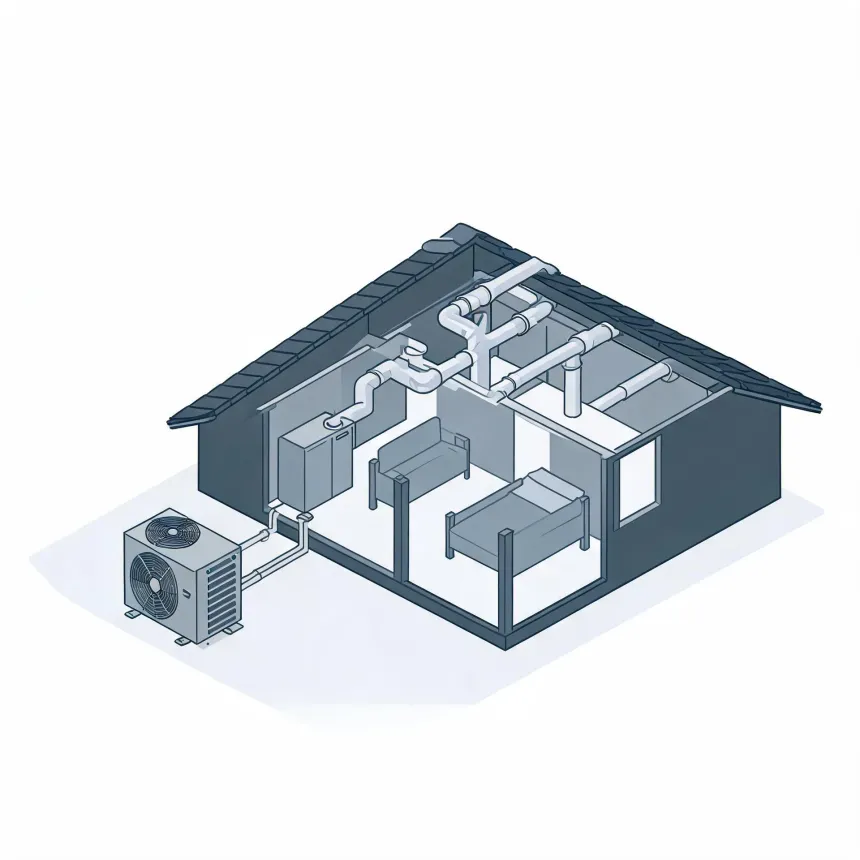
Isometric cutaway illustration of a house showing interior ductwork, an indoor air handler, and beds, with an outdoor condenser unit connected by lines outside the wall.
Your system heats December through February and cools March through November.

NOAA nClimDiv, 1991–2020 normals

A tech starts by asking what the system is doing, not by opening a panel.

Short cycling points to one part, a frozen coil to another, long before a screwdriver comes out.

November is when a weak heat pump gets found out

Cooling runs March through November
Heat runs December through February
Power costs 14.94 cents a kWh statewide

Half the houses in Nueces County were built in 1983 or later. If yours is one of them, the heat pump giving you trouble may not be as old as the house itself. Units get swapped out over the years, and a system installed in a newer home has usually had less time to take the kind of wear that adds up to a full replacement. That changes the math on a repair. A compressor or a control board problem in a system with years of life left is worth fixing. Ask whoever comes out how old the unit actually is before anyone talks about replacing it.

Had storm damage? Get the heat pump checked before it quits on you

After a storm, a heat pump that still runs isn't the same as one that's fine. Get the coil and fan grille looked at before the next heat wave makes a dent in the fins into a system that can't keep up.

Find a contractor
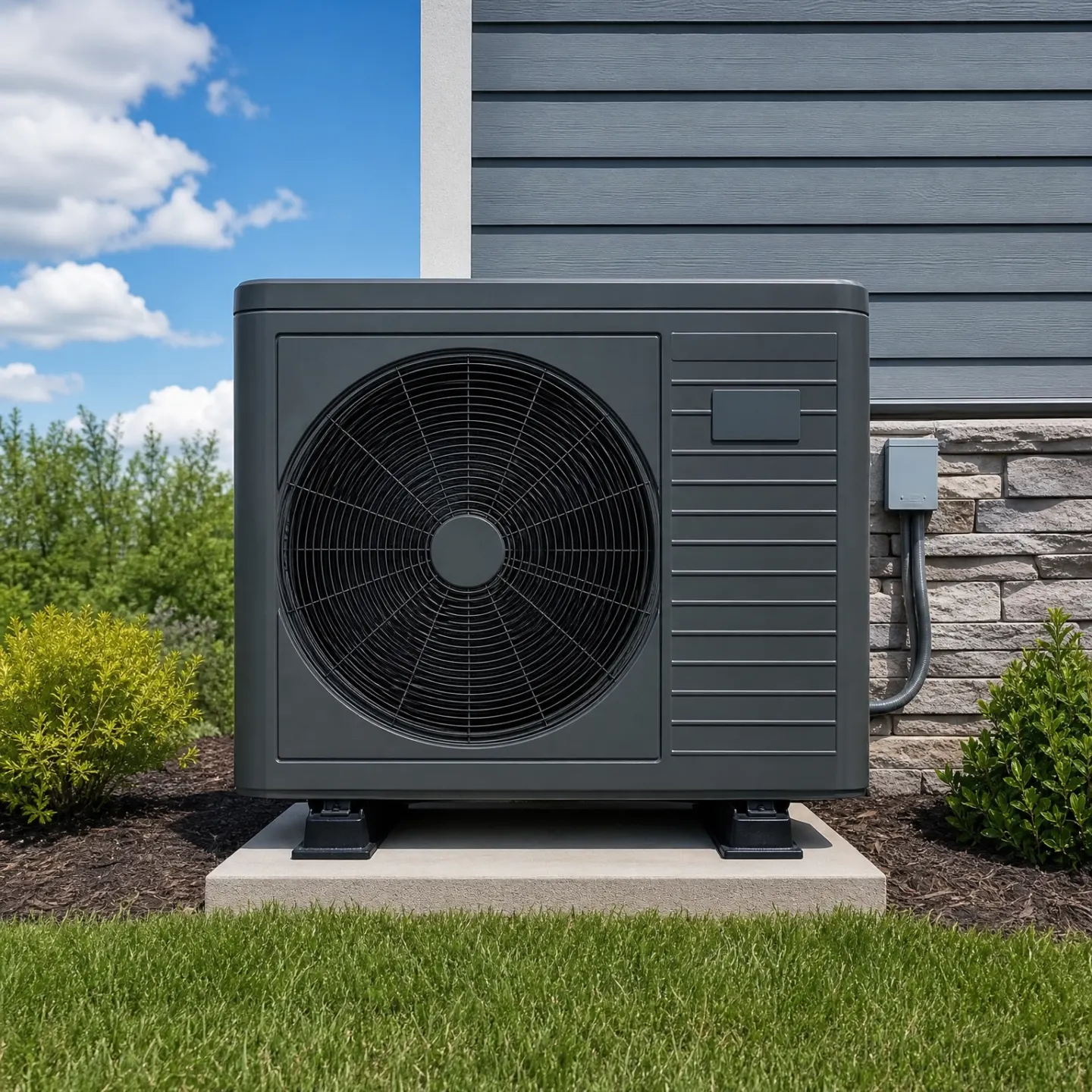
A dark gray heat pump unit mounted on a concrete pad next to a house with gray siding and a stone veneer wall.

Less time running means less wear to find

The clip beside this runs a day into a night, but a unit in a newer home hasn't logged many years doing that yet. If 1983 or later is about right for the house, ask the contractor for the install date on the unit itself before you agree to anything bigger than a repair.

Check the thermostat and the breaker first

Set it to heat and bump the temperature up past the room reading. The outdoor unit should kick on. If nothing happens, check the breaker for the heat pump and the one for the air handler, since a heat pump runs on separate circuits for each. A breaker that resets and then trips again means a short somewhere, and that's not something to keep flipping back on.
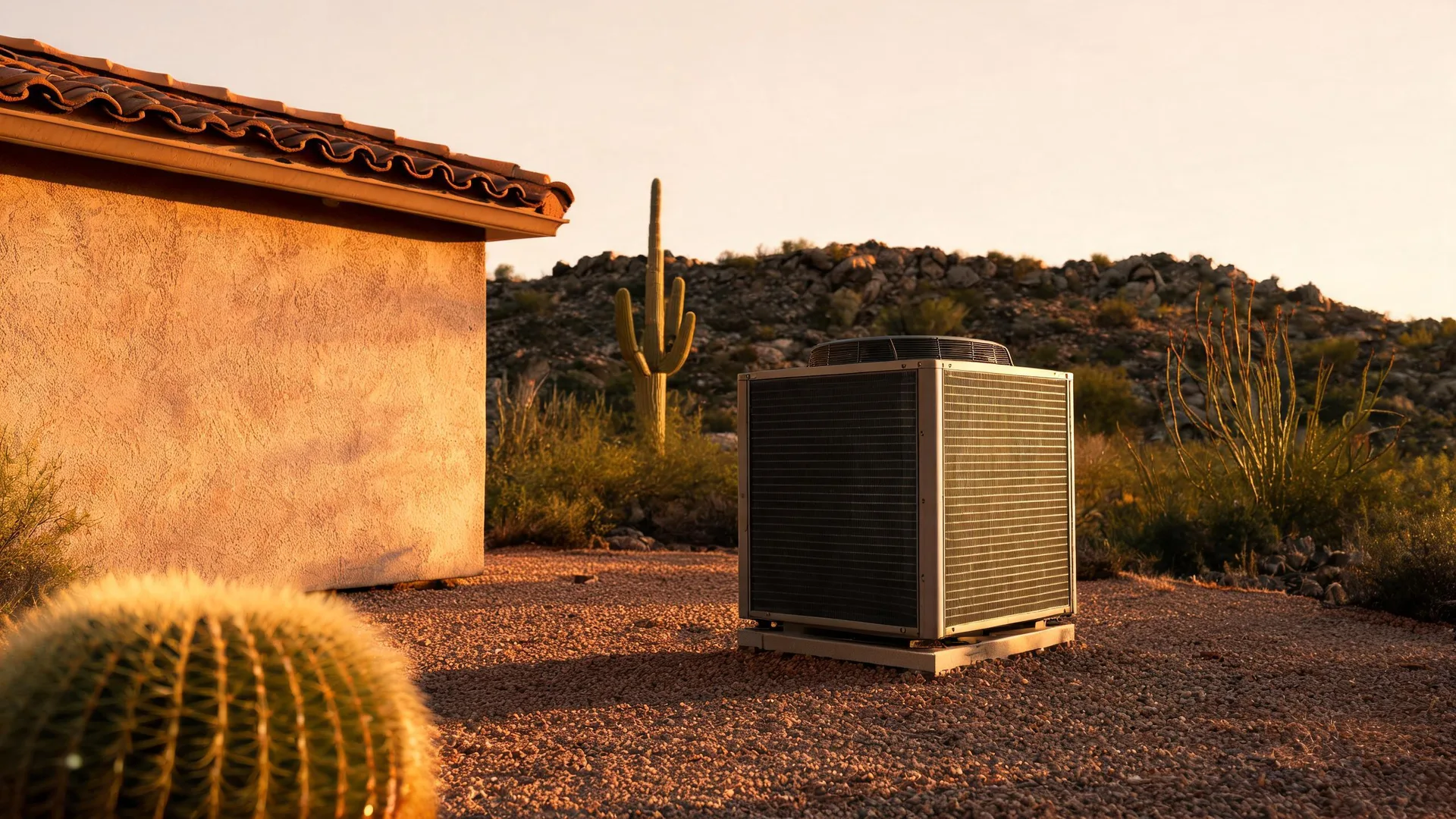
Look at the outdoor unit before you call anyone

Walk outside and check the coil for leaves, grass clippings or anything blocking airflow through the fins. Check that the fan on top spins freely and isn't grinding or wobbling. A heavy coat of ice on the coil outside of genuinely cold weather usually means the system needs a professional look, not a thaw and a wait to see if it clears on its own.

A heat pump fails in a handful of predictable ways. The reversing valve is the part that lets it switch between heating and cooling, and when it sticks, the system keeps running but stops doing what the thermostat asked for. A compressor can fail outright after years of cycling on and off, usually the last part to go after everything else has been strained for a while. Low refrigerant almost always means a leak somewhere in the lines, not the unit just running low the way a car burns gas. Capacitors wear out quietly, giving the fan or compressor a weak start until one day they don't start at all. A dirty outdoor coil makes the whole system work harder to move heat, and over time that strain is what pushes other parts toward failure.

Most heat pump problems show up as something the system is doing, not something you can see. It runs constantly and the house still won't hold its temperature, which usually means it can't keep up anymore, not that the thermostat is set wrong. It blows air that isn't warm or isn't cool, which points to the reversing valve or the refrigerant charge before anything else. It short cycles, turning off soon after it starts, which strains the compressor every time it happens. It makes a new sound, a click before startup, a hum with no fan movement, a grinding from the outdoor unit, and none of those are things to wait out. Ice on the outdoor coil in mild weather, or the system running nonstop without catching up, are both signs the problem is past the point of clearing on its own.