Texas Cooling Help
An outdoor air conditioning condenser unit mounted on a concrete pad in front of a single-story suburban house.

Heat Pump Repair in College Station, TX

Tell us about the job

Takes about a minute. No obligation.

Step 1 of 3: Equipment

Check the thermostat and the breaker first

Make sure the thermostat is set to heat or cool and the setpoint is actually past room temperature. Check the breaker panel for the heat pump and the air handler, since a tripped breaker will shut the whole system down and look like a bigger problem than it is. If the outdoor unit is caked in ice, flip the system off and let it thaw before anyone touches it.

Know what to tell the contractor

Walk around the outdoor unit and clear away leaves, mulch or anything blocking airflow into the coil, then note whether the fan is spinning or the unit is dead quiet. Check the filter and swap it if it is gray or clogged. Telling the tech what the thermostat shows, whether you hear the outdoor fan run, and when the trouble started helps them narrow it down before they even get there.

5 months
November through March, your system heats
7 months
April through October, it cools
41°F
the average winter night it heats against
94°F
the average summer afternoon it cools against
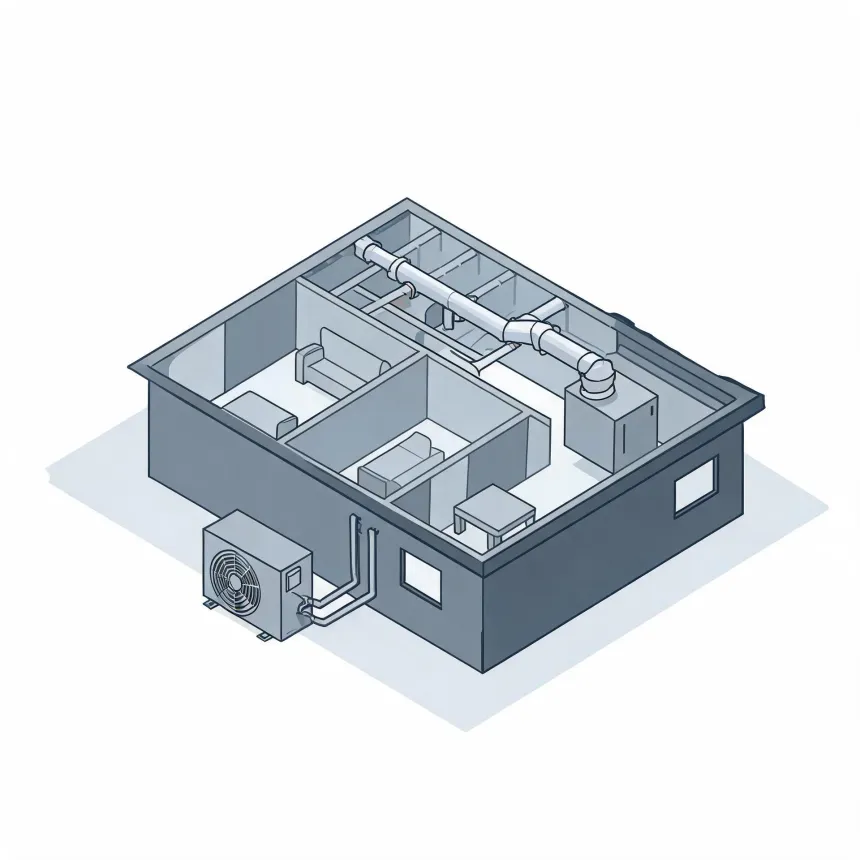
Isometric line illustration of a cutaway single-story building showing interior rooms, ceiling ductwork, an indoor air handler, and an outdoor condenser unit connected by refrigerant lines.
Your system heats November through March and cools April through October.

NOAA nClimDiv, 1991–2020 normals

Half the houses in Brazos County were built in 1997 or later.

A heat pump that came with a newer house still has working life in it, so a repair call makes sense before anyone talks replacement.

November is when a weak heat pump gets found out

Cooling runs April through October
Heat runs November through March
Power costs 14.94 cents a kWh statewide

Most heat pump problems here are the same ones a tech would find anywhere else. A dirty filter, a low charge, a failed capacitor, a stuck reversing valve. Nothing about College Station wears on a heat pump harder than it does elsewhere. That matters because it means the fix is usually ordinary too, not a sign the whole system is on its way out. Texas electricity ran 14.94 cents a kilowatt-hour in 2024, so a heat pump that has to work harder than it should shows up on the bill fast. If yours is running long cycles or not keeping up, that is reason enough to get it looked at, not a reason to assume the worst.

Repair it

If your system came with a newer house, it likely has plenty of life left. Repair is usually the right call.

Find a contractor
A man in a dark long-sleeve shirt and tan work pants, seen from behind, carries a canvas tool bag up wooden steps toward an orange front door with a potted plant beside it.
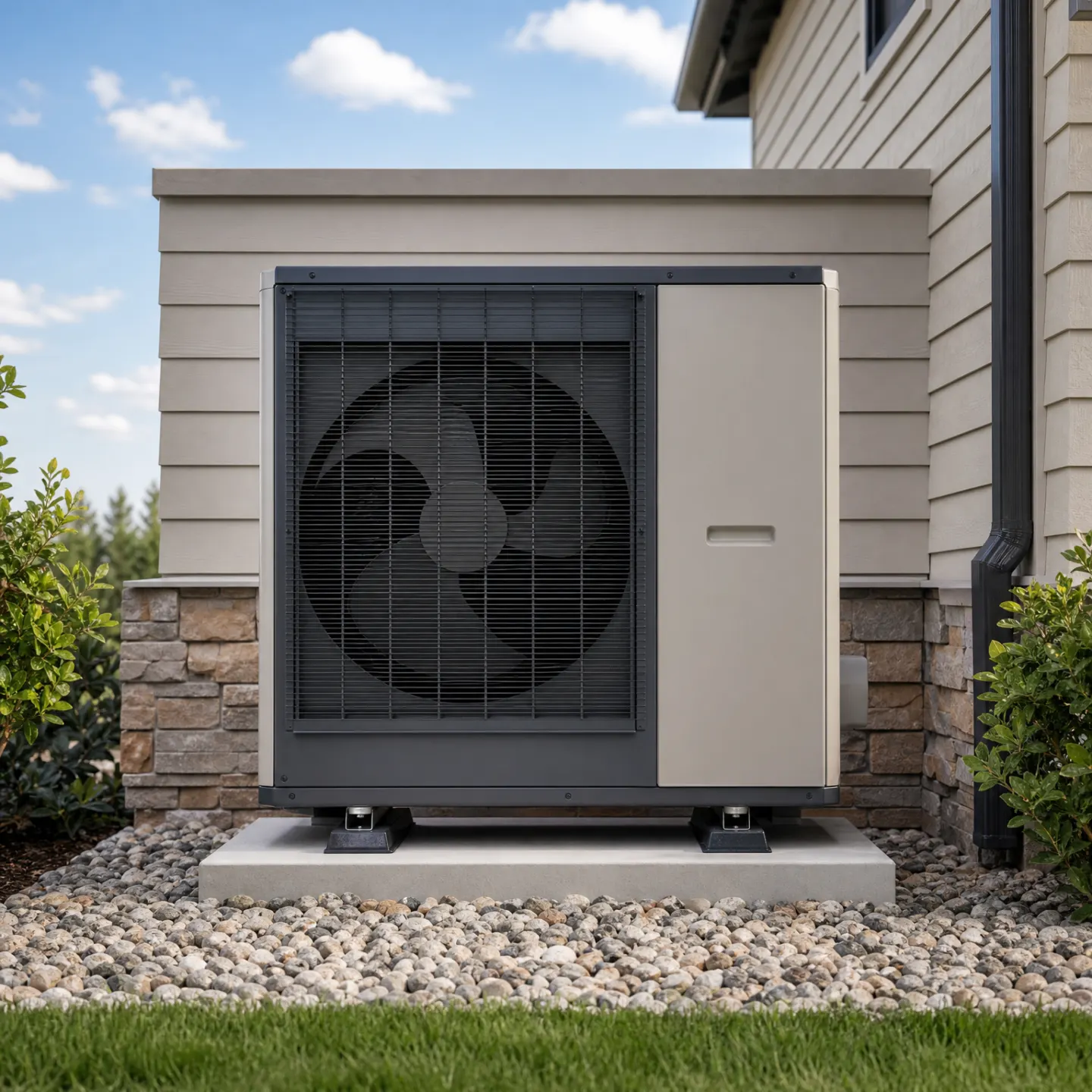
A gray heat pump outdoor unit mounted on a concrete pad next to the stone-accented exterior wall of a house.

A heat pump that's been reliable the rest of the year is usually worth fixing

A heat pump doesn't get a season off the way a furnace or an air conditioner does. It runs in winter to heat and runs again in summer to cool, so the same compressor is working year round. That's worth knowing when something acts up. If the unit has been reliable the rest of the year and the trouble only shows up now, that points to something specific going wrong rather than a system that's simply worn out. A compressor that's actually on its way out doesn't wait for the weather to change. It struggles in whatever mode it's running, and it keeps struggling. One bad stretch during a cold snap isn't the same as a pattern that shows up every time the unit kicks on.

It blows air that isn't warm or cold

A heat pump stuck on fan, or blowing air that feels barely different from the room, usually means the reversing valve is stuck or the refrigerant charge is low. Either way the unit is running without actually moving heat.

It won't stop defrosting itself

Some frost on the outdoor coil in cold weather is normal, and the unit should clear it on its own every so often. If it never seems to come out of defrost, or ice keeps building back faster than the cycle clears it, the defrost control or a sensor on the coil has likely failed.

A heat pump that's struggling still runs, and that's what causes the damage. Low refrigerant charge makes the compressor work harder to move the same amount of heat, so it runs hotter than it was built to. Keep that up for days or weeks and the compressor can fail outright, instead of just needing the leak found and the charge topped off. A failing capacitor wears the same way. The motor struggles to start, it pulls more current than it should, and over time that current wears down windings that were fine before. Ice on the outdoor coil follows the same pattern. A little is normal, but if the defrost cycle isn't clearing it, ice builds on top of ice and blocks the airflow the unit needs to run at all. None of these start as emergencies. They turn into one because the system kept running while the real problem sat there unfixed.

A diagnostic call starts outside at the unit, not inside at the thermostat. The tech checks refrigerant pressure, looks at the condition of the coil, and listens to how the compressor sounds when it kicks on. Inside, they'll pull the filter, check airflow across the air handler, and test the capacitor and the contactor, since those fail more than people expect and are quick to rule out. If the system has been running in defrost or not keeping up, they'll check the reversing valve and the defrost control board, because either one can fake the same symptom. Most of this is testing, not guessing. A heat pump either holds the right pressure and amp draw or it doesn't, and that tells the tech what's actually wrong before anything gets replaced.