




Texas Cooling Help
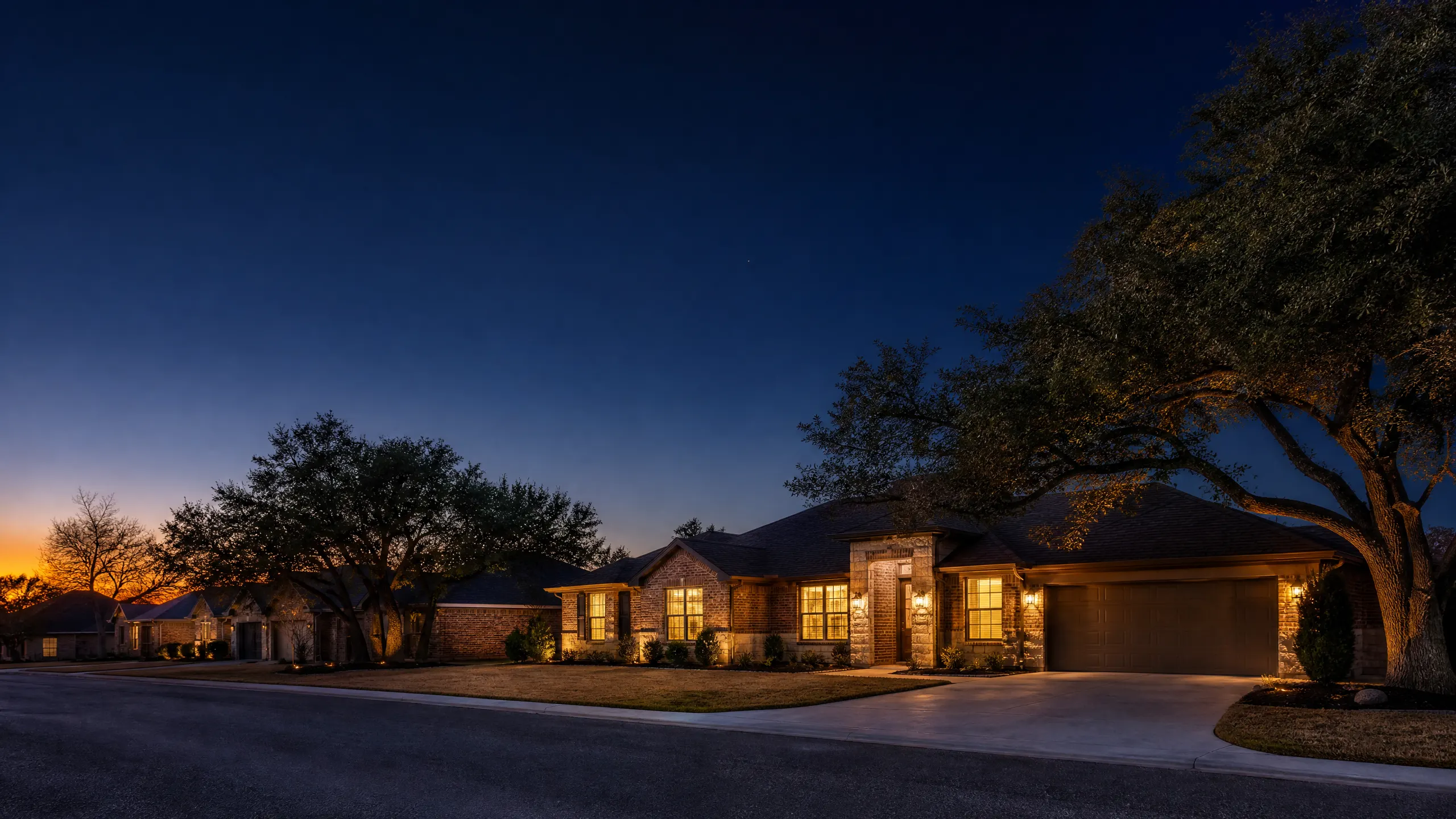
A lit single-story brick ranch house with a two-car garage photographed at dusk on a quiet residential street lined with oak trees.

Heat Pump Repair in Burleson, TX

Tell us about the job

Takes about a minute. No obligation.

Step 1 of 3: Equipment

Hail is the thing to watch here. Johnson County saw 98 hail events between 2015 and 2024, and a heat pump's outdoor unit sits right out in it. Thin aluminum fins and the coil behind them don't take a direct hit well. A storm can bend fins, dent the cabinet, or crack a fan blade without the system losing power right away, so it keeps running on a damaged coil for weeks before you notice airflow dropping off or the unit working harder than it should. If your heat pump is acting up after a storm season, that history is worth mentioning to whoever comes out to look at it.

5 months
November through March, your system heats
6 months
May through October, it cools
38°F
the average winter night it heats against
94°F
the average summer afternoon it cools against
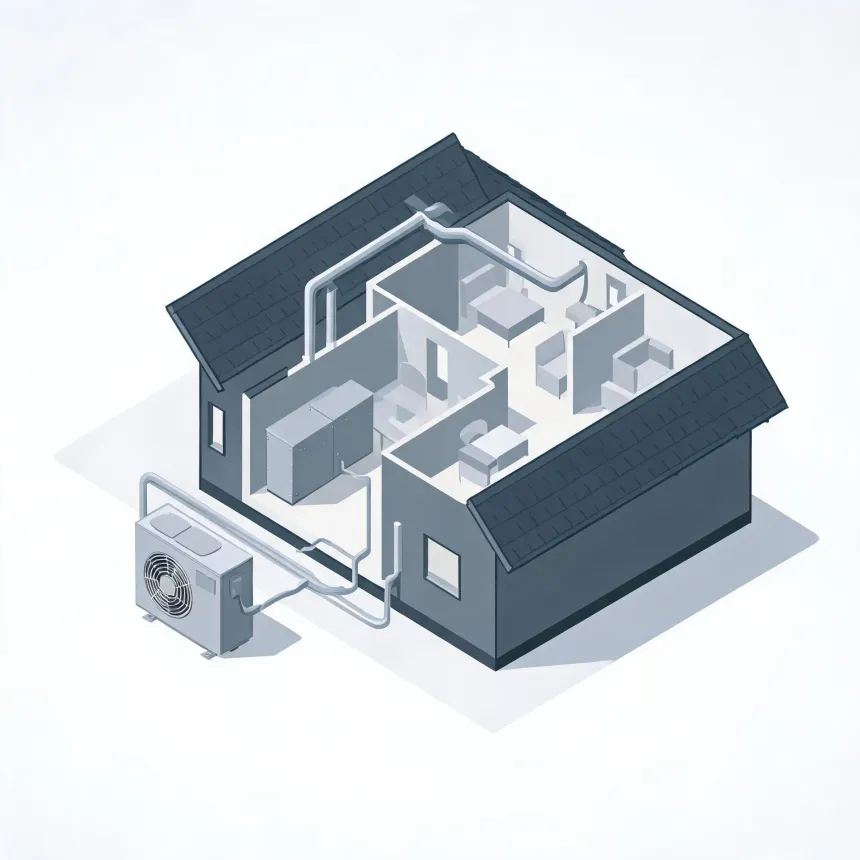
Isometric grayscale illustration of a cutaway house showing interior rooms, ductwork and an indoor air handler connected by lines to an outdoor condenser unit on the ground outside.
Your system heats November through March and cools May through October.

NOAA nClimDiv, 1991–2020 normals

Heat pumps in Johnson County start their cooling run in May and switch to heat in November.

The first cold snap or the first hot stretch is when a weak part gives out, so November and May are when heat pump repair calls here spike.

Half the homes here were built in 1997 or later, so the heat pump is often newer too

Half the homes here were built by 1997
Climate zone 2A
Power costs 14.94 cents a kWh statewide
Johnson County sees its share of storms177 severe weather events hit Johnson County between 2015 and 2024.

A heat pump repair here is usually what it would be anywhere. A capacitor weakens, a contactor pits, the reversing valve sticks, or the refrigerant charge drops low. None of that is particular to Burleson. What does cost something is electricity, since Texas homes paid 14.94 cents per kilowatthour in 2024, and a heat pump running on a weak part pulls harder to do the same job. A system low on charge or short on airflow will keep heating or cooling the house, just by spending more to get there. That's often the first sign something needs a look, before the unit stops outright.

After a hailstorm, get the coil checked before the problem gets worse

If your outdoor unit has been through a hailstorm, a dent in the cabinet or a bent fin doesn't always stop it from running right away. It can keep working on a damaged coil for weeks while it loses efficiency. Worth having someone check it, especially if it's acting up now.

Find a contractor
A man in a cap, dark shirt and tan work pants, seen from behind carrying a worn canvas tool bag, steps up onto a porch toward an orange front door beside a potted shrub.
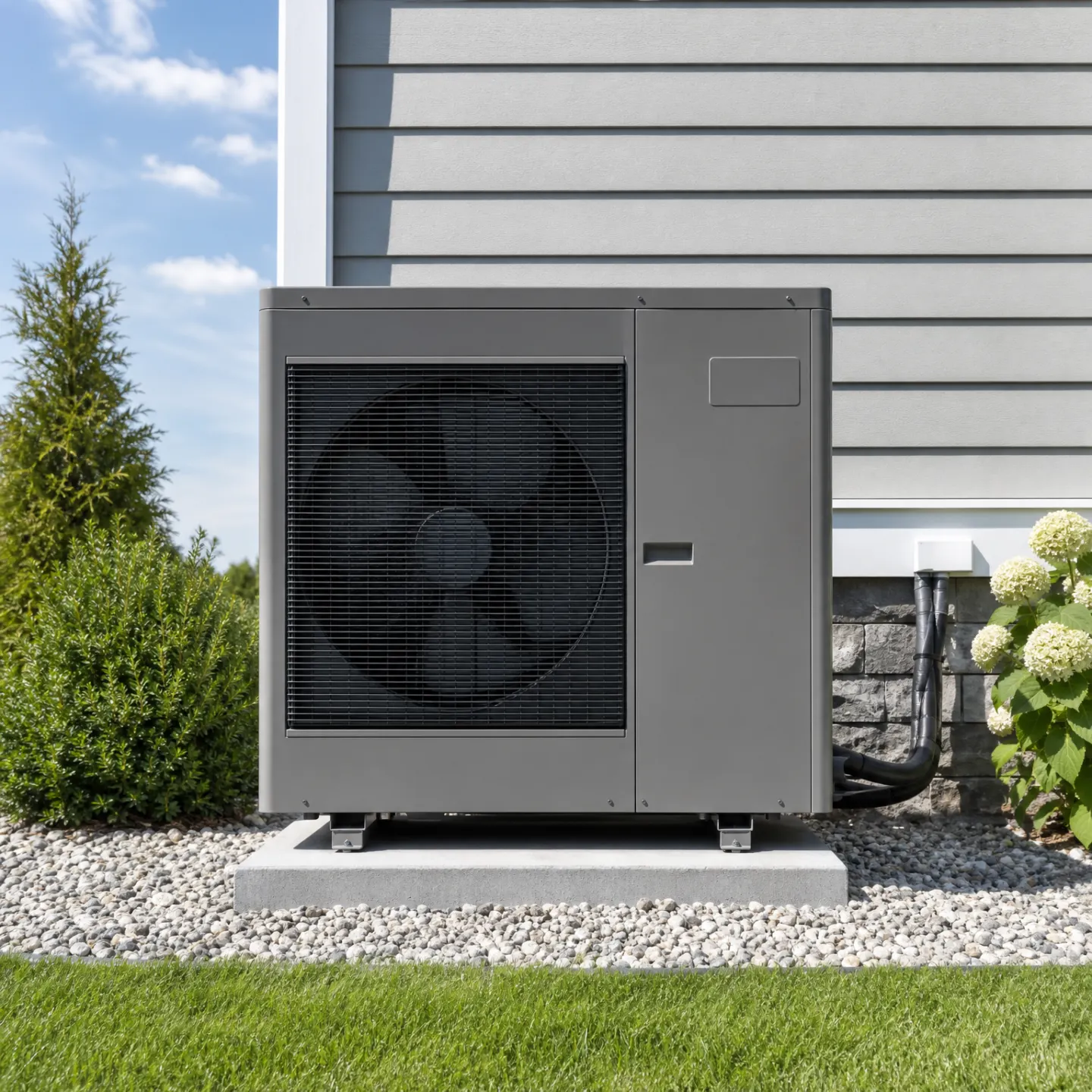
A gray air-source heat pump mounted on a concrete pad next to a house with gray vinyl siding, surrounded by gravel and flanked by green shrubs and white hydrangea flowers.

A newer system is worth repairing first

If your house went up in 1997 or later, the heat pump probably isn't old enough to be wearing out on its own. That points to a repair, not a replacement. A capacitor or a contactor failing on a newer system is just a part giving out, not the whole unit reaching the end of its life. Tell the tech when the house was built, or the age of the system if you know it. That's what lets them rule out old age and go straight to what's actually wrong.

A small fault makes the compressor carry the load

A low charge or a weak capacitor doesn't stop a heat pump from running. The compressor just works harder to move the same heat. Keep it running that way long enough and the compressor is what finally gives out, not the part that caused the strain in the first place.
A sticking reversing valve gets worse, not better

A reversing valve that hesitates when the system switches between heat and cool is already wearing. Every cycle it sticks on asks the compressor to push against a valve that isn't fully seated. Left alone, a valve that sometimes sticks turns into one that stays stuck.

Most heat pump failures start small and electrical, not with the compressor itself. A capacitor loses its charge over time and can't give the motor the kick it needs to start, so the outdoor unit hums but the fan doesn't turn. A contactor pits from arcing every time it opens and closes, until it stops making contact at all. Either one takes the whole system down, because nothing downstream of it can run. The reversing valve fails differently. It's what switches the system between heating and cooling, and when the coil inside it wears or the valve body sticks, the unit can get stuck running one mode no matter what the thermostat asks for. None of these parts fail from age sitting idle. They fail from cycling on and off every time the system runs, in both directions, all year.

Most heat pump repairs are worth doing. A capacitor or contactor is a small part, and swapping it brings the whole system back to normal operation. The compressor is the exception. It's the most expensive part in the unit, and if it's failing, a straight answer matters more than a quick repair that won't hold. A failing compressor usually shows itself by tripping breakers, running loud, or not building pressure at all. A unit that's been maintained and just had one part give out is a different situation than one that keeps coming back with new problems. Ask what failed and why, not just whether it can be fixed.