



Texas Cooling Help
Two illuminated single-story brick houses with mature oak trees photographed at twilight on a quiet residential street.

Heat Pump Repair in Brownsville, TX

Tell us about the job

Takes about a minute. No obligation.

Step 1 of 3: Equipment

The question is usually whether the compressor is still good. That's the part that costs the most to replace and the part everything else depends on. If a contractor finds the compressor is failing, putting more money into the system rarely makes sense. If the problem is something else, a capacitor, a contactor, a reversing valve, a board, those are normal repairs on a system that still has plenty of life left. Age matters too, but not by itself. A heat pump that keeps needing service calls is telling you something different than one that's been trouble free and just tripped a breaker. Ask the contractor what's actually wrong before you decide anything, not just how old the unit is.

2 months
December through January, your system heats
10 months
February through November, it cools
53°F
the average winter night it heats against
94°F
the average summer afternoon it cools against
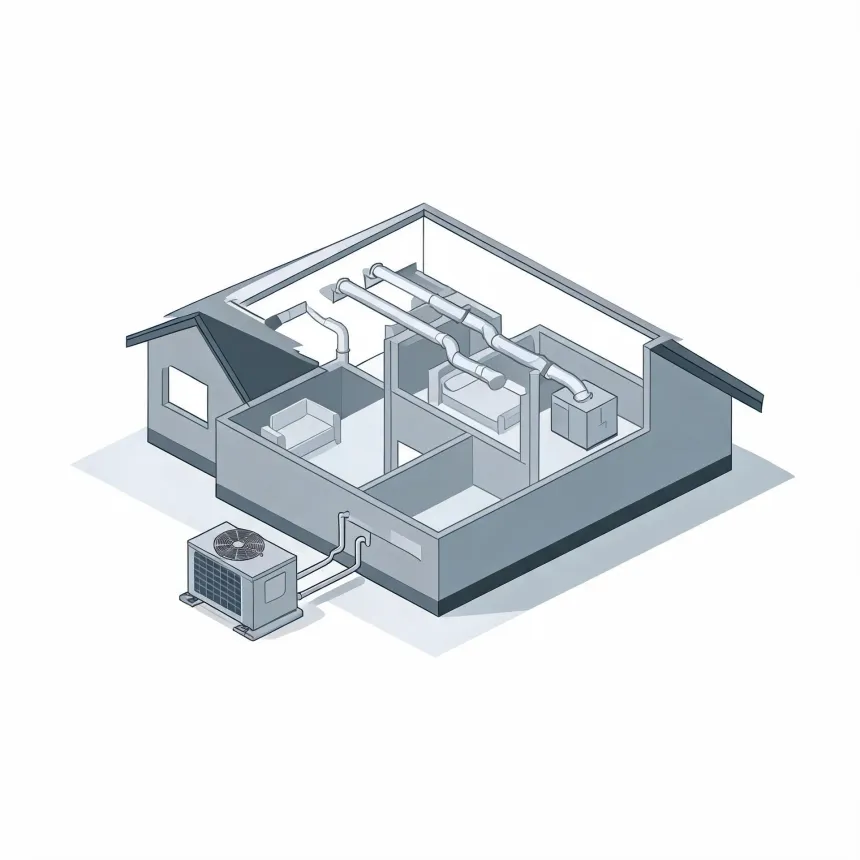
Isometric grayscale illustration of a cutaway house showing interior rooms, ceiling ductwork and an air handler, connected by lines to an outdoor condenser unit on a pad outside.
Your system heats December through January and cools February through November.

NOAA nClimDiv, 1991–2020 normals

A heat pump here runs cooling and heating both, most of the year.

More hours on the system means parts wear sooner, so the fix is usually something small and normal.

Heat pump problems here tend to surface in February and December, the first weeks of a new season

Cooling runs February through November
Heat runs December through January
Power costs 14.94 cents a kWh statewide
Cameron County sees its share of storms132 severe weather events hit Cameron County between 2015 and 2024, most of them damaging wind

Since the house is probably newer, there's a decent chance the heat pump is the original unit, or close to it, and not something patched together over the years. That changes the math on a repair. A contractor can check the compressor and tell you if it's sound. If it is, fixing a capacitor or a board on a newer system is money that holds its value, because the rest of the unit still has years in it. Ask what year the system was installed if you don't already know. That one number tells the contractor more than guessing at it from the outside.

If the outdoor unit took a hit, get it checked even if it's still running

After wind or hail, a heat pump can keep running for a while before the real damage shows up. Bent fins, a cracked fan blade, debris in the coil, none of that always stops the system right away. Have a contractor look at the outdoor unit after a bad storm, not just when it quits.

Find a contractor
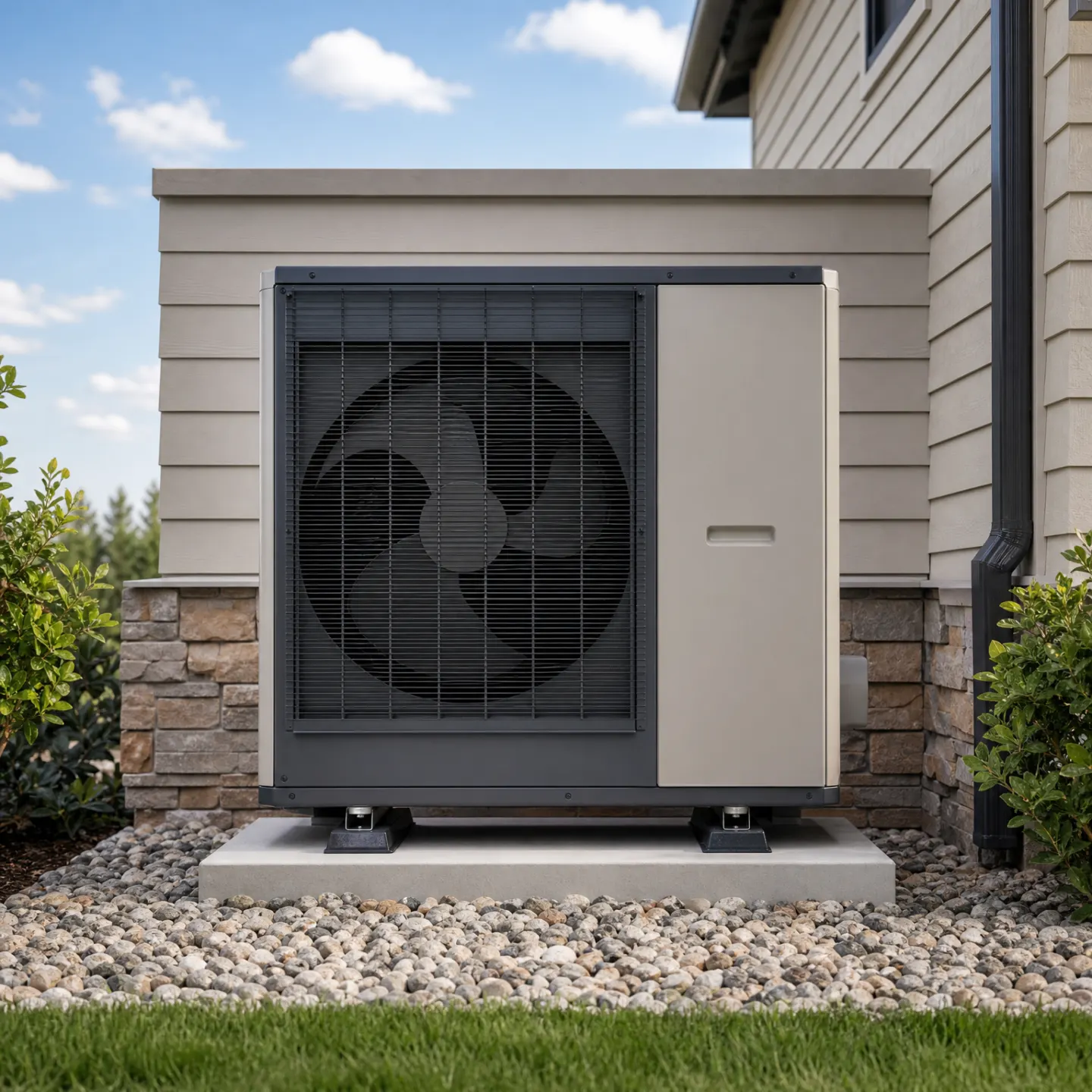
A gray heat pump outdoor unit mounted on a concrete pad next to the stone-accented exterior wall of a house.

Why some problems get worse the longer it runs

A refrigerant leak does not stay the same size if the system keeps running. The compressor still tries to move heat with less refrigerant than it needs, so it runs hotter, and heat is what wears a compressor down. A weak capacitor makes the compressor or fan motor strain on every start, and each hard start brings it closer to not starting at all. A dirty coil forces the system to run longer to do the same job, and that extra runtime falls on the same parts already struggling. None of these fix themselves by waiting it out. Shutting the system off and having someone look at it keeps a small problem a small problem.

What you can check safely

Look at the outdoor unit and clear away leaves, grass clippings or anything blocking the coil. Check that the outdoor fan isn't obstructed and spins freely when the system is running. Inside, swap out a dirty filter, a clogged one starves the system of airflow and makes everything downstream work harder. Check the thermostat batteries and settings before assuming the problem is bigger than it is.
What to leave alone

Don't open the outdoor unit's cabinet or touch anything electrical inside it. Don't add refrigerant yourself or try to find a leak, that takes gauges and training to do safely. If the breaker keeps tripping when you reset it, stop resetting it and call someone, that's the system telling you it can't run safely right now.

Most people notice a heat pump before they notice a problem with it. Air coming out the vents feels wrong, lukewarm in winter instead of warm, or not as cold as it should be in summer. Short cycling is another one, the system kicking on and shutting off again in a few minutes instead of running a full cycle. Ice on the outdoor unit when it shouldn't be there, especially outside of a defrost cycle, usually points to low refrigerant or an airflow problem rather than the weather. A noise that wasn't there before, a hum, a click that repeats, a rattle when the outdoor fan spins up, is the system telling you a part is struggling before it quits outright. Any of these is worth a call. None of them get better from waiting.

A diagnostic visit starts outside, at the unit itself. A contractor checks refrigerant pressures first, because that tells them right away if the system has a leak and roughly where it is. They'll check the compressor's amp draw against what it's rated for. A compressor pulling too much current is wearing out even if it still runs. Electrical parts get tested directly, the capacitor, the contactor, the reversing valve, rather than guessed at from symptoms alone. Inside, they'll check the air handler for airflow problems, since a lot of what looks like a failing heat pump is actually a dirty coil or a weak blower motor making the whole system work harder than it should. By the end you should know what's wrong, what it takes to fix it, and whether that repair makes sense for the system you have.