Texas Cooling Help
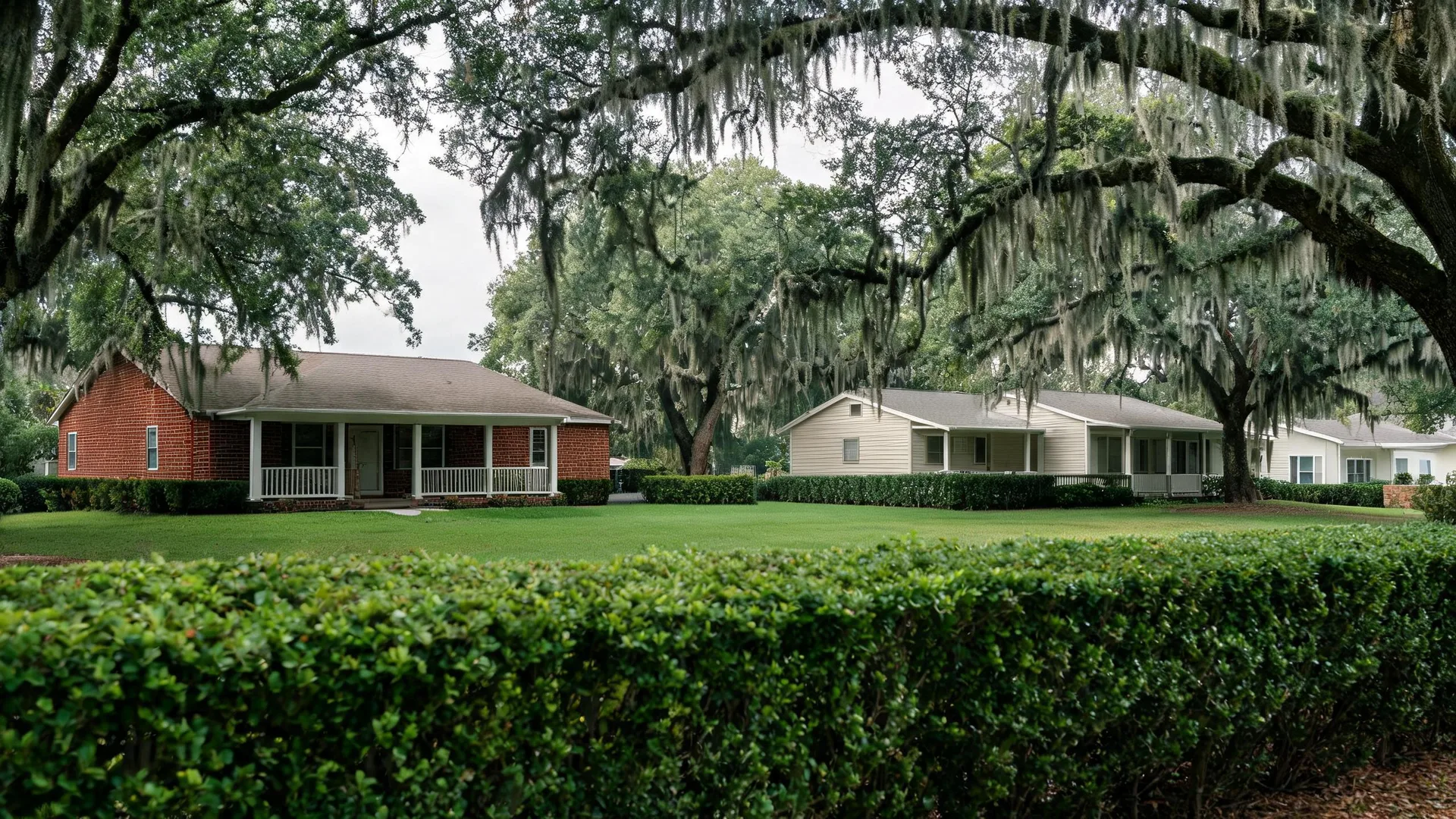
A red brick single-story house with a covered porch and adjacent cream-sided houses behind a trimmed hedge and lawn, framed by large oak trees draped with Spanish moss under an overcast sky.

Heat Pump Repair in Beaumont, TX

Tell us about the job

Takes about a minute. No obligation.

Step 1 of 3: Equipment

Age is not the problem

Half the homes in Jefferson County were built in 1978 or earlier, half in 1978 or later. That split doesn't point to any one cause. A heat pump acting up in an older house usually fails for the same reasons it fails in a newer one.

The usual causes still apply

Whatever year your house was built, a heat pump that's short cycling, icing up, or blowing warm air is almost always down to a failed capacitor, a low charge, or a dirty coil. Those get checked and fixed the same way no matter how old the place is.

5 months
November through March, your system heats
7 months
April through October, it cools
46°F
the average winter night it heats against
91°F
the average summer afternoon it cools against
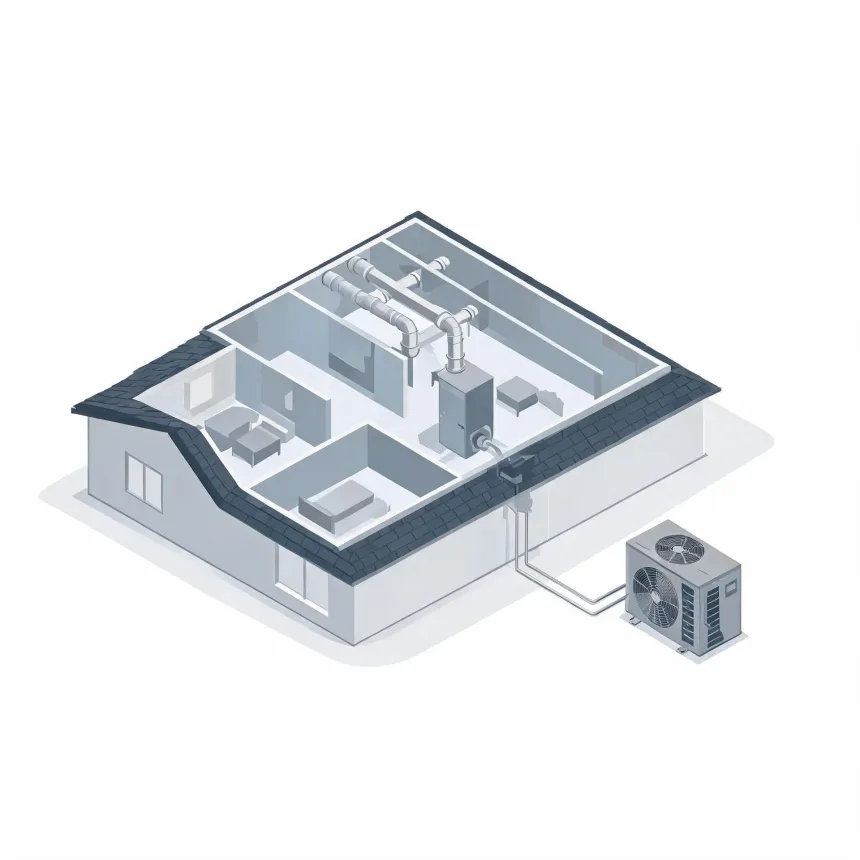
Isometric cutaway illustration of a single-story house showing interior rooms with ductwork, a furnace or air handler, and refrigerant lines running outside to a condenser unit on a pad.
Your system heats November through March and cools April through October.

NOAA nClimDiv, 1991–2020 normals

Your heat pump switches over to heat in November, so October is when a weak part still has time to get caught.

Wait until the cold snap hits and you're calling for repair on the coldest night of the year.

Jefferson County sees 93 severe weather events a decade, and the outdoor unit sits right in the path

93 severe weather events from 2015 to 2024
33% of homes statewide lost power a day or more in 2024
48 damaging wind events from 2015 to 2024

A tech starts outside at the unit itself, checking the refrigerant charge and looking at the coil for dirt or frost. Ice on the coil usually means airflow is blocked or the charge is low, and both get traced back to a cause rather than just defrosted and left alone. Next comes the electrical side. The capacitor, the contactor, the wiring at the disconnect all get checked in turn. A failing capacitor is one of the most common reasons a heat pump short cycles or won't start at all. Inside, the tech checks the air handler, the filter, and the reversing valve that lets the system switch between heat and cooling. If the system won't switch over, that valve is usually the first suspect. By the end, you should know exactly which part failed and why, not just that something did.

Get the usual fix

Nothing about this area is especially hard on it. It's most likely the usual problem with the usual fix.

Find a contractor

What you can check from inside

Look at the thermostat setting and make sure it's actually calling for heat or cooling, not sitting in a mode that does neither. Check the filter. A filter clogged with dust chokes airflow and can make a heat pump freeze up outside or run constantly without catching up. Walk around the vents and make sure none are closed or blocked by furniture or rugs. Check the breaker panel for a tripped breaker, since a heat pump that won't start at all sometimes just lost power.

What to leave alone

If the outdoor unit is iced over, don't chip at the coil or pour water on it. That ice points to a problem with airflow or refrigerant charge, and the coil fins bend easily under anything metal. Don't add refrigerant yourself even if you have some on hand. The charge has to match what the system is built for, and getting it wrong causes more damage than running low. Clearing leaves or debris away from the outdoor unit is fine. Opening it up is not.

A heat pump that's struggling doesn't stay in one place. Low refrigerant charge makes the compressor run longer to hit the set temperature, and that extra runtime puts heat and strain on a compressor that was never designed for it. A compressor failure turns a repair into a replacement. Ice on the coil is the same story. The system keeps trying to pull heat through a coil that's already blocked, so the ice builds rather than melts, and airflow keeps dropping. A weak capacitor that lets the unit limp along today can fail outright tomorrow, usually on the coldest morning, because the strain of starting up is what finally kills it. None of these fix themselves by waiting.

A repair is worth making when one part failed and everything around it is still sound. A capacitor, a contactor, a defrost control board, these are inexpensive next to the cost of the whole system, and replacing one doesn't mean the rest of the unit is any less reliable than it was the day before. Replacement starts to make sense when the compressor is the problem. That's the heart of the system, and when it fails, you're often paying close to what a new unit costs just to keep the old one running. The other sign worth watching is frequency. A heat pump that needs a tech out every season isn't unlucky, it's telling you the system as a whole is wearing out even if each visit fixes something different. A good tech will tell you which kind of problem you've got before they start work, not after.