



Texas Cooling Help
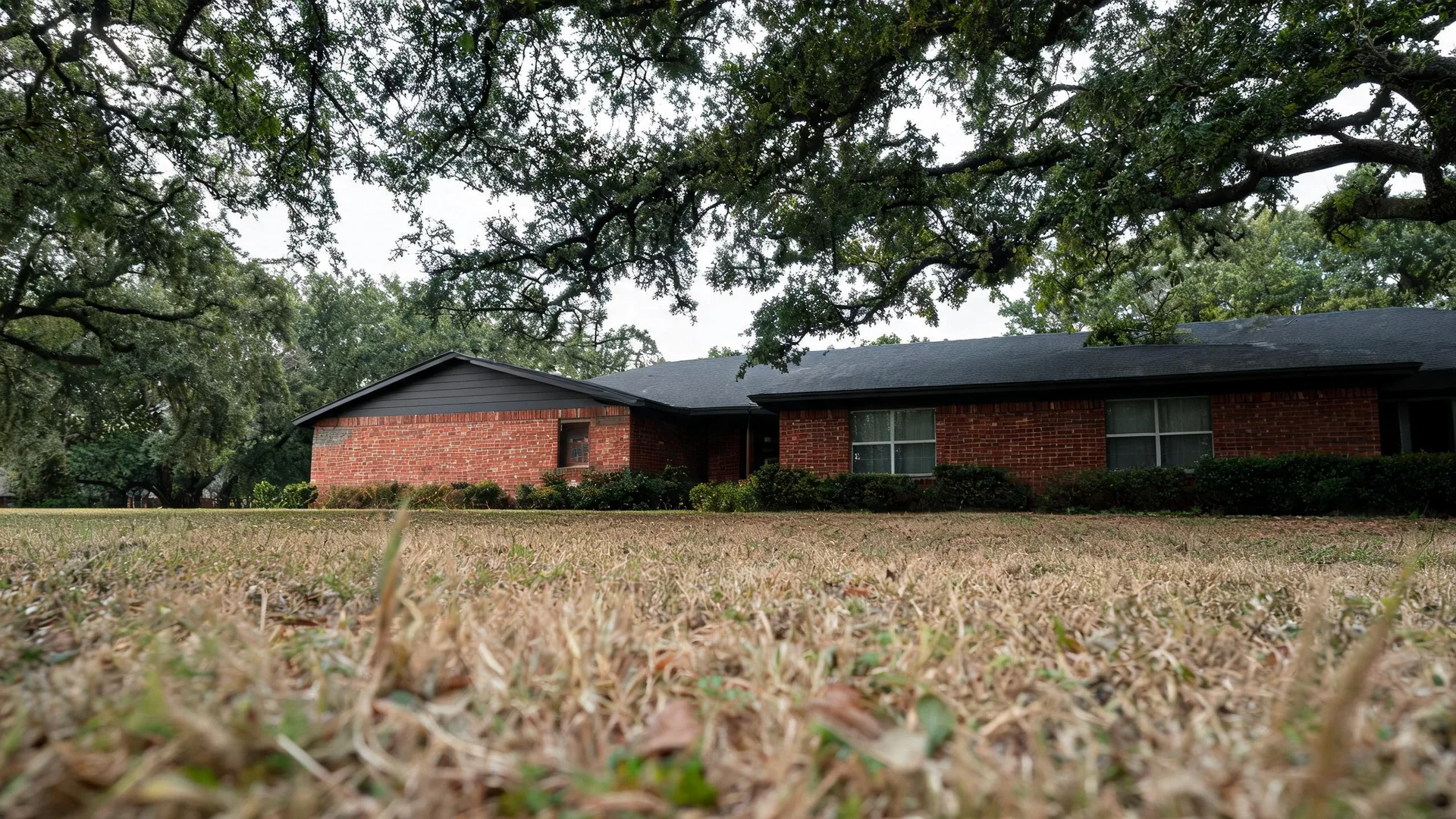
A single-story red brick house with a dark shingled roof, photographed from low in a dry brown lawn with large oak branches overhead.

Heat Pump Repair in Austin, TX

Tell us about the job

Takes about a minute. No obligation.

Step 1 of 3: Equipment

A technician starts outside at the outdoor unit, checking the refrigerant charge and looking at the coil and fan motor before touching anything else. From there it's the reversing valve, since that's the part that lets a heat pump switch between heating and cooling, and a stuck valve explains a lot of the calls that come in. Next is the thermostat and the defrost board, because a heat pump that runs constantly without warming the house often traces back to a control problem rather than the compressor itself. The indoor coil and blower get checked too, since weak airflow from a dirty coil or a failing motor can look like a refrigerant problem when it isn't. By the time the diagnosis is done, you should hear exactly which part is at fault and why, not just a guess at a repair.

5 months
November through March, your system heats
7 months
April through October, it cools
40°F
the average winter night it heats against
95°F
the average summer afternoon it cools against
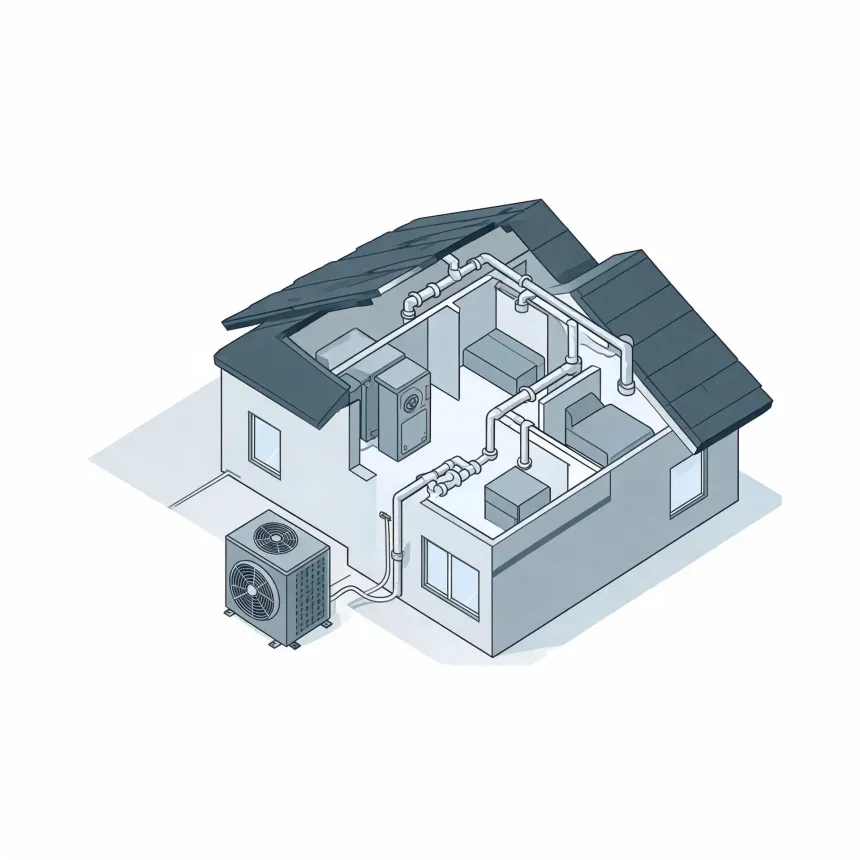
Isometric grayscale illustration of a cutaway two-story house showing interior ductwork, an indoor air handler unit, and an outdoor condenser unit on a pad beside the building.
Your system heats November through March and cools April through October.

NOAA nClimDiv, 1991–2020 normals

Heat pumps here switch over in November and start cooling again in April.

A reversing valve or defrost board that's been slipping by tends to fail right when that first cold snap or first hot week puts real load on it.

Travis County sees enough wind and hail that an outdoor unit can take a hit without you knowing it

277 severe weather events from 2015 to 2024
33% of homes statewide lost power a day or more in 2024
103 damaging wind events from 2015 to 2024

Nothing about an Austin heat pump breaks differently than one anywhere else. A bad capacitor is a bad capacitor, a low charge is a low charge, and the repair looks the same whether the unit sits here or somewhere else. What's worth knowing is what it costs to run while it's struggling. Texas homes paid 14.94 cents per kilowatt-hour for electricity in 2024, and a heat pump working around a stuck valve or a dirty coil pulls more power to do the same job. That shows up on the bill before it shows up as a breakdown.

A heat pump working this hard deserves a real diagnosis

Your heat pump runs almost year round here, and outdoor units in Travis County have taken 147 hail events between 2015 and 2024. A hit like that can leave a coil or fan motor weaker without it being obvious right away. Get it looked at properly so whatever's wrong gets fixed once.

Find a contractor
A man in a cap, gray long-sleeved shirt and tan work pants, seen from behind, carries a canvas tool bag up steps toward an orange front door of a gray clapboard house, with a potted shrub to the right.
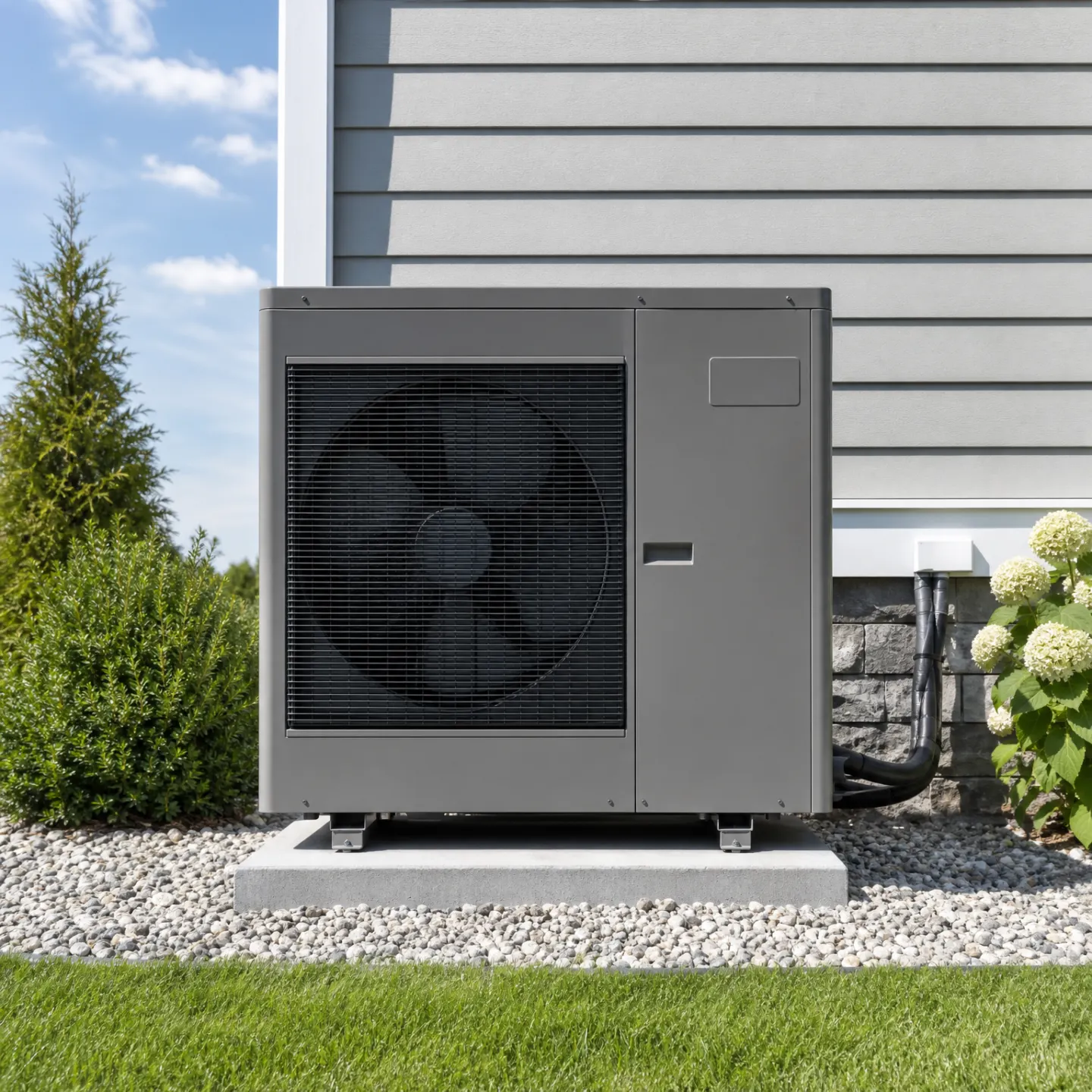
A gray air-source heat pump mounted on a concrete pad next to a house with gray vinyl siding, surrounded by gravel and flanked by green shrubs and white hydrangea flowers.

It runs nearly year round, with little downtime to catch a problem early

This unit runs nearly all year, with only a short break between switching off heat and switching on cooling. That doesn't leave much of a gap for a coil or fan motor to get looked at before the next stretch of work starts. If a hailstorm left something weaker than it should be, the unit just keeps running on it, pulling more than it should to do the same job. A diagnosis catches that early. A service call after it quits does not.

A low charge makes the compressor work to cover for it

When refrigerant is low, the compressor has to run longer and harder to move the same amount of heat through the system. That extra strain shows up as extra heat inside the compressor, and that heat breaks down the oil that keeps its moving parts from wearing on each other. A low charge caught early is a simple fix. Left alone, it can take the compressor down with it.
A stuck reversing valve puts the load somewhere else

When the valve won't switch cleanly, the system ends up fighting itself, pushing refrigerant one way while trying to heat or cool the other. That resistance doesn't stay in the valve. It passes through the compressor every time the unit runs. A valve that could have been swapped on its own ends up taking the compressor with it if it keeps running that way.

Most calls start with something simple. The system blows air that isn't warm enough or cool enough for how hard it's running. Or it cycles on and off more than it used to, never settling into a steady run. Ice on the outdoor coil in the middle of a mild day means the defrost cycle isn't doing its job. A hissing or bubbling sound near the lines points to refrigerant escaping somewhere it shouldn't. If the system seems to be heating and cooling at once, or won't commit to one or the other, the reversing valve is a likely place to look. None of these fix themselves, and a unit left to run on a fault like this usually ends up working harder to make up for it.

A compressor failure is usually the one that ends the conversation. It's the most expensive part in the system, and replacing it alone can cost close to what a new unit runs, so most homeowners put that money toward a new system instead. A bad capacitor, a weak contactor, a failed fan motor, those are worth fixing on a unit that's otherwise sound. Age matters too, but not by itself. A unit that keeps coming back for repair in a short span is telling you something a single repair bill doesn't. The question worth asking isn't just what this fix costs. It's whether the unit has been reliable up to now or whether this is the latest in a pattern.