



Texas Cooling Help
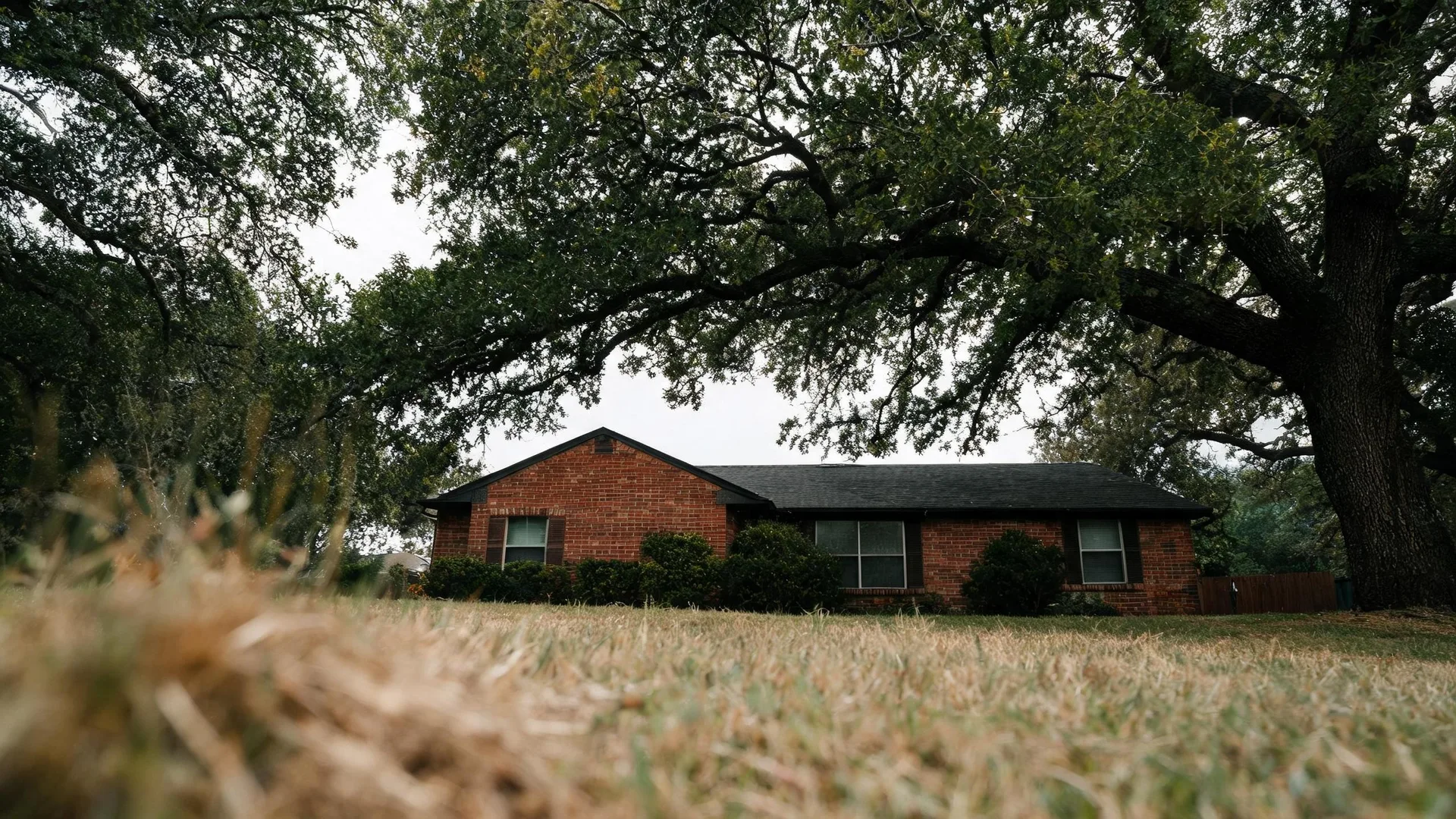
A single-story brick house with a dark shingled roof and low shrubs, photographed from ground level across a dry grass lawn beneath a large spreading oak tree.

Heat Pump Repair in Amarillo, TX

Tell us about the job

Takes about a minute. No obligation.

Step 1 of 3: Equipment

Potter County logged 406 severe weather events between 2015 and 2024, and most of that was wind and hail. A heat pump's outdoor unit sits right in the path of all of it. Hail dents the fins and bends them shut, and wind throws branches and grit into the coil. The unit can keep running for months after and still be down on airflow, so a system that still turns on after a storm isn't proof it came through fine.

7 months
October through April, your system heats
5 months
May through September, it cools
25°F
the average winter night it heats against
92°F
the average summer afternoon it cools against
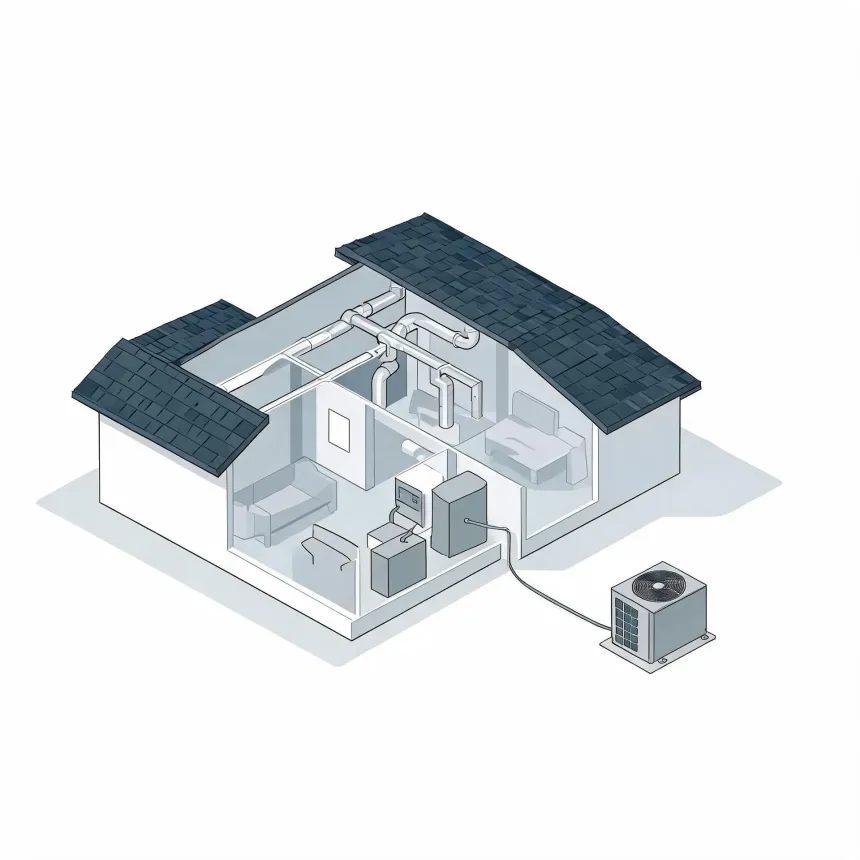
Isometric cutaway illustration of a single-story house showing interior ductwork, an indoor air handler and furnace unit, and an outdoor condenser connected by a line, on a white background.
Your system heats October through April and cools May through September.

NOAA nClimDiv, 1991–2020 normals

Heat runs October through April here, seven months straight once it starts.

September is when a weak heat pump shows it before the cold mornings hit.

Wind and hail hit this county hard, and your outdoor unit takes the impact

196 damaging wind events from 2015 to 2024
195 hail events from 2015 to 2024
Power costs 14.94 cents a kWh statewide
Amarillo heat pump repair, no mystery requiredTexas homes paid 14.94 cents per kilowatt-hour in 2024, and a heat pump acting up is still just a heat pump acting up

Half the homes in Potter County were built in 1963 or earlier. If your heat pump came with a house that old, it may not be the original unit, but it's worth finding out one way or the other. A heat pump nearing the end of its life tends to run longer to hit the same temperature, and the repairs start coming more often. Before paying for a big repair, ask how many years the unit has left in it. That answer changes whether the repair is worth making.

If the outdoor unit took a hit this year, get it looked at now

If hail or wind got to your outdoor unit this year, have it checked before heat season puts it to work. A bent coil or clogged fins can run fine on a mild day and fall behind once it has to carry the house for months.

Find a contractor
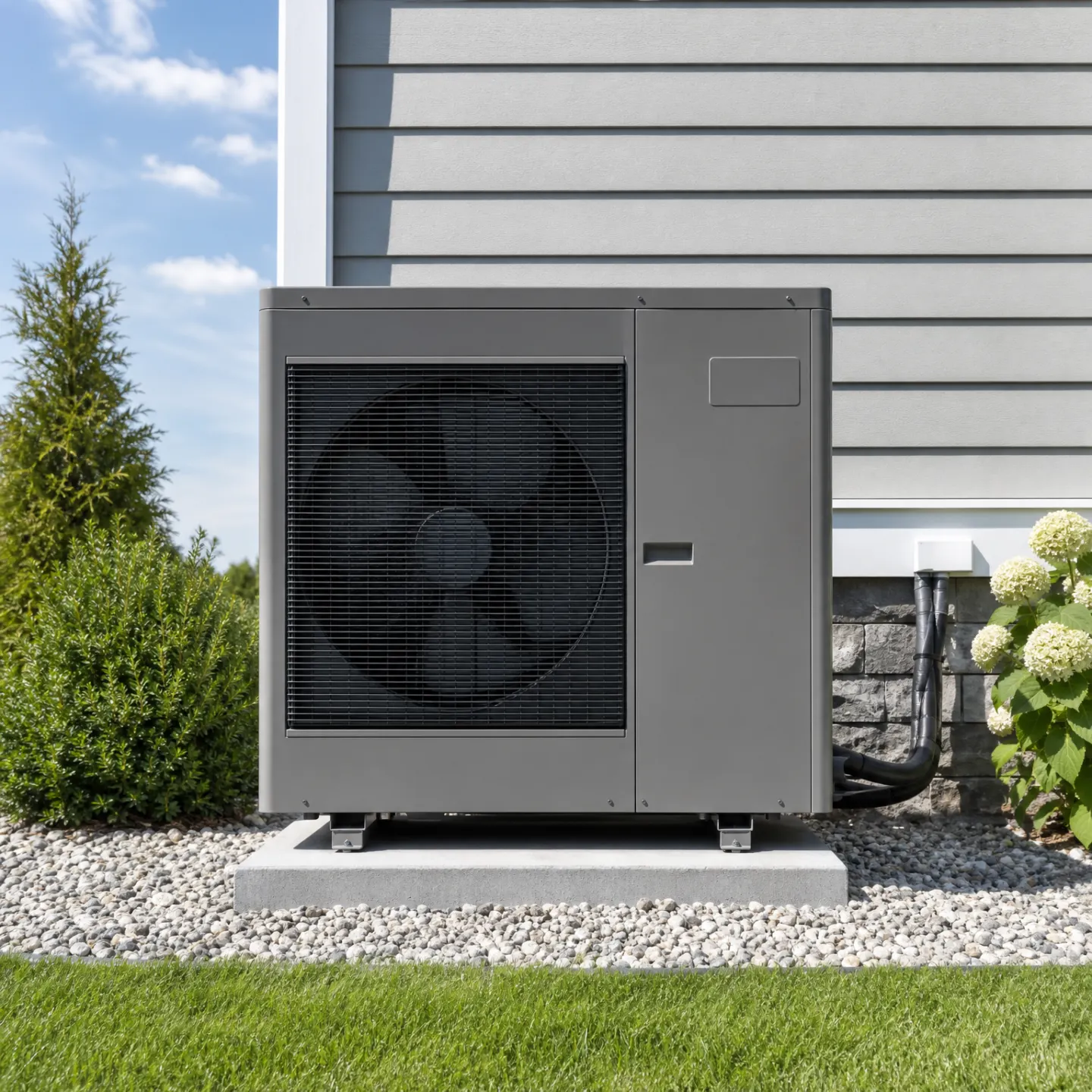
A gray air-source heat pump mounted on a concrete pad next to a house with gray vinyl siding, surrounded by gravel and flanked by green shrubs and white hydrangea flowers.

A heat pump never gets the off-season

A heat pump never really stops, not the way a furnace does when summer comes. It runs the reversing valve every time it switches between heat and cooling, and that valve is one of the first things to wear out from the back and forth. The outdoor fan motor runs on both sides too, warm months and cold, so its bearings log hours a straight furnace or AC never would. Contactors pit and stick from the constant cycling, and a capacitor that has been weakening quietly can finally give out on the day it is asked to start the compressor one more time. Winter adds its own wear through the defrost cycle, melting frost off the coil over and over through a cold stretch, and a stuck defrost board either runs it too much or not enough. None of this shows up as one dramatic failure. It shows up as the system running longer to hold the same temperature, short-cycling, or blowing air that is not quite warm enough, well before it quits outright.

What you can check from the thermostat and the curb

Check the thermostat is set to heat and the temperature is actually above room temperature. Look at the outdoor unit and clear away leaves, grass clippings or anything piled against the cabinet, since the coil needs open air on all sides to work. Look at the fins for a layer of dirt or flattened spots and see if the fan is spinning when the system is running. Check the breaker box for a tripped breaker, and check that the indoor filter is not clogged, since a dirty filter can choke airflow enough to look like a bigger problem.
What tells you to stop and call instead

If the outdoor unit is covered in ice beyond the normal frost a defrost cycle clears, or if you hear grinding, screeching or a hard clunk when it starts, turn the system off and leave it off. Ice that will not clear, a burning smell, or a breaker that trips again right after you reset it all mean something past a simple reset is wrong, and running it longer can turn a repair into a bigger one.

A heat pump that's struggling still tries to do its job, and that's the problem. A weak capacitor makes the compressor strain to start instead of failing clean, so it keeps pulling hard every cycle until something finally gives. Low refrigerant means the compressor runs hotter than it was built to, and it keeps running that way because the thermostat just sees a house that hasn't reached temperature yet. Ice on the coil that never fully clears blocks more airflow each time it builds back up, so the next cycle works harder to move the same air. A failing defrost board doesn't stop the system, it just lets frost pile up past the point the unit can recover from on its own. None of these shut the system down right away. They let it keep running in a way that wears down the compressor, the part a heat pump can't work without.

A repair is worth making when the part that failed is just that, one part, and the compressor is still sound. A capacitor, a contactor, a defrost board, these are things a tech replaces in an afternoon and the system runs like it did before. What changes the math is the compressor itself. It's the most expensive part in the unit and the one thing that can't be swapped on its own for anything close to reasonable money, since a new compressor still has to work inside an old, worn system. If a tech tells you the compressor is failing or already has, that's usually the point where fixing it and replacing the unit cost close to the same thing. A system that's needed a repair every year for the last few years is telling you something a single clean repair history doesn't, and it's worth asking about alongside how many years the unit has left in it.