Check the thermostat settings first
Make sure it's set to heat, not auto or cool, and that the set point is actually above room temperature. A setting bumped by accident is the most common reason a heat pump seems dead when it isn't.
Takes about a minute. No obligation.
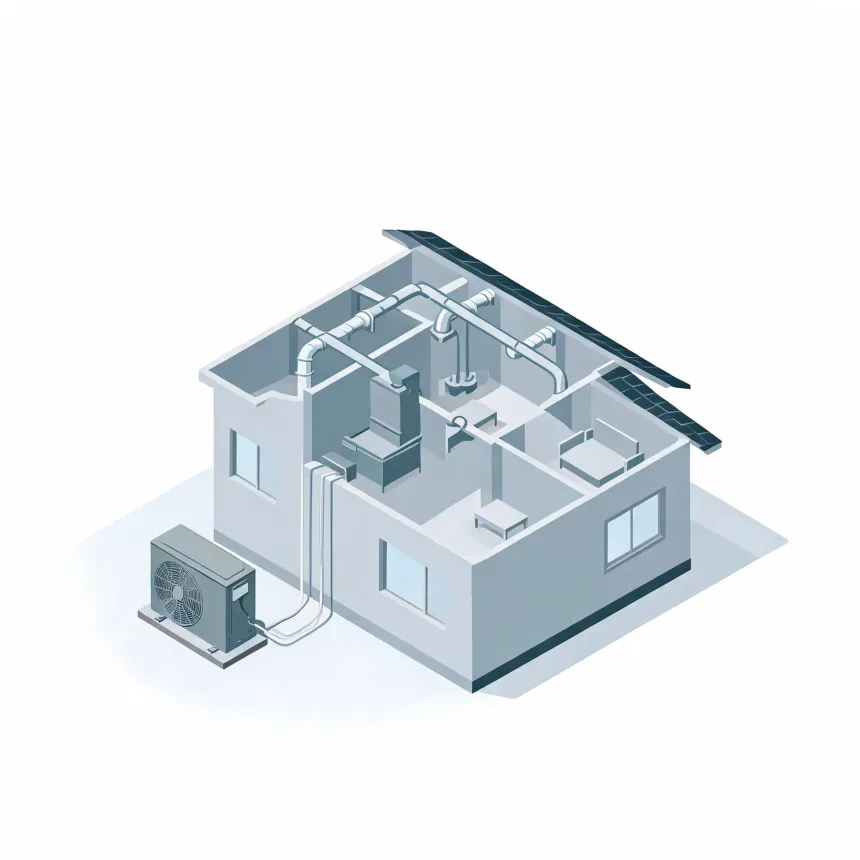
Most heat pump failures trace back to a handful of parts. The reversing valve is a common one. It's what switches the system between heating and cooling, and when it sticks, you'll get warm air when you wanted cool or no switch at all. The capacitor is another. It gives the compressor and fan motors the jolt they need to start, and a weak one leaves you with a fan that hums but won't spin or a compressor that won't kick on. Outside, the coil needs clean airflow around it, and if it's caked with dirt or iced over because of a low refrigerant charge, the whole system struggles to move heat in either direction. Low refrigerant itself almost always means a leak somewhere in the line, not a fluid that simply runs low over time. If the system is short cycling or blowing air that isn't the right temperature for the setting, one of these is usually why.
NOAA nClimDiv, 1991–2020 normals
Taylor County logged 121 hail events between 2015 and 2024.
Your heat pump sits outside through all of that, and the coil or fan blades are usually the first to show it.




October is the last easy month before heat season starts here. A heat pump that struggled through the summer doesn't rest and fix itself over those few weeks. The first cold snap in November asks the reversing valve to switch over and hold, and if it was already sticking, that's when it finally gives out. A weak capacitor can limp along all summer and still fail the moment the compressor has to work harder in the cold. If your system is acting up in these first weeks of heat, have someone look at it before a cold spell leaves you without it.
Your heat pump works hard here, and that's usually what's behind the problem. Have it diagnosed properly so the fix lasts.
Find a contractorHail doesn't have to crack a coil to cause trouble. Bent fins block airflow, and once that happens the system works harder to move heat than it should have to. If your heat pump has been outside through those 121 hail events, a dented coil or bent fan blade is worth ruling out before anyone replaces a part that was never the problem. That's a visual check, quick to do and worth asking for by name.
Make sure it's set to heat, not auto or cool, and that the set point is actually above room temperature. A setting bumped by accident is the most common reason a heat pump seems dead when it isn't.
Walk outside and check that the fan is spinning and nothing is blocking the coil, like leaves, debris or ice buildup. If the unit is frozen over or the fan isn't turning, that's worth telling the tech before they arrive, not something to try to fix yourself.
Pay attention to what the air feels like, not just whether it's blowing. Air that's barely warm, or that turns cold partway through a cycle, points at the reversing valve or the compressor rather than anything you can fix by adjusting a setting. Listen too. A click at the outdoor unit followed by silence usually means the compressor is trying to start and can't, often the capacitor. Short cycles, where the system kicks on and off every few minutes instead of running a full stretch, wear the compressor down faster each time it happens. And if the system runs constantly without ever bringing the house up to temperature, it's losing the fight somewhere, whether that's airflow, refrigerant, or a part that's stopped pulling its weight. Any of these is worth a call before the next cold stretch asks more of the system than it can give.
A diagnostic visit starts outside, at the unit itself. The tech checks refrigerant pressure, looks at the coil and fan blades, and runs the compressor and reversing valve through their paces to see where the system is losing ground. Inside, they check the air handler, the temperature split between return and supply air, and the condition of the filter, since restricted airflow can mimic a refrigerant problem that isn't actually there. Electrical readings on the capacitor and contactor come next, because a part can look fine and still test weak. None of this is guesswork. Each reading rules something out until what's left is the actual cause, and that's what gets fixed instead of whatever part happened to be easiest to replace.