



Texas Cooling Help
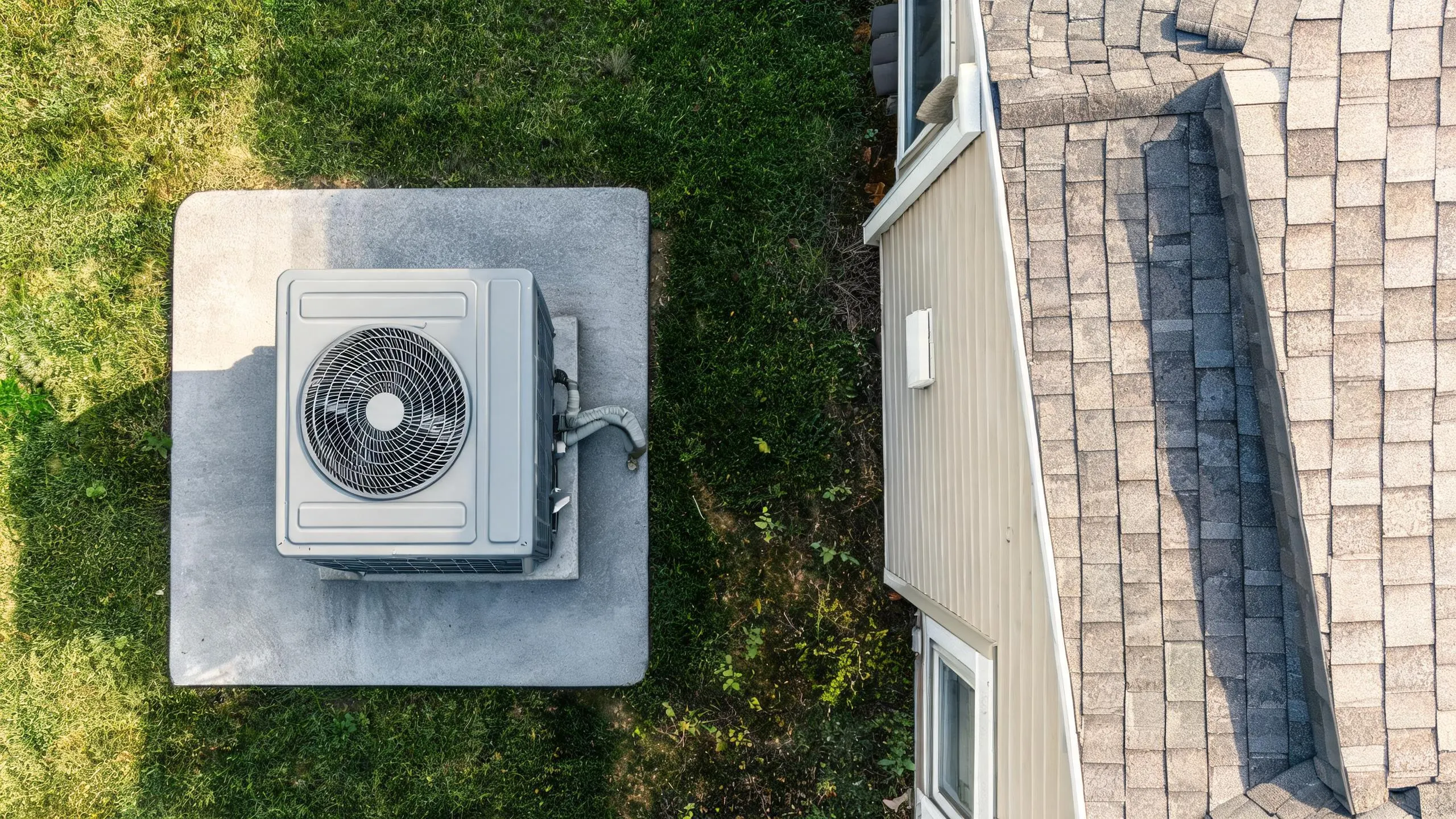
Overhead view of an air conditioning condenser unit on a concrete pad next to a house with asphalt shingle roofing and vinyl siding.

AC Repair in Weatherford, TX

Tell us about the job

Takes about a minute. No obligation.

Step 1 of 3: Equipment

Most AC calls come down to one of a few things. The capacitor weakens and the compressor or fan struggles to start, so the unit hums or clicks but doesn't kick on. The contactor sticks or pits from years of cycling on and off, and the outdoor unit stops getting the signal to run. A low refrigerant charge means the system is leaking somewhere, and it'll keep blowing warm air no matter how long it runs until that leak gets found and sealed. Drain lines clog with algae and shut the system down on purpose to stop water from backing up into the house. And a dirty condenser coil outside makes the whole system work harder just to dump heat, which wears on everything else over time. Some of these are quick fixes. Others mean real diagnostic work to find where the trouble actually is.

6 months
May through October, your air conditioner is on duty
94°F
the average summer afternoon it cools against
113 hail events
in ten years, and hail bends the fins on outdoor coils
50 wind events
in ten years, and wind drives debris into outdoor units
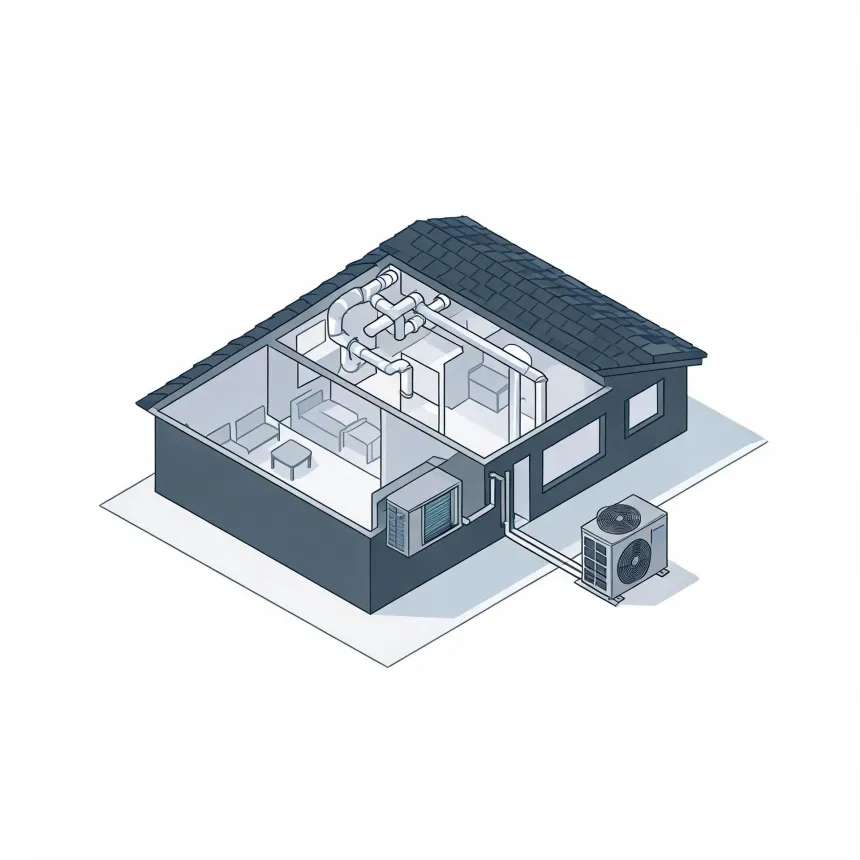
Isometric line illustration of a cutaway single-story house showing interior rooms with furniture, ceiling ductwork, an indoor air handler, and an outdoor condenser unit connected by lines along the exterior wall.
Your air conditioner works hardest from June through September.

NOAA nClimDiv, 1991–2020 normals

Half the homes in Parker County were built in 2002 or later.

A system that came in with a house that age usually has years left in it, which is a point in favor of repair over replacement.

A broken AC costs more to ignore in Weatherford than most places

Power costs 14.94 cents a kWh statewide
Cooling runs May through October
Summer afternoons average 94°F

April is worth a look before the heat sets in. Cooling here runs May through October, and the first hot stretch is when a weak part finally gives out. A capacitor that was marginal all winter has to kick the compressor on for the first time in months, and that's when it fails. A drain line that sat dry since October can back up the moment the system runs long enough to produce condensate again. Catching these in April means a scheduled visit instead of a system that won't cool once summer is underway.

This system has earned a proper look before it runs again

Cooling runs here from May through October, with afternoon highs averaging 94 in summer. That's a lot of hours on the compressor and the coil. Hail is common in Parker County too, and a storm can leave damage that doesn't show up until the system is under load. When something's off, it's worth finding out exactly what before putting the system back to work.

Find a contractor
A man in a dark cap, gray T-shirt and brown work pants climbs porch steps toward an orange front door, carrying a worn canvas tool bag, with a potted shrub beside the entry.
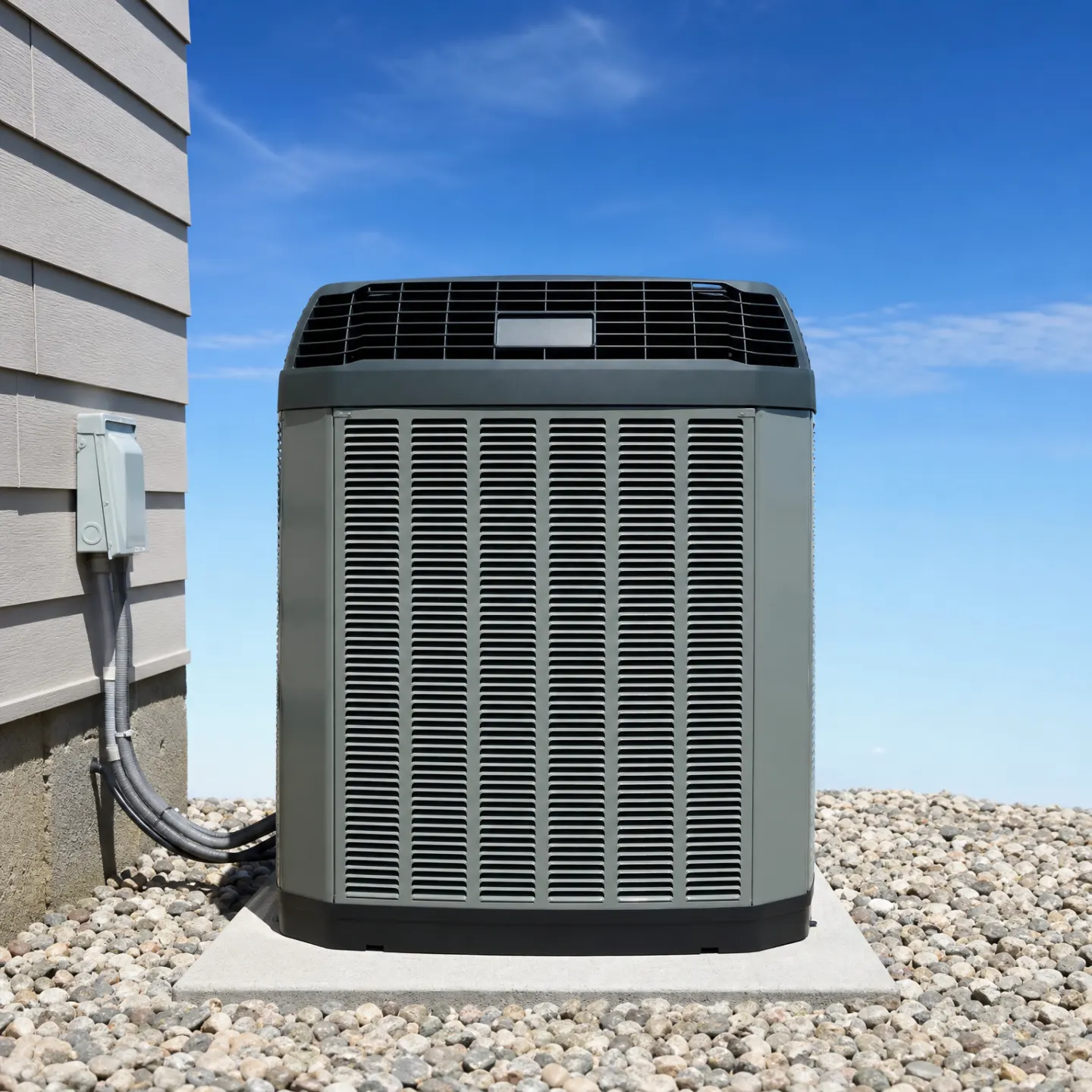
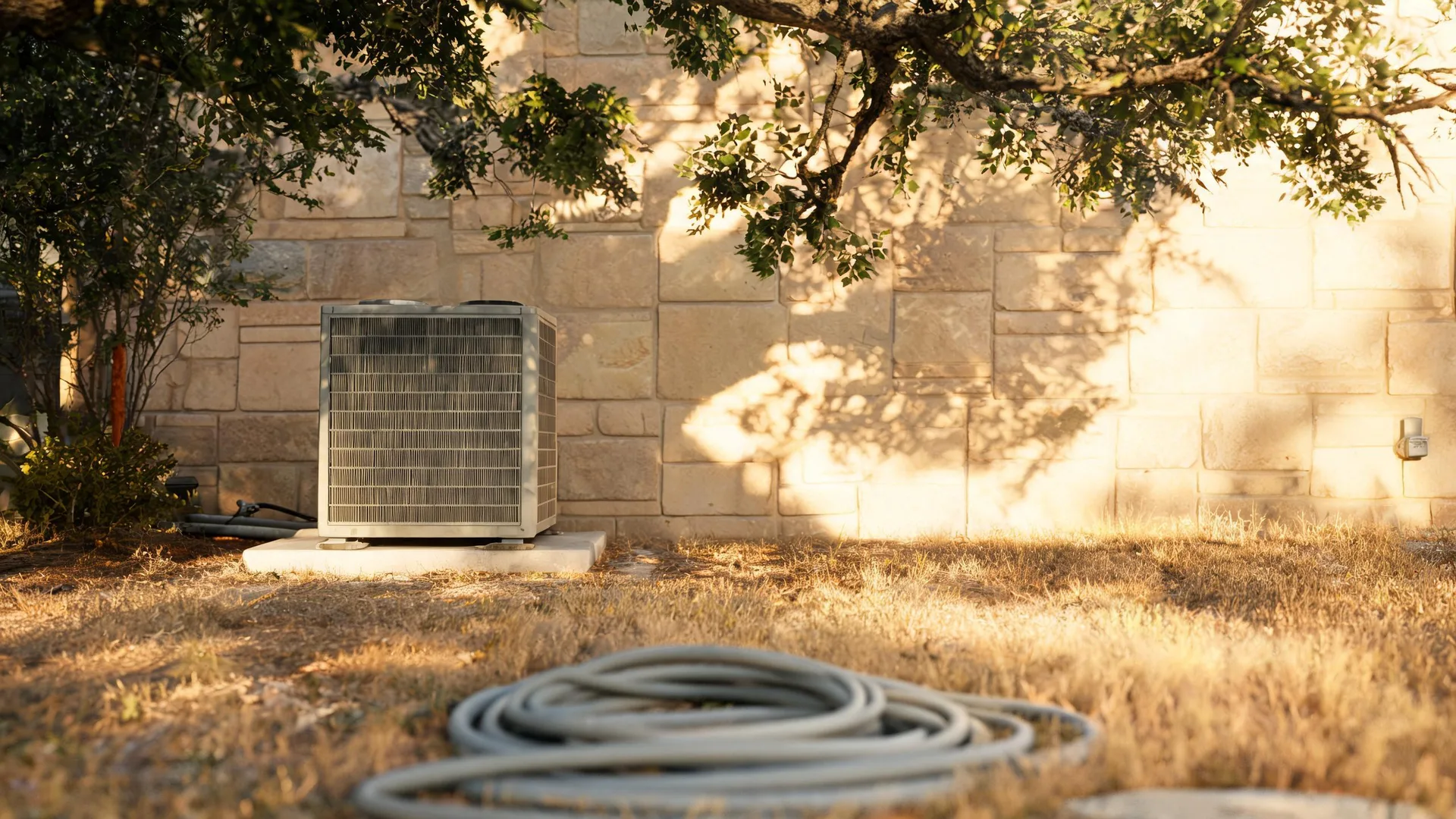
An outdoor air conditioning condenser unit mounted on a concrete pad beside a house, with electrical conduit running to a wall-mounted disconnect box.

Worth fixing

Get the model and the install date off the unit before you call. If it came with the house, parts are likely still available and a tech can get a straight answer on what's wrong instead of guessing at a system nobody has records for. That's worth knowing before anyone talks about replacing it.

What you'll actually notice first

The air coming out of the vents turns warm while the system keeps running like normal. Or the outdoor unit hums but the fan doesn't spin. Sometimes it's just that the house never quite gets to temperature anymore, even though nothing sounds wrong. These are usually the first sign, well before anything shuts down completely.
Noise and water are not minor

A new rattle, squeal, or grinding from the outdoor unit means a part is failing, not settling in. Water pooling near the indoor unit means the drain line or pan has a problem that will shut the system down on its own if it's not caught. Neither of these gets better by waiting.

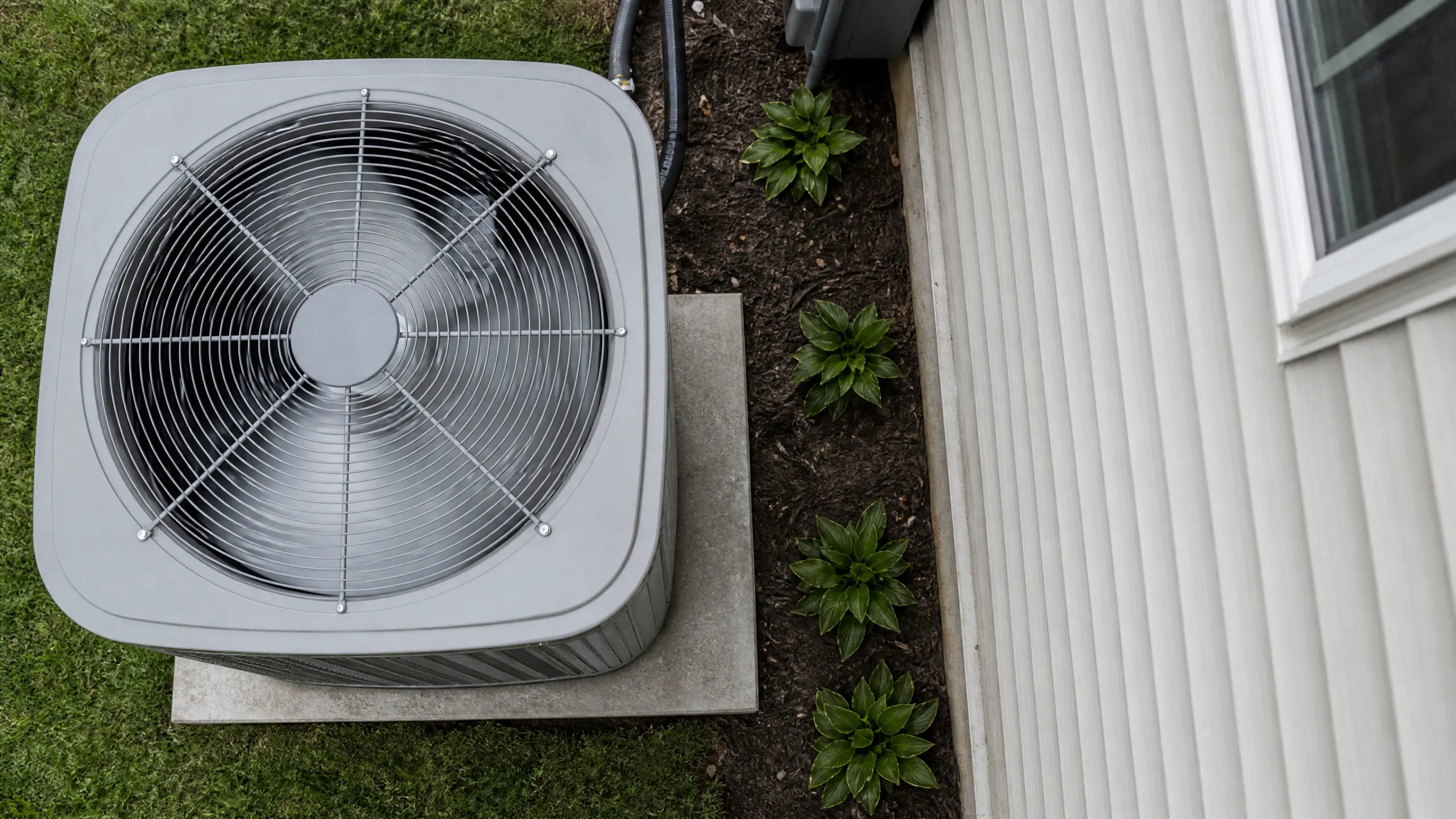
Overhead view of a gray outdoor AC condenser unit on a concrete pad beside a mulched garden bed and a house with vinyl siding.

A new air conditioner would cut about $70 a year off cooling for a typical Parker County home.

  • A new one at the federal minimum, 14.3 SEER2$450 a year
  • An older air conditioner$520 a year

Estimates for a typical Parker County home, compared with an older unit built to the previous federal minimum, from EIA household energy data, Texas fuel prices and NOAA climate normals. Your home will differ.

Repair makes sense when a part like a capacitor or contactor has failed.

Replacement makes sense when the compressor has failed or the system uses R-22 refrigerant, which is no longer made.

A diagnostic visit starts with the complaint, not the unit. A tech wants to know what the system was doing right before it acted up, whether it was blowing warm, not turning on, or tripping a breaker, because that points to a different part every time. From there it's gauges on the refrigerant lines, a meter on the capacitor and contactor, and a look at the coil and drain line while the system runs under load. A unit that looks fine sitting still can show its problem the moment it's asked to actually cool. Most of this gets sorted out in one visit. The exception is a slow refrigerant leak, which sometimes takes a second look once the system has run long enough to show where it's losing charge.