


Texas Cooling Help
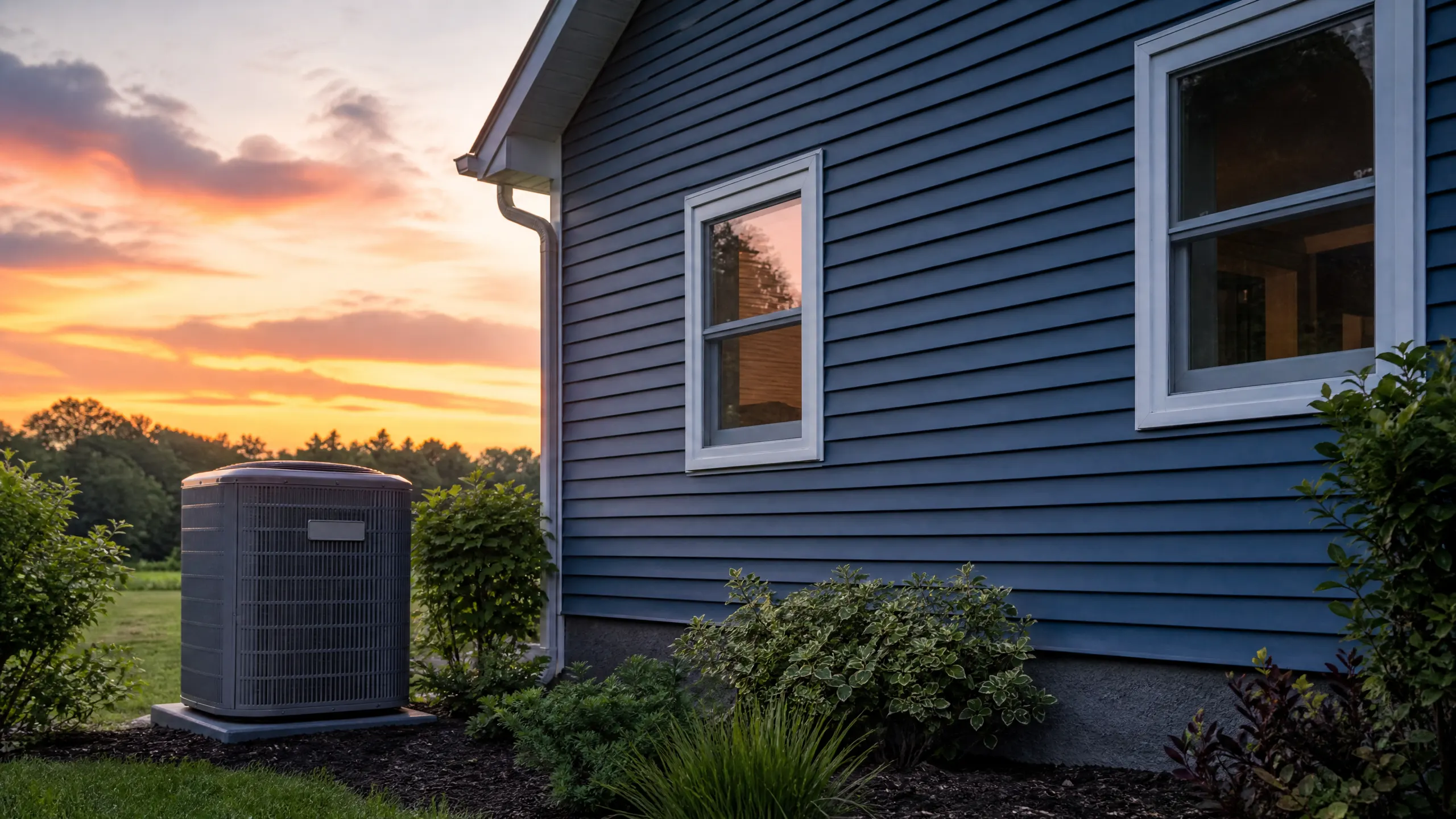
An outdoor air conditioning condenser unit installed beside the exterior wall of a blue vinyl-sided house at sunset.

AC Repair in Sherman, TX

Tell us about the job

Takes about a minute. No obligation.

Step 1 of 3: Equipment

Before you call anyone, check a few things yourself. Go to the thermostat and make sure it's set to cool and the setpoint is actually below room temperature, not accidentally bumped up. Check your breaker panel for a tripped breaker on the AC circuit. Look at the outdoor unit and see if the fan is spinning and air is coming off the top. If it's dead quiet out there and the indoor fan isn't blowing either, that points to power or the thermostat rather than something deeper in the system. Pull the filter and hold it up to a light. If you can't see through it, swap it, because a clogged filter can starve the system of airflow and cause it to ice up. If the indoor unit or the line going outside has ice on it, shut the system off and let it thaw before anyone touches it. Walking through these steps tells the tech a lot before they even ring the doorbell.

5 months
May through September, your air conditioner is on duty
93°F
the average summer afternoon it cools against
150 hail events
in ten years, and hail bends the fins on outdoor coils
79 wind events
in ten years, and wind drives debris into outdoor units
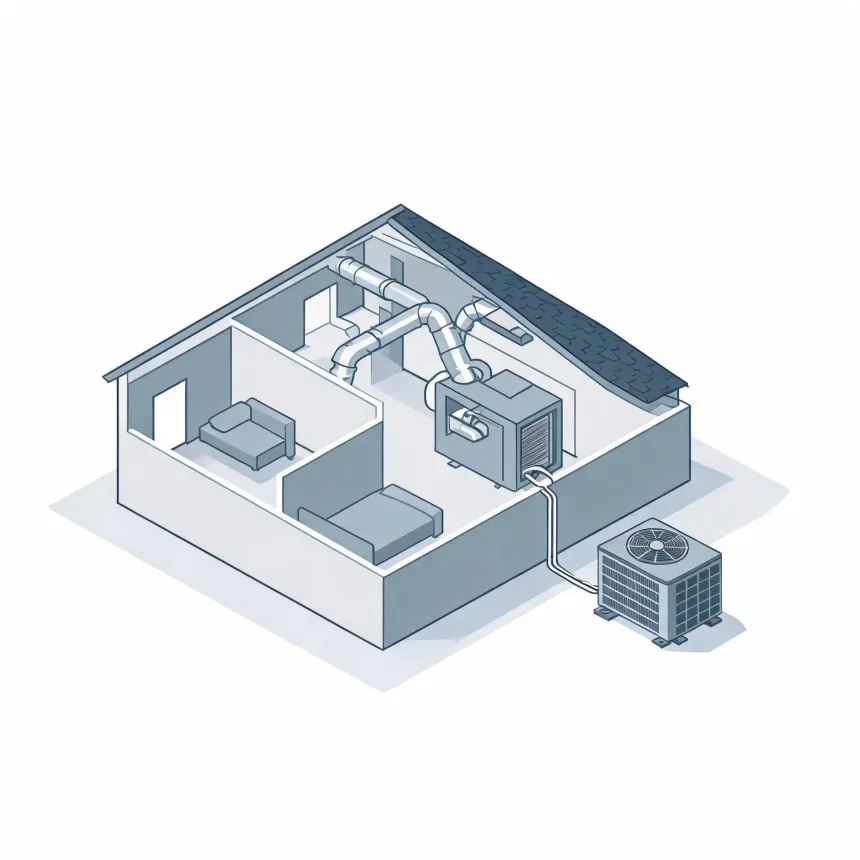
Isometric line illustration of a cutaway house showing an indoor air handler with branching ducts in the attic space, connected by a line set to an outdoor condenser unit beside the building, with simple furniture in two rooms.
Your air conditioner works hardest from June through September.

NOAA nClimDiv, 1991–2020 normals

Texas electricity ran 14.94 cents per kilowatt-hour in 2024.

An AC unit short cycling or running nonstop burns through that rate fast, so a repair put off is a bill that keeps climbing.

Five months of 93 degree afternoons wears an AC down fast here

Cooling runs May through September
Summer afternoons average 93°F
150 hail events from 2015 to 2024

April is worth a call even if the system ran fine last fall. Cooling starts in May here and runs through September, and the first long hot stretch is when a weak part finally gives out. A capacitor that was marginal at the end of last season has sat through winter doing nothing, and it's the first real run of the season that it fails under. Getting it looked at in April means a tech can catch that before it leaves you without cooling once May hits.

Half the homes here were built in 1985 or later

Half the homes in Grayson County were built in 1985 or later. If your AC came with a newer build like that, it's probably well within its working life, and a repair now is likely the right call rather than a sign the whole system is done.

Find a contractor
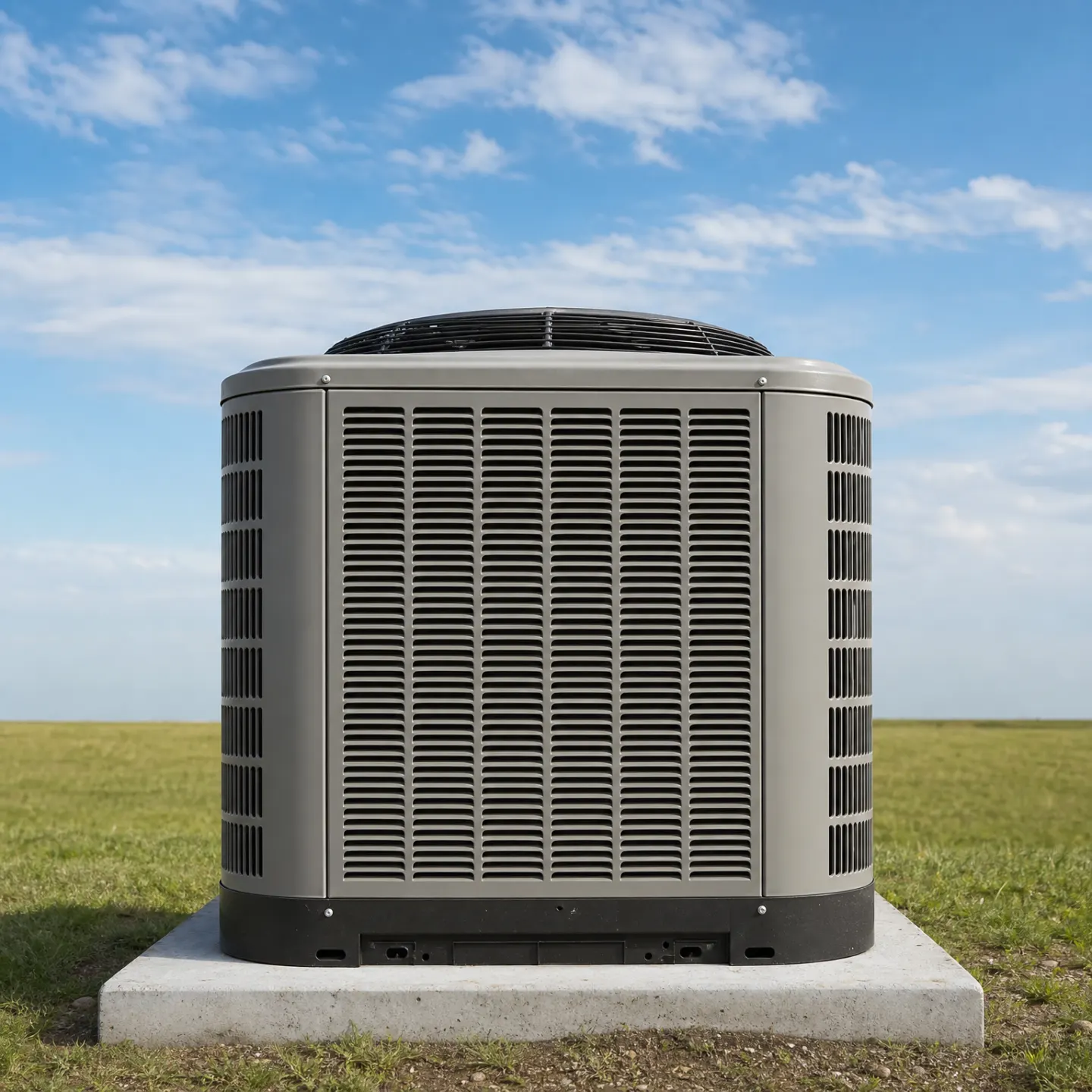
A gray metal air conditioning condenser unit mounted on a concrete pad in a flat grassy field under a partly cloudy sky.

Five months of strain adds up to one point of failure

That heat load every summer is exactly why a diagnosis matters more than a guess. A capacitor or contactor that's been straining since June can look fine to the eye and still be the reason the system is failing now. A tech with a meter can tell you which part gave out under the load and whether anything else took damage alongside it. That's worth knowing before you pay for a fix, because a swapped part on top of a problem left in place just means another call later.

Capacitors and contactors wear out first

The run capacitor gives the compressor and fan motor the extra push they need to start. It weakens slowly, so the system still starts, just with more strain each time, until one afternoon it doesn't. The contactor is the switch that sends power to the outdoor unit, and its contacts pit and burn from years of closing and opening. Either one failing can look the same from inside the house. The indoor fan runs, but the outdoor unit stays silent.
Refrigerant doesn't wear out, it leaks out

A low charge almost always means a leak somewhere in the coils or line set, usually at a joint or a worn spot in the copper. The system doesn't use up refrigerant the way a car uses gas. If it's low, it's going somewhere. Running it low forces the compressor to work harder and can ice the indoor coil. Topping off the charge without finding the leak just means doing it again later.

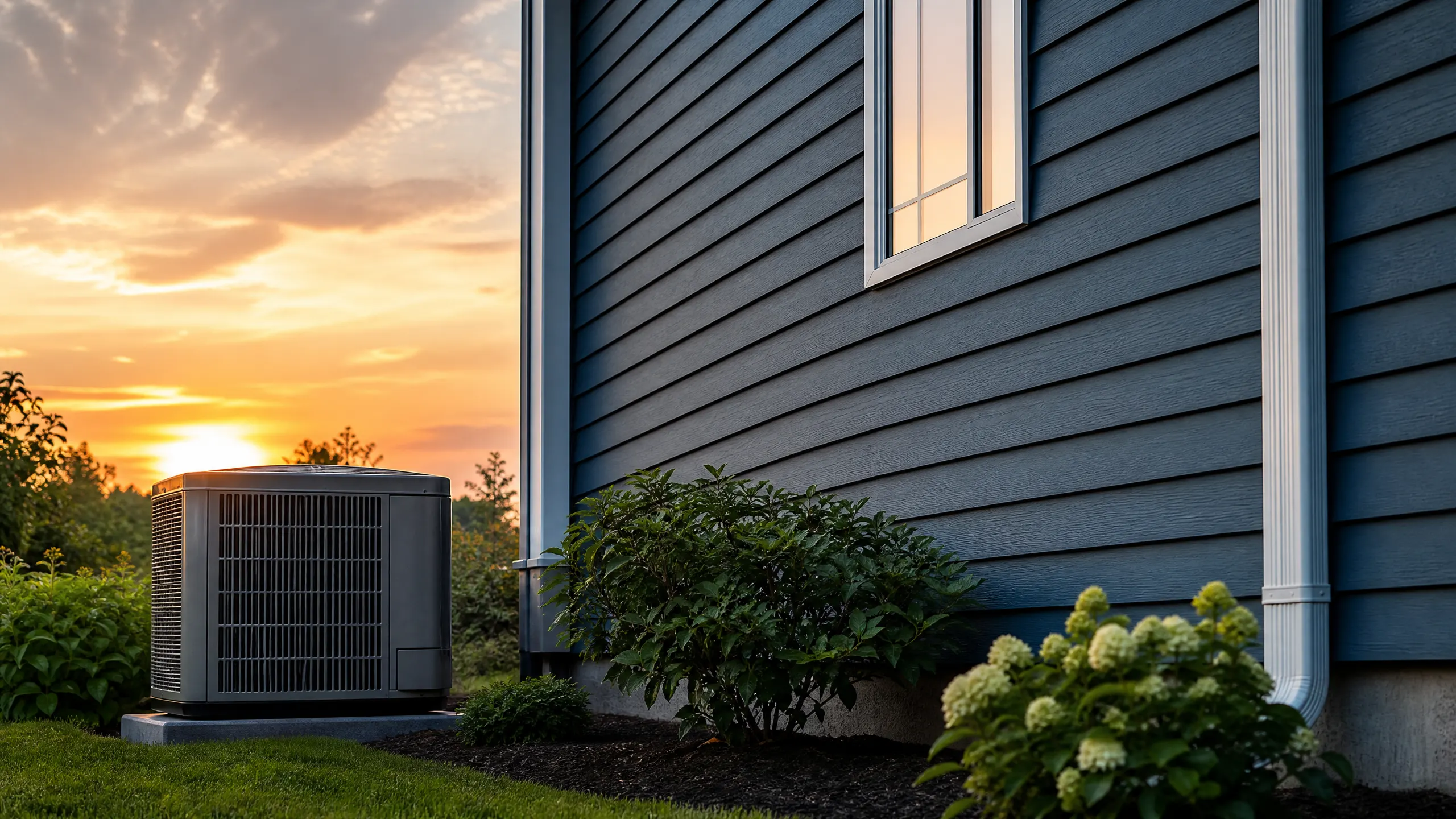
An outdoor air conditioning condenser unit positioned on a concrete pad next to a blue-sided house, surrounded by green shrubs and flowering hydrangeas at sunset.

A new air conditioner would cut about $60 a year off cooling for a typical Grayson County home.

  • A new one at the federal minimum, 14.3 SEER2$420 a year
  • An older air conditioner$480 a year

Estimates for a typical Grayson County home, compared with an older unit built to the previous federal minimum, from EIA household energy data, Texas fuel prices and NOAA climate normals. Your home will differ.

Repair makes sense when a part like a capacitor or contactor has failed.

Replacement makes sense when the compressor has failed or the system uses R-22 refrigerant, which is no longer made.

Not every failing AC needs a new system, and not every one is worth saving either. Age matters less than what's actually wrong and what else is likely to go next. A compressor that's seized or a coil that's leaking in more than one spot is usually the end of the road, since those jobs cost close to a new system without the warranty that comes with one. A bad capacitor, a failed contactor, a blower motor that's quit, those are normal wear parts and fixing them is the right call almost every time. The question worth asking a tech isn't just what broke, it's whether the rest of the system is in good shape around that one failure. A unit that's been maintained and is only now having its first real problem is a different case than one that's had a string of repairs over a couple of summers.