Seven months of cooling, most of it near 95°F
AC units in Round Rock run from April through October, and June through August the afternoon high averages 95°F. That is a long stretch with the compressor working close to its limit most afternoons.
Takes about a minute. No obligation.
AC units in Round Rock run from April through October, and June through August the afternoon high averages 95°F. That is a long stretch with the compressor working close to its limit most afternoons.
A capacitor, contactor or low refrigerant charge gives out sooner after a Texas summer like this one than it would somewhere milder. Worth having a contractor check the actual cause before anything gets replaced.
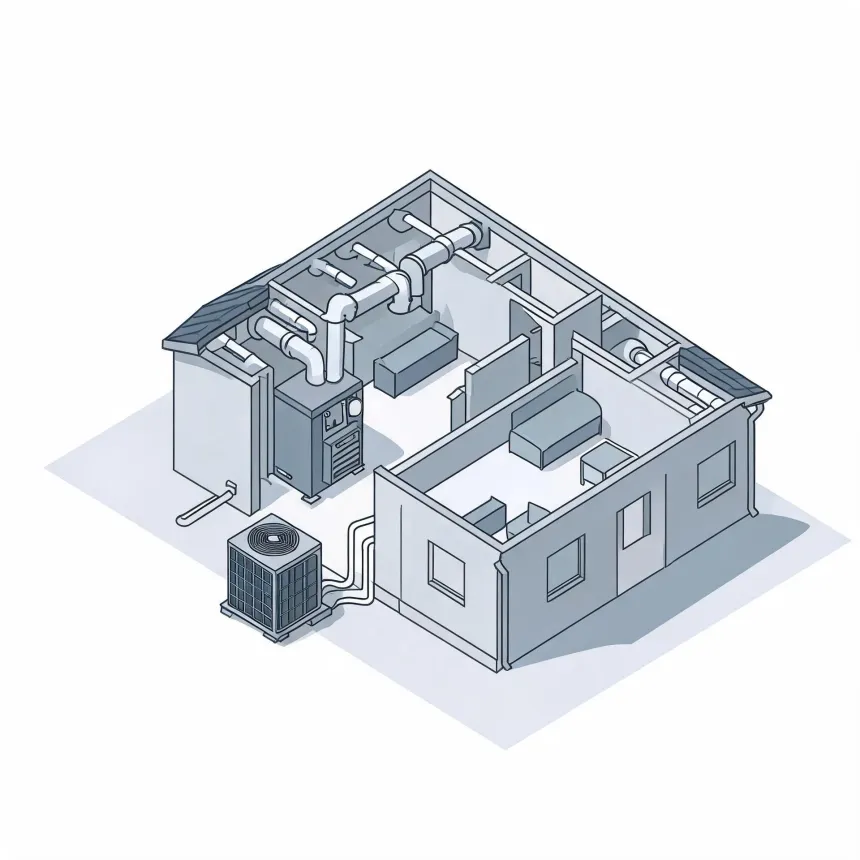
NOAA nClimDiv, 1991–2020 normals
Texas homes paid 14.94 cents per kilowatthour in 2024, among the higher rates in the country.
A struggling AC unit burns through more power at that rate, so a bad capacitor or low charge costs you more every month it runs unfixed.




A unit that short cycles or runs nonstop without cooling the house is spending more power to do less work. At 14.94 cents a kilowatt-hour, that difference shows up on the next bill before anyone gets around to fixing it. Waiting doesn't save the repair, it just adds the cost of running broken on top of it. Have a contractor find the actual cause, whether that's the capacitor, the charge, or something else, before it gets worse.
Get the actual cause checked, the capacitor, the charge, or whatever it turns out to be, before more parts give out behind it.
Find a contractorThat age puts a lot of these systems under factory or extended warranty still. Check the paperwork before you pay out of pocket for a repair. If it's out of warranty, a system this age is still a good candidate for repair rather than replacement, since the compressor and coil have plenty of working life left in them. A contractor can confirm it's worth fixing in a few minutes once they're out there.
Make sure the thermostat is set to cool and set below room temperature, and check the batteries if it uses them. Then look at the breaker panel. A tripped breaker, or a disconnect switch near the outdoor unit that got bumped off, will stop the whole system and takes a minute to rule out.
Pull the air filter and hold it up to a light. If you cannot see through it, air is not getting through it either, and that alone can cause weak cooling or ice forming on the coil. Walk outside and check that the condenser is not blocked by leaves, grass clippings or anything stacked against it. It needs open airflow on all sides to move heat out of the house.
Estimates for a typical Williamson County home, compared with an older unit built to the previous federal minimum, from EIA household energy data, Texas fuel prices and NOAA climate normals. Your home will differ.
Repair makes sense when a part like a capacitor or contactor has failed.
Replacement makes sense when the compressor has failed or the system uses R-22 refrigerant, which is no longer made.
Age is one way to think about it, but how the system is failing matters more. A part that fails on its own, like a capacitor or a contactor, is a cheap, quick fix and worth doing almost every time regardless of how old the unit is. A compressor going bad is a different question, since the compressor is the most expensive part in the system and a failing one often means refrigerant has been moving metal through the lines, which can affect the coil too. If a contractor finds the same kind of failure showing up again not long after the last one, that pattern matters more than any single repair. One honest repair call can usually tell you which situation you're in.