Texas Cooling Help
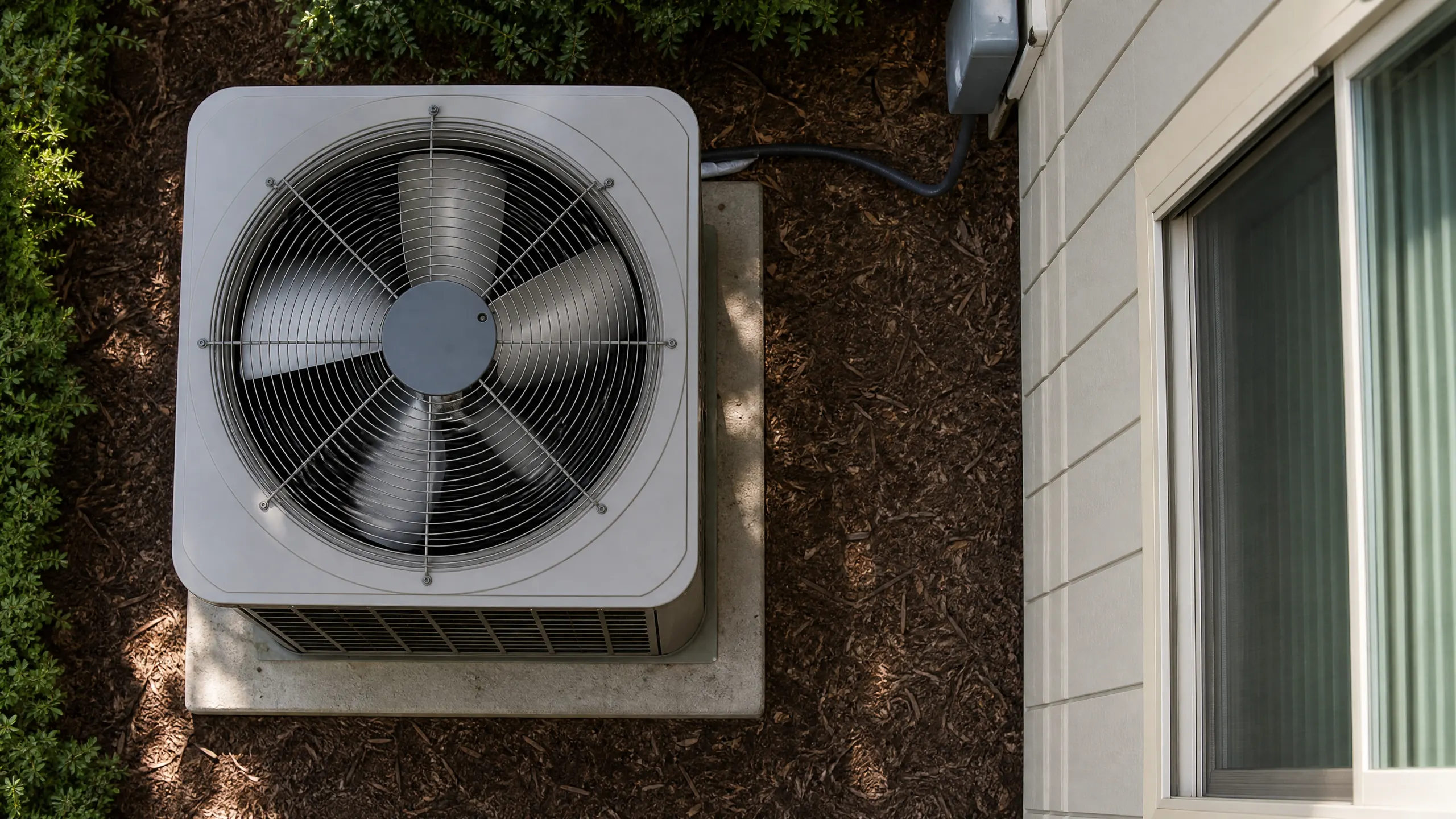
Aerial view of a square outdoor air conditioning condenser unit on a concrete pad beside a house wall with a sliding glass door.

AC Repair in Plano, TX

Tell us about the job

Takes about a minute. No obligation.

Step 1 of 3: Equipment

What's failing tells you something

A capacitor or contactor is a cheap, quick swap on a unit of any age. A failing compressor or a leaking coil is a different kind of news. Parts in an air conditioner age together, so a major part failing on an older unit often means the parts around it are close behind.

A repair that doesn't hold is the real cost

If the same problem keeps bringing a tech back out, the repair is only buying time. Refrigerant that gets recharged without the leak being found will leak out again. A system that short cycles right after a fix usually has another problem sitting under the one that just got repaired.

6 months
May through October, your air conditioner is on duty
93°F
the average summer afternoon it cools against
283 hail events
in ten years, and hail bends the fins on outdoor coils
86 wind events
in ten years, and wind drives debris into outdoor units
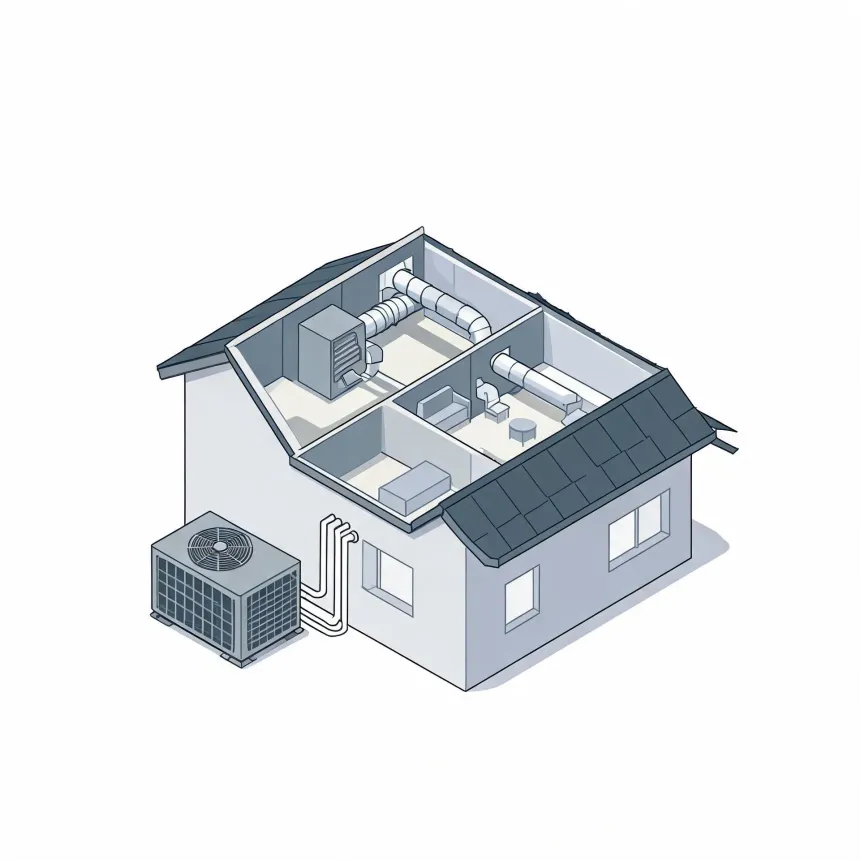
Isometric cutaway illustration of a single-story house showing interior rooms with ductwork and an air handler, connected by refrigerant lines to an outdoor condenser unit on the left.
Your air conditioner works hardest from June through September.

NOAA nClimDiv, 1991–2020 normals

Half the homes in Plano and the rest of Collin County were built in 2003 or later.

A system installed with a newer house usually has years of working life left, which makes repair the right call.

May here means the first hot week finds the weak part

Cooling runs May through October
Summer afternoons average 93°F
283 hail events from 2015 to 2024

Plano runs the AC from May through October, six months straight. In June, July and August the afternoon high averages 93, and the unit outside is working the whole time it's that hot. That kind of stretch wears on the compressor and the condenser fan before anything actually breaks. Collin County also sees a lot of hail, and a dented cabinet or bent fins can cut airflow well before the unit quits. Both of those point to the same thing, parts here wear sooner than they do in milder places. When something finally acts up, finding the real cause is what makes the repair hold.

Repair it

If your system came with a newer house, it likely has plenty of life left. Repair is usually the right call.

Find a contractor
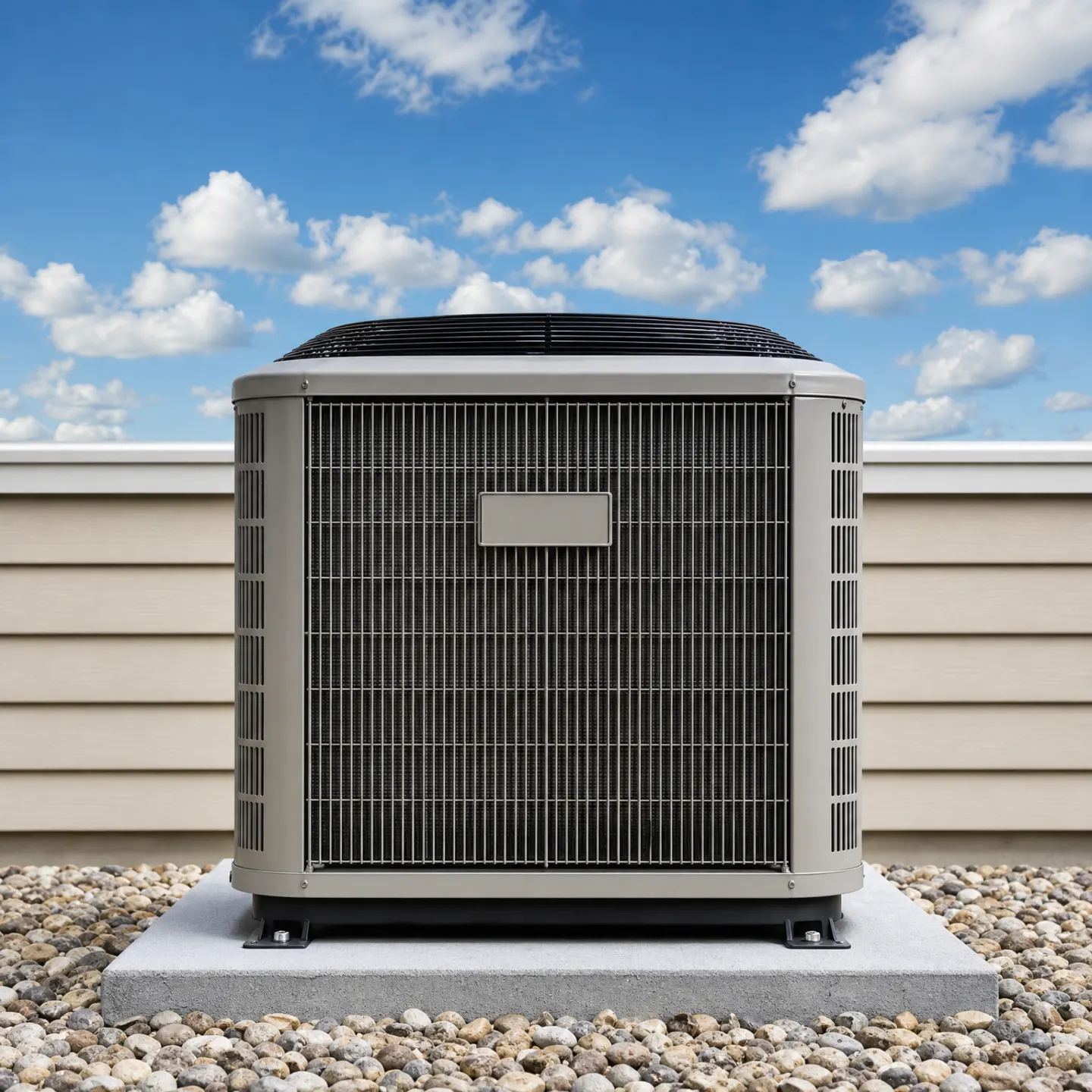
An outdoor residential air conditioning condenser unit mounted on a concrete pad, surrounded by gravel with a blue sky in the background.

Young system, one bad part

A unit that's only a few years old hasn't logged enough summers to wear out a compressor on its own. When something acts up on a system like that, the cause is usually one part, not the system itself. Worth getting a tech to find which one before anything gets replaced.

What you'll notice first

Warm air out of the vents, the unit cycling on and off faster than it used to, or ice forming on the copper line running to the outdoor unit. Sometimes it's a sound instead, a hard click when the compressor tries to start, or a hum with no air moving at all. These are signs a part failed, not proof the whole system is done.

What's worth a same-day call

A system that won't turn on, one that keeps tripping its breaker, or one leaking water inside the house needs a tech now. A unit still running but blowing warm or cycling oddly can usually wait a bit. Ice on the line means shut it off and call. Running it iced over turns a simple fix into a compressor problem.

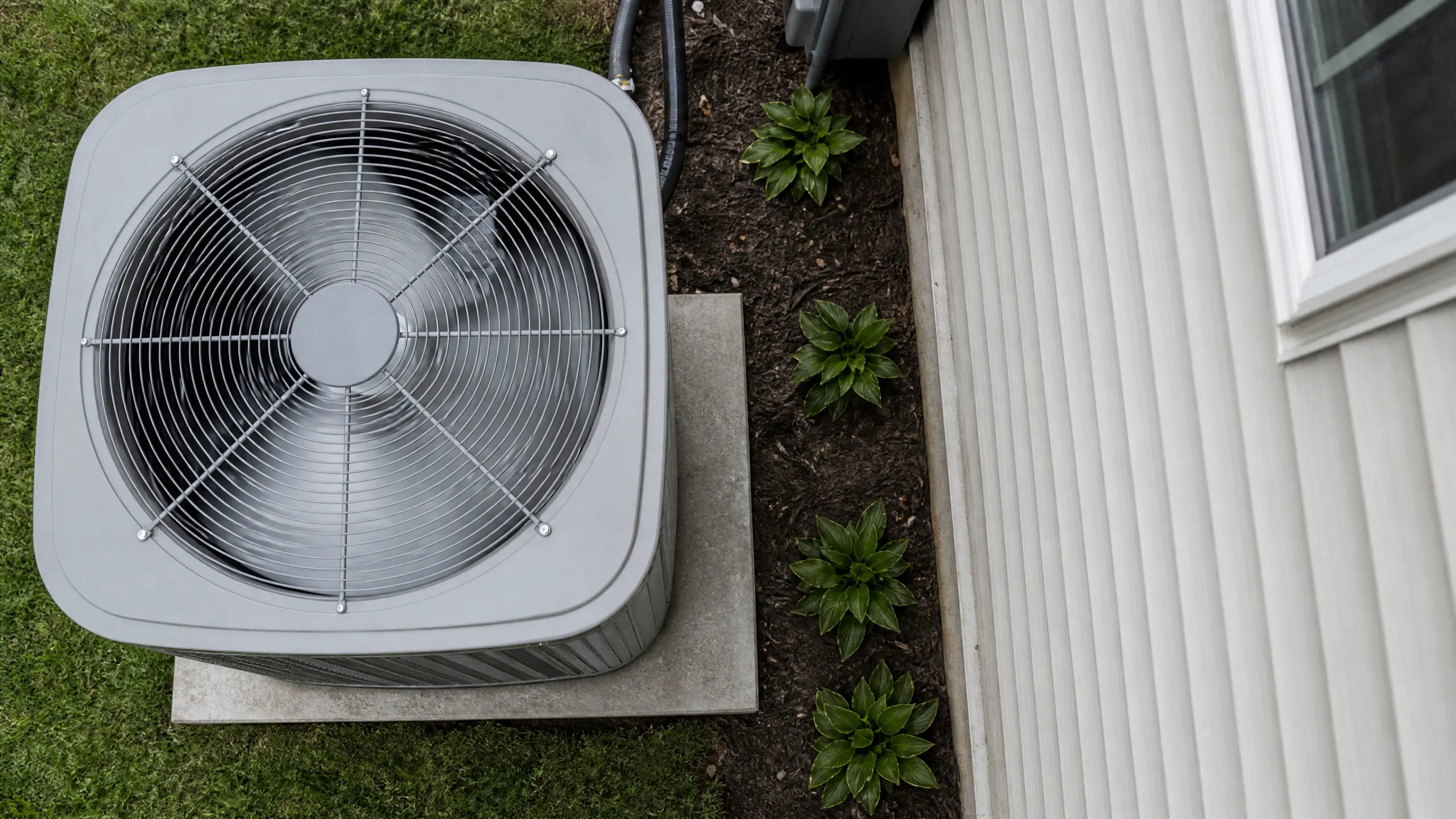
Overhead view of a gray outdoor AC condenser unit on a concrete pad beside a mulched garden bed and a house with vinyl siding.

A new air conditioner would cut about $70 a year off cooling for a typical Collin County home.

  • A new one at the federal minimum, 14.3 SEER2$440 a year
  • An older air conditioner$510 a year

Estimates for a typical Collin County home, compared with an older unit built to the previous federal minimum, from EIA household energy data, Texas fuel prices and NOAA climate normals. Your home will differ.

Repair makes sense when a part like a capacitor or contactor has failed.

Replacement makes sense when the compressor has failed or the system uses R-22 refrigerant, which is no longer made.

A diagnostic starts outside, at the unit itself. A tech checks the capacitor first, since it's the part most likely to fail and the cheapest to confirm. From there it's the contactor, the condenser fan motor, and the refrigerant charge, checked with gauges rather than guessed at. Warm air or short cycling can come from any of these, and they don't look alike once the panel's off. If the line to the outdoor unit was iced over, that ice has to melt back before a true reading on the charge is possible, so the tech may need to let the system sit before testing it. The goal isn't just to find a part that's failed, it's to find out why that part failed, since a weak capacitor on its own is a different job than a weak capacitor next to a compressor pulling too much current.