
Texas Cooling Help
An outdoor air conditioning condenser unit mounted on a concrete pad next to a blue-sided residential house at sunset.

AC Repair in Pearland, TX

Tell us about the job

Takes about a minute. No obligation.

Step 1 of 3: Equipment

Your AC runs about seven months a year here, April through October. During June, July and August, it's working against an afternoon high around 91°F, day after day. That's a long stretch of real load on the compressor and the fan motor, not just a few hot afternoons a year. Systems in Pearland earn their wear honestly. When something starts acting up, it's usually tied to that long run of hard work, not a fluke. Worth having someone look at the actual cause before you decide what it needs.

7 months
April through October, your air conditioner is on duty
91°F
the average summer afternoon it cools against
25 hail events
in ten years, and hail bends the fins on outdoor coils
63 wind events
in ten years, and wind drives debris into outdoor units
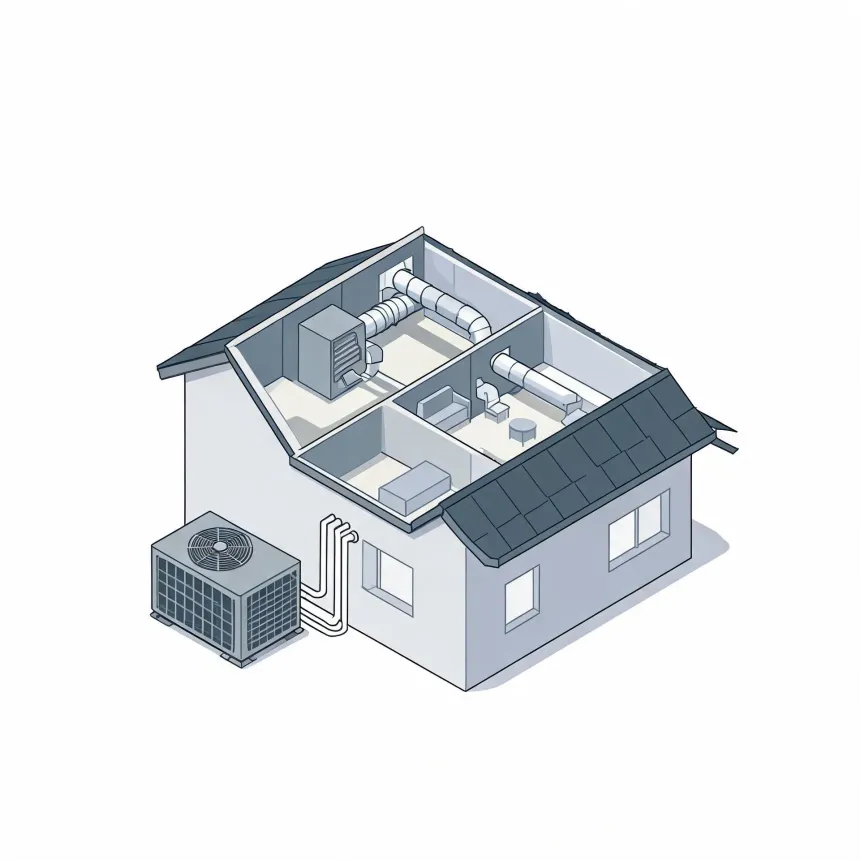
Isometric cutaway illustration of a single-story house showing interior rooms with ductwork and an air handler, connected by refrigerant lines to an outdoor condenser unit on the left.
Your air conditioner works hardest from May through September.

NOAA nClimDiv, 1991–2020 normals

Half the homes in Brazoria County were built in 1996 or later.

If your AC came with a newer house, it's probably still within its working life, and a repair should take care of it.

Electricity here runs 14.94 cents a kilowatt-hourA system that's struggling costs you more here than almost anywhere else.

March is worth a call before the heat does. Cooling in Pearland runs April through October, and the first weeks of that run are when a weak part finally gets tested. A capacitor or contactor that sat unused all winter is still untested, and the first real load of the season is what shows whether it's still good. Catching that in March means a quick fix instead of a breakdown once the heat has settled in for the next seven months.

Find out what's actually wrong before you fix it

Get the actual cause checked before you pay for a fix. A system that's been working this hard for this long doesn't act up for no reason, and the right repair depends on knowing which part gave out first.

Find a contractor
An outdoor residential air conditioning condenser unit mounted on a concrete pad, surrounded by gravel with a blue sky in the background.

A newer system still breaks, but it breaks for a reason

If your AC is only a few years old, that points toward a specific repair rather than a system on its way out. A technician can usually tell quickly whether a part failed on its own or whether something else is stressing it. Worth mentioning the age when you call, or checking the install date on the unit itself if you're not sure.

The capacitor usually goes first

The capacitor gives the compressor and fan motor the kick they need to start. Years of heat and running time wear it down until it can't deliver that kick. A fan that spins slow, or a compressor that hums but won't start, is often just that one part giving out.

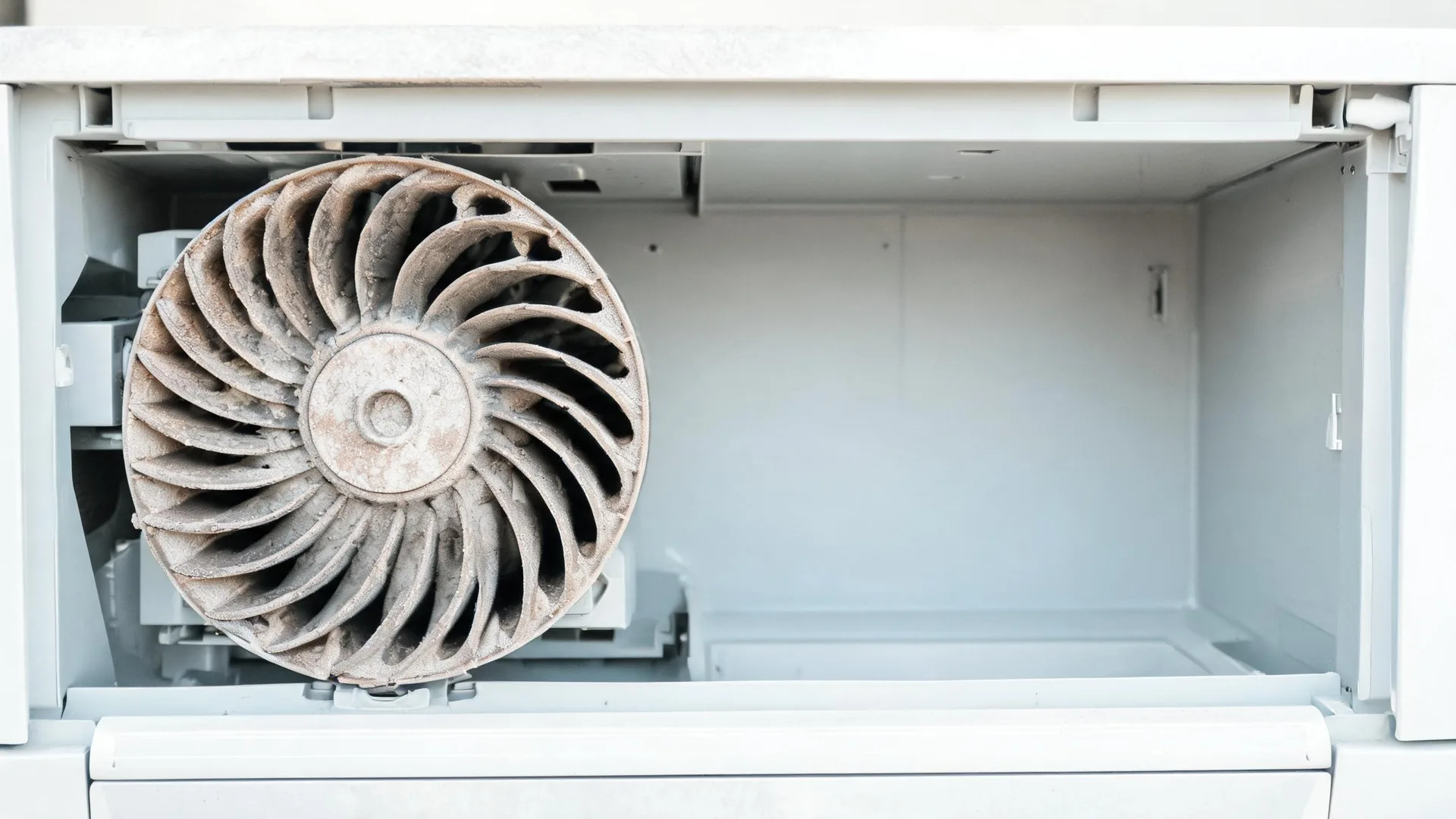
A dirty coil makes the whole system work harder

When the outdoor coil is caked with dirt or the indoor coil is iced over, the system can't move heat the way it should. The compressor ends up running longer to do the same job, and that extra strain is what wears it out early. Clean coils are one of the few things that head off a bigger repair later.

An outdoor central air conditioning unit mounted on a concrete pad beside a blue-sided house at sunset.

A new air conditioner would cut about $90 a year off cooling for a typical Brazoria County home.

  • A new one at the federal minimum, 14.3 SEER2$570 a year
  • An older air conditioner$660 a year

Estimates for a typical Brazoria County home, compared with an older unit built to the previous federal minimum, from EIA household energy data, Texas fuel prices and NOAA climate normals. Your home will differ.

Repair makes sense when a part like a capacitor or contactor has failed.

Replacement makes sense when the compressor has failed or the system uses R-22 refrigerant, which is no longer made.

Age isn't the only thing that decides repair versus replacement. A system that's been serviced right along, coils cleaned, filter changed, refrigerant charge correct, holds up differently than one that's been ignored even if they're the same age. What matters more is whether this breakdown is a single part failing on its own or a sign the compressor itself is wearing out. A capacitor or contactor is a straightforward swap. A compressor that's failing is a different conversation, because replacing it often costs close to what a new system would. If a technician finds the second kind of problem, that's when replacement is worth weighing seriously. If it's the first kind, fixing it is usually the right call regardless of how old the unit is.