Seven months of cooling
AC here runs from April through October. That's most of the year with the compressor cycling on and off, not just a few weeks in summer.
Takes about a minute. No obligation.
AC here runs from April through October. That's most of the year with the compressor cycling on and off, not just a few weeks in summer.
June through August, the afternoon high averages 94°F. A system fighting that kind of heat for weeks at a stretch is running near its limit, and that's when a weak part finally gives out.
NOAA nClimDiv, 1991–2020 normals
March is the month before cooling starts in Comal County.
A check now catches the weak part before the first hot week in April asks too much of it.




A system that's low on refrigerant or working with a dirty coil pulls more power to do the same job, and at 14.94 cents a kilowatt-hour that difference shows up on the bill every month it runs. In New Braunfels that's most of the year, not just a few weeks. Waiting doesn't make the repair smaller, it just means more months of paying extra for a system that isn't cooling right anyway. If the AC is struggling now, have it looked at before the next bill comes.
A system that's been fighting 94 degree afternoons for months doesn't fail for no reason. Get the actual cause found now, so the fix holds instead of just buying a few more weeks.
Find a contractorIf the system in your house went in when the house was built, and the house was built in 2005 or later, it's not old. Most parts last well past year one. That points away from replacing the whole system and toward fixing what's actually wrong with it. A compressor or capacitor failing this early usually means a specific problem, not old age catching up with it. Worth asking whoever looks at it whether the system matches the house or was swapped in later, since that changes what you'd expect from it.
A system low on refrigerant makes the compressor work harder to move heat out of the house. That extra strain shows up as higher head pressure, and over time it can push the compressor past what it's built for. A leak that started small doesn't stay small either, since the oil that lubricates the compressor travels with the refrigerant and leaves with it.
A weak capacitor makes the compressor motor start hard every cycle, drawing more amperage than it should for a few seconds each time. Enough hard starts and the motor windings heat up past what they're rated for. A capacitor is a quick swap on its own. A compressor that's been dragged down with it is a different repair entirely.
Estimates for a typical Comal County home, compared with an older unit built to the previous federal minimum, from EIA household energy data, Texas fuel prices and NOAA climate normals. Your home will differ.
Repair makes sense when a part like a capacitor or contactor has failed.
Replacement makes sense when the compressor has failed or the system uses R-22 refrigerant, which is no longer made.
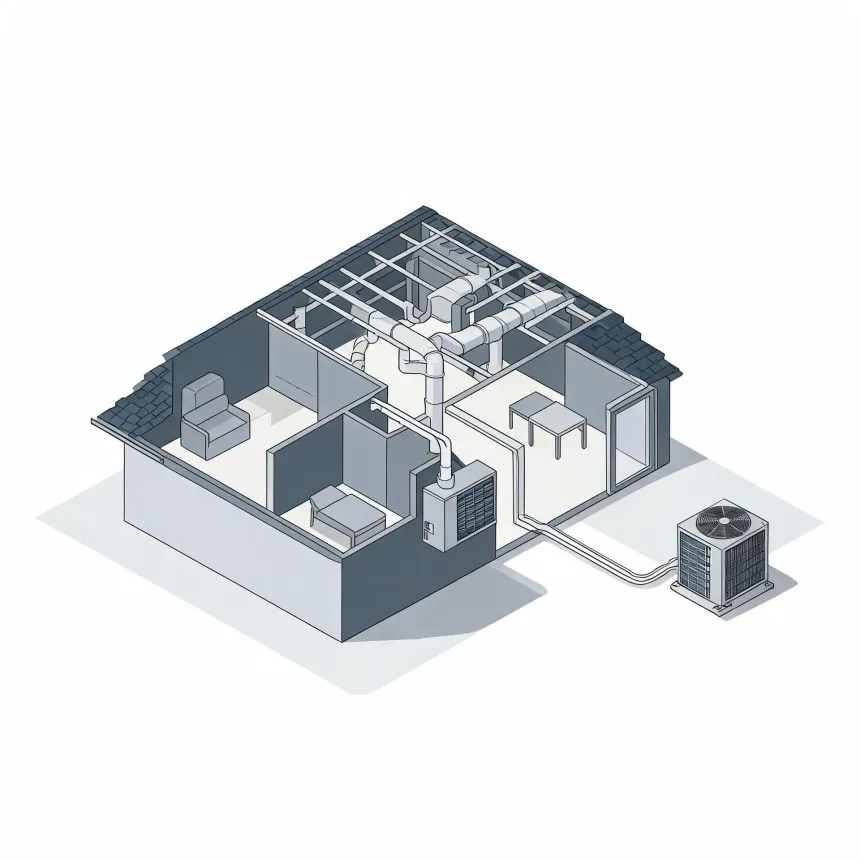
A diagnostic visit starts with questions. When the system acts up, what it sounded like, whether the air coming out was warm or just weak. Then gauges go on to check refrigerant pressure, and a clamp meter goes on the compressor and fan motor to see what they're actually drawing against what the nameplate calls for. The capacitor gets tested under load, not just looked at, since a capacitor can look fine and still be weak. Coils get checked for ice or buildup, and the contactor gets checked for pitting from years of cycling on and off. None of this is guesswork. Every reading points at something specific, and a tech worth paying tells you what the numbers showed, not just what part they're replacing.