




Texas Cooling Help
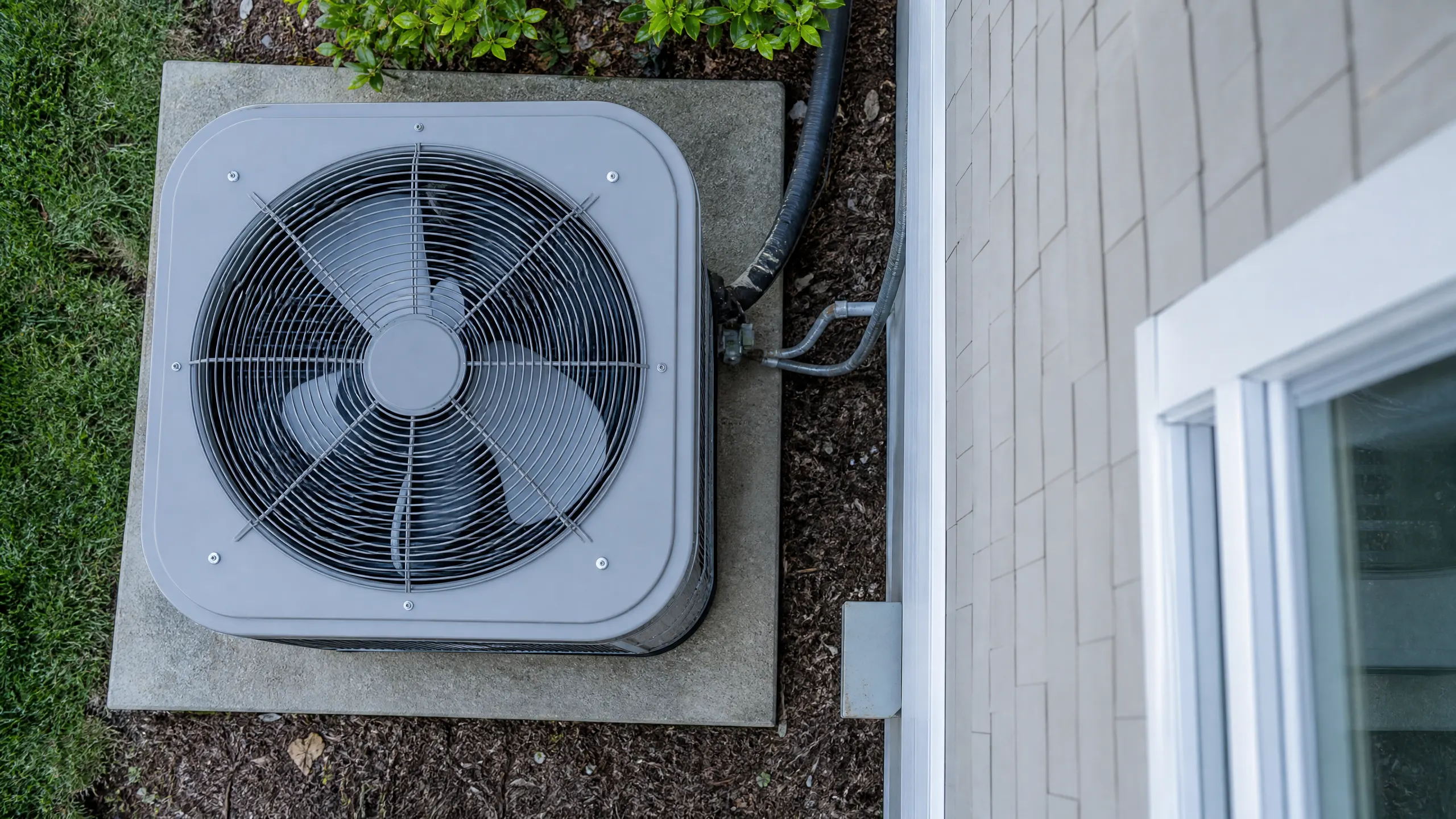
Aerial view of a residential air conditioning condenser unit mounted on a concrete pad next to a house with vinyl siding and a sliding glass door.

AC Repair in Lubbock, TX

Tell us about the job

Takes about a minute. No obligation.

Step 1 of 3: Equipment

Check the thermostat first. Make sure it is set to cool and the temperature is actually below room temperature, since a setting bumped by accident looks exactly like a dead system. Next look at the breaker box. A tripped breaker on the outdoor unit will stop the compressor cold even though the thermostat still lights up. Go outside and look at the condenser. If the fan isn't spinning and you don't hear any hum, that points to the capacitor or the motor rather than something minor. Inside, pull the filter and hold it up to a light. If you can't see through it, swap it before calling anyone, because a clogged filter can starve the system enough to freeze the coil and mimic a much bigger problem.

5 months
May through September, your air conditioner is on duty
92°F
the average summer afternoon it cools against
93 hail events
in ten years, and hail bends the fins on outdoor coils
150 wind events
in ten years, and wind drives debris into outdoor units
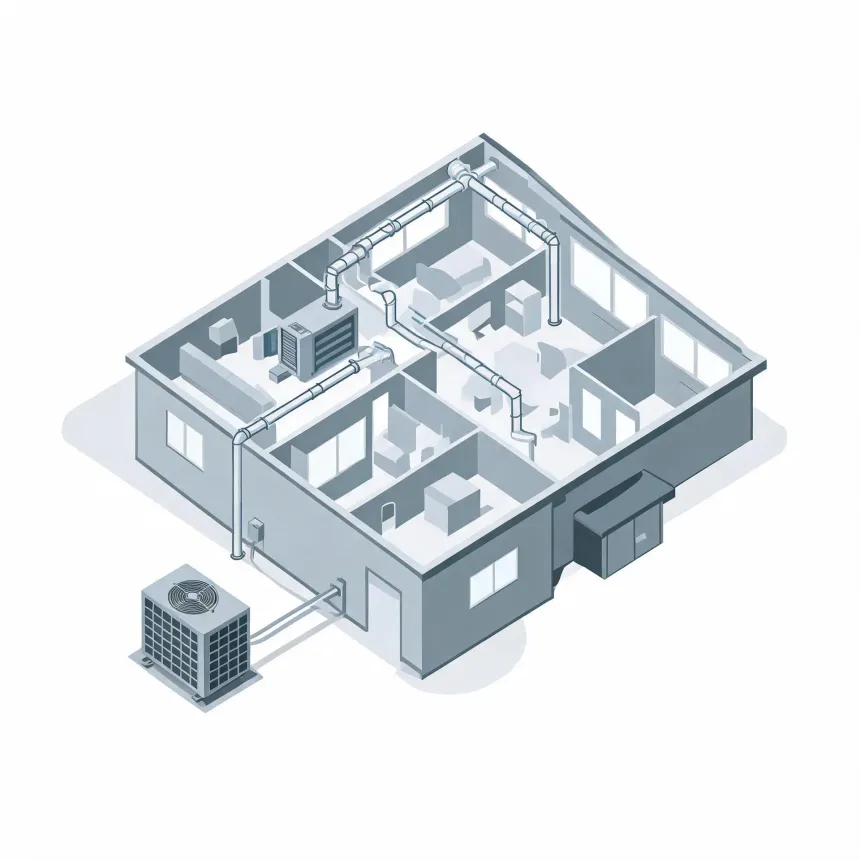
Isometric grayscale illustration of a cutaway house showing interior rooms, ceiling ductwork connected to an indoor air handler, and an outdoor condenser unit linked by lines along the exterior wall.
Your air conditioner works hardest from June through August.

NOAA nClimDiv, 1991–2020 normals

Half the houses in Lubbock County were built in 1985 or later.

A system that came with a newer house still has years in it, so repair is usually the better call before anyone talks replacement.

A newer system is worth fixing, not replacing

Half the homes here were built by 1985
Cooling runs May through September
Summer afternoons average 92°F
Five months of 92 degree heat, every yearCooling runs May through September here, with afternoon highs averaging 92°F in June, July and August.

May is when cooling starts here, and it's also when a weak part finally gets found out. A capacitor or contactor that limped along all winter has to carry a full load the first hot week of the season, and that is usually where it gives out. April is worth a look before that happens, especially on a system that struggled last September. Once May through September runs its course, the unit gets a break, but nothing wears out from sitting idle. It wears out from running, and here that means five straight months of it.

Repair it

If your system came with a newer house, it likely has plenty of life left. Repair is usually the right call.

Find a contractor
A man in a dark cap, gray T-shirt and brown work pants climbs porch steps toward an orange front door, carrying a worn canvas tool bag, with a potted shrub beside the entry.
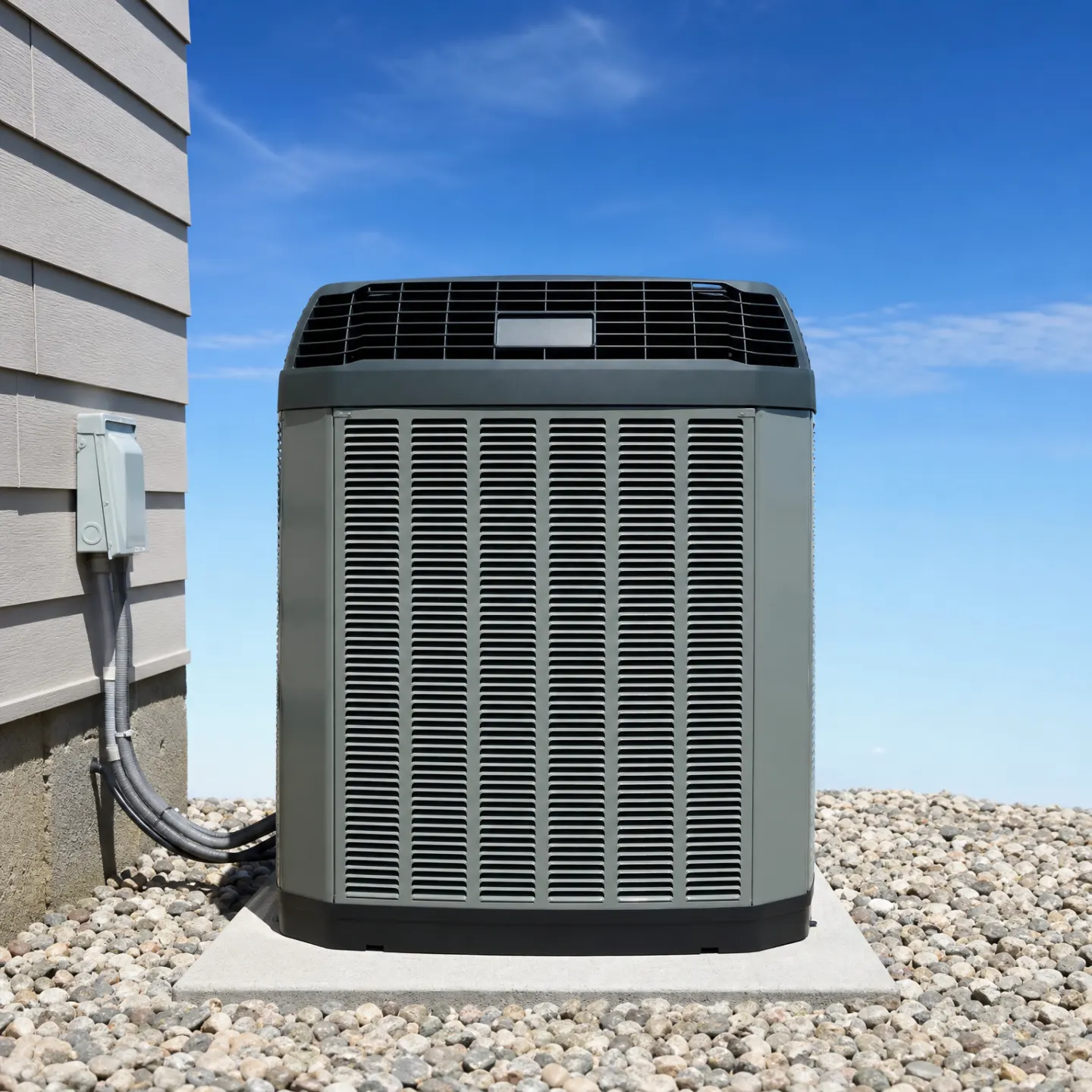
An outdoor air conditioning condenser unit mounted on a concrete pad beside a house, with electrical conduit running to a wall-mounted disconnect box.

Heat wears it down. Storms find what's already weak.

Wind has hit this county 150 times in the past ten years. Hail has come through 93 times in that same stretch. A coil or fan blade that takes a hit doesn't always fail right away. It can run weakened for months until the summer heat load finds it. If the system is acting up now, have it looked at rather than guessing at the part. A contractor can tell whether this is heat, age or storm damage catching up with it, and fix the one that's actually true.

Warm air from the vents

If the air moving out of the vents isn't cold, the compressor outside may have quit even though the indoor blower still runs. That split, air moving but not cold, almost always points outside to the compressor or the refrigerant charge rather than anything inside.

Ice on the refrigerant line or coil

A coil that freezes over usually means airflow is restricted or the charge is low, and running it longer makes the ice worse, not better. Shut the system off and let it thaw completely before anyone touches it, otherwise a contractor is diagnosing a block of ice instead of the actual fault.

Overhead view of an air conditioning condenser unit on a concrete pad next to a house with asphalt shingle roofing and vinyl siding.

A new air conditioner would cut about $50 a year off cooling for a typical Lubbock County home.

  • A new one at the federal minimum, 14.3 SEER2$320 a year
  • An older air conditioner$370 a year

Estimates for a typical Lubbock County home, compared with an older unit built to the previous federal minimum, from EIA household energy data, Texas fuel prices and NOAA climate normals. Your home will differ.

Repair makes sense when a part like a capacitor or contactor has failed.

Replacement makes sense when the compressor has failed or the system uses R-22 refrigerant, which is no longer made.

A diagnostic visit starts outside at the condenser, with gauges on the refrigerant lines to check the charge and a look at the capacitor and contactor while the system runs. Inside, the tech checks the temperature split between the air going into the system and the air coming out, since that split points to whether the problem is airflow, charge, or the compressor itself. The blower and the coil get checked too, because a coil caked with dirt or a blower running slow can starve the system the same way a low charge does. Electrical connections get tested under load, not just looked at, since a connection can look fine sitting still and still fail once it heats up. A working system shows a cold line set, a clean coil, and a steady compressor, and the visit comes down to finding which of those isn't true right now.