Texas Cooling Help
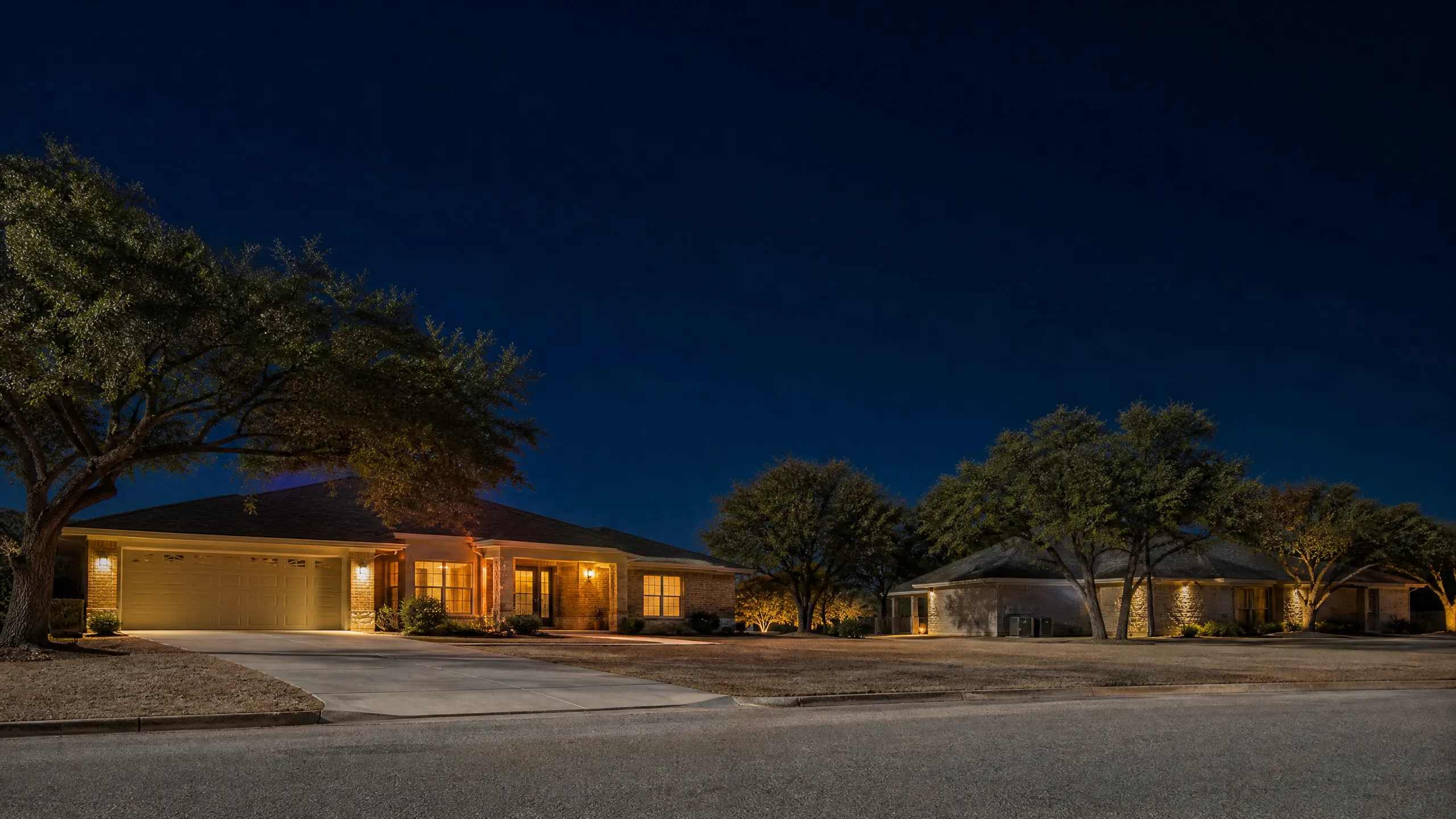
Two illuminated single-story brick houses with mature oak trees photographed at twilight on a quiet residential street.

AC Repair in Laredo, TX

Tell us about the job

Takes about a minute. No obligation.

Step 1 of 3: Equipment

Check the thermostat and the breaker first

Make sure the thermostat is set to cool and set below room temperature, and check that the batteries aren't dead if it has them. Then look at the breaker panel. A tripped breaker on the outdoor unit will stop the compressor from running even though the indoor fan still blows air. These take a minute to check and rule out a service call for something that isn't a repair at all.

Look at the filter and the outdoor unit

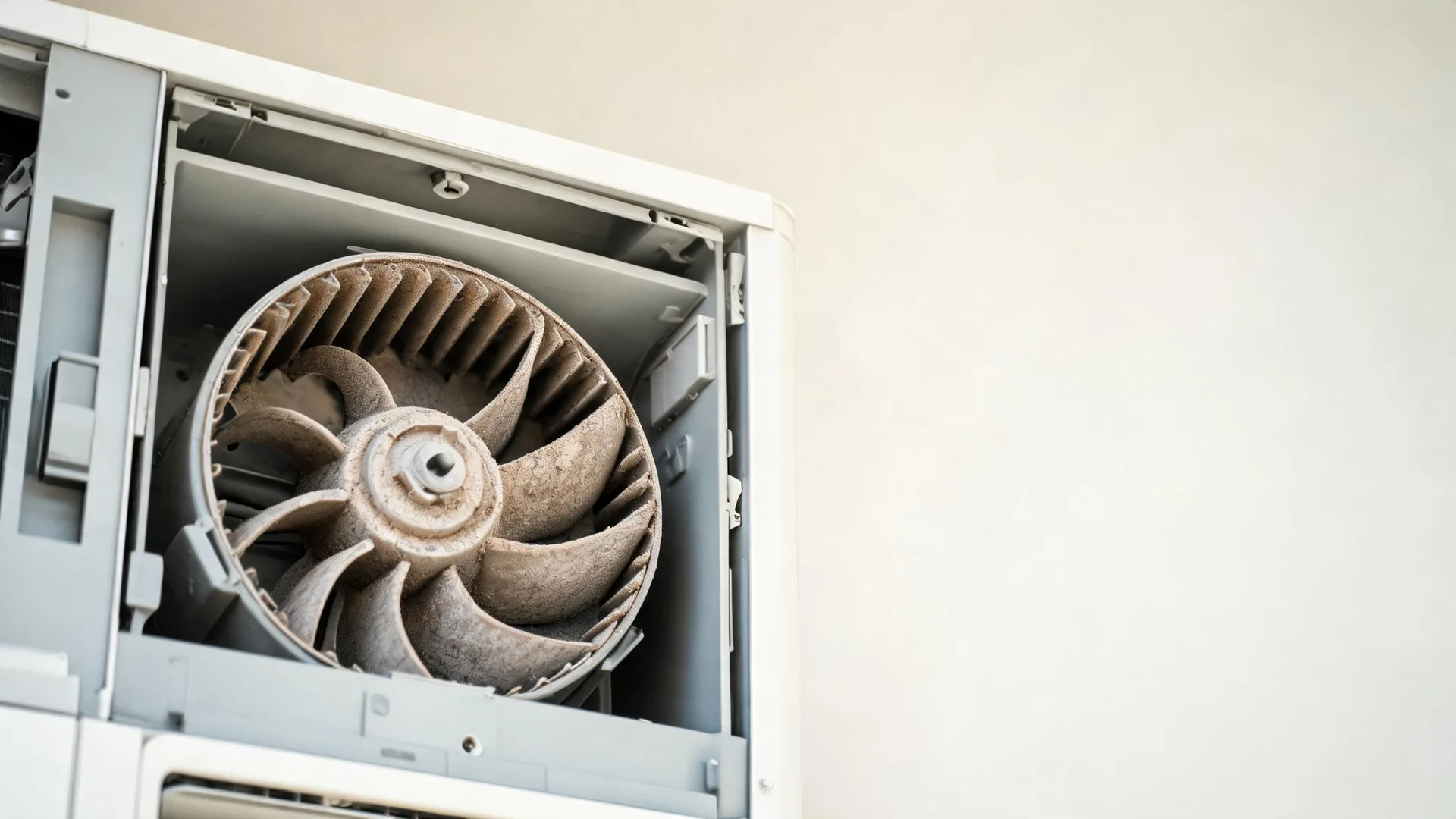
Pull the air filter and hold it up to the light. If you can't see light through it, it's choking off airflow and can cause the coil to freeze over, which then reads like bigger problems than it is. Outside, clear any grass clippings, leaves or debris packed against the condenser fins, since the unit needs open airflow on all sides to move heat properly. If the outdoor fan isn't spinning at all, that's one to leave for a tech rather than something to force by hand.

8 months
March through October, your air conditioner is on duty
98°F
the average summer afternoon it cools against
48 hail events
in ten years, and hail bends the fins on outdoor coils
31 wind events
in ten years, and wind drives debris into outdoor units
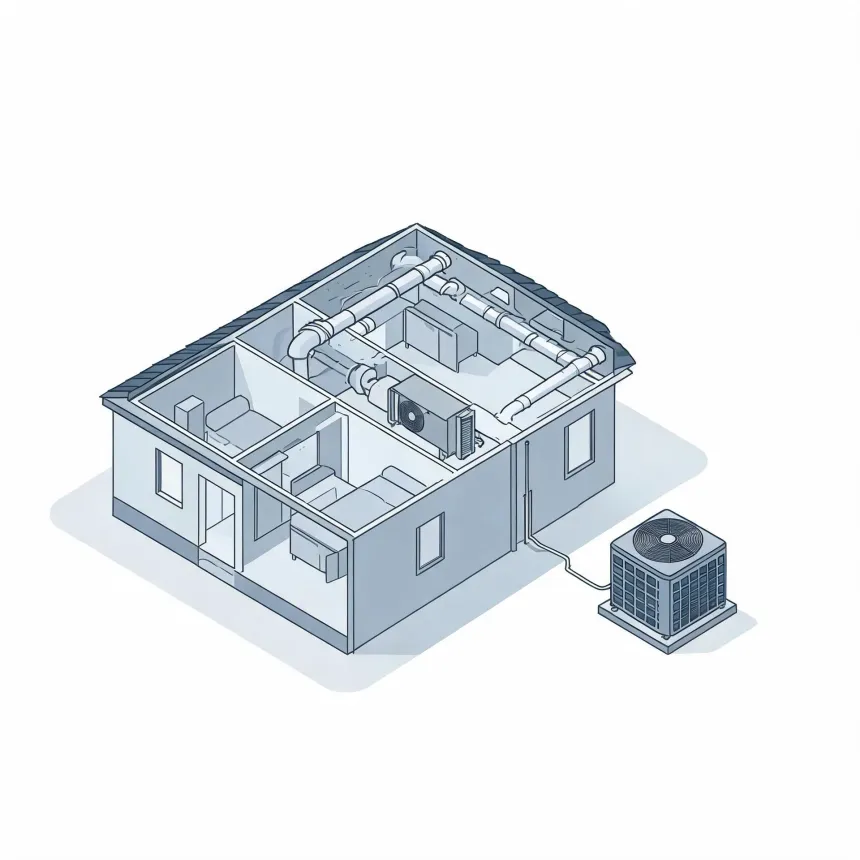
Isometric line illustration of a cutaway single-story house showing interior rooms, attic ductwork and an air handler, connected by a line to an outdoor condenser unit on a pad.
Your air conditioner works hardest from May through September.

NOAA nClimDiv, 1991–2020 normals

Half the homes in Webb County were built in 1997 or later.

A system installed with a house that age usually still has years left in it, which makes repair the right call before anyone talks about replacing it.

Cooling starts in March here, and that first month is when a weak system fails

Cooling runs March through October
Summer afternoons average 98°F
Power costs 14.94 cents a kWh statewide

Texas runs on some of the higher electric rates in the country, 14.94 cents per kilowatt-hour as of 2024. An AC that's low on charge or struggling with a weak capacitor doesn't just cool poorly, it pulls more power trying to do the job. That shows up on the bill before it shows up as a full breakdown. Catching it now, while it's still a repair, costs less than letting it run that way through a Laredo summer.

Repair it

If your system came with a newer house, it likely has plenty of life left. Repair is usually the right call.

Find a contractor
A man in a dark t-shirt and tan work pants walks up concrete steps toward a red front door, carrying a worn canvas tool bag, with a potted shrub beside the entry.
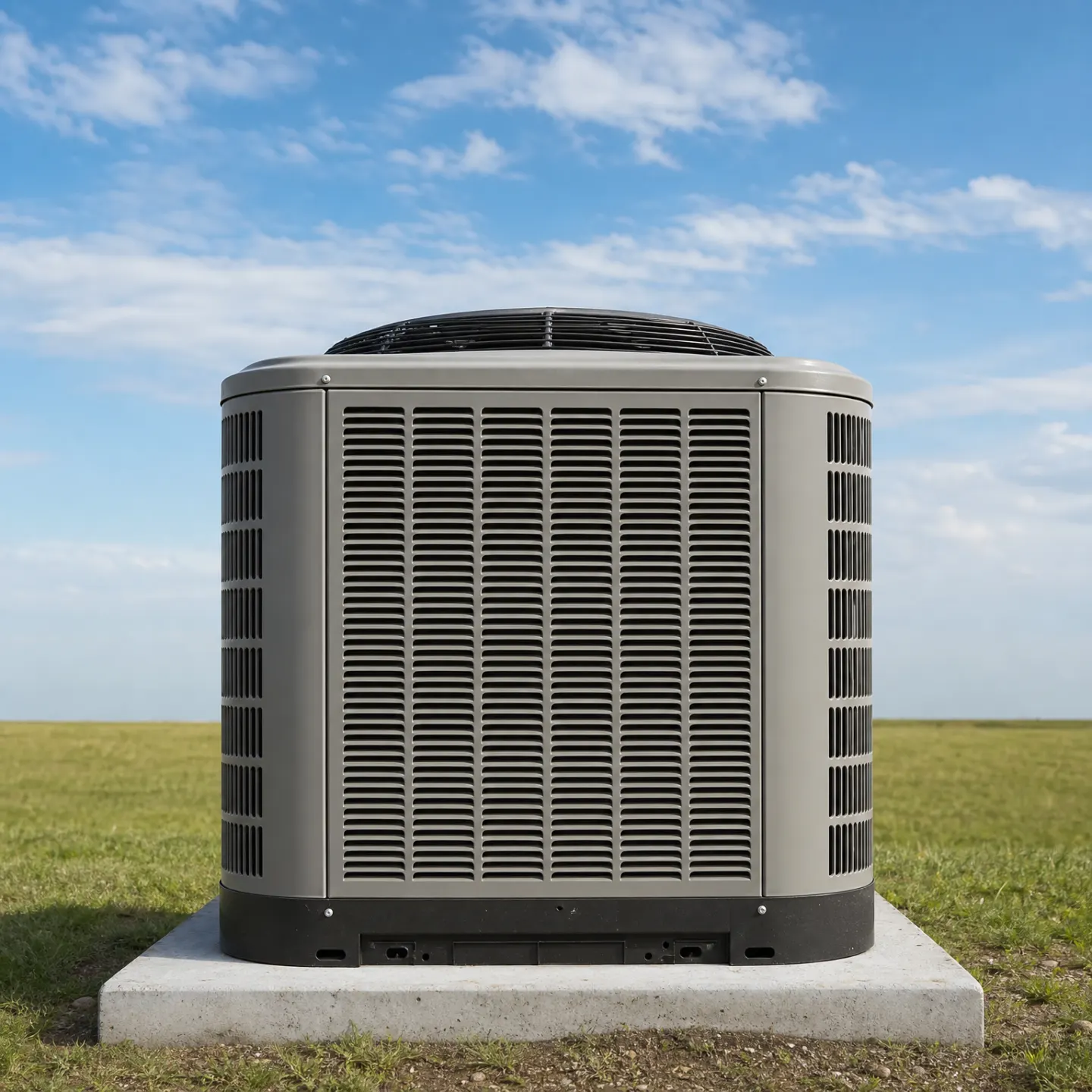
A gray metal air conditioning condenser unit mounted on a concrete pad in a flat grassy field under a partly cloudy sky.

The system usually warns before it quits

A system that's struggling doesn't usually just quit. It tells you first. Warm air coming out of the vents when the thermostat is set to cool is the clearest sign, and it points at the compressor or the refrigerant charge. Short cycling, where the system turns on and off every few minutes instead of running a full cycle, wears out the parts that start the compressor each time. A hissing or bubbling sound near the indoor coil usually means refrigerant escaping from a line, not air moving where it should. Water pooling around the indoor unit means the condensate drain is clogged and backing up instead of carrying moisture outside. A burning smell or a breaker that trips when the system starts points at the electrical side, often the capacitor or the compressor itself drawing more current than it should. None of these fix themselves, and running the system while they're happening usually turns a small repair into a bigger one.

A weak capacitor can take the compressor with it

A capacitor that's starting to fail makes the compressor draw harder every time it tries to start. Run it that way long enough and the compressor overheats or burns out. A capacitor swap is simple. A failed compressor is not.

A frozen coil needs to thaw before anyone can diagnose it

If the coil ices over and the system keeps running, that ice only builds. Liquid refrigerant can end up flooding back into the compressor instead of absorbing heat the way it should, and that damages it. A tech has to wait for a full thaw before they can even see what's wrong underneath.

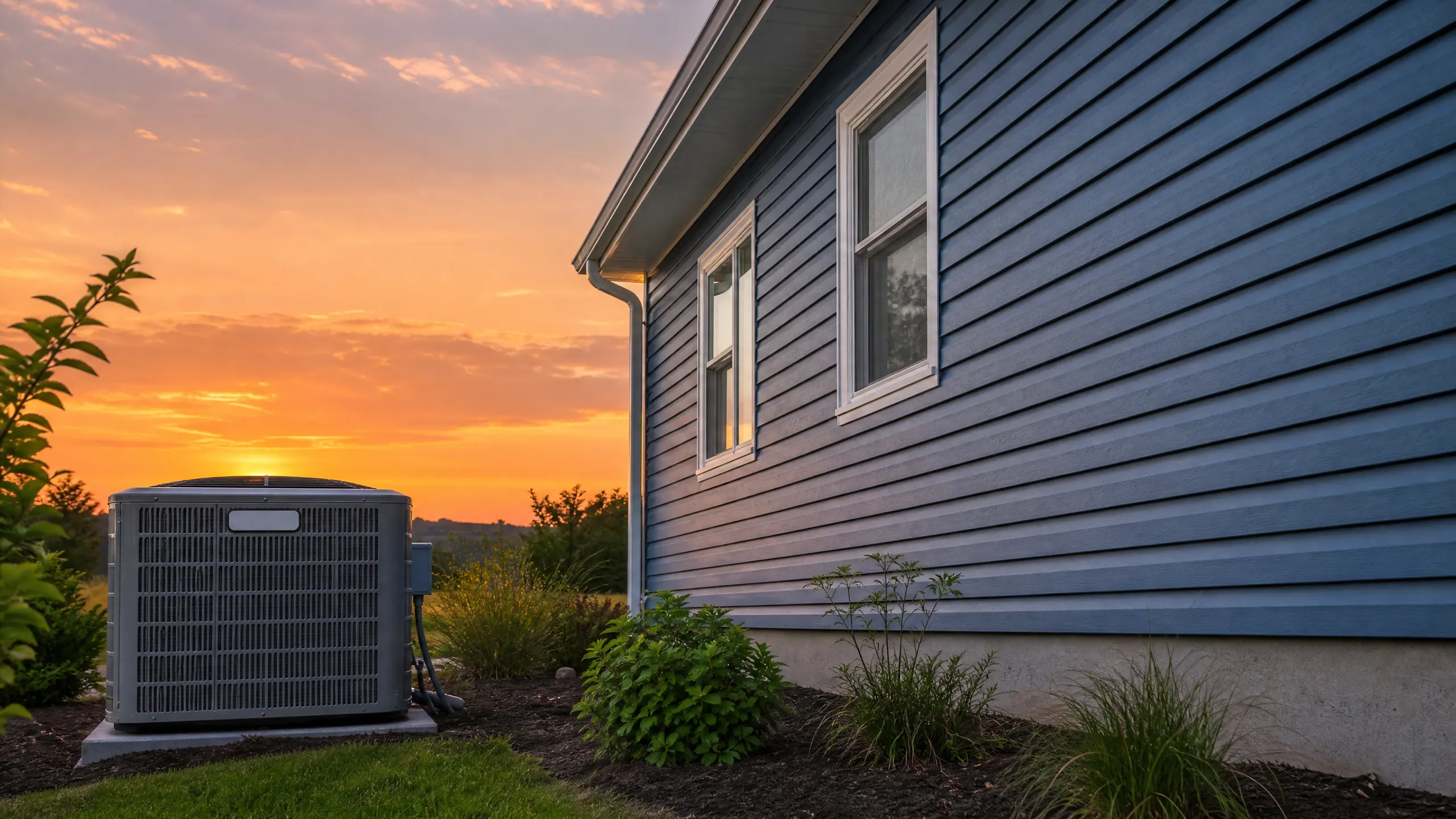
An outdoor air conditioning condenser unit positioned beside a blue-sided house at sunset.

A new air conditioner would cut about $100 a year off cooling for a typical Webb County home.

  • A new one at the federal minimum, 14.3 SEER2$710 a year
  • An older air conditioner$810 a year

Estimates for a typical Webb County home, compared with an older unit built to the previous federal minimum, from EIA household energy data, Texas fuel prices and NOAA climate normals. Your home will differ.

Repair makes sense when a part like a capacitor or contactor has failed.

Replacement makes sense when the compressor has failed or the system uses R-22 refrigerant, which is no longer made.

A diagnostic starts with gauges, not guesses. A tech connects them to the service ports and reads refrigerant pressure on both sides of the system. That tells whether the charge is right or low, or whether the problem is somewhere else entirely. From there it's the electrical side. The capacitor gets tested against its actual rating, the contactor gets checked for pitting, and the compressor's amp draw gets measured against what it should be pulling. Airflow gets checked too, since a starved return or a coil running too cold can look like a refrigerant problem when it isn't. Most of this is ruling things out as much as finding them. By the end, the tech knows which part is failing and why, not just that the system isn't cooling.