Texas Cooling Help
A lit single-story brick ranch house with an attached garage photographed from the street at dusk, flanked by large mature oak trees.

AC Repair in College Station, TX

Tell us about the job

Takes about a minute. No obligation.

Step 1 of 3: Equipment

The tech checks the system before touching it

A diagnostic starts with the thermostat setting, the return air, and the airflow out of the vents before anyone opens a panel. The tech checks refrigerant pressures, looks at the capacitor and contactor in the outdoor unit, and watches how the compressor and fan behave when the system cycles on. That tells them whether the problem is electrical, a refrigerant issue, or something restricting airflow.

What they find decides what happens next

A weak capacitor or a dirty coil usually gets dealt with on the spot. A refrigerant leak means finding where it's leaking before adding any back, since charging a system that's still leaking just means doing it again soon. If the compressor itself has failed, that's a different conversation, since the compressor is what actually moves the refrigerant through the system.

7 months
April through October, your air conditioner is on duty
94°F
the average summer afternoon it cools against
50 hail events
in ten years, and hail bends the fins on outdoor coils
75 wind events
in ten years, and wind drives debris into outdoor units
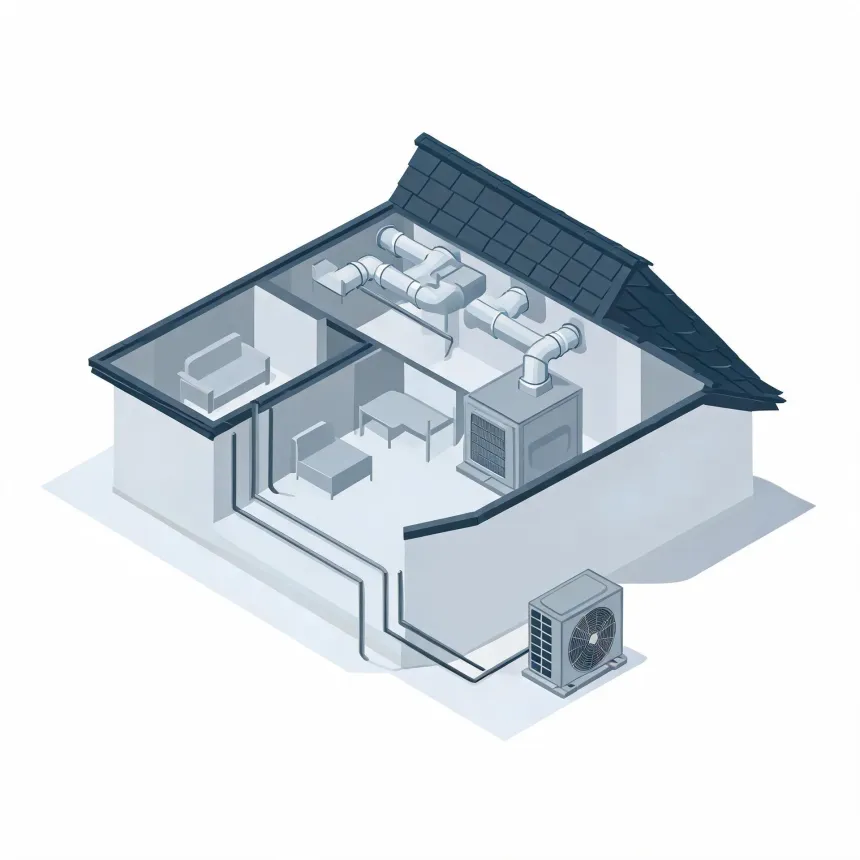
Isometric cutaway illustration of a house showing attic ductwork, an indoor air handler, refrigerant lines running outside, and an outdoor condenser unit on a pad.
Your air conditioner works hardest from May through September.

NOAA nClimDiv, 1991–2020 normals

Your AC runs from April through October here, with afternoon highs averaging 94 in June, July and August.

Seven months of hard running wears out capacitors and coils sooner than they'd last elsewhere.

A broken AC costs more to ignore here than in most places

Power costs 14.94 cents a kWh statewide
Cooling runs April through October
Summer afternoons average 94°F

March is worth paying attention to here. Cooling starts up in April and runs through October, so whatever was already weak gets tested in the first warm week. A capacitor that was marginal at the end of last season doesn't get better sitting idle all winter. If the system struggled before it was last shut off, that same problem is still there waiting. Getting it looked at in March means a tech is diagnosing a quiet system instead of one that's already failed on the first hot afternoon with you in the house.

Half the homes here were built in 1997 or later. That system is probably worth fixing.

Half the homes in Brazos County were built in 1997 or later. If yours is one of them, the AC likely came with the house and still has years of life in it. That's a repair, not a replacement.

Find a contractor
A man in a dark cap and jacket and tan work pants, seen from behind, climbs porch steps toward an orange-brown front door while carrying a worn canvas tool bag.
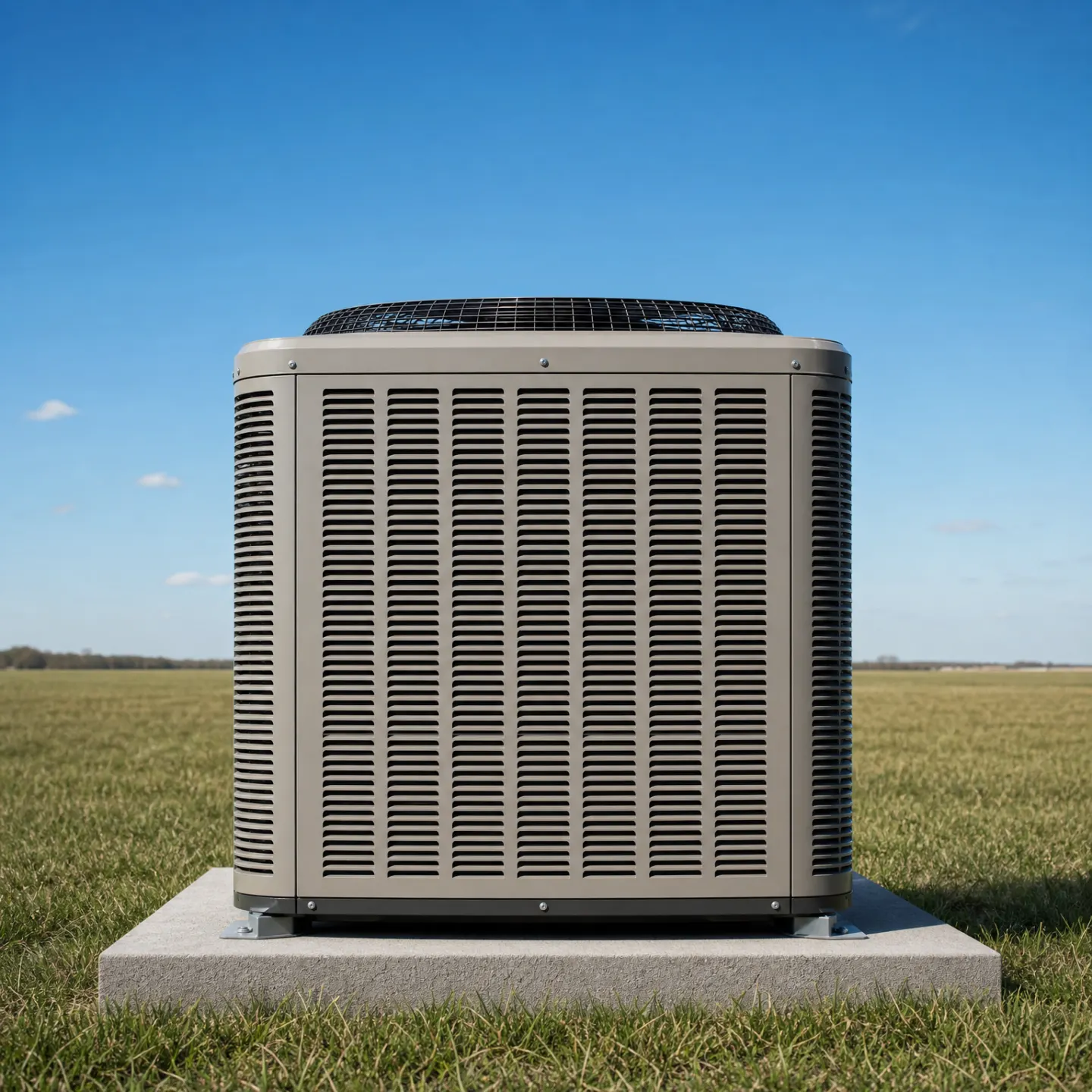
A gray residential air conditioner condenser unit mounted on a concrete pad in an open grass field.

What actually wears out

A capacitor usually fails before a compressor does. It sits there holding a charge, kicking the motors into motion every time the system cycles on, and that charge weakens a little each time until one day it can't start the compressor or the fan at all. A contactor goes a similar way, its contacts pitting and burning from years of making and breaking the circuit. Coils fail differently. Dirt and dust build up on the indoor coil until airflow across it drops, the coil runs colder than it should, and eventually ice forms where there shouldn't be any. The outdoor coil fails from the outside in, its fins bent or caked with debris until it can't shed heat the way it needs to. A refrigerant leak is its own category, usually a slow one at a joint or a rubbed-through line, and it never fixes itself. What drives all of this is hours run, not years on the wall. A system that cycles on and off for more months out of the year puts more wear on these same parts than one that sits idle most of the time.

What you can check before you call

Check the thermostat is set to cool and the setting is actually below room temperature. Check the breaker for the outdoor unit and the one for the air handler, both can trip separately. Look at the filter and change it if it's gray or clogged, since a blocked filter can starve the system of airflow and ice up the coil. Check that the outdoor unit isn't buried in leaves or grass clippings. If you can see the indoor coil and it's covered in ice, shut the system off and let it thaw before anyone comes out.

What tells you to stop and wait

Warm air blowing when it should be cold, ice on the coil, or water pooling near the air handler are all reasons to shut the system off rather than let it keep running. Running a frozen coil or a tripping breaker over and over doesn't fix anything, it just stresses parts that are already struggling. A system making a new noise, a burning smell, or a breaker that trips again right after you reset it needs a tech before it runs again, not after.

An outdoor air conditioning condenser unit positioned on a concrete pad next to a blue-sided house, surrounded by green shrubs and flowering hydrangeas at sunset.

A new air conditioner would cut about $70 a year off cooling for a typical Brazos County home.

  • A new one at the federal minimum, 14.3 SEER2$520 a year
  • An older air conditioner$590 a year

Estimates for a typical Brazos County home, compared with an older unit built to the previous federal minimum, from EIA household energy data, Texas fuel prices and NOAA climate normals. Your home will differ.

Repair makes sense when a part like a capacitor or contactor has failed.

Replacement makes sense when the compressor has failed or the system uses R-22 refrigerant, which is no longer made.

A repair that keeps coming back is telling you something a single fix can't fix. If a capacitor failed once, replacing it is a repair. If the compressor is drawing hard because it's been running on low refrigerant for months, or the coil has corroded through in more than one spot, you're往 looking at a system where one part failing is a symptom of everything else nearing the same point. Age by itself doesn't decide this. What decides it is whether the next repair is likely to be the last one for a while, or just the first of several this year. A tech who's already inside the unit for one problem can usually tell you which situation you're in, because they can see the condition of everything else while they're in there.