Texas Cooling Help
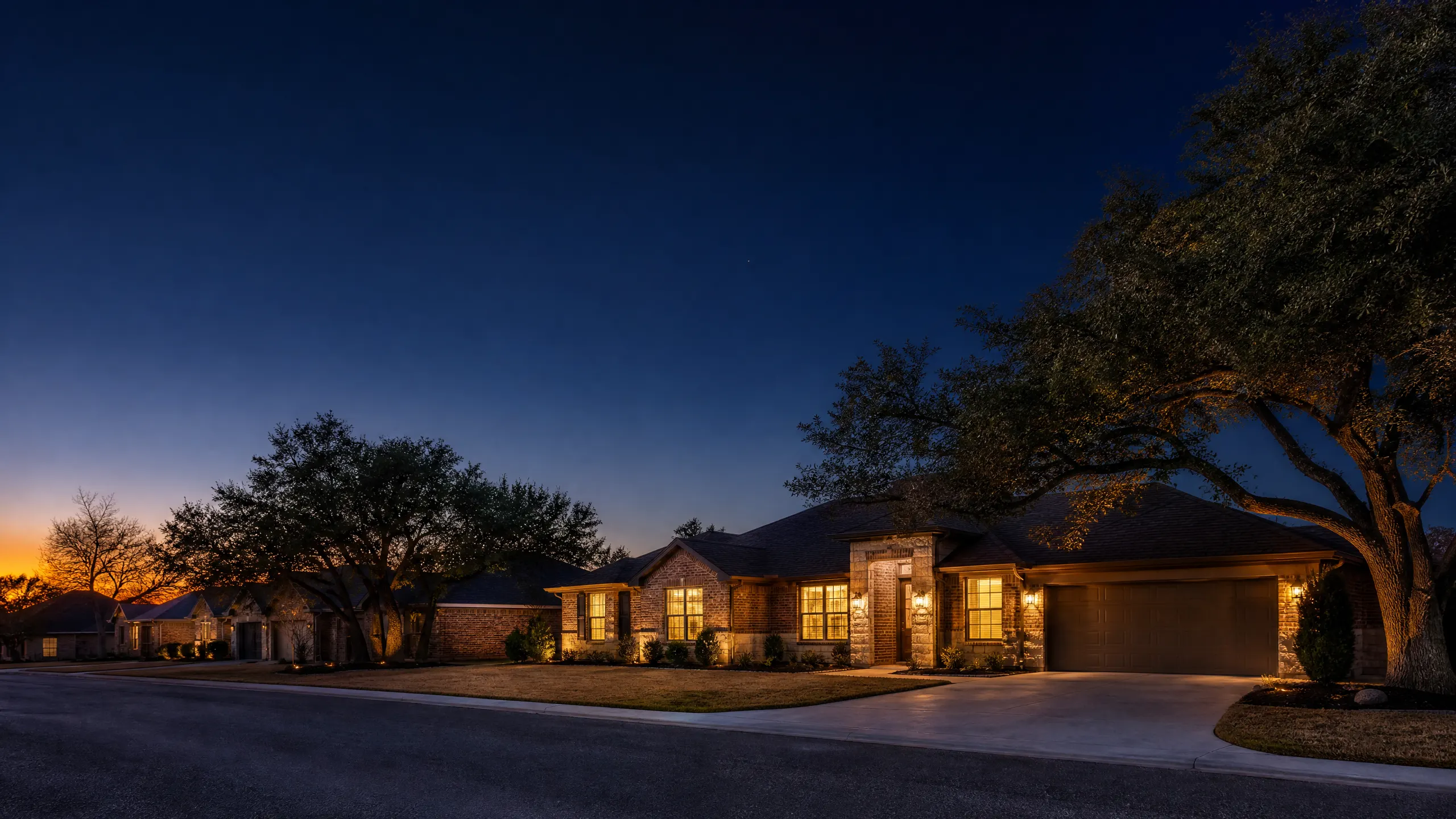
A lit single-story brick ranch house with a two-car garage photographed at dusk on a quiet residential street lined with oak trees.

AC Repair in Brownsville, TX

Tell us about the job

Takes about a minute. No obligation.

Step 1 of 3: Equipment

Warm air from the vents means the system stopped cooling, not that it's slow

A unit blowing warm air usually isn't struggling to keep up. It's often a frozen coil, a refrigerant leak, or a compressor that quit. The fix depends entirely on which one it is, so this is worth a real diagnosis rather than a guess.

A short cycle wears the compressor faster than running long

If the unit kicks on and off every few minutes instead of running a full cycle, something is cutting it short, a bad capacitor, a clogged filter choking airflow, or a thermostat sensor that's lying about the temperature. Left alone, that stop-start pattern is what burns out a compressor early.

10 months
February through November, your air conditioner is on duty
94°F
the average summer afternoon it cools against
27 hail events
in ten years, and hail bends the fins on outdoor coils
95 wind events
in ten years, and wind drives debris into outdoor units
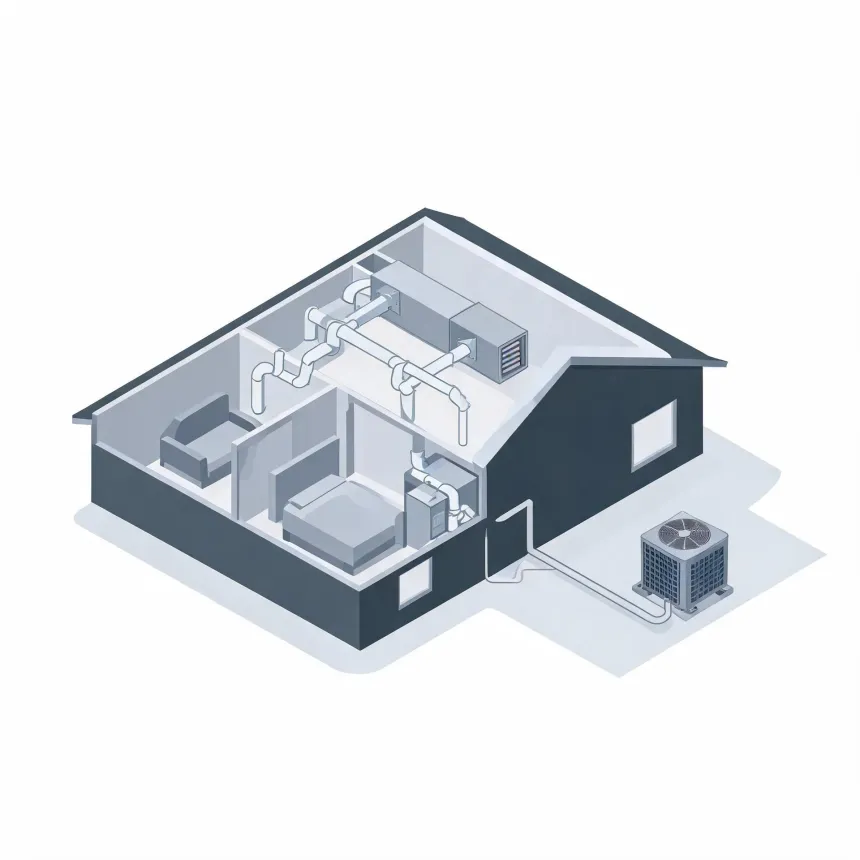
Isometric cutaway illustration of a house showing interior ductwork, an air handler and furnace unit, and an outdoor condenser connected by lines outside the wall.
Your air conditioner works hardest from May through October.

NOAA nClimDiv, 1991–2020 normals

A low refrigerant charge makes the compressor work harder to hit the same temperature.

Keep it running like that and the compressor overheats, and that part doesn't get a second chance.

January is the one month this system gets to rest before February asks a lot of it

Cooling runs February through November
Summer afternoons average 94°F
Power costs 14.94 cents a kWh statewide
Electricity here runs 14.94 cents a kilowatt-hourA unit that's cooling poorly still runs the compressor hard, and that cost shows up on the next bill

Half the houses in Cameron County were built in 1992 or later. If yours is one of them, the AC that came with it is probably not old enough to be the reason it's struggling. A compressor or coil from a newer install has years left in it under normal conditions. What wears it down faster here is the heat load, not age, so a repair usually brings it back rather than just delaying a replacement. Worth checking the install date on your unit before anyone tells you it needs to be replaced instead of fixed.

Ten months of cooling a year wears parts sooner

Ten months of cooling a year, with afternoons near 94°F all summer, is what wears a capacitor or a coil down early here. That's worth a real diagnosis so the fix holds.

Find a contractor
A man in a cap, gray t-shirt and brown work pants climbs porch steps toward an orange front door, carrying a canvas and leather tool bag.
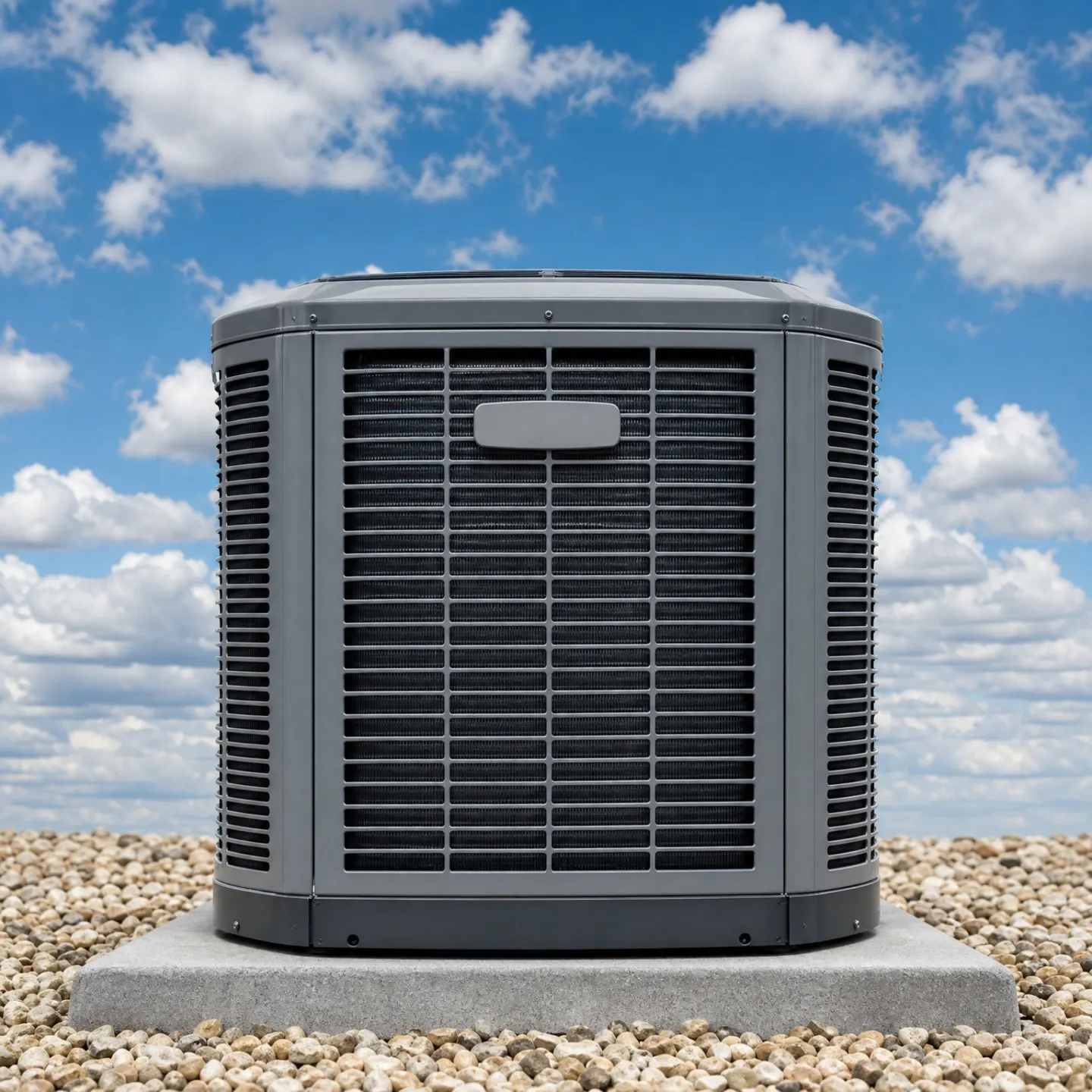
An outdoor air conditioning condenser unit mounted on a concrete pad surrounded by gravel, photographed against a partly cloudy blue sky.

Fewer years running means repair still makes sense

A unit installed with a newer house has run fewer hours total, even with the load this heat puts on it. If a part is failing early, that points to the part or the install, not the age of the system. Worth getting that checked before paying for a full replacement.

Check the filter before anything else

Pull it out and hold it up to a light. If you can't see through it, airflow is choked and the coil behind it can ice over. Swapping it is free to try and it rules out the most common cause of weak airflow.

Look at the outside unit

Check that the fan is spinning and nothing is pressed up against the cabinet. Leaves, grass clippings or a fence line too close to it block the airflow that unit needs to dump heat. If the fan isn't turning at all, that's one to stop and call in rather than keep running.

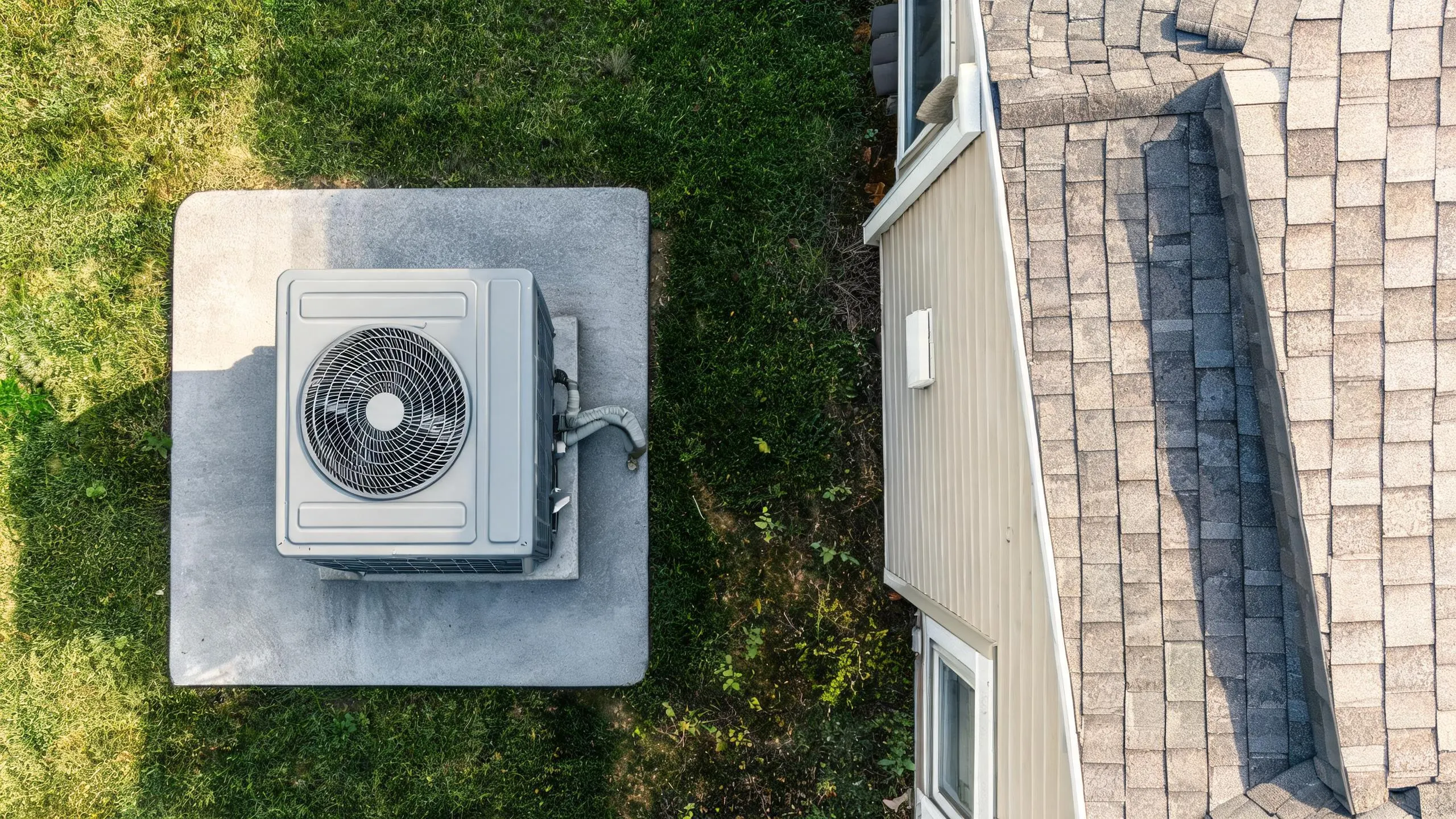
Overhead view of an air conditioning condenser unit on a concrete pad next to a house with asphalt shingle roofing and vinyl siding.

A new air conditioner would cut about $120 a year off cooling for a typical Cameron County home.

  • A new one at the federal minimum, 14.3 SEER2$760 a year
  • An older air conditioner$880 a year

Estimates for a typical Cameron County home, compared with an older unit built to the previous federal minimum, from EIA household energy data, Texas fuel prices and NOAA climate normals. Your home will differ.

Repair makes sense when a part like a capacitor or contactor has failed.

Replacement makes sense when the compressor has failed or the system uses R-22 refrigerant, which is no longer made.

A repair makes sense when the rest of the system is sound and one part failed on its own. A capacitor, a contactor, a fan motor, these wear out on their own schedule and swapping one brings the unit back to full working order. Replacement starts to make more sense when the compressor itself is failing, since that part accounts for most of what a system costs and a few more years from one that's already struggled rarely pencils out. The coil matters too. A coil that keeps icing over or leaking refrigerant after it's been repaired once is telling you the fix isn't holding. If a contractor finds one worn part on an otherwise healthy system, fixing it is the right call. If they're finding a second or third failure within a short stretch, that pattern is worth weighing against putting in a new unit.