





Texas Cooling Help
Two single-story houses, one brick and one with light siding, both with covered front porches, set behind a mowed lawn and a tall green hedge under large moss-draped oak trees.

AC Repair in Beaumont, TX

Tell us about the job

Takes about a minute. No obligation.

Step 1 of 3: Equipment

Your AC runs about seven months a year here, April through October. That's seven months of the compressor cycling on and off most days to keep up. Afternoon highs average 91 in June, July and August, so there's no real break in the middle of summer for the system to coast. That kind of run time wears on parts faster than a system that only runs a few months out of the year. A capacitor, a contactor, a low charge, these show up sooner under that kind of load. If something's acting up now, there's usually a reason tied to that wear, and it's worth having someone find the actual cause instead of just resetting it and hoping.

7 months
April through October, your air conditioner is on duty
91°F
the average summer afternoon it cools against
32 hail events
in ten years, and hail bends the fins on outdoor coils
48 wind events
in ten years, and wind drives debris into outdoor units
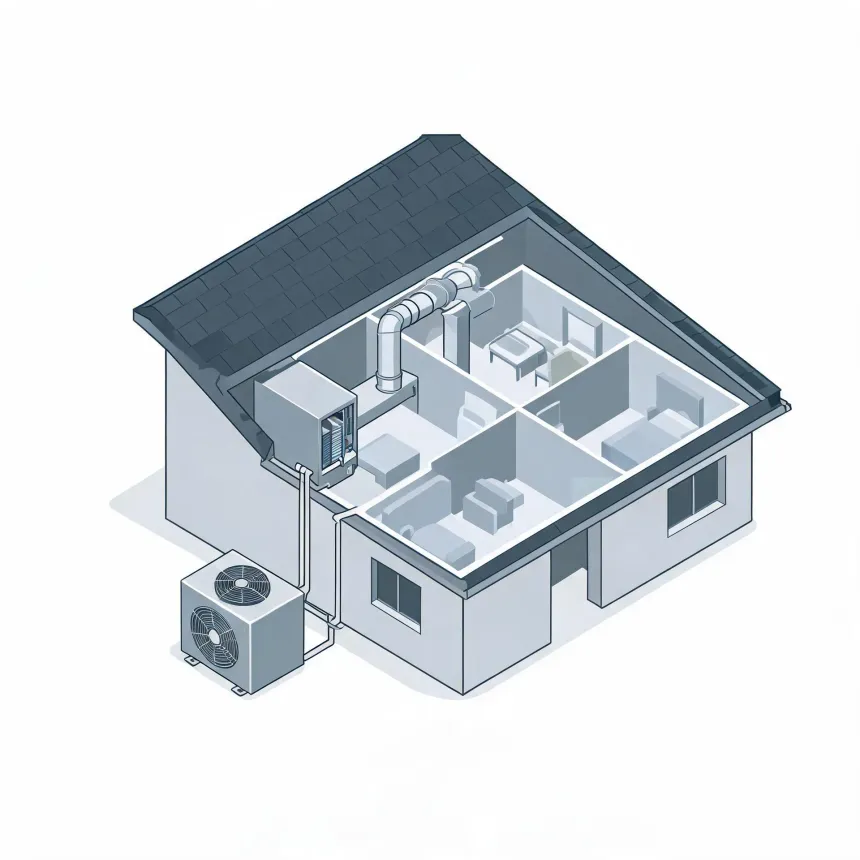
Isometric cutaway illustration of a single-story house showing interior rooms, ceiling ductwork connected to an indoor air handler, and an outdoor condenser unit beside the exterior wall.
Your air conditioner works hardest from May through September.

NOAA nClimDiv, 1991–2020 normals

A compressor straining against a low charge still runs, right up until it burns out the motor windings.

Shutting it off and calling someone beats running it another day on a problem that's already there.

An old house and a hot summer, nothing unusual about either

Half the homes here were built by 1978
Cooling runs April through October
Summer afternoons average 91°F
Beaumont AC RepairCooling runs April through October here, seven months a year.

Electricity here runs 14.94 cents a kilowatt-hour. A unit that's low on charge or struggling with a bad capacitor draws more than it should, and every one of those hours shows up on the bill. That cost doesn't wait for the system to fail outright. It starts the day something goes wrong and keeps adding up for as long as it runs that way. Fixing it sooner just means fewer of those hours get paid for.

Get the real cause found, not just the symptom reset

Seven months of hard running catches up with parts eventually, and when something's off, it's worth finding out why instead of just living with it. A tech can check the capacitor, the charge, the contactor and tell you which one's behind what you're seeing.

Find a contractor
A man in a cap, gray long-sleeved shirt and tan work pants, seen from behind, carries a canvas tool bag up steps toward an orange front door of a gray clapboard house, with a potted shrub to the right.
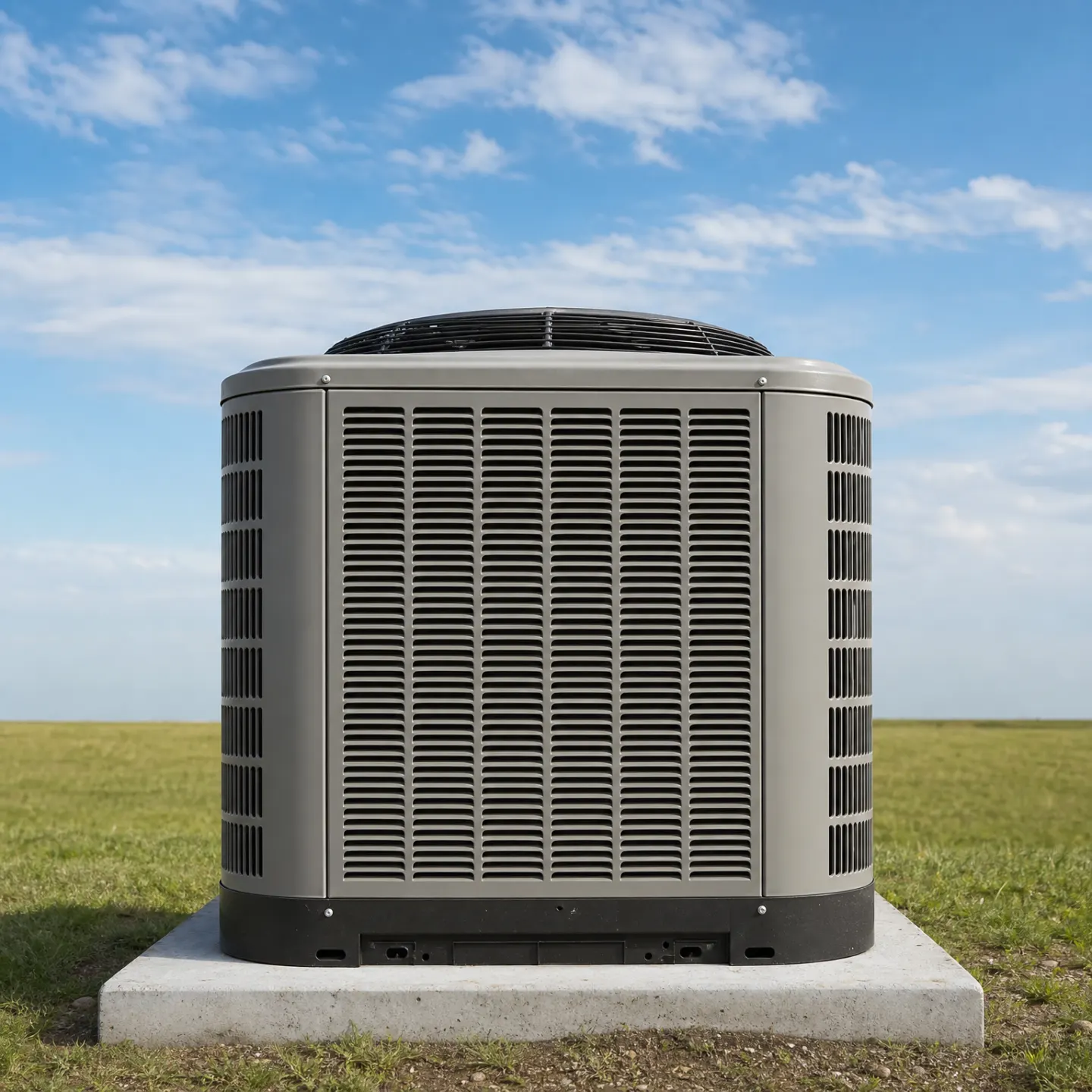
A gray metal air conditioning condenser unit mounted on a concrete pad in a flat grassy field under a partly cloudy sky.

What to check before you call

Before anyone comes out, check the simple things first. Look at the thermostat and make sure it's set to cool and set below room temperature, not just sitting on auto. Go to the breaker panel and see if the breaker for the outdoor unit or the air handler has tripped. Check the filter. A filter clogged with dust blocks airflow, and when airflow drops the coil can ice over, which makes the whole system work worse the longer it runs. If you can get to the outdoor unit, look for anything blocking it, leaves, grass clippings, a fallen branch, and clear it away. Check the vents inside the house and make sure none of them are closed or blocked by furniture. If there's a drain line near the indoor unit, look for water pooling around it, since a clogged line will shut some systems down on its own as a safety measure. None of this fixes a bad capacitor or a low charge, but it rules out the easy explanations before you pay someone to find a harder one.

The capacitor wears down, it doesn't just quit

The compressor and the fan both need a hard push to start spinning, and the capacitor stores that push. It weakens a little every time it fires, cycle after cycle, until one day the motor hums and doesn't start, or the fan spins slow. By the time you notice, it's usually been getting weaker for a while.

A slow leak looks like a lot of other problems

Refrigerant doesn't get used up. If the charge is low, it's leaking out somewhere, a joint, a coil, a fitting. A system running low will still blow cold at first and lose ground over hours, which looks like a bad thermostat or a dirty filter until someone actually checks the charge.

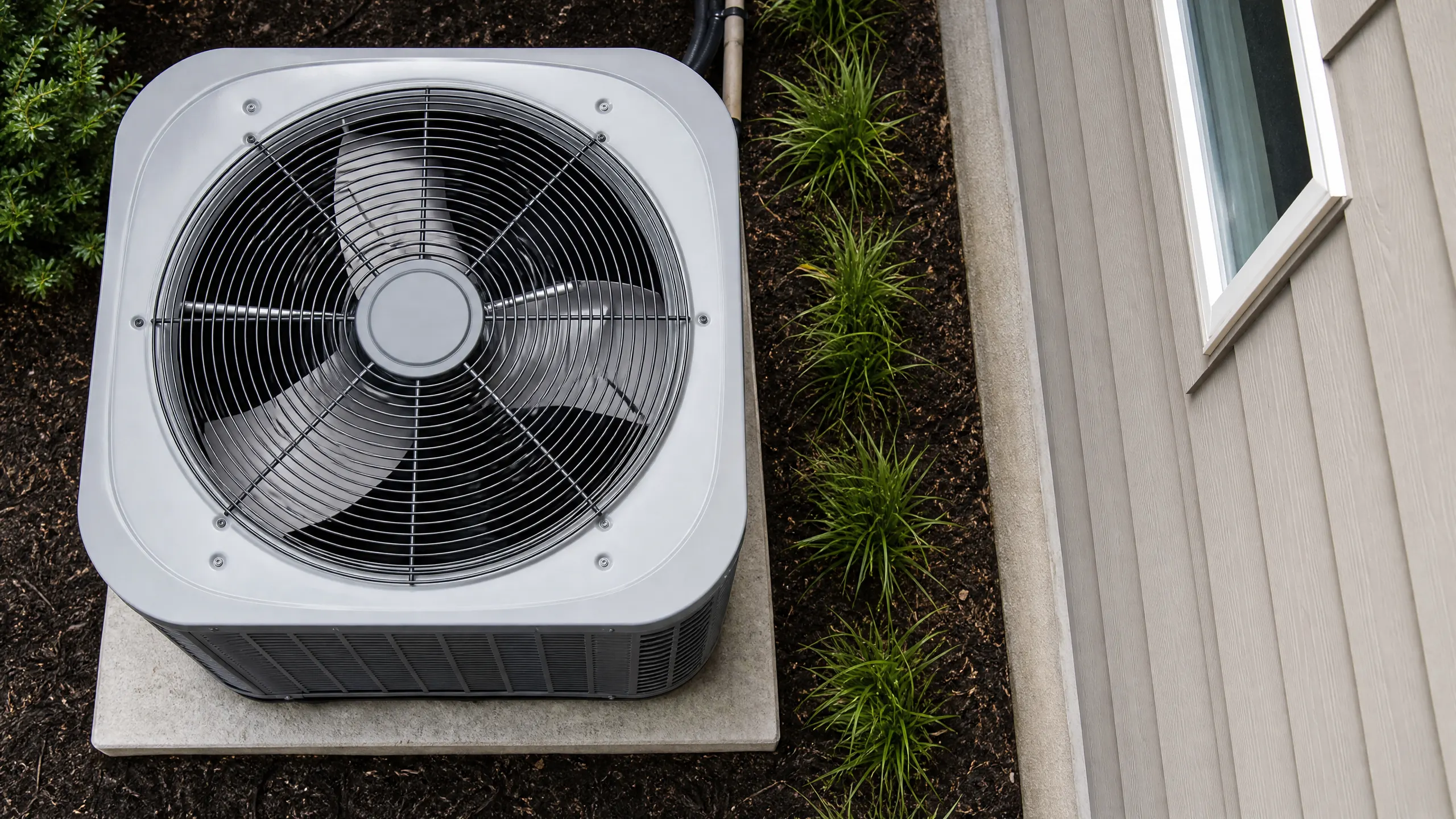
An outdoor air conditioning condenser unit on a concrete pad next to the gray vinyl siding of a residential home.

A new air conditioner would cut about $80 a year off cooling for a typical Jefferson County home.

  • A new one at the federal minimum, 14.3 SEER2$530 a year
  • An older air conditioner$610 a year

Estimates for a typical Jefferson County home, compared with an older unit built to the previous federal minimum, from EIA household energy data, Texas fuel prices and NOAA climate normals. Your home will differ.

Repair makes sense when a part like a capacitor or contactor has failed.

Replacement makes sense when the compressor has failed or the system uses R-22 refrigerant, which is no longer made.

A diagnostic starts with gauges, not guesses. The tech hooks up to the system and checks the charge first, since that one reading points toward or away from a lot of other problems. From there it's the electrical side, the capacitor, the contactor, the wiring at the disconnect, testing each with a meter instead of just looking at it. A capacitor can look fine and still be weak, so it gets tested under load, not eyeballed. If the coil's iced over, that gets shut down and thawed before anything else gets checked, since ice hides what's actually wrong underneath. The outdoor unit gets opened up too, because a failing fan motor or a dirty coil outside can look exactly like a refrigerant problem from inside the house. Skipping any of these steps is how a bad capacitor gets missed and a low charge gets blamed on something else entirely.