Texas Cooling Help
A weathered wooden fence runs along the left side of a dry grass lawn beside a row of single-story brick buildings with gray shingle roofs, under overhanging oak branches.

AC Repair in Abilene, TX

Tell us about the job

Takes about a minute. No obligation.

Step 1 of 3: Equipment

Check the thermostat and the breaker first

Make sure the thermostat is set to cool and set below room temperature, not just on. Then check the breaker panel for a tripped breaker on the AC circuit, and check for a reset button on the outdoor unit. If the breaker trips again right after you reset it, stop and leave it off. That means something downstream is pulling too much current.

Look at the filter and the outdoor unit before you call

Pull the air filter and hold it up to a light. If you can't see light through it, it's restricting airflow and needs changing before anything else gets checked. Walk outside to the condenser and clear away any leaves, grass clippings or grown-in brush around it. A blocked outdoor unit can't dump heat, and the system will struggle or shut itself off no matter what else is wrong.

6 months
May through October, your air conditioner is on duty
93°F
the average summer afternoon it cools against
121 hail events
in ten years, and hail bends the fins on outdoor coils
88 wind events
in ten years, and wind drives debris into outdoor units
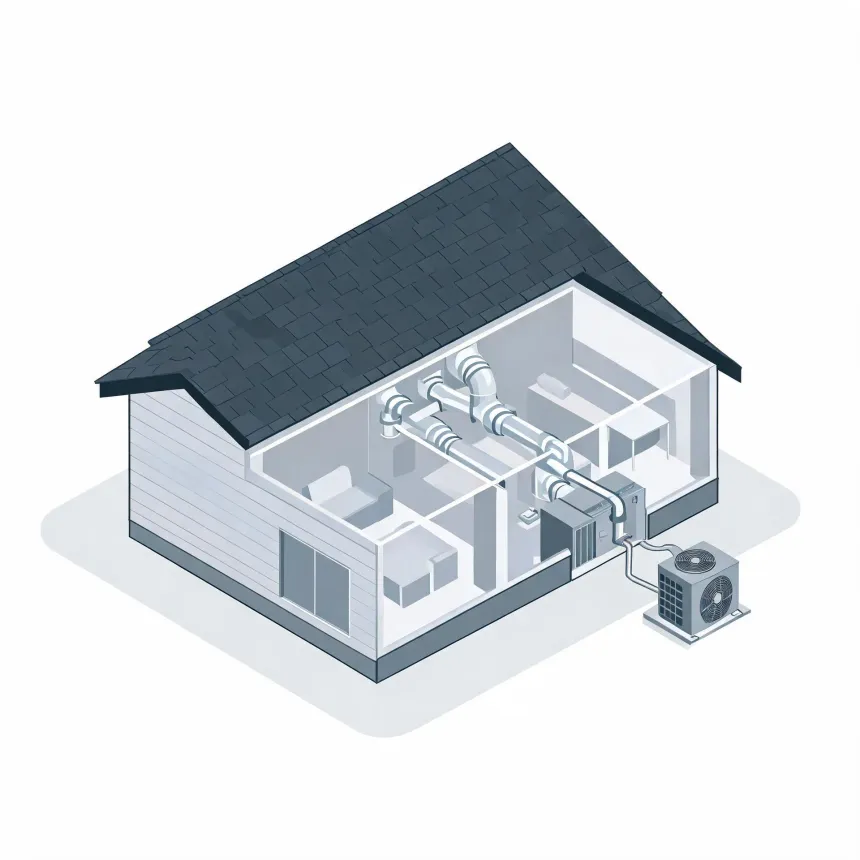
Isometric cutaway illustration of a house with a dark shingled roof, showing interior ductwork connected to an indoor air handler and an outdoor condenser unit beside the building.
Your air conditioner works hardest from June through September.

NOAA nClimDiv, 1991–2020 normals

A weak capacitor won't start the compressor or fan the way it should.

A struggling AC unit will hum, click, or trip the breaker instead of kicking on.

At 14.94 cents a kWh, a struggling AC runs up your bill from May to October

Power costs 14.94 cents a kWh statewide
Cooling runs May through October
Summer afternoons average 93°F

Cooling starts in May here, and May is when a lot of repair calls come in. The system sat off since October, and the first real hot stretch asks it to run longer than it has in months. A capacitor or contactor that was already marginal tends to fail right there, at the first real load, not later in the summer. April is the month to get it looked at, before that first hot week finds the weak part for you. Homes here run cooling from May through October, six months straight, so whatever is wrong at the start stays wrong for the rest of it.

After a storm, have the outdoor unit checked, even if it still runs

Taylor County saw 121 hail events and 88 damaging wind events in the last ten years. An outdoor unit can take a hit and keep running for a while before the problem shows up as weak cooling or a tripped breaker. If yours has been through a hailstorm or high wind, worth having it looked at even if it still starts.

Find a contractor
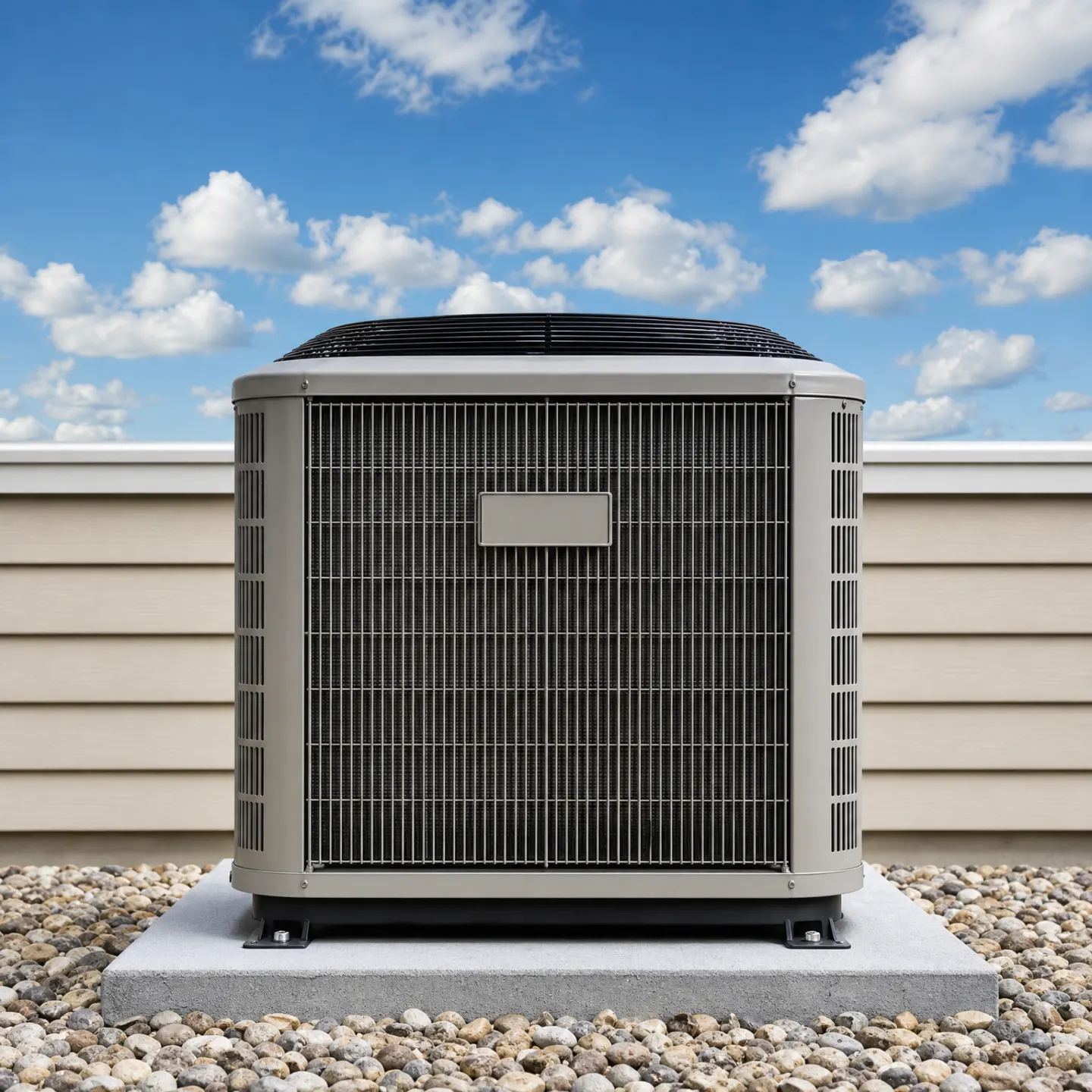
An outdoor residential air conditioning condenser unit mounted on a concrete pad, surrounded by gravel with a blue sky in the background.

Six months of Texas heat, and the compressor never gets a break

Six months of cooling, with afternoons averaging 93°F through June, July and August. That's the stretch your condenser and compressor are working against, day after day, not just the occasional hot spell. A system built to cycle on and off ends up running long stretches instead, and the parts that start and protect the compressor take the brunt of it. That's usually where a repair call traces back to.

A refrigerant leak gets worse the longer it runs

A low charge makes the compressor work harder to move heat, and it starts pulling in heat from the air around it instead. Keep running it low on charge and that heat can cook the compressor windings. What starts as weak cooling turns into a compressor that needs replacing.

A dirty coil turns into a frozen coil

A coil that can't shed heat gets colder than it should, and moisture in the air starts freezing on it instead of draining off. Once ice forms it blocks airflow further, so more ice builds up behind it. Left running, that ice can work down into the compressor and crack it.

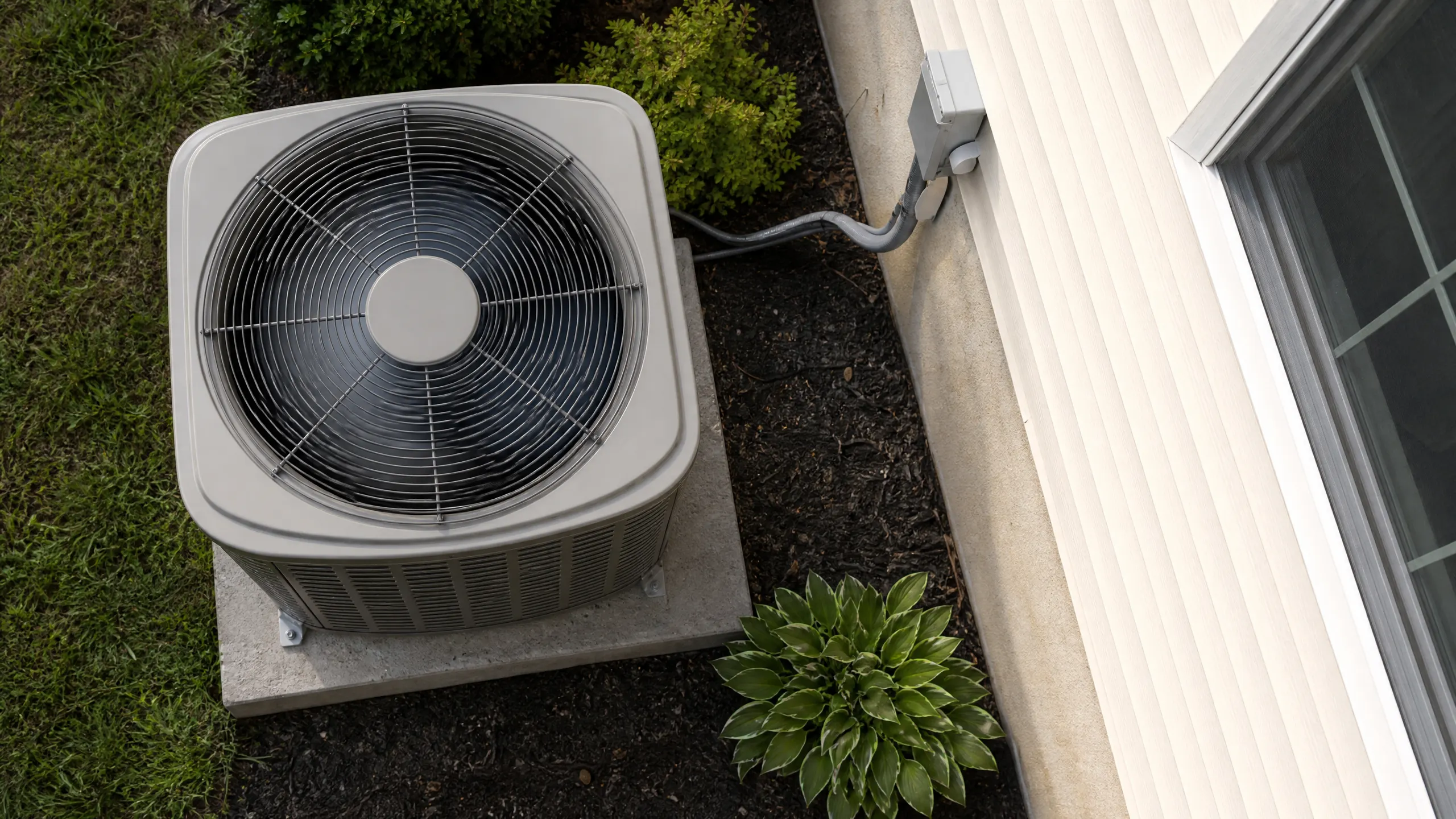
An overhead view of a residential air conditioning condenser unit mounted on a concrete pad next to a house with vinyl siding.

A new air conditioner would cut about $60 a year off cooling for a typical Taylor County home.

  • A new one at the federal minimum, 14.3 SEER2$420 a year
  • An older air conditioner$480 a year

Estimates for a typical Taylor County home, compared with an older unit built to the previous federal minimum, from EIA household energy data, Texas fuel prices and NOAA climate normals. Your home will differ.

Repair makes sense when a part like a capacitor or contactor has failed.

Replacement makes sense when the compressor has failed or the system uses R-22 refrigerant, which is no longer made.

A diagnostic starts before the panels come off. The tech checks the return air temperature against the supply air coming out of the vents, because that gap says a lot about whether the system is actually moving heat. Then it's gauges on the refrigerant lines to check the charge, and a look at the capacitor and contactor to see if they're sending the compressor and fan the power they need. If the coil is iced over, that gets shut down and thawed before anything else can be tested, since you can't read a true charge off a frozen coil. Electrical connections get checked for corrosion or a loose spot, since that shows up as intermittent failures that are hard to catch any other way. By the end you know which part is failing and why, not just that the air isn't cold.