




Texas Cooling Help
An outdoor central air conditioning unit mounted on a concrete pad beside a blue-sided house at sunset.

AC Installation in Waxahachie, TX

Tell us about the job

Takes about a minute. No obligation.

Step 1 of 3: Equipment

Ask what size unit they're recommending and why, not just the price. A contractor should size the system to your house with a load calculation, not guess based on square footage or match whatever was there before. Ask what's included in the installation, not just the condenser outside. New refrigerant lines, a new coil to match the condenser, and a thermostat that works with the system all matter. Ask about the warranty on the compressor versus the warranty on labor, because those are usually different and both matter if something fails. Ask how they'll handle the ductwork already in place, since a new system connected to old, leaky, or undersized ducts won't perform the way it's rated to.

6 months
May through October, your air conditioner is on duty
94°F
the average summer afternoon it cools against
133 hail events
in ten years, and hail bends the fins on outdoor coils
13.4 SEER2
the federal minimum any new unit must meet
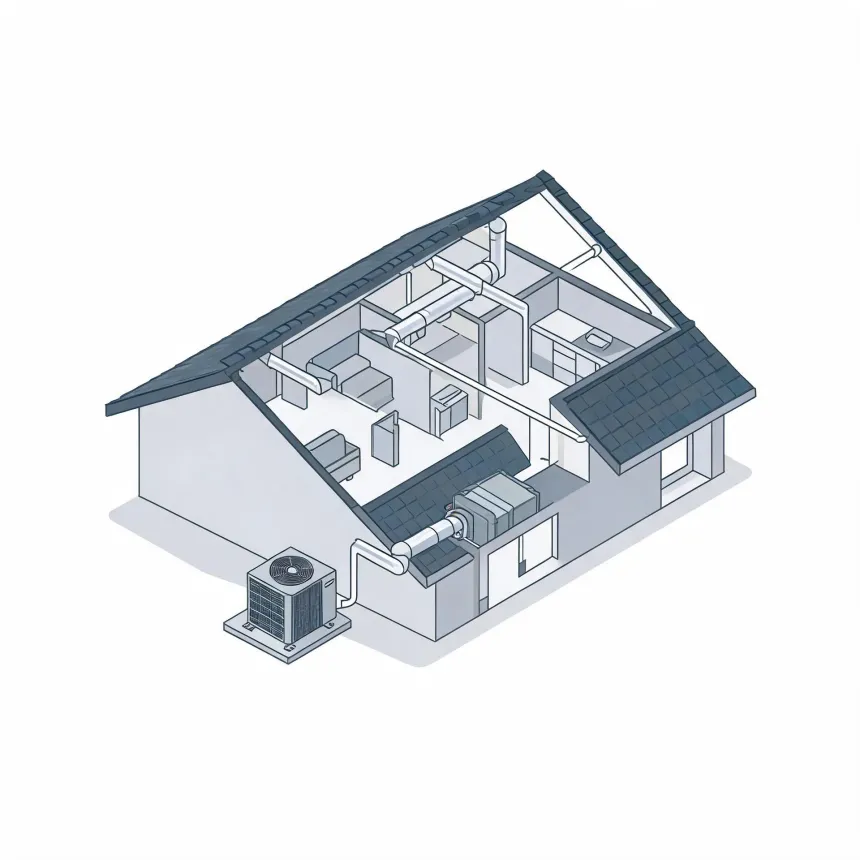
Isometric line illustration of a cutaway single-story house showing interior rooms, ceiling ductwork and an air handler, connected to an outdoor condenser unit on a pad beside the building.
Your air conditioner works hardest from June through September.

NOAA nClimDiv, 1991–2020 normals

The rating on the label is measured over a season, not on the worst day of the year.

On the hottest afternoons the system can still work harder and cost more to run than that number suggests.

133 hail events between 2015 and 2024 means the outdoor unit's location is part of the installation

196 severe weather events from 2015 to 2024
33% of homes statewide lost power a day or more in 2024
43 damaging wind events from 2015 to 2024
Install in April, before the season startsCooling here runs May through October, about six months a year.

Ellis County is zone 2A, hot and humid, where cooling is the main load on a system all year. Because of that, a new split system here has to meet the Southeast's regional minimum, not just the national one. For units under 45,000 Btu/h, that floor is 14.3 SEER2. Larger systems have their own minimum, set a step above what the rest of the country requires. A contractor quoting something below that number isn't offering a deal. It's a unit that can't legally go into your house.

Most homes here run electric. Installing to match keeps the job simple.

Electricity heats 75.4% of homes in Ellis County, and gas heats under a fifth. If your home already runs on electric heat, a straight electric AC system is the simplest match, no new gas line or venting to account for. Ask the contractor to confirm what your home already has before they quote anything else.

Find a contractor
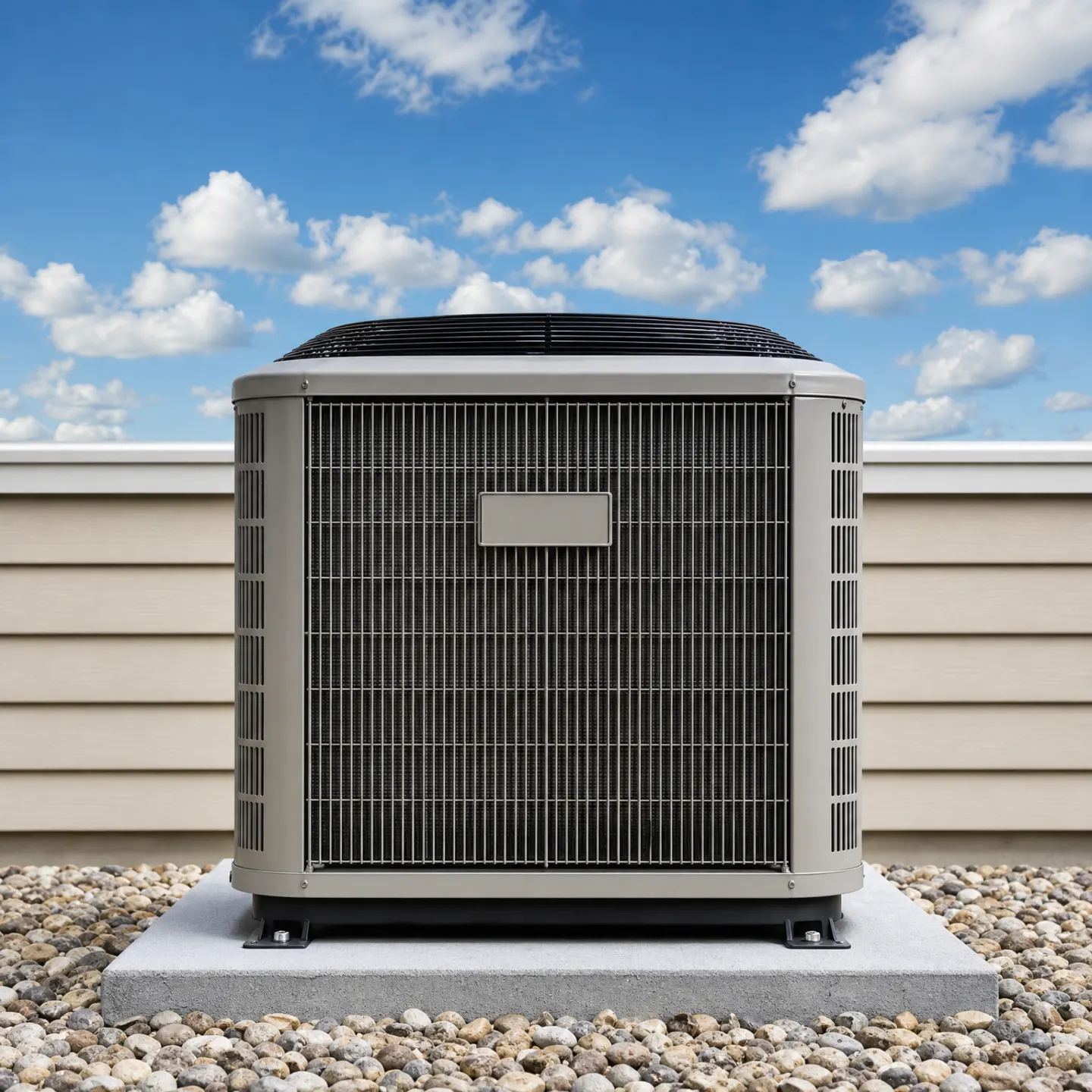
An outdoor residential air conditioning condenser unit mounted on a concrete pad, surrounded by gravel with a blue sky in the background.

The price is the whole job, not the box outside

A new system gets priced on what it takes to do the job right, not just the equipment sitting in the truck. The size of the condenser and coil matters, but so does everything connected to it. Longer line sets cost more in refrigerant and copper. A coil that has to be swapped to match the new condenser adds a part the homeowner doesn't see but pays for. If the ductwork can't move enough air for the new system, that's a separate job on top of the install, and skipping it just means the new equipment never performs the way it's rated to. Electrical work is its own variable. Some systems need a bigger breaker or new wiring from the panel, especially if the old system was undersized or outdated. The pad underneath, the disconnect box, the line hookups, all of it is labor and material that doesn't show up in a glance at the unit outside. A contractor who walks the whole job before quoting is pricing what your house actually needs. One who quotes off a square footage number alone is guessing, and guesses tend to run short.

The old unit gets hauled away, refrigerant and all

A licensed contractor has to recover the refrigerant from the old condenser before it's disconnected. That refrigerant can't legally be vented into the air, so it gets pulled out with a recovery machine and either reused or sent off for reclamation. Once that's done the old condenser, coil and any line that isn't being reused come out with the crew.
What's underneath it matters more than the unit itself

Old pads and brackets usually don't get reused. A new condenser has its own footprint and weight, and a cracked or sunken pad will throw the whole unit off level over time, which wears the compressor faster than it should. Most installs set a new pad as part of the job rather than build the new system on what the old one sat on.

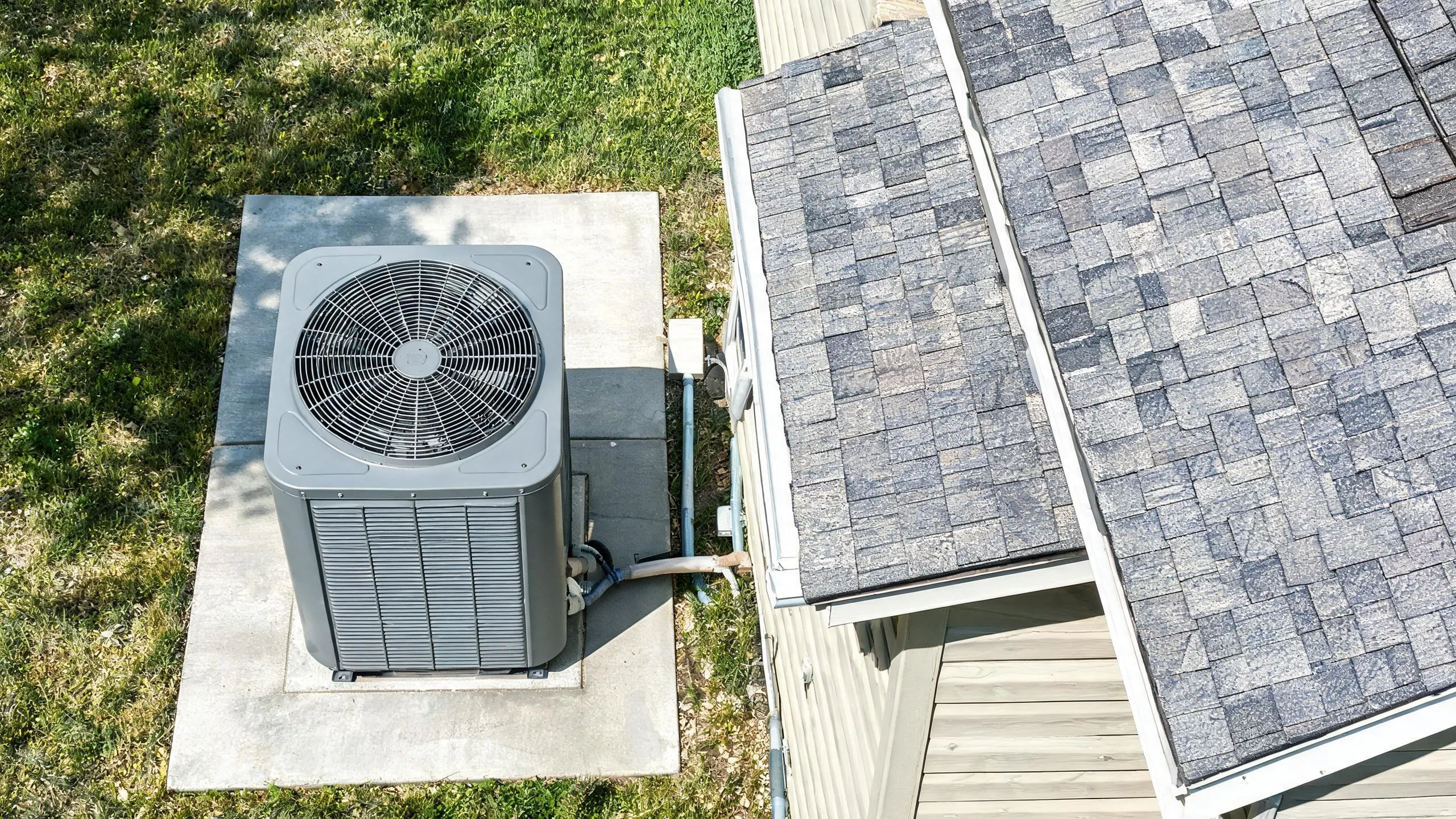
Overhead view of a gray residential air conditioning condenser unit mounted on a concrete pad beside a house with asphalt shingle roofing.

A higher-efficiency unit would save about $30 a year to run in Ellis County compared with a new unit at the federal minimum.

  • A higher-efficiency unit$460 a year
  • A new unit at the federal minimum, 14.3 SEER2$490 a year

Estimates for a typical Ellis County home, from EIA household energy data, Texas fuel prices and NOAA climate normals. Your home will differ.

Installation day starts with the old system coming out and the new one going in, but most of the day goes to the parts that don't show. The refrigerant lines get run or replaced, and if they're being reused, they have to be flushed clean before the new coil connects to them. The line set gets pressure tested, then pulled down into a vacuum to clear out any moisture or air before refrigerant goes in. Skipping that step is what leads to a compressor failing early, so a contractor doing it right will spend real time on it rather than rushing to power the system on. Once it's running, expect the crew to check refrigerant charge against the manufacturer's numbers, test airflow at the vents, and walk the thermostat settings with you before they leave. A system that gets fired up and left without those checks might run fine that first week and still be set up wrong.