Electricity here runs 14.94 cents per kilowatthour
Texas homes paid that rate on average in 2024. A system that wastes power turns that rate into real money every month it runs.
Takes about a minute. No obligation.
Texas homes paid that rate on average in 2024. A system that wastes power turns that rate into real money every month it runs.
At that price per kilowatthour, a new AC that holds its rated efficiency keeps paying you back all summer. The SEER2 number on the unit only means something once your power rate is this high.
NOAA nClimDiv, 1991–2020 normals
Electricity heats 70.7% of homes in McLennan County, far ahead of gas.
Most central air conditioners run on electricity already, so the new AC fits the same setup the rest of the house uses.



AC here runs May through October, six months most days. Afternoons in June, July and August average 94 degrees, and the system has to hold the house against that heat day after day. A unit sized too small will run flat out and still lose ground on the hottest afternoons. One sized too big will cool the house fast and shut off before it pulls the humidity down, so the air feels damp even at the temperature you set. The contractor should size it to what this county asks of it, not to whatever was there before.
Waco sits in climate zone 2A, where cooling carries the year. Any new split system has to meet 14.3 SEER2 under 45,000 Btu/h, higher than the national minimum. A federal tax credit is available for qualifying high-efficiency equipment. A contractor can walk you through what qualifies.
Find a contractor
Cooling runs May through October here, six months. Put the new system in during April and it's already working before the season starts. A mild spring day gives the contractor room to check everything over without the house counting on it yet. Wait for the old one to give out mid-summer and there's no good day for that. You take whatever unit is available and get it installed in a hurry, with the house already depending on it.
The condenser and air handler cost what they cost once you pick the size and efficiency. What moves the price around them is the work the installer has to do to make that equipment fit your house. A new line set. A new electrical whip. A pad or stand for the condenser outside. Changes to the duct trunk if the new coil isn't shaped like the old one. The house around the unit decides a lot of what you pay, not just the unit.
A contractor should run a load calculation on the house itself, not just match whatever size was there before. That calculation sets the tonnage. Tonnage sets the price of the condenser, the coil and the air handler. Skip the calculation and you risk paying for more system than the house needs, or putting in one that runs constantly and never gets ahead.
Estimates for a typical McLennan County home, from EIA household energy data, Texas fuel prices and NOAA climate normals. Your home will differ.
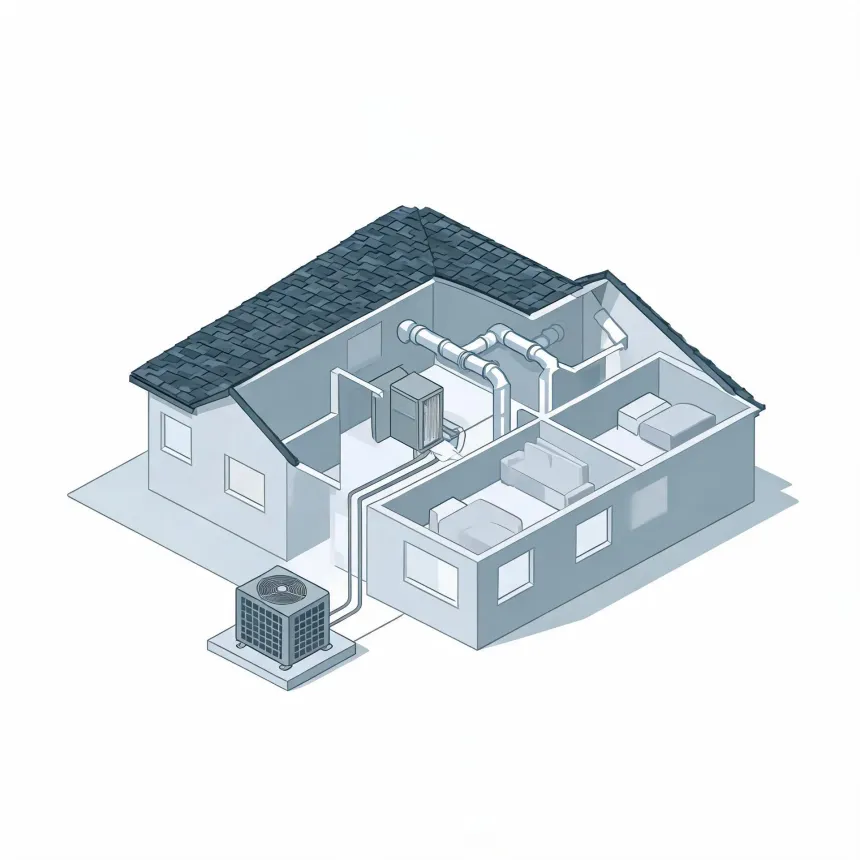
A crew usually starts by pulling the old equipment out, the condenser outside and the coil and air handler wherever they sit inside. Before anything new goes in, they check the line set and decide whether it gets reused or replaced. The refrigerant in the new system is often different from what the old one ran. The ductwork gets a look too. If the new coil has a different shape or airflow than the old one, the trunk line near it may need work to match. Once the new condenser is set on its pad and the air handler or furnace coil is in place, the electrical gets tied in and the line set gets connected and sealed. Then comes the part that takes the longest. The system gets charged to the correct refrigerant level and run to check airflow at the vents and the temperature split between the air going in and the air coming out. A system that's rushed through that last step is the one that comes back with a problem a month later.