




Texas Cooling Help
A single-story brick house with a two-car garage photographed at dusk, with interior lights glowing through the windows and trees on either side.

AC Installation in San Marcos, TX

Tell us about the job

Takes about a minute. No obligation.

Step 1 of 3: Equipment

Texas homes paid 14.94 cents per kilowatthour in 2024. That's the number your new system has to work against every time it cycles on. A unit sized right for your house and running at a high SEER2 rating pulls less power to do the same job, and in San Marcos that difference shows up on the bill month after month. An old or oversized system wastes power regardless of the rate, but at Texas prices that waste costs more than it would somewhere cheaper. When you're comparing installation quotes, the efficiency rating on the unit matters as much as the price tag on the job.

7 months
April through October, your air conditioner is on duty
94°F
the average summer afternoon it cools against
59 hail events
in ten years, and hail bends the fins on outdoor coils
13.4 SEER2
the federal minimum any new unit must meet
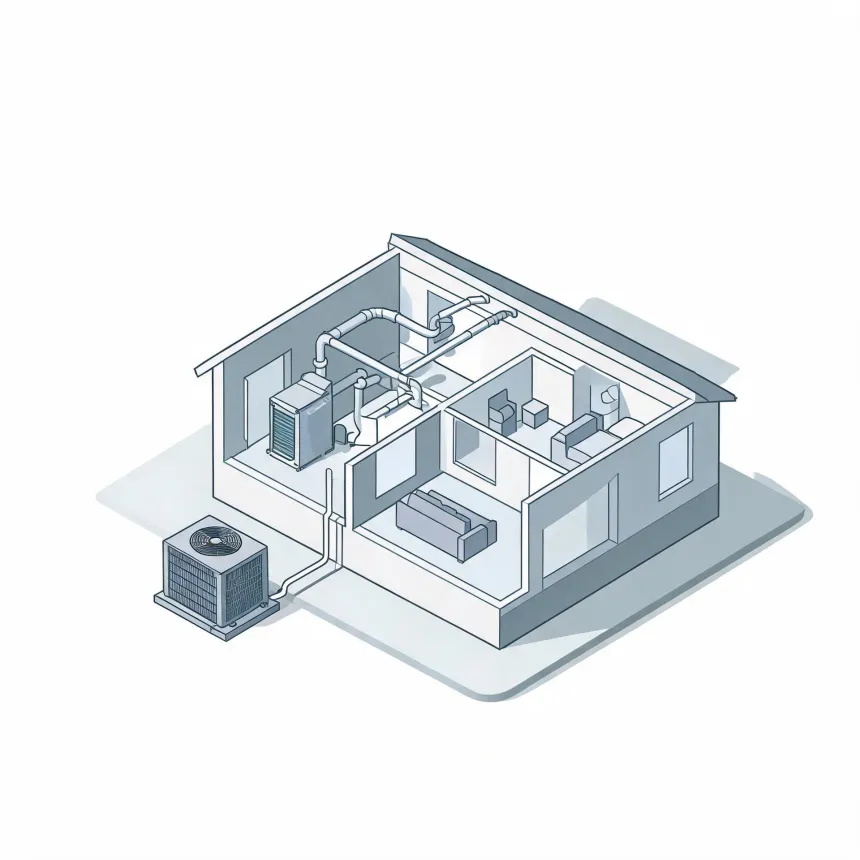
Isometric line illustration of a cutaway house showing interior rooms, a furnace or air handler with ductwork, and an outdoor condenser unit beside the building.
Your air conditioner works hardest from May through September.

NOAA nClimDiv, 1991–2020 normals

A bigger air conditioner isn't a safer bet, it's a worse fit.

Oversized units cool the air fast and shut off before they pull the moisture out, so the house feels clammy even at the right temperature.

Seven months of cooling start in April. March is when you want the new system already in.

Cooling runs April through October
Summer afternoons average 94°F
Power costs 14.94 cents a kWh statewide
Most homes here run on electric62.1% of homes in Hays County heat with electricity, and that's what most AC installs here are built around.

Hays County is zone 2A, a hot and humid climate where cooling carries most of the year's load. That's why the minimum efficiency here is higher than what the rest of the country requires. Split-system central air conditioners installed in the Southeast have to hit at least 14.3 SEER2 below 45,000 Btu/h, compared to the national manufacturing floor of 13.4. If a contractor quotes you something at the lower number, it isn't legal to install here. A federal tax credit is also available for qualifying high-efficiency equipment, on top of meeting the regional minimum.

Plan the install around the weather it has to survive

Hays County saw 108 severe weather events between 2015 and 2024, including hail and damaging wind. Statewide, a third of households lost power for a day or more in 2024. Your outdoor unit sits through all of it, so where it goes and what shields it matters. Worth deciding before install day, not after a storm.

Find a contractor
A man in a dark shirt and tan work pants, seen from behind, carries a canvas tool bag up concrete steps toward an orange front door flanked by gray siding and a potted shrub.
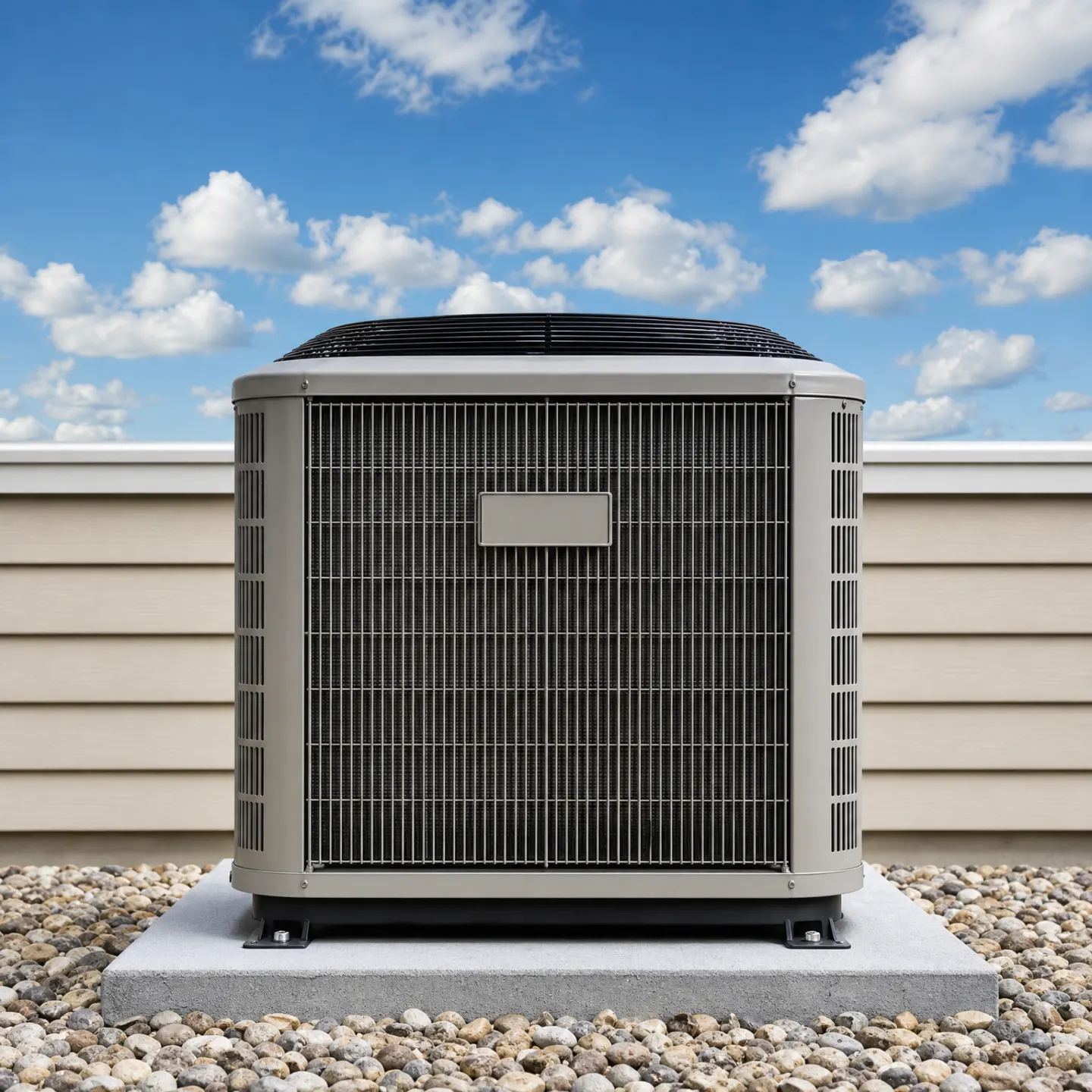
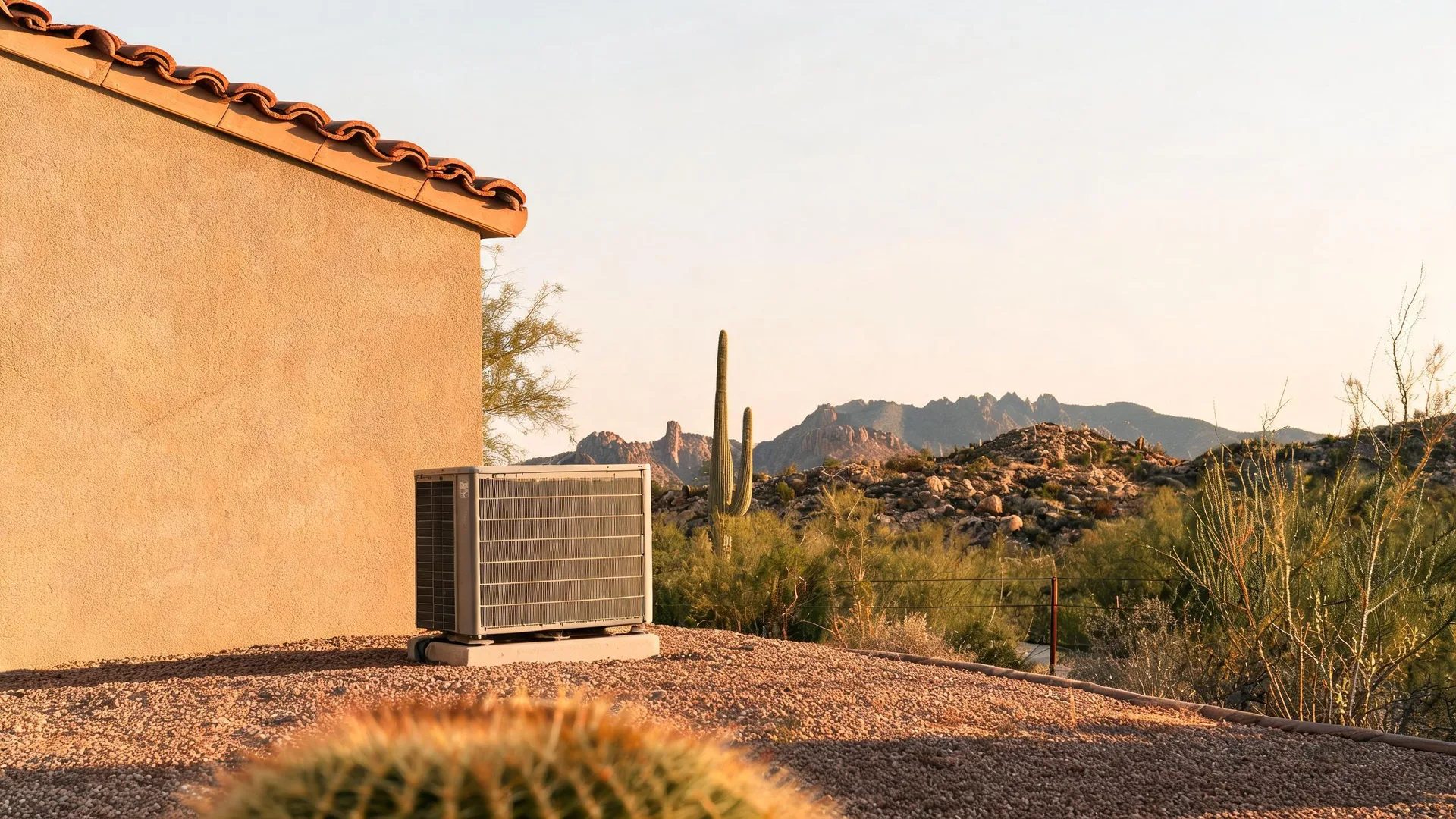
An outdoor residential air conditioning condenser unit mounted on a concrete pad, surrounded by gravel with a blue sky in the background.

Seven months of this, every year

Seven months of cooling here, April through October. June, July and August push the afternoon high to 94 degrees on average, so the system runs long hours against real heat, not mild days. A unit sized right for your house will cycle on and off at a steady pace through all of that. One sized wrong runs long and still falls behind, or shuts off before it pulls the moisture out. Either way the strain lands on the compressor first, and it shows up sooner here than in a place that only asks this of a system for a few months a year.

The old unit comes out the same day

A straight swap means the old condenser and coil leave before the new ones go in. The refrigerant gets recovered first, it can't legally be vented to the air. If the line set or pad is being reused, it gets checked before the new unit sits on it. Anything cracked or undersized gets replaced rather than reused, since the new system depends on it too.
The refrigerant decides what can be reused

Older systems run on a refrigerant that's being phased out, and newer units don't use it. That means the old line set, coil and condenser usually can't mix with new equipment even if the metal looks fine. Expect the whole matched set to go, not just the loudest or oldest-looking piece of it.

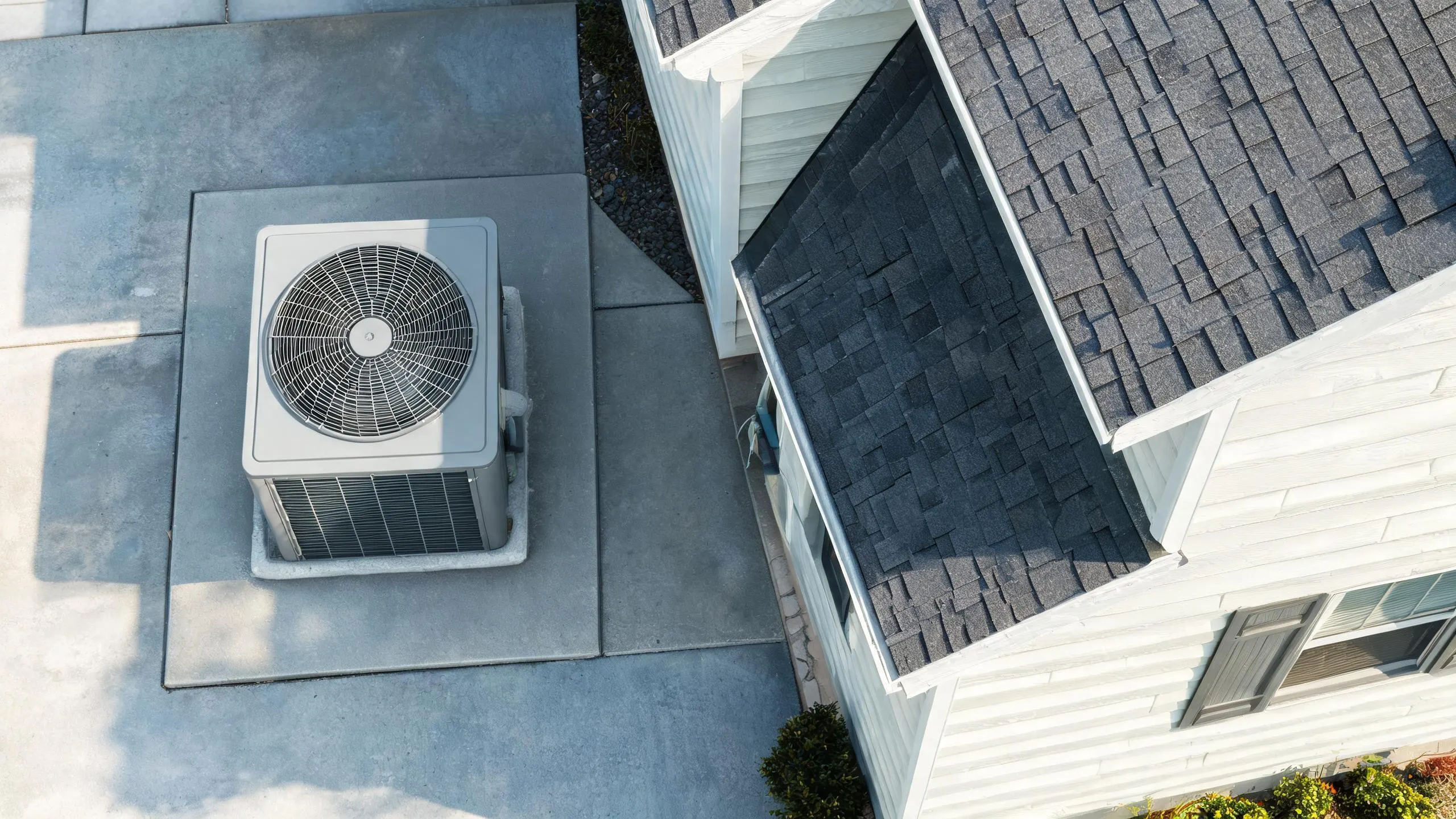
Overhead view of an outdoor AC condenser unit on a concrete pad next to a house with a dark shingle roof.

A higher-efficiency unit would save about $30 a year to run in Hays County compared with a new unit at the federal minimum.

  • A higher-efficiency unit$480 a year
  • A new unit at the federal minimum, 14.3 SEER2$510 a year

Estimates for a typical Hays County home, from EIA household energy data, Texas fuel prices and NOAA climate normals. Your home will differ.

The crew shows up with a load calculation already done, not a tape measure and a guess. That number decides the tonnage, so the sizing argument is settled before anyone touches the old unit. Expect the indoor coil and outdoor condenser swapped as a pair, the line set checked or replaced, and the new unit set on a pad that's actually level, since a tilted pad strains the compressor from day one. The ductwork gets a look too. A new system moves a specific amount of air, and supply runs that are crushed, leaky or undersized choke that airflow no matter how good the condenser is. Startup means the refrigerant charge gets weighed in and verified, not eyeballed, then the system runs through a full cycle while static pressure and temperature split get checked. A good install ends with someone walking the thermostat settings with you, not just the invoice.