


Texas Cooling Help
A single-story red brick house with a dark shingled roof and trimmed shrubs, photographed from ground level across a patchy lawn with a large spreading oak tree overhead.

AC Installation in San Angelo, TX

Tell us about the job

Takes about a minute. No obligation.

Step 1 of 3: Equipment

Tom Green County saw 171 hail events and 171 damaging wind events between 2015 and 2024. That's the backdrop for where a new condenser goes and what sits around it. A unit tucked against a fence or under open sky takes the brunt of a hailstorm differently than one with some cover nearby. Outages matter too. Statewide, a third of Texas households lost power for a day or more in 2024. If the install includes a heat pump or ties into backup power, that's worth working out with the contractor before the equipment is picked, not after.

7 months
April through October, your air conditioner is on duty
95°F
the average summer afternoon it cools against
171 hail events
in ten years, and hail bends the fins on outdoor coils
13.4 SEER2
the federal minimum any new unit must meet
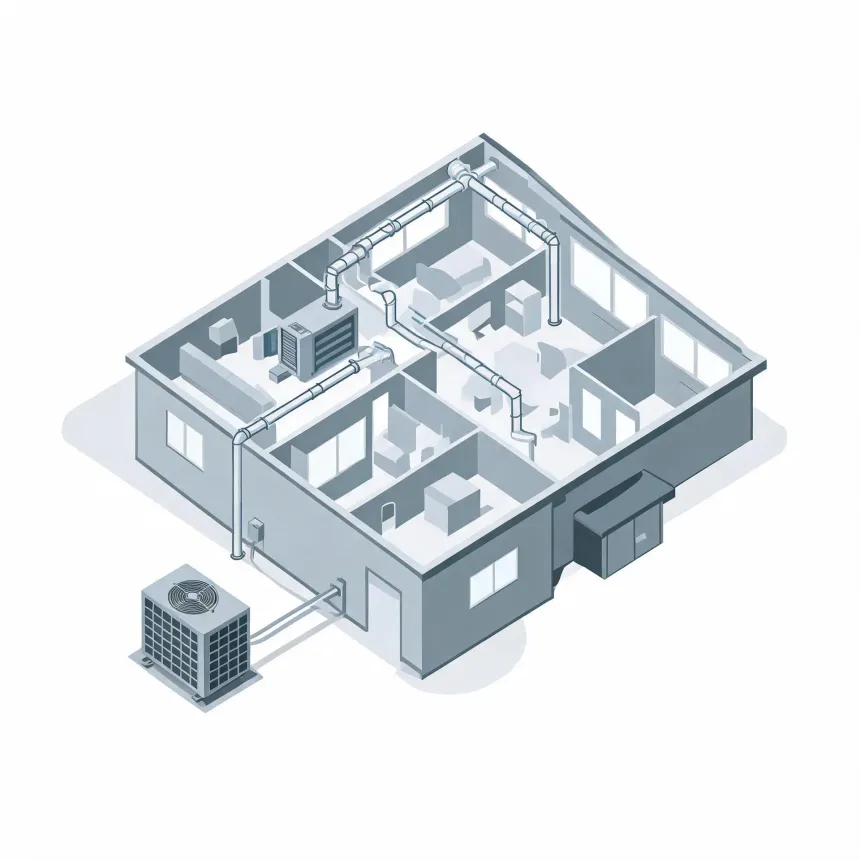
Isometric grayscale illustration of a cutaway house showing interior rooms, ceiling ductwork connected to an indoor air handler, and an outdoor condenser unit linked by lines along the exterior wall.
Your air conditioner works hardest from May through September.

NOAA nClimDiv, 1991–2020 normals

Electricity heats 65% of homes in Tom Green County.

A heat pump fits a San Angelo install without adding a new fuel line.

Cooling starts in April. March is when to put the new system in.

Cooling runs April through October
Summer afternoons average 95°F
171 damaging wind events from 2015 to 2024

A few things are worth deciding before the crew shows up. Where the condenser sits is one of them. A spot with a wall or fence nearby to break the wind does better in a hailstorm than one standing in the open. Clearance still matters, so this is a conversation with the contractor, not a guess. Mounting and anchoring are worth asking about too, since this county has seen tornadoes touch down alongside the wind and hail. None of this changes how the system runs day to day. It changes whether it's still standing the way it should after the next storm comes through.

Power costs more here, so the right system matters

Texas households paid 14.94 cents per kilowatthour in 2024, more than a lot of the country. A system sized and installed right runs on less power than one picked in a hurry. That difference shows up on every bill for as long as the system runs.

Find a contractor
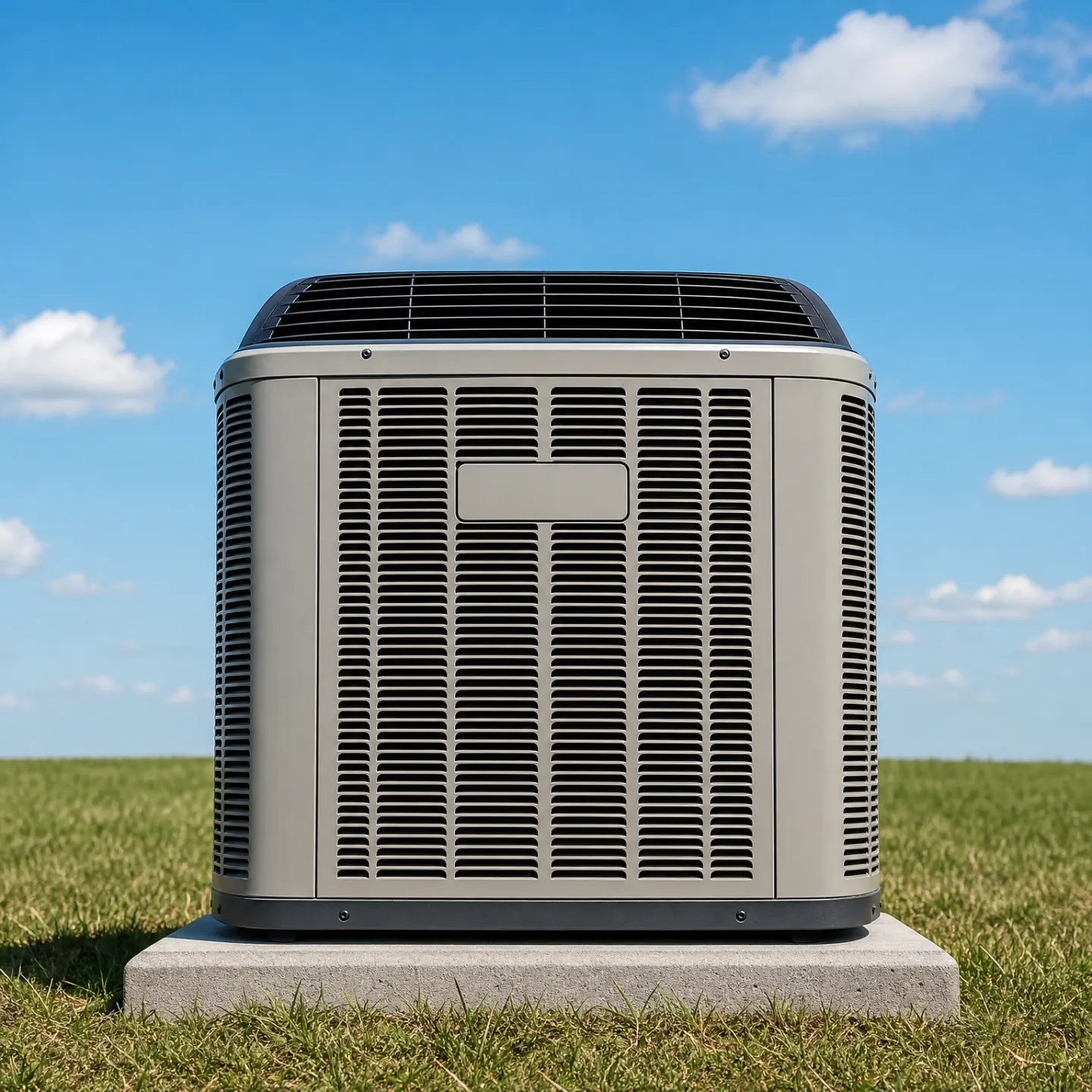
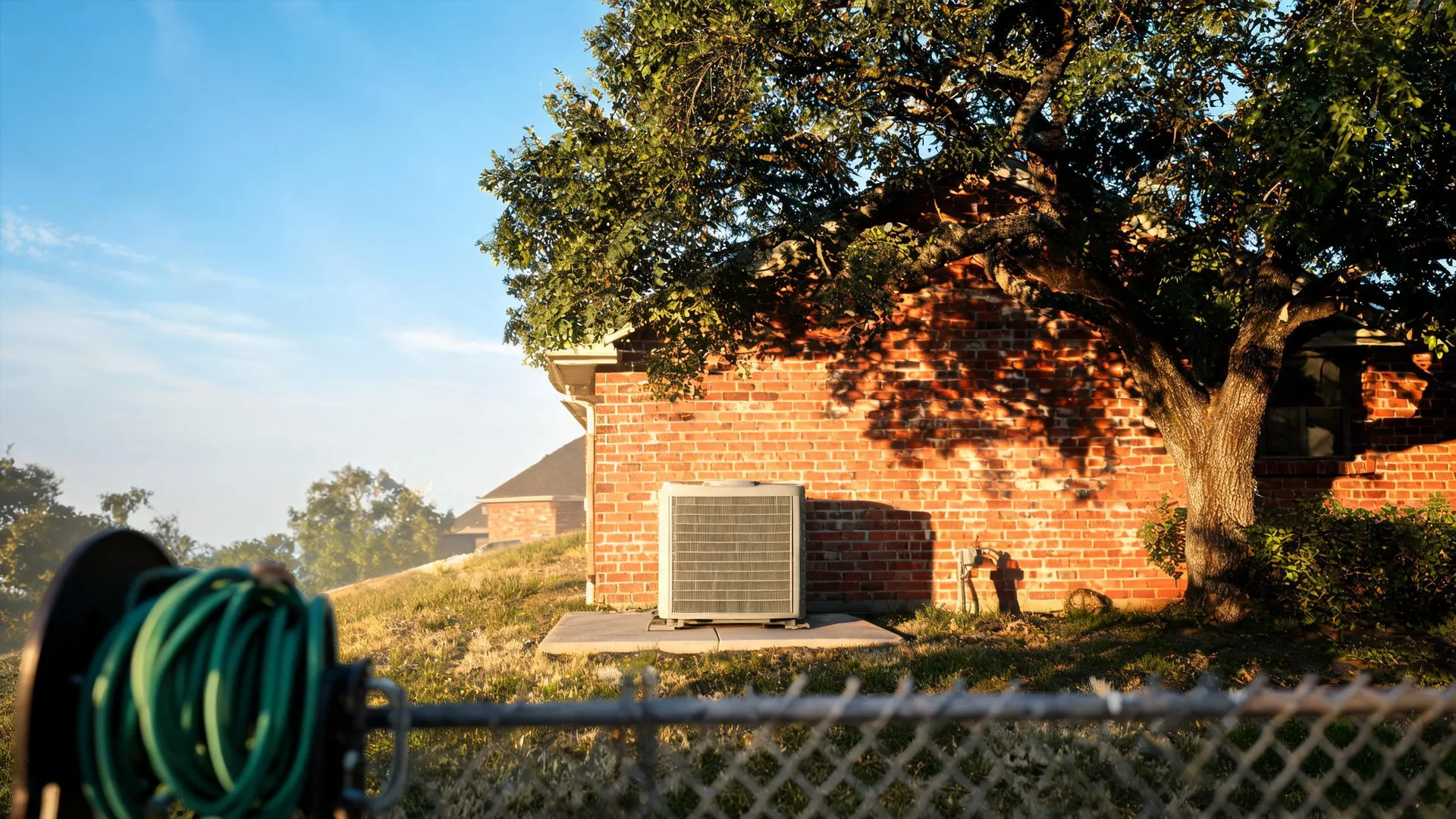
A gray residential air conditioning condenser unit mounted on a concrete pad outdoors, surrounded by green grass under a partly cloudy blue sky.

Seven months of Texas summer, every year

Seven months of cooling a year, April through October, and the afternoons average 95°F in June, July and August. That's the stretch a new system sits in every single year it's running. Sized right for that load, it holds steady through the worst of the summer. Sized wrong, it either short cycles or runs flat out trying to keep up, and either way the parts underneath, the compressor, the fan motor, wear sooner than they would otherwise. Size for what San Angelo actually does in July, not for a number that fits some average town nowhere in particular.

A load calculation, not a square footage chart

The right size for a condenser comes from a room by room load calculation, not a quick look at square footage. A contractor worth hiring measures window area and facing direction, checks insulation, counts doors, and factors in ceiling height. Houses that look alike from the street can call for different tonnage because one has more west facing glass or a different attic setup. Skipping this step and sizing off a rule of thumb is how the wrong unit ends up on the pad.
Oversized fails differently than undersized

A unit that's too big cools the air fast and shuts off before it pulls the moisture out, so the house feels cold and clammy at once. A unit that's too small runs constantly and never quite catches up on the hottest afternoons. Both wear out the compressor and fan motor sooner than a correctly sized system would. Bigger is not a safety margin here. It's its own kind of wrong.

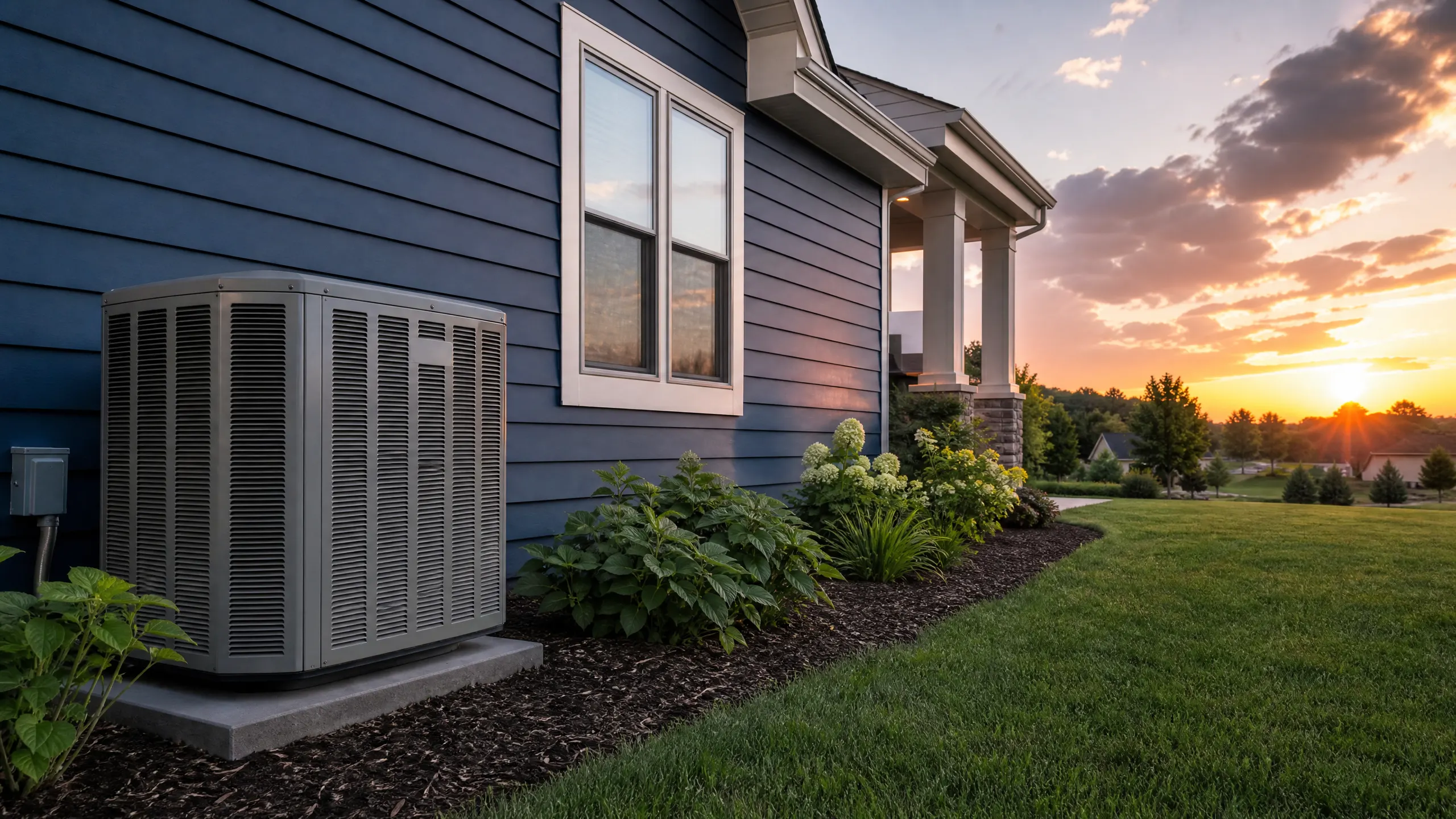
An outdoor central air conditioning unit mounted on a concrete pad beside a blue-sided house at sunset.

A higher-efficiency unit would save about $30 a year to run in Tom Green County compared with a new unit at the federal minimum.

  • A higher-efficiency unit$420 a year
  • A new unit at the federal minimum, 14.3 SEER2$450 a year

Estimates for a typical Tom Green County home, from EIA household energy data, Texas fuel prices and NOAA climate normals. Your home will differ.

Install day starts with the old system coming out, not the new one going in. The crew disconnects the refrigerant lines, pulls the old condenser off the pad, and takes the indoor coil out of the plenum. Then they look hard at what's left. Line sets get replaced or reused depending on condition, and the electrical disconnect gets checked against the new unit's requirements. Setting the new condenser and anchoring it comes next, then the coil goes in, lines get connected, and the system gets evacuated to pull all moisture and air out before any refrigerant goes in. That step matters as much as anything else that day. A system charged without a proper vacuum can lose efficiency and strain the compressor from the first time it kicks on. Once it's charged and powered up, a decent contractor runs it, checks the refrigerant pressures, and confirms airflow at the vents before calling the job done.