Electricity here runs 14.94 cents a kilowatt-hour
Texas homes paid that on average in 2024. An air conditioner that wastes power costs more to run here than in a state with cheaper rates.
Takes about a minute. No obligation.
Texas homes paid that on average in 2024. An air conditioner that wastes power costs more to run here than in a state with cheaper rates.
A new AC's efficiency rating decides what it costs to run for as long as you own it. Worth checking closely before you pick a system, not after.
NOAA nClimDiv, 1991–2020 normals
Cooling runs seven months a year in Williamson County, with afternoon highs averaging 95°F in June, July and August.
A new system here needs to be sized for that seven-month stretch of 95-degree afternoons, not just a few peak weeks.




Williamson County sits in climate zone 2A, a hot and humid zone where cooling carries most of the load. That puts new split-system air conditioners here under the Southeast's regional rule, not just the national one. A unit under 45,000 Btu/h has to hit at least 14.3 SEER2 to be installed, higher than the 13.4 SEER2 minimum that applies elsewhere in the country. A contractor can't install anything below that regional number. There's also a federal tax credit available for equipment that qualifies, worth asking about when you're comparing systems.
Half the homes in Williamson County heat with electricity, and almost as many run gas. Both need an AC that matches the house. If your system is electric already, straight replacement is the simplest path, and the SEER2 minimum still applies either way.
Find a contractor
Ask for a load calculation on this house, not a match to the old equipment or a guess based on square footage. A system sized for a mild climate runs flat out all seven months here and still falls behind on the worst afternoons. One sized for a few peak weeks short-cycles the rest of the summer, which wears the compressor sooner and leaves the house damp. Sizing and the SEER2 rating are what decide what this system is like to live with here, more than the brand on the side of it.
A contractor should be able to tell you the room by room numbers, not just a total tonnage. If they quote a size without measuring the house first, ask why. The calculation accounts for windows, insulation and layout, things the square footage alone can't tell you.
Some systems run at one speed, on or off. Others modulate, running at a lower output most of the time and ramping up only when it's hottest. A single-stage unit and a variable-speed one will feel different inside the house even at the same SEER2 rating, so compare quotes that match on this before you compare price.
Estimates for a typical Williamson County home, from EIA household energy data, Texas fuel prices and NOAA climate normals. Your home will differ.
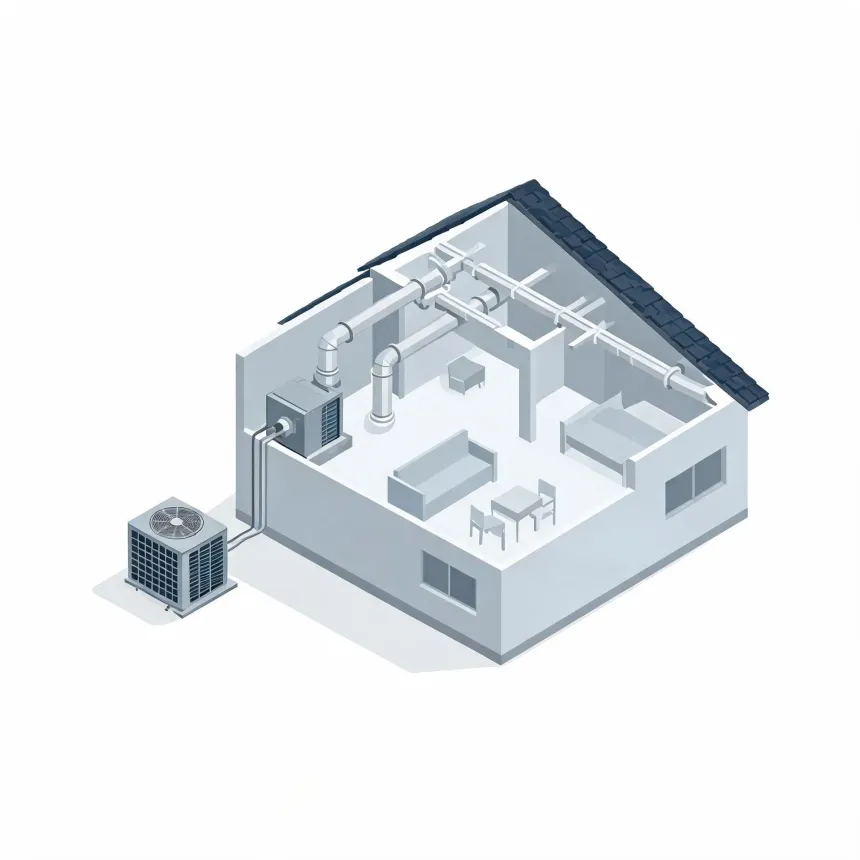
Installation day starts with the old equipment coming out, not the new unit going in. The refrigerant gets recovered from the lines before anything is disconnected, since it can't legally be vented into the air. The indoor coil and outdoor unit both come off, along with the old refrigerant lines if they're being replaced rather than reused. A new line set gets run when the old one doesn't match the new system's requirements, and the lines get brazed, pressure tested, then pulled into a vacuum to clear out moisture and air before any refrigerant goes back in. The electrical disconnect and condensate drain get checked too, since a new unit still depends on both working right. Once everything's charged and running, a tech checks refrigerant pressures and airflow against the manufacturer's numbers rather than just confirming the unit turns on.