




Texas Cooling Help
A nighttime street view of a row of illuminated single-story brick houses with large trees along the sidewalk.

AC Installation in Midland, TX

Tell us about the job

Takes about a minute. No obligation.

Step 1 of 3: Equipment

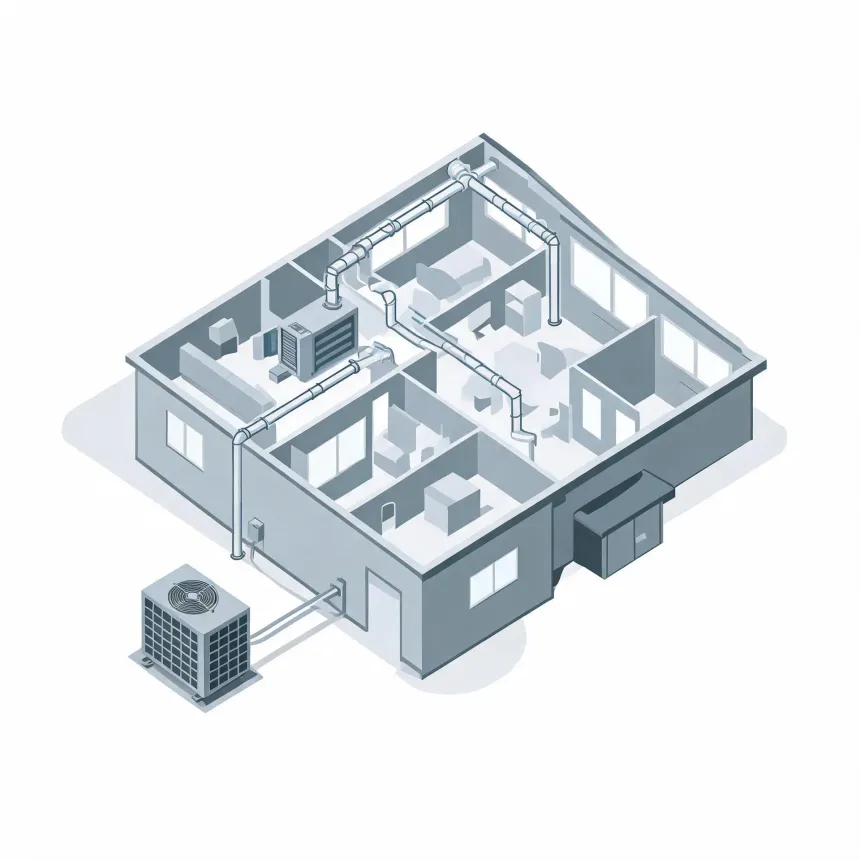
The size of the unit matters more than the brand. An air conditioner that's too big for the house cools the air fast and shuts off before it pulls the moisture out, so rooms feel clammy even when the thermostat says they're cool. One that's too small runs constantly and never catches up on the hottest days. Getting the size right means a contractor has to look at the square footage, the insulation, the windows, and the ductwork, not just swap in whatever matches the old unit. The ductwork itself is often the real cost driver. If it's undersized or leaky, running new duct or sealing what's there adds work that has nothing to do with the condenser or the coil sitting outside. Where the indoor and outdoor units go, and how far apart they are, also changes how much labor the job takes.

5 months
May through September, your air conditioner is on duty
95°F
the average summer afternoon it cools against
154 hail events
in ten years, and hail bends the fins on outdoor coils
13.4 SEER2
the federal minimum any new unit must meet
Isometric grayscale illustration of a cutaway house showing interior rooms, ceiling ductwork connected to an indoor air handler, and an outdoor condenser unit linked by lines along the exterior wall.
Your air conditioner works hardest from May through September.

NOAA nClimDiv, 1991–2020 normals

Just over half of Midland County homes heat with electricity.

An electric furnace or heat pump paired with the new AC keeps the whole system on one fuel.

Midland gets hit by storms, wind and outages worth planning the install around

264 severe weather events from 2015 to 2024
33% of homes statewide lost power a day or more in 2024
93 damaging wind events from 2015 to 2024
Five months of 95 degree afternoonsCooling runs May through September, with afternoon highs averaging 95°F in June, July and August.

Midland County is zone 3B, a warm climate with a long run of hot months and a short mild winter. A new air conditioner going in here has to meet 14.3 SEER2, the regional minimum for the Southeast. That is higher than the 13.4 SEER2 floor that applies in most of the rest of the country. It rules out the lower-efficiency units still allowed elsewhere. Whatever gets installed has to clear this region's number, not the national one.

Install before May, while you still have time to choose

Cooling runs May through September here. Put the new system in during April and it goes in on your schedule, with time to size it right and sort out any duct work, instead of getting picked off the lot because the old one died mid season.

Find a contractor
A man in a dark cap, gray T-shirt and brown work pants climbs porch steps toward an orange front door, carrying a worn canvas tool bag, with a potted shrub beside the entry.
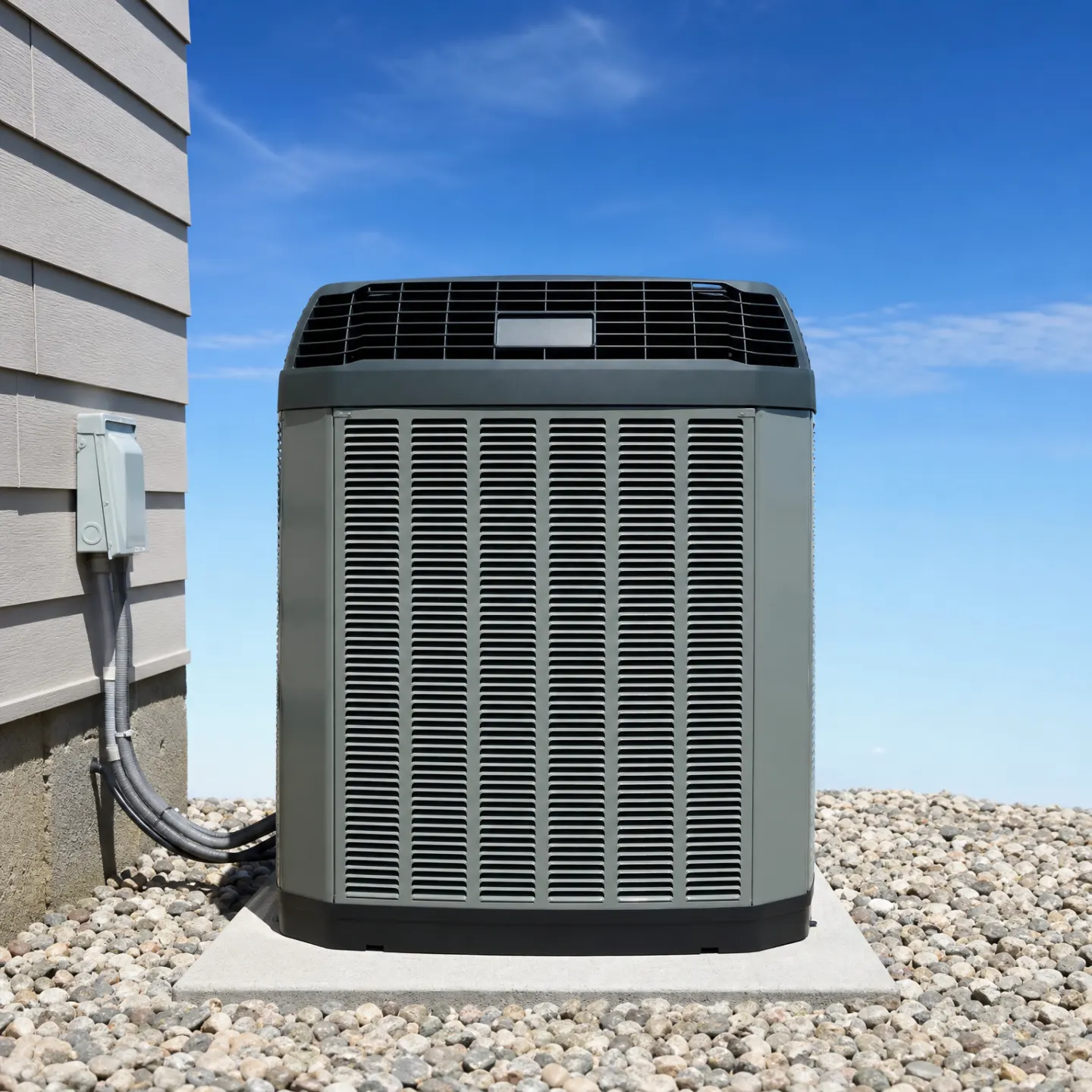
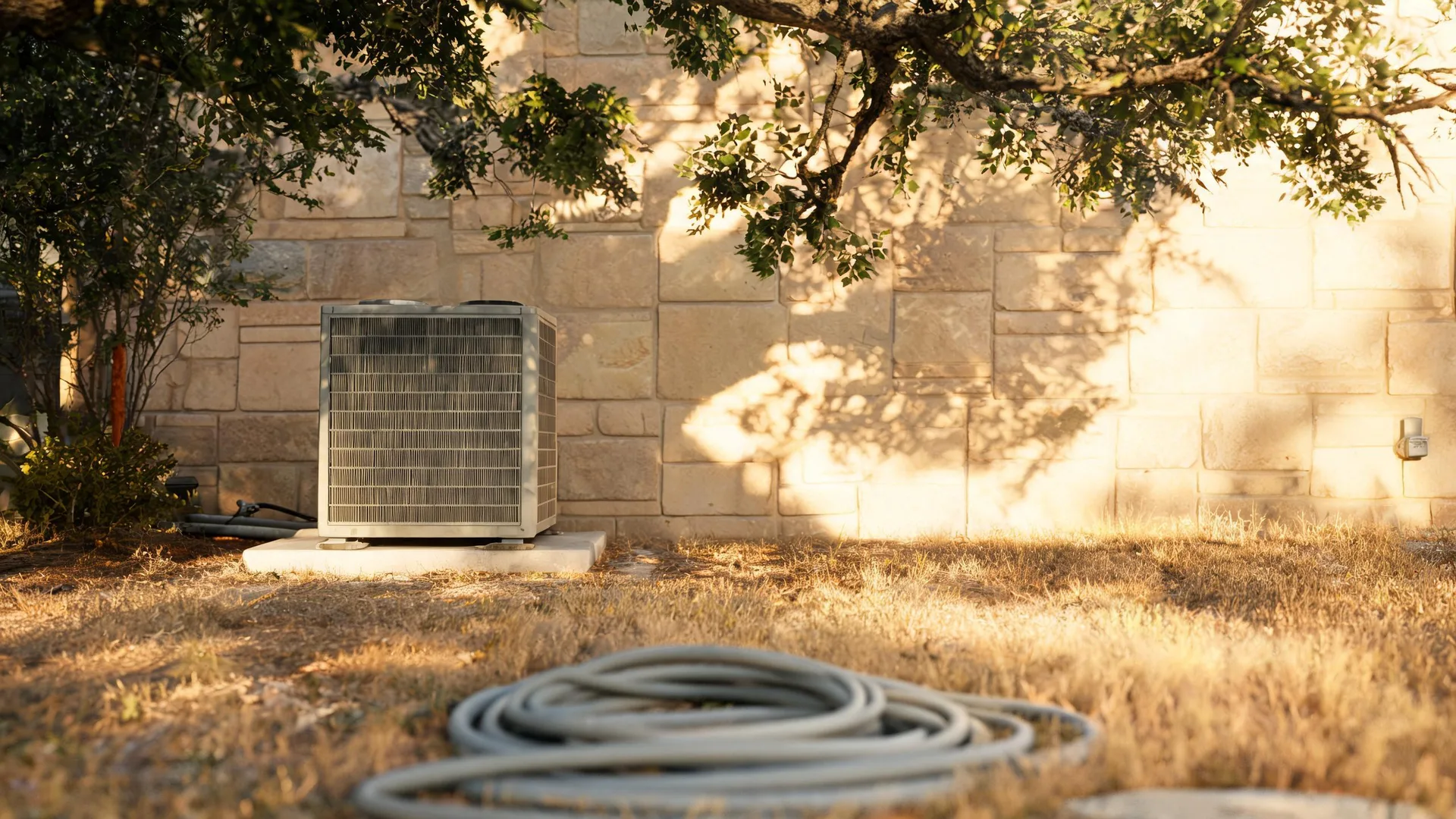
An outdoor air conditioning condenser unit mounted on a concrete pad beside a house, with electrical conduit running to a wall-mounted disconnect box.

Built for five months of this, not a few weeks

Five months a year is a long stretch for a condenser to run near its limit. At 95 degrees outside, a system has to work harder to move heat out of the house, and it does that for the better part of summer here, not just a few weeks. That's the load the new unit has to be sized for, not the mild days in between. Ask the contractor to run a load calculation on this house rather than matching the tonnage of whatever is coming out. A unit sized for an easier climate will run long hours it wasn't built for and show problems sooner, a weak capacitor, a coil that ices up, a compressor working harder than it should.

The math behind the tonnage

A load calculation weighs square footage against the insulation, the window area and direction, the ceiling height, and how much heat the attic passes down. Houses that look alike from the street can need different tonnage once those are counted. Pulling the number straight off a nameplate or a rule of thumb skips the part that actually determines whether the unit matches the house.
Oversizing hides inside a thermostat that reads right

A unit that's too large satisfies the thermostat fast, so it never runs long enough to pull humidity out of the air. The house can sit at the right temperature and still feel damp. The compressor also cycles on and off more, and that short-cycling wears parts faster than a system sized to run long, steady stretches.

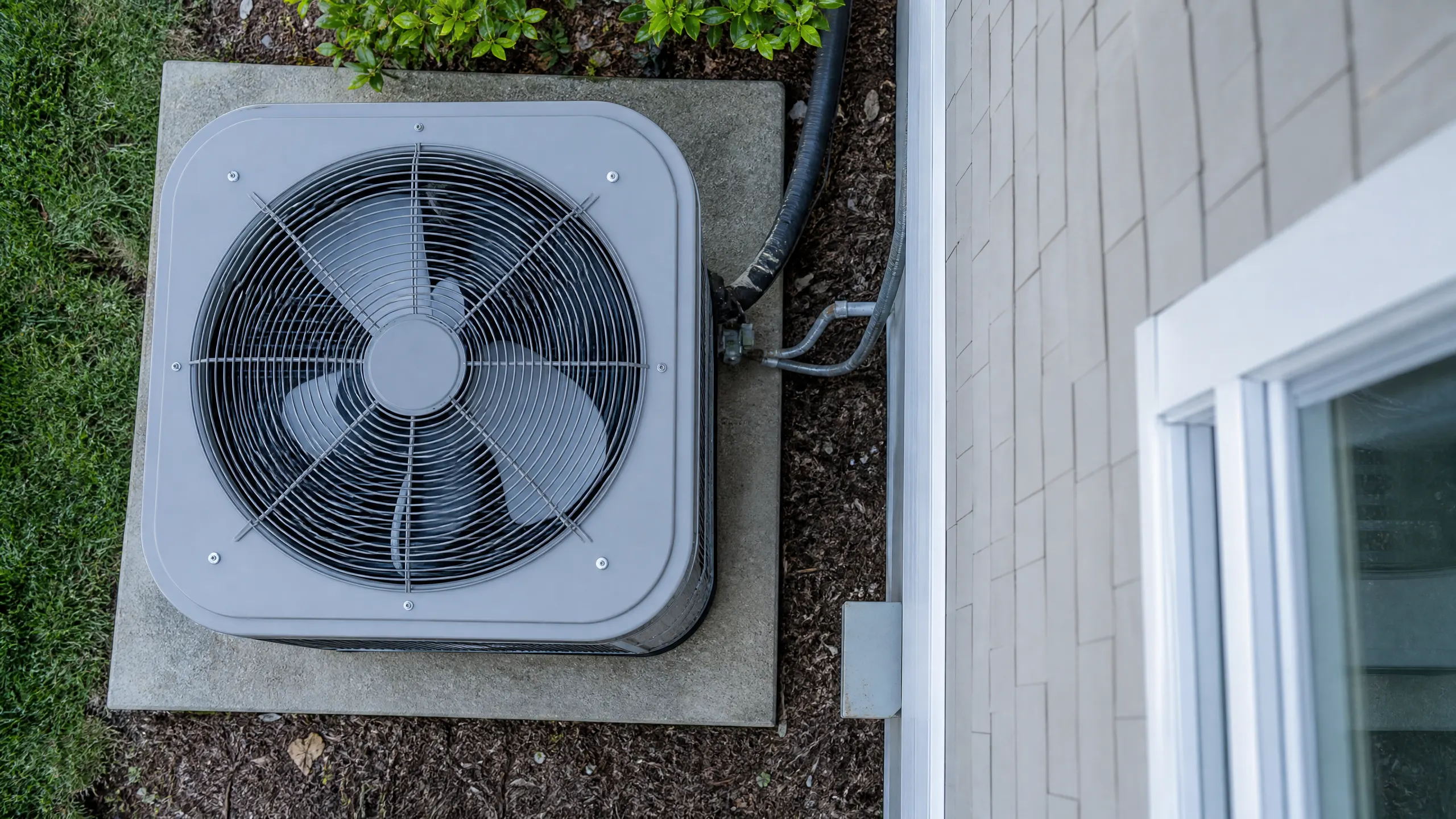
Aerial view of a residential air conditioning condenser unit mounted on a concrete pad next to a house with vinyl siding and a sliding glass door.

A higher-efficiency unit would save about $30 a year to run in Midland County compared with a new unit at the federal minimum.

  • A higher-efficiency unit$410 a year
  • A new unit at the federal minimum, 14.3 SEER2$440 a year

Estimates for a typical Midland County home, from EIA household energy data, Texas fuel prices and NOAA climate normals. Your home will differ.

Installation day starts with the old equipment coming out, the indoor coil, the outdoor condenser, and the line set connecting them. A contractor checks whether that line set gets reused or replaced, since the wrong refrigerant lines can choke flow to the new unit. Setting the new condenser means leveling a pad outside and leaving clearance around it for airflow. Inside, the coil has to match the condenser. Mismatched parts are a common reason a new system never hits its rated efficiency. Once everything is connected, the lines get pulled into a vacuum to clear out moisture and air before refrigerant goes in. That step protects the compressor for the life of the system. Last comes the startup check, refrigerant charge, airflow across the coil, and whether the thermostat is talking to the system the way it should.