




Texas Cooling Help
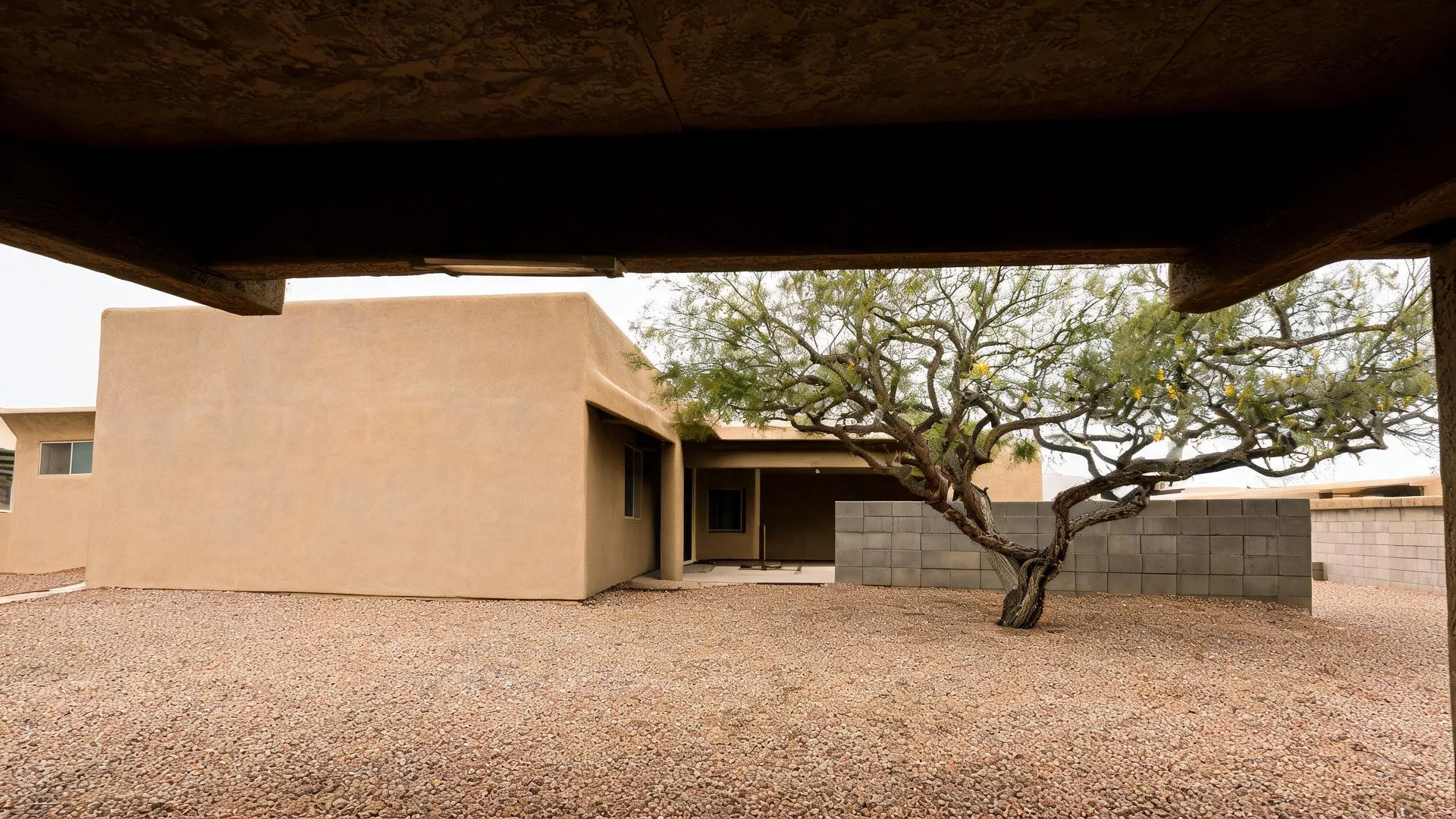
View from beneath a concrete overhang toward a tan stucco single-story house with a gravel yard, a low concrete block wall, and a mesquite-like tree with a twisted trunk.

AC Installation in El Paso, TX

Tell us about the job

Takes about a minute. No obligation.

Step 1 of 3: Equipment

Texas households paid 14.94 cents per kilowatt-hour in 2024. In El Paso the air conditioner runs for months at a stretch, from spring into fall, so that rate applies to a lot of hours. A higher SEER2 rating means the system uses less electricity to move the same heat out of the house. Over that many months of running, the difference between an efficient system and a tired one shows up on the bill every time it comes. Ask about the SEER2 rating on any system you're considering before you decide.

5 months
May through September, your air conditioner is on duty
95°F
the average summer afternoon it cools against
57 hail events
in ten years, and hail bends the fins on outdoor coils
13.4 SEER2
the federal minimum any new unit must meet
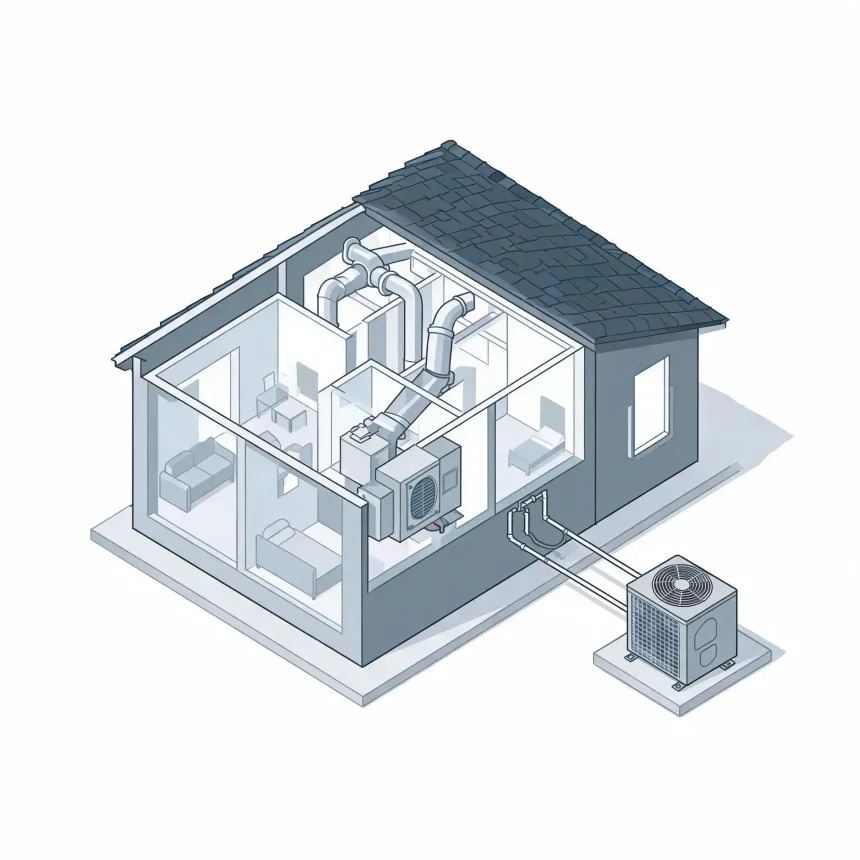
Isometric cutaway illustration of a small house showing interior rooms with furniture, an indoor air handler with ducts in the attic space, and refrigerant lines running to an outdoor condenser unit on a pad.
Your air conditioner works hardest from June through September.

NOAA nClimDiv, 1991–2020 normals

Cooling in El Paso starts up in May.

Put the new system in during April and it's already settled in before it has to work.

El Paso gets hit with severe weather more than most of Texas

133 severe weather events from 2015 to 2024
33% of homes statewide lost power a day or more in 2024
70 damaging wind events from 2015 to 2024
El Paso runs on gas heat71% of homes here heat with gas, so the AC side usually pairs with a gas furnace already in place.

Cooling runs May through September here, five months of the system working almost every day. June, July and August bring afternoon highs averaging 95 degrees, and that's the load it's built for, not an occasional spike. A system sized too small for the house will run close to constant trying to keep up. One sized too big will short cycle, kicking on and off without actually pulling the heat and humidity down, and that wears parts faster too. Either mistake shows up sooner in a climate that runs the equipment this hard. Getting the size right matters as much as anything else in the install.

Any new system here has to clear a higher bar

A system installed here has to meet at least 14.3 SEER2, the minimum for this region. That floor is already higher than what the rest of the country requires, so what's available to install here starts at a better place. A federal tax credit is available for qualifying high-efficiency equipment, worth looking into alongside the SEER2 rating when you're comparing systems.

Find a contractor
A man in a cap, gray long-sleeve shirt and brown pants carries a worn canvas tote bag up porch steps toward an orange front door beside a potted olive tree.
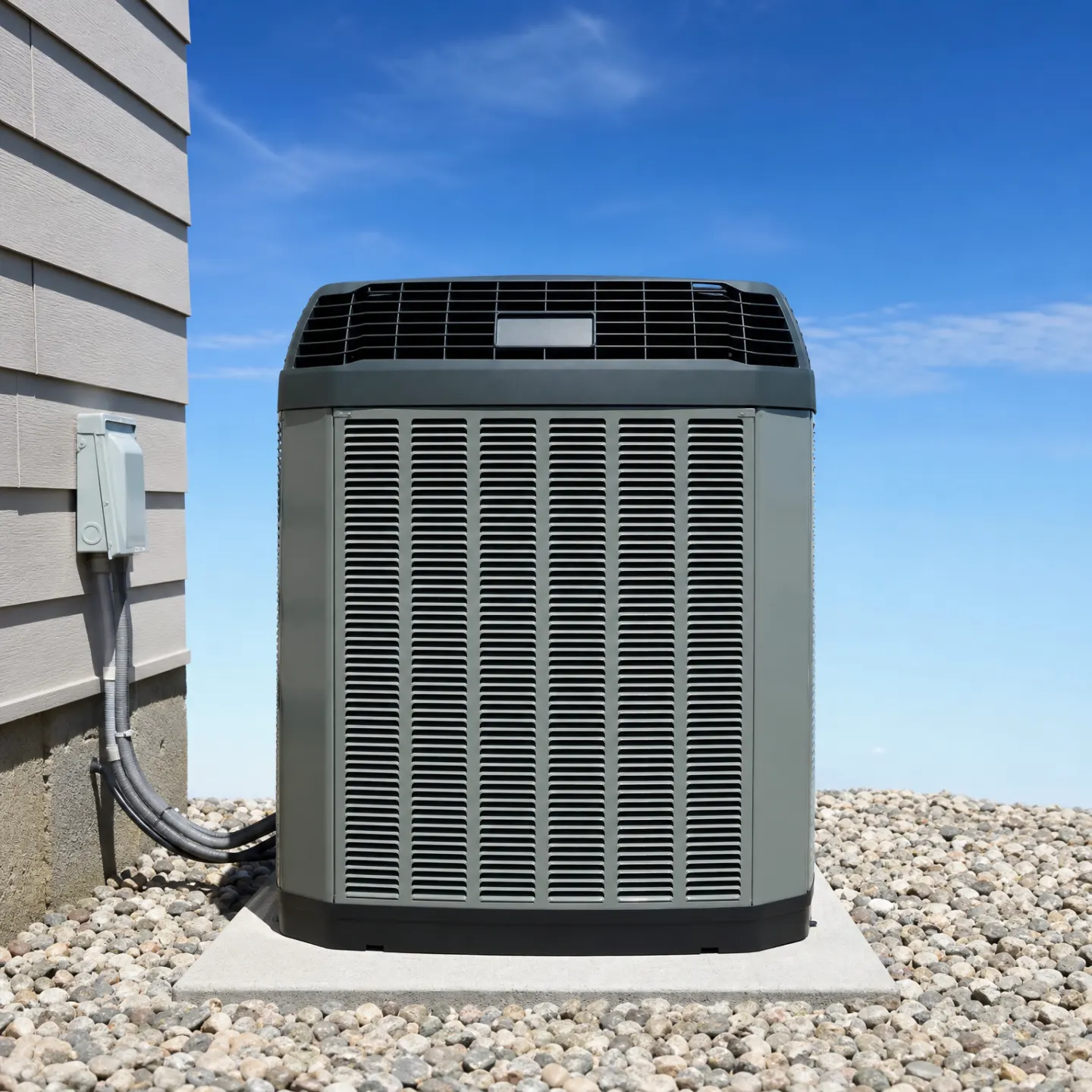
An outdoor air conditioning condenser unit mounted on a concrete pad beside a house, with electrical conduit running to a wall-mounted disconnect box.

Sized right, it runs five months straight

Get the sizing from a load calculation on this house, not a guess based on the old system or square footage alone. That's the only way to know the right size before five months of near-daily running tells you the hard way. Ask the contractor for the number before you sign anything.

The load calculation sets the equipment

Tonnage, coil size and duct changes all follow from that room-by-room number. A house that needs more tonnage costs more in equipment no matter who installs it, and if the existing ductwork can't move enough air for the new system, modifying it adds to the job before the condenser ever goes in.
The coil and the ductwork decide the rest

A furnace already in place can often keep its place in the lineup, but the coil that sits with it has to match the new outdoor unit, and an old coil usually gets swapped along with it. If the line set, the disconnect or the electrical whip need to be replaced to meet current code, that work goes into the job too, even though none of it is the condenser itself.

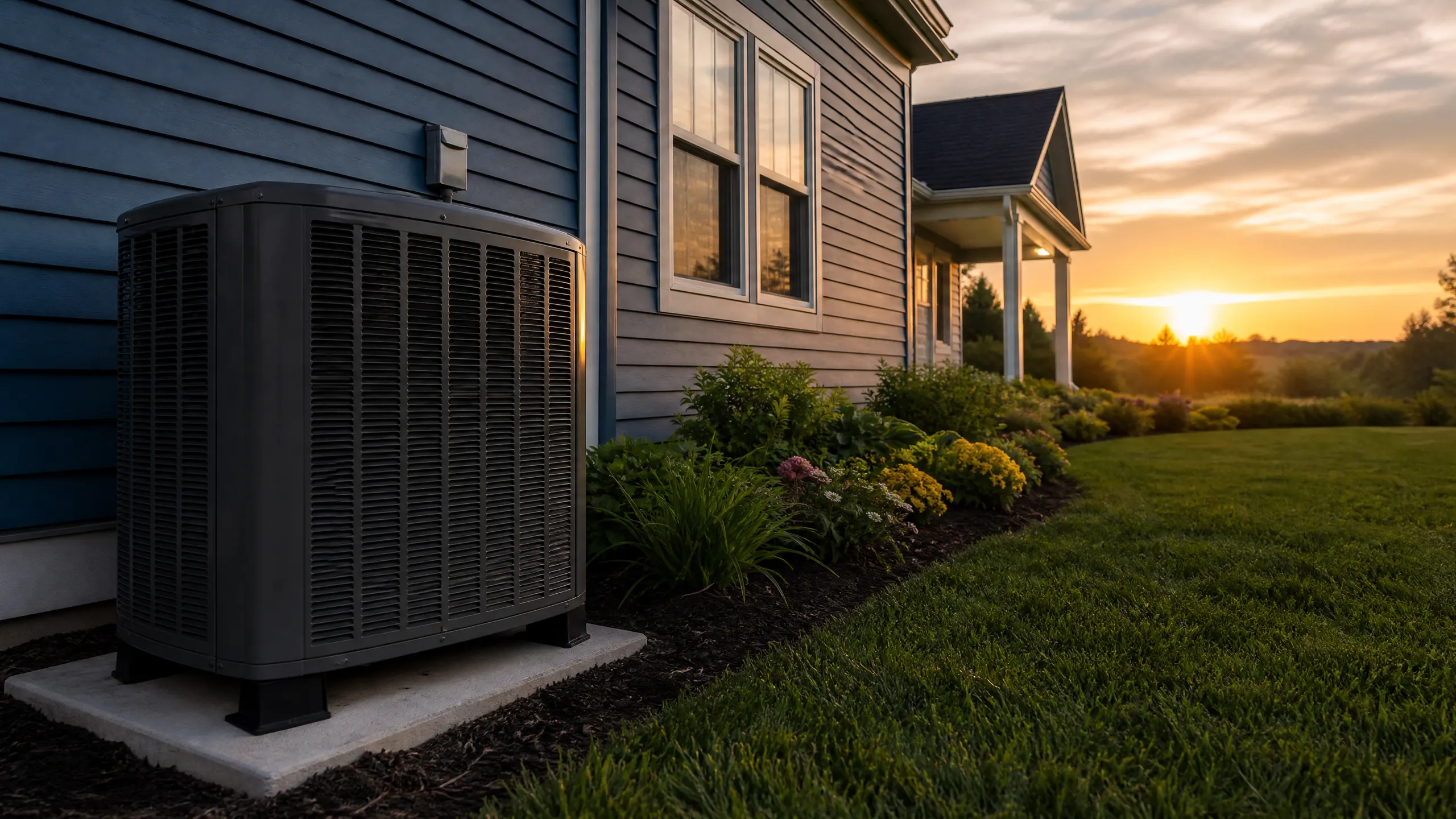
An outdoor air conditioning condenser unit mounted on a concrete pad next to a blue-sided residential house at sunset.

Going above the federal minimum saves little here, about $20 a year.

  • A higher-efficiency unit$380 a year
  • A new unit at the federal minimum, 14.3 SEER2$400 a year

Estimates for a typical El Paso County home, from EIA household energy data, Texas fuel prices and NOAA climate normals. Your home will differ.

On install day the old outdoor unit comes out first, then the coil above the furnace if it's being swapped. The line set gets disconnected and the refrigerant in it gets recovered into a tank, not vented into the air. Setting the new condenser is the fast part. What takes the time is pulling a vacuum on the line set and coil to clear out moisture and air before any refrigerant goes in. Skip that step and the system runs with moisture in it for years. Once it's running, a good installer checks the charge against the subcooling and superheat numbers for that specific equipment rather than just turning it on and calling it done. The house won't have cooling while any of this is underway, so plan around that stretch of the day.