Electricity here runs 14.94 cents per kilowatthour
Texas homes paid that rate in 2024. An AC that struggles to cool or runs longer than it should turns that rate into a bigger bill every month it runs.
Takes about a minute. No obligation.
Texas homes paid that rate in 2024. An AC that struggles to cool or runs longer than it should turns that rate into a bigger bill every month it runs.
A new system sized and installed right will use less power to do the same job. In a place where cooling runs most of the year, that difference shows up on every bill, not just a few.
NOAA nClimDiv, 1991–2020 normals
Cooling here starts up in March and keeps running through November.
Get the new system in during February and it's already up and running when the heat arrives, not fighting to keep up.




Corpus Christi falls under climate zone 2A, where cooling is the main load on a system all year. That puts a floor under what can be installed here. A new split system under 45,000 Btu/h has to hit 14.3 SEER2, higher than the national minimum. Larger systems have to clear a higher mark too. The installer isn't choosing that number. It's set for this region because cooling runs harder here than it does in most of the country.
Cooling runs here from March through November, and in June, July and August the afternoon high averages 94°F. A new system has to hold up under that load every year, not just on the hottest days. Getting the size right matters more here than it does somewhere the system only has to work a few months out of the year.
Find a contractorGet the size wrong on a system that runs this many months and it shows up fast. Too small, and it runs long hours trying to catch up, March through November, not just on the worst afternoons in August. Too big, and it shuts off before it finishes pulling the moisture out of the air, then kicks back on again soon after. Either way the wear lands on the same parts, year after year. Ask the installer for a load calculation done room by room, not a number pulled from the unit it's replacing.
The number on that label gets measured under set lab conditions. A unit matched poorly to the ductwork, or installed with the wrong refrigerant charge, won't deliver that rating no matter what the sticker says. The installer's work decides how close the system gets to it.
A higher-rated system cools the same space while drawing less power to do it. Over a cooling system that cycles on and off for months at a stretch, that gap in power draw repeats on every cycle, all season.
Estimates for a typical Nueces County home, from EIA household energy data, Texas fuel prices and NOAA climate normals. Your home will differ.
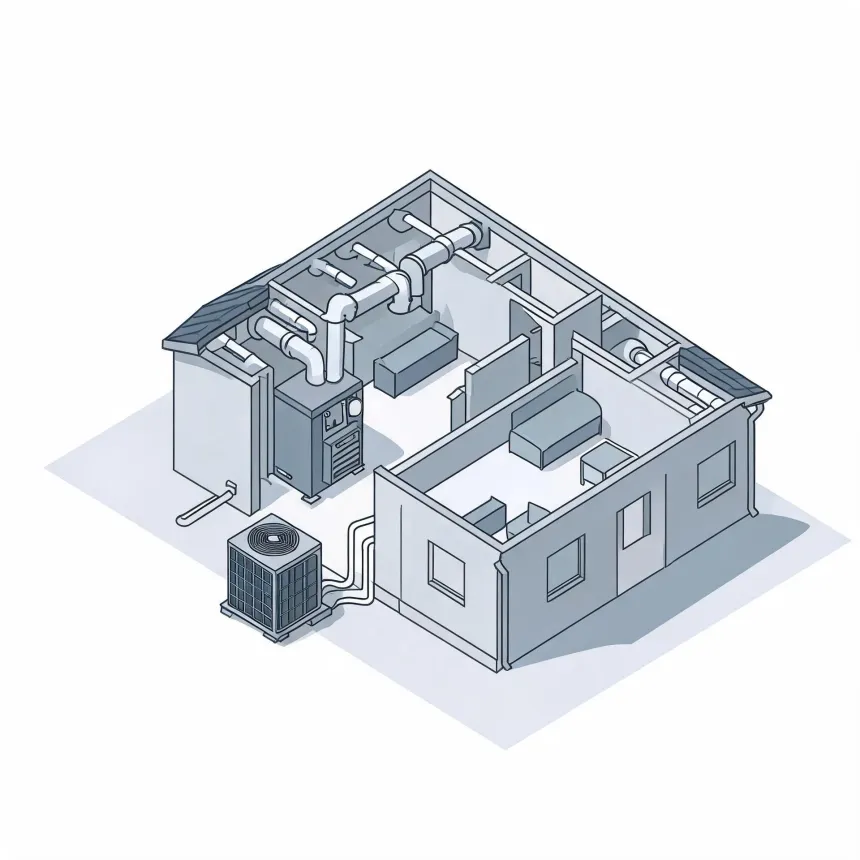
Installation starts with the load calculation, not the equipment. The installer measures each room, checks the windows, and figures out where the ductwork can tie in before anything gets pulled out. Once the old system comes out, expect the refrigerant lines, the electrical disconnect, and in many cases the ductwork itself to get attention, not just a swap of the outdoor unit. The new line set gets brazed and pressure tested for leaks before anyone opens a valve. The system gets charged with refrigerant to the exact weight the manufacturer specifies, not just until it feels cold at the vent. Airflow gets checked room by room before the crew packs up, because a system that cools the house but starves one bedroom wasn't installed right.