



Texas Cooling Help
A single-story brick house with a two-car garage photographed at dusk, with interior lights glowing through the windows and trees on either side.

AC Installation in Burleson, TX

Tell us about the job

Takes about a minute. No obligation.

Step 1 of 3: Equipment

Electricity in Texas ran 14.94 cents per kilowatt-hour in 2024, and your AC is probably your biggest draw on the meter all summer. A new system's efficiency rating decides how much of that power actually turns into cooled air versus how much just runs the compressor longer than it needs to. When you're comparing units for installation, the rating on the label matters as much as the price tag, because you'll be paying that electric rate every month the unit runs, not just once at purchase.

6 months
May through October, your air conditioner is on duty
94°F
the average summer afternoon it cools against
98 hail events
in ten years, and hail bends the fins on outdoor coils
13.4 SEER2
the federal minimum any new unit must meet
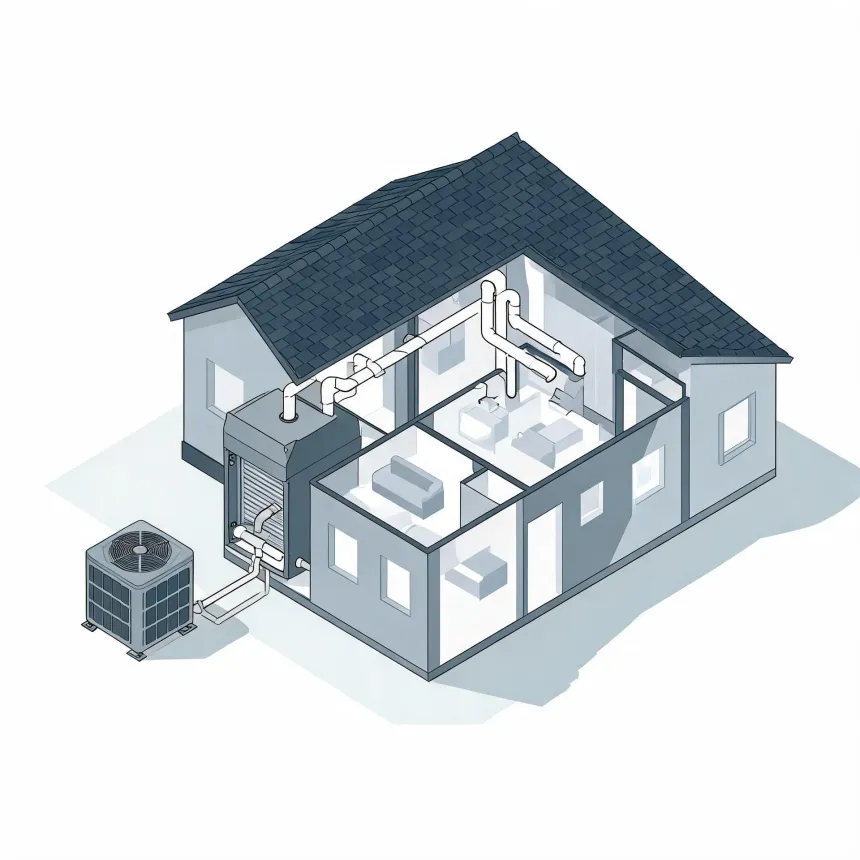
Isometric illustration of a cutaway single-story house showing interior rooms, ductwork running from an indoor air handler, and an outdoor condenser unit on a pad beside the building.
Your air conditioner works hardest from June through September.

NOAA nClimDiv, 1991–2020 normals

AC runs May through October in Johnson County.

April is when a new system should already be in, not when you start calling around.

Most homes here heat with electricity, and that's what a new AC install works alongside

79.5% of homes heat with electricity
Cooling runs May through October
Summer afternoons average 94°F
Six months of afternoons near 94°FJohnson County summers run May through October, and that's what a new system has to be sized for.

Johnson County falls under zone 2A, the hot and humid side of the energy code, and cooling carries most of the load here rather than heating. That's why the installation minimum is set higher than the rest of the country. Any split-system AC under 45,000 Btu/h put in here has to hit at least 14.3 SEER2. A unit built only to the national manufacturing floor doesn't clear what this region requires. That rating limits which systems a contractor can legally install here, not just which ones run cheaper to operate.

Plan this install around the storms this county actually gets

Johnson County logged 98 hail events between 2015 and 2024, plus dozens of windstorms and tornadoes. That outdoor unit is going to take weather. Where it sits, what shields it, and how you'll handle a power outage are decisions for the installation, not after.

Find a contractor
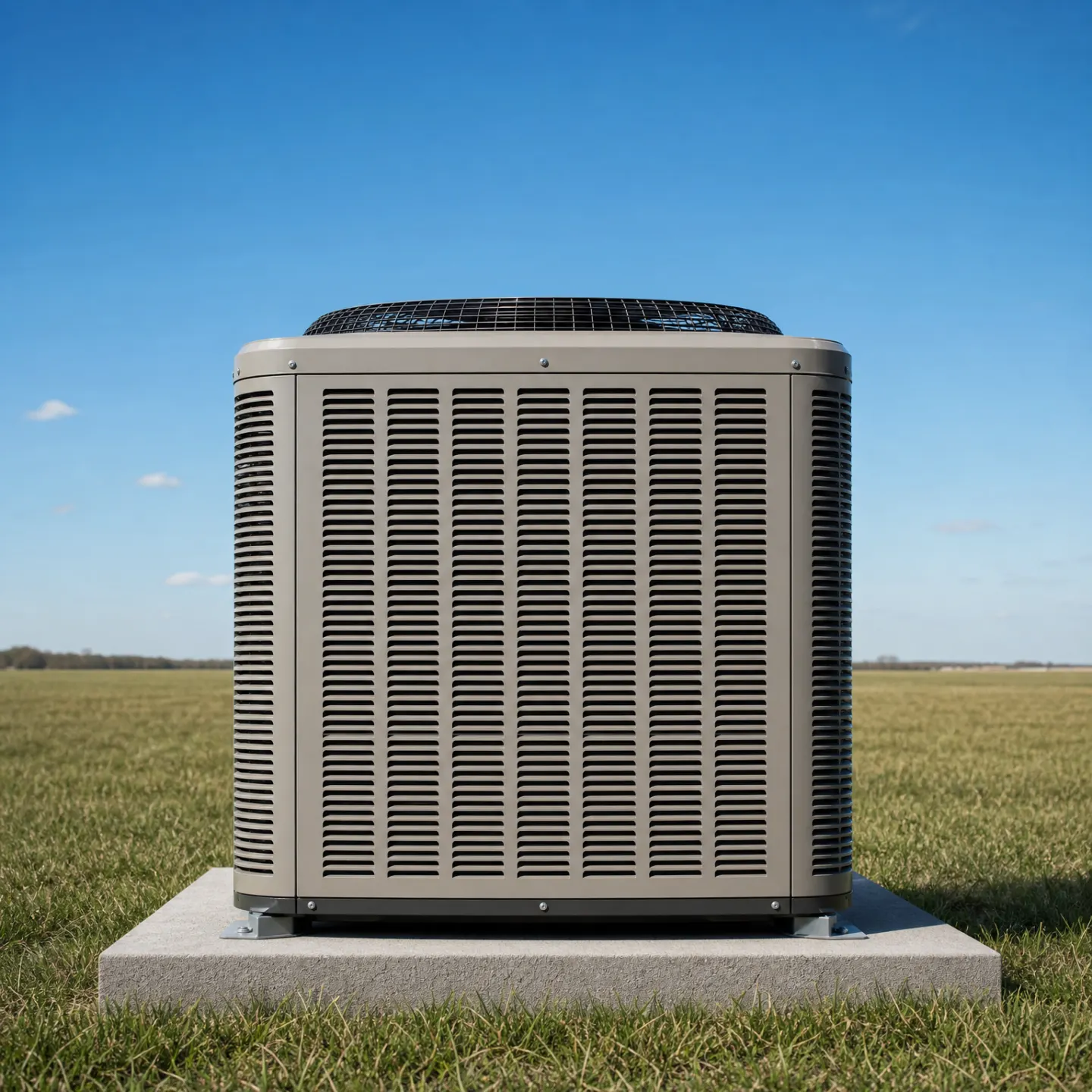
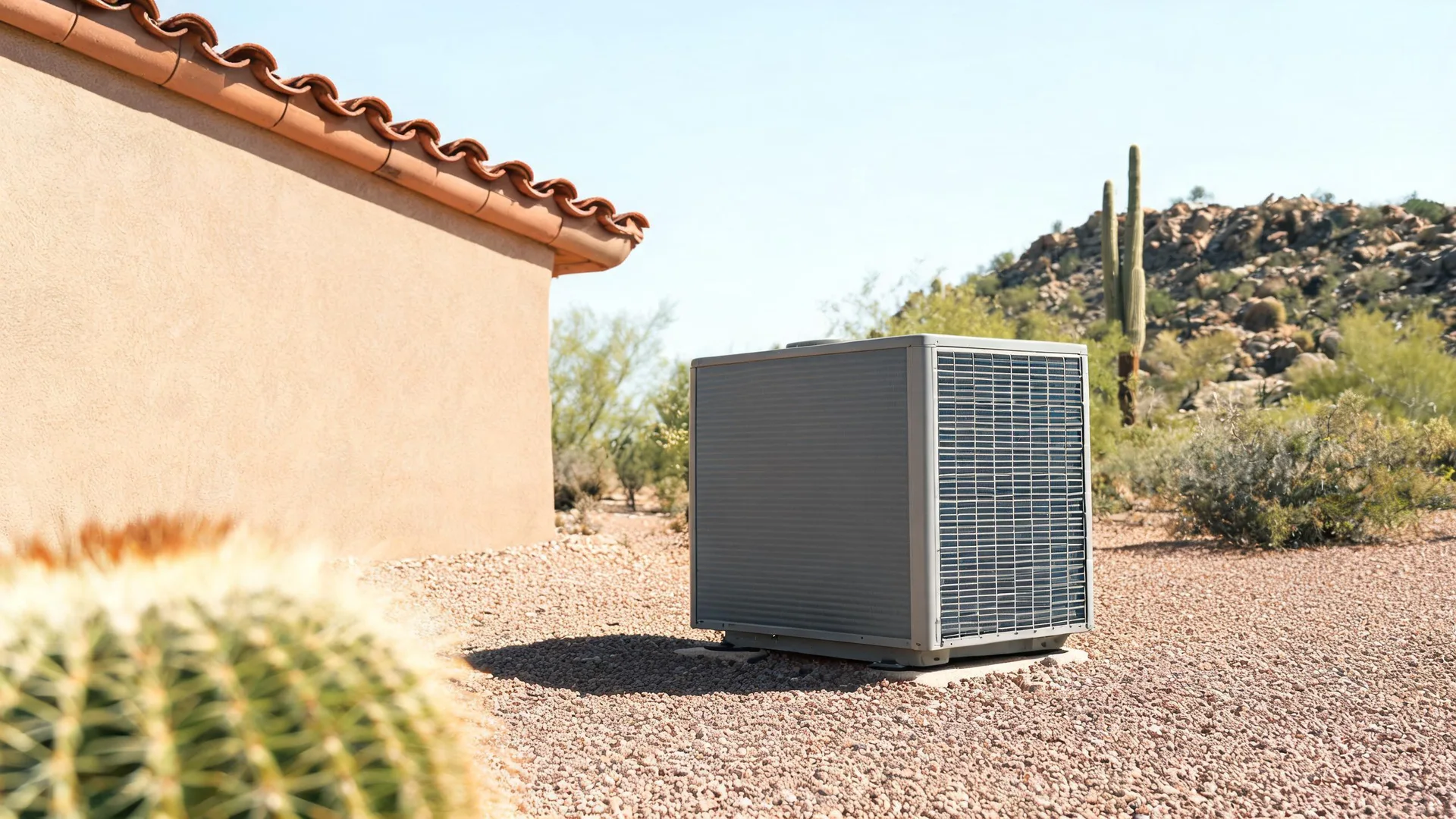
A gray residential air conditioner condenser unit mounted on a concrete pad in an open grass field.

Built for six months of this, every year

Six months of 94-degree afternoons means the compressor outside is running long hours most days, all summer. That kind of duty pushes a contractor toward sizing the system by a load calculation rather than copying the number off the old unit's nameplate. A system sized too big short-cycles and wears its parts sooner. One sized too small runs flat out all afternoon and still falls behind. Ask whoever quotes the job to show you the load calculation, not just a figure pulled from the square footage.

The old unit gets disconnected and hauled off

A contractor recovers the refrigerant from the old system before touching anything, since it's against the law to vent it into the air. After that the lines get capped, the electrical gets disconnected, and the indoor coil and outdoor unit both come out. Hauling off the old equipment is usually part of the install job, not something you arrange separately.
The refrigerant lines usually get replaced, not reused

Older systems often ran a different refrigerant than what's made today, and the oil left behind in the old lines doesn't mix well with the new charge. Most contractors run new line sets rather than flush the old ones. If the old pad or mounting is cracked or sunk, that gets replaced too, since the new unit needs a level base to run quietly for years.

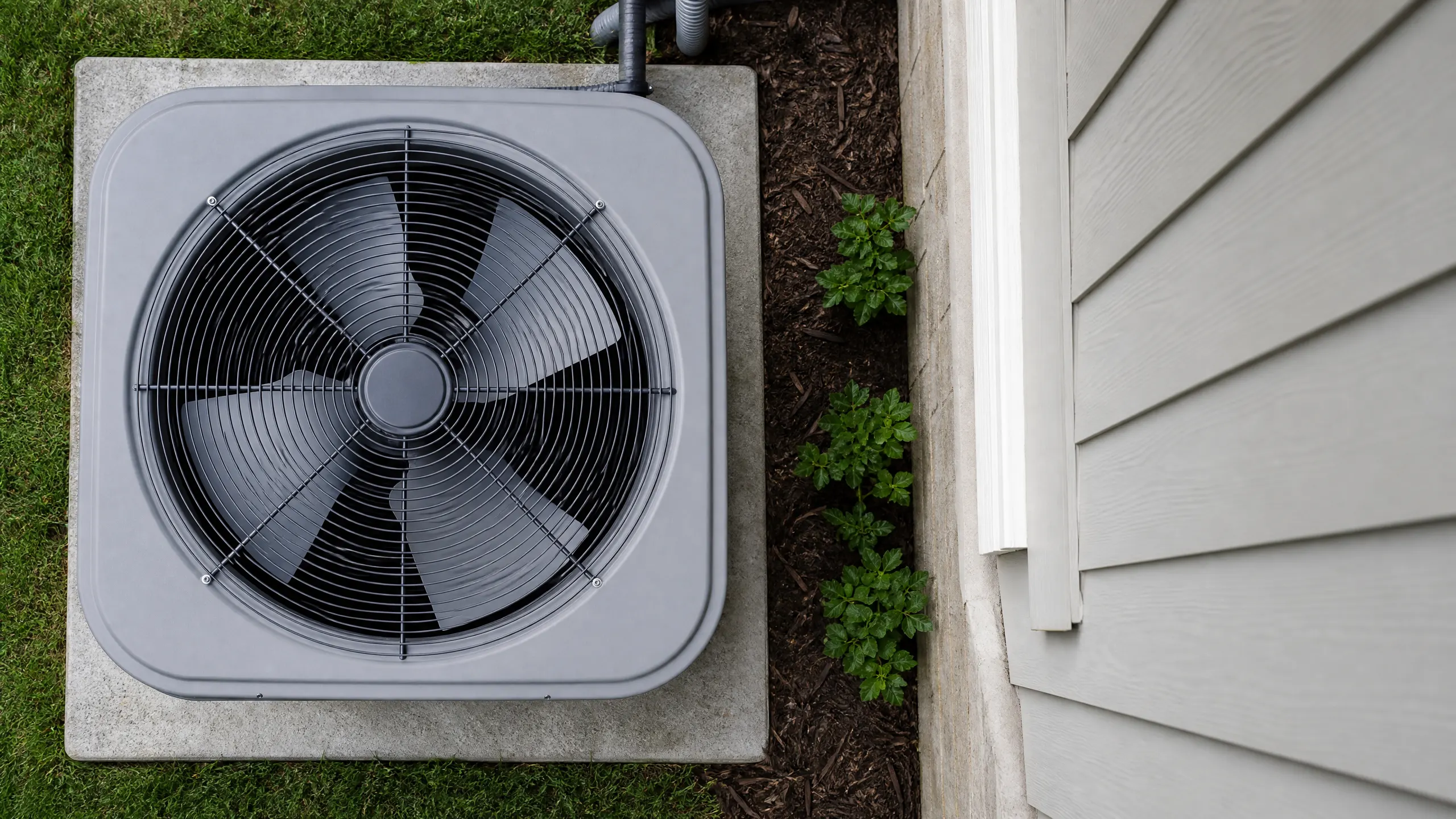
Aerial view of a gray central air conditioning condenser unit on a concrete pad next to a house with vinyl siding.

Going above the federal minimum saves little here, about $20 a year.

  • A higher-efficiency unit$450 a year
  • A new unit at the federal minimum, 14.3 SEER2$470 a year

Estimates for a typical Johnson County home, from EIA household energy data, Texas fuel prices and NOAA climate normals. Your home will differ.

A load calculation and a permit come before anything gets touched. Once the crew starts, the old refrigerant gets recovered, the lines get disconnected, and the indoor coil and outdoor unit both come out. The new line set goes in, the pad gets leveled or replaced, and the new coil and condenser get set and connected. Then the lines get pulled down with a vacuum pump to clear out air and moisture before any refrigerant goes in. Trapped moisture turns to acid inside a sealed system, so that step doesn't get skipped. After charging, a contractor checks static pressure, airflow across the coil, and the temperature split between the air going in and the air coming out. That split shows whether the system is actually cooling the way it should, not just running.