Electricity here runs 14.94 cents per kilowatthour
Texas households paid that rate in 2024. A new AC runs on every hot afternoon for months, so that rate hits your bill a lot more than it would somewhere milder.
Takes about a minute. No obligation.
Texas households paid that rate in 2024. A new AC runs on every hot afternoon for months, so that rate hits your bill a lot more than it would somewhere milder.
Two systems cooling the same house can use different amounts of electricity to do it. At this rate per kilowatthour, the difference between them shows up on every bill, not just the first one.
NOAA nClimDiv, 1991–2020 normals
The size of the system matters more than the brand on it.
A unit sized wrong for the house costs more to run and wears out faster than one sized right.




Jefferson County sits in zone 2A, a hot and humid climate where cooling carries most of the year's load. That puts it in the Southeast region for federal efficiency rules, and the Southeast has its own minimum, higher than the rest of the country. A split-system AC installed here has to meet 14.3 SEER2 below 45,000 Btu/h, or a little less above that size. A unit built for an average climate doesn't automatically clear that bar. Whatever gets installed has to be rated for this region specifically.
Half the homes in Jefferson County were built in 1978 or earlier, half later. Neither age calls for anything special. A properly sized system at the required SEER2 rating will cool a house here the way it's supposed to. Get the sizing right and let the installer confirm it meets the regional minimum.
Find a contractorThe old outdoor unit and coil come out, and so does the line set between them in most cases. Refrigerant lines pick up an oil coating from whatever's run through them for years, and that oil doesn't mix with what a new system uses. Trying to reuse the old lines can carry contaminants into a brand new compressor, so most installers cut them out rather than take the risk. The old pad usually comes up too, especially if it's cracked or sitting unevenly after years of the unit settling into it. None of this is extra work tacked onto the job. It's what has to happen for the new equipment to start clean instead of inheriting problems from the one it's replacing.
A contractor should measure the house, the windows and the insulation, and run the numbers rather than just matching whatever size was in there before. The old system may have been wrong from the start, or sized for a house that was different before an addition or a renovation. Ask to see the calculation, not just hear a number.
A new system moves air through the ducts already in the house. Ducts that leak, that are crimped, or that were sized for a different unit will undercut even a properly sized system. Ask whether the ducts get inspected and tested as part of the job, not just connected to.
Estimates for a typical Jefferson County home, from EIA household energy data, Texas fuel prices and NOAA climate normals. Your home will differ.
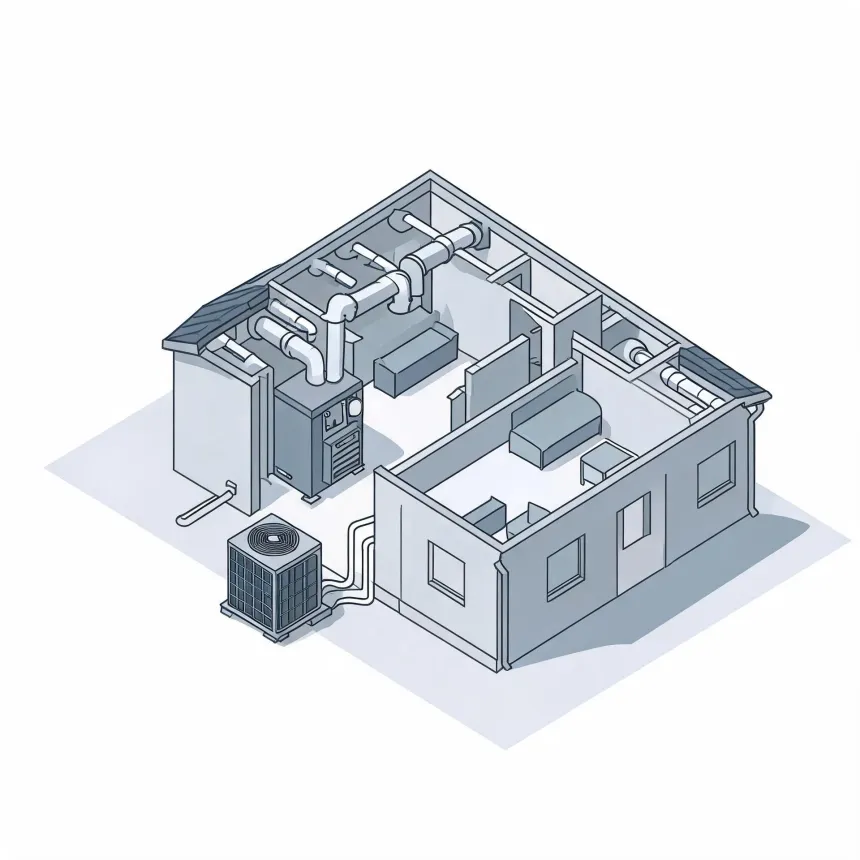
Installation day starts with the old equipment coming out, indoor coil, outdoor unit, and the line set between them. If the new system uses a different refrigerant than the old one, the line set usually has to be replaced rather than reused, since the oils and pressures aren't the same. The outdoor pad gets leveled or replaced if it's cracked or sinking. Inside, the installer sets the new coil into the plenum and checks that it matches the air handler or furnace it's pairing with. Once everything's connected, the system gets charged with refrigerant to the exact weight the manufacturer specifies, not just run until it feels cold. Before anyone leaves, static pressure and airflow get tested, because a system can be wired correctly and still not move the air it's rated for.